Element-Level Analysis
Last updated
Element-level analysis dissects ads into individual components to measure what drives performance. Learn how to analyze headlines, images, and CTAs separately.
Element-Level Analysis
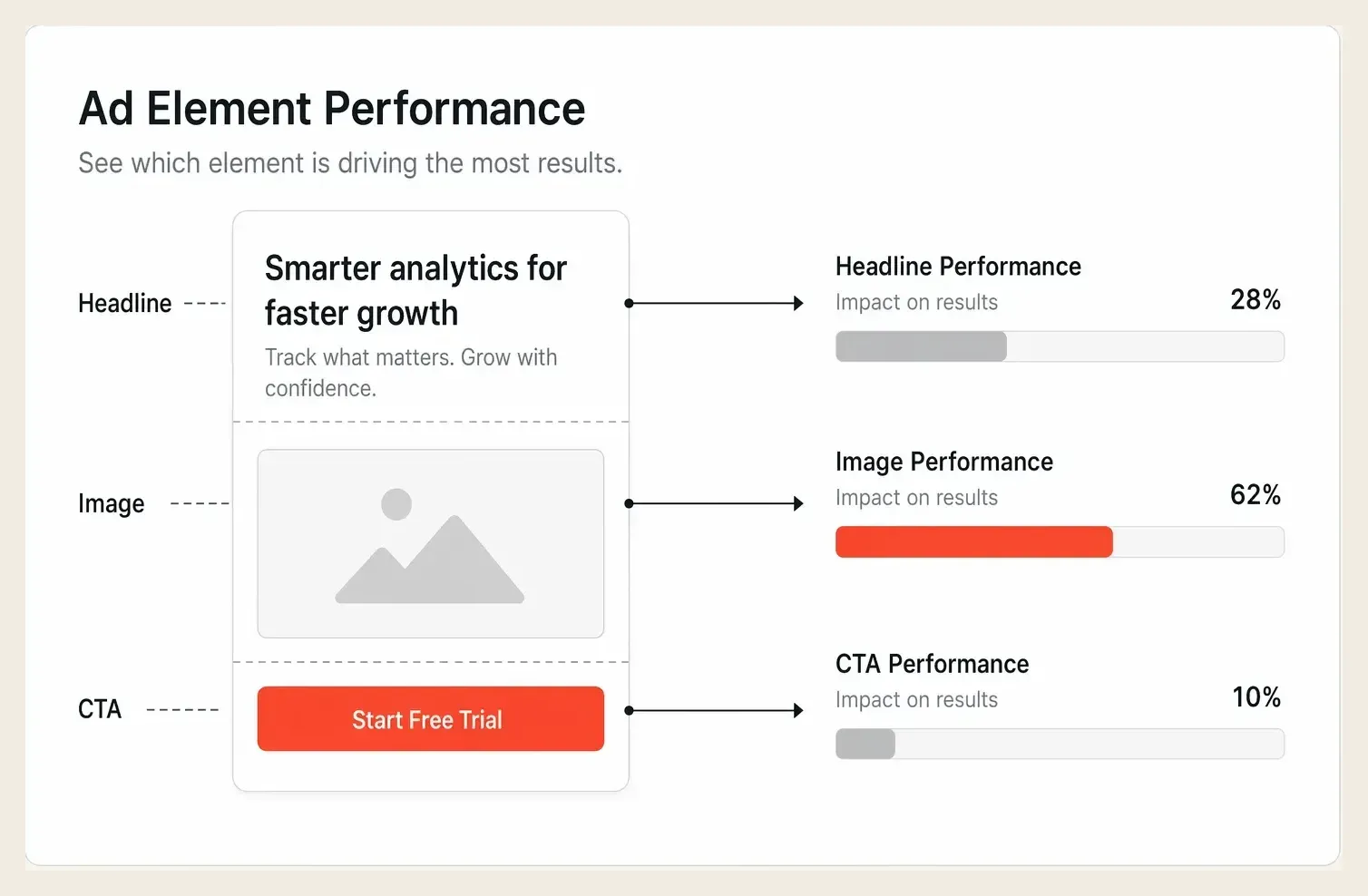
Element-level analysis is the practice of dissecting your ad creative into individual components (headlines, images, CTAs, colors, video hooks) and measuring how each element independently impacts performance. Instead of only knowing "this ad worked," you understand exactly which parts made it work. That distinction is what turns winning ads into repeatable patterns rather than lucky accidents.
Why It Matters
Most marketers treat ads as indivisible units: Ad A beat Ad B, so they run more ads like A. But what made Ad A successful? Was it the headline, the image, the color scheme, or the CTA placement? Without element-level analysis, you are copying entire ads blindly instead of replicating the specific elements that drove results, which means you carry forward the weak parts along with the strong ones.
This approach transforms creative from guesswork into systematic optimization. When you know that a specific hook style lifts CTR by 40 percent, you can apply it across every new variation instead of rediscovering it by chance. It is the engine behind a disciplined creative testing framework, because it tells you which variable is actually worth isolating next. In a paid environment where creative fatigue constantly erodes performance, knowing which elements drive results lets you refresh the right pieces instead of rebuilding from scratch.
How It Works
Element-level analysis follows a repeatable progression from decomposition to prediction:
- Decomposition: break each ad into discrete elements (image type, headline format, CTA language, color palette, emotional tone, social-proof placement).
- Pattern identification: analyze performance across many ads to isolate which elements consistently correlate with better metrics.
- Attribution modeling: determine which combinations of elements drive the strongest results, for example urgency headlines plus testimonials plus warm colors.
- Predictive application: apply those insights to new creative by building in high-performing elements before launching campaigns.
The method depends on volume. Conclusions drawn from a handful of ads are anecdotes, while patterns confirmed across dozens or hundreds of ads become reliable rules you can build a creative system around.
A Real Example
An e-commerce fashion brand analyzed 200 of their Facebook ads and discovered something surprising. They assumed their best-performing ads succeeded because of the models they featured. Element-level analysis revealed the real driver: ads with "styled outfit" images showing complete looks had 41 percent higher CTR than single-item product shots, regardless of the model.
More specifically, outfits photographed in real-world settings like cafes, streets, and homes converted at a $38 CPA versus $67 CPA for studio backgrounds. Armed with this insight, they restructured their entire creative production process and reduced average CPA by 34 percent in 60 days. The lesson generalized: once they knew the winning element was the styled-outfit context and not the model, every future shoot started from that proven pattern instead of guessing. That is the compounding value of element-level analysis, since each test sharpens the brief for the next batch rather than producing a one-off win.
Common Mistakes
| ❌ Mistake | ✅ Better approach |
|---|---|
| Treating ads as black boxes and only comparing whole-ad performance | Tag and track individual elements to understand what makes winning ads work |
| Making broad conclusions from limited testing, such as "lifestyle images do not work" | Analyze patterns across dozens of ads to reach statistically valid conclusions |
| Focusing only on visual elements and ignoring copy, structure, and format | Analyze all creative elements, including headline structure, CTA language, video pacing, and emotional tone |
How Hawky Helps
Hawky's Creative Agent performs element-level analysis automatically across millions of ads, tagging each one with dozens of element attributes and using machine learning to surface patterns human marketers cannot detect manually. You get specific, actionable insights like "testimonials in the first 3 seconds increase completion rates by 47 percent" instead of vague guidance like "use social proof," and the agent then rebuilds creative around the elements that win in your category.
Because every element-level finding is stored in FeatherDB, the account accumulates a structured map of what drives performance for your brand. The Performance Agent acts on that map, shifting budget toward creative that contains proven winning elements so analysis turns directly into spend decisions rather than a report nobody reads.
Frequently Asked Questions
What is element-level analysis in advertising?
Element-level analysis is the practice of breaking an ad into its individual components, such as the hook, headline, image, CTA, and color palette, and measuring how each one affects performance on its own. It moves beyond knowing that an ad worked to understanding exactly which parts made it work, so winning elements can be reused across future creative.
How is element-level analysis different from A/B testing?
A/B testing compares whole ads against each other to find a winner, while element-level analysis explains why one ad won by attributing performance to specific components. The two work together: testing identifies the winners, and element-level analysis decomposes them so you can carry the winning elements forward instead of copying entire ads blindly.
What creative elements should you analyze?
Analyze both visual and structural elements, including the opening hook, headline format, CTA language, color palette, image style, emotional tone, social-proof placement, and video pacing. Marketers often over-index on visuals, but copy structure and format frequently drive larger performance differences, so a complete analysis covers every component.
How many ads do you need for reliable element-level analysis?
Reliable patterns require analyzing dozens of ads at minimum, and ideally hundreds, so that conclusions are statistically valid rather than anecdotal. Insights drawn from a few ads can be misleading, while patterns confirmed across a large set become dependable rules you can apply to new creative with confidence.
Quick Takeaway
Element-level analysis breaks ads into individual components and measures how each part contributes to performance, transforming creative from guesswork into systematic optimization based on which specific elements actually drive results.
Still copying whole ads without knowing which parts work? Book Demo