8 Best Tools to Evaluate Creative Performance in 2026

Sudarshan Baskar
Sudarshan Baskar
Sudarshan Baskar
Mar 24, 2026
Mar 24, 2026
Mar 24, 2026
8 Mins Read
8 Mins Read
8 Mins Read

What does evaluating creative performance actually mean?
The 8 best tools to evaluate creative performance
Feature comparison: how these tools stack up
How to measure creative performance: the metrics that actually matter
Frequently asked questions
Which tool is right for you?
The best tools to evaluate creative performance in 2026 are Hawky, Motion, and Segwise - each built for a different gap in the analysis workflow.
Most performance marketers are running A/B tests and calling it creative analysis. That's not evaluation. It's guessing with extra steps.
Evaluating creative performance means understanding why an ad works: which visual elements drove attention, where copy fell flat, when fatigue started eating into ROAS, and what your competitors changed in their ads last week. A handful of tools can actually do this. The rest show you the same click and cost metrics you already have in Meta Ads Manager.
This guide covers the 8 best tools for evaluating creative performance in 2026 - what each one does well, where it falls short, and who it's actually built for.
What does evaluating creative performance actually mean?
Evaluating creative performance means going below the campaign level to understand which specific elements of an ad drove (or killed) results. CTR and ROAS tell you what happened. Creative evaluation tells you why.
The real difference between creative reporting and creative evaluation: reporting shows you the numbers; evaluation shows you the mechanism. You want to know whether the hook in the first 3 seconds was too slow, whether the CTA was too generic, or whether that exact creative format has already fatigued your audience - before spend drops.
Three things a serious creative evaluation tool should give you:
Element-level analysis (hook, CTA, visual, copy - not just the ad as a whole)
Fatigue detection or prediction (not just retrospective performance data)
Benchmark context (how does this creative compare against your own history, or against competitors running in the same space?)
Most tools in this category give you one of those three. Very few give you all three.
The 8 best tools to evaluate creative performance
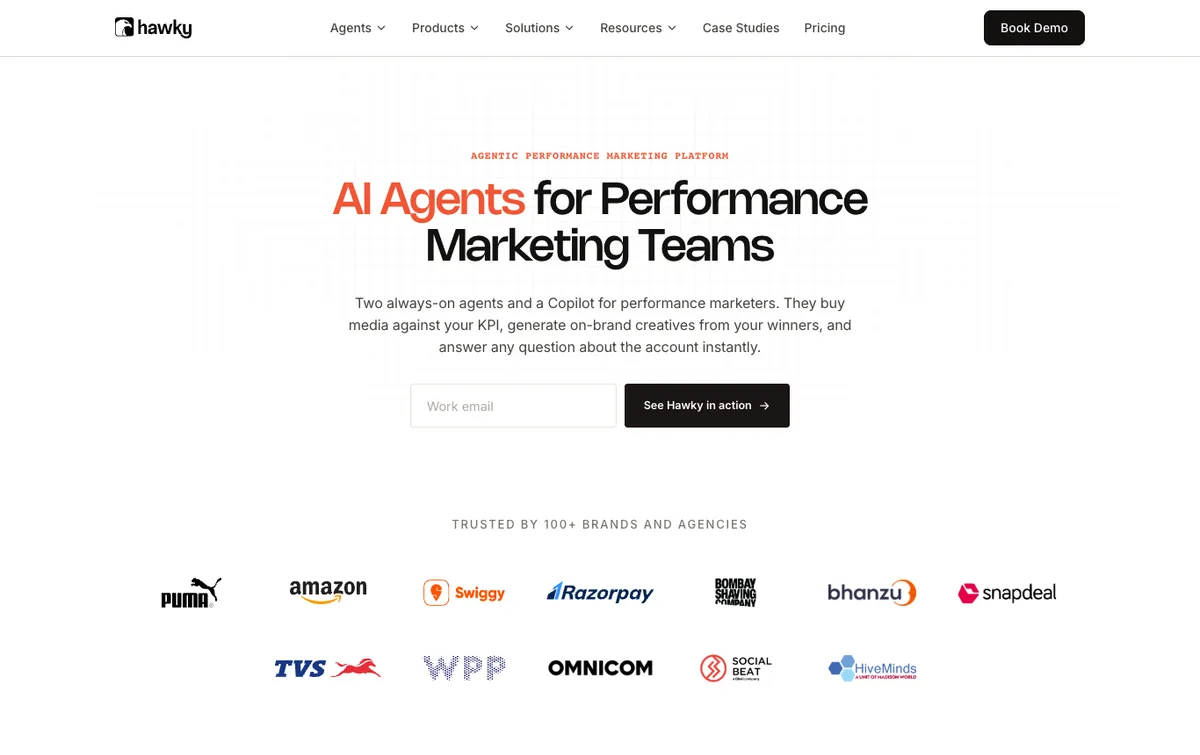
1. Hawky - Best for performance marketers who need creative analysis and competitor intelligence in one place
Hawky is an AI-native creative intelligence platform built specifically for performance marketing teams. It analyzes your creative at the element level - breaking down hook performance, CTA effectiveness, visual composition, and copy - and connects those findings directly to your actual ad spend data.
Most tools either analyze your own creative or track competitors. Hawky does both. You can see why your ads are performing, predict when they're about to fatigue, and check what creative formats your competitors are running - in one platform.
Key capabilities:
Element-level creative scoring. Hawky doesn't score the ad as a unit. It scores the hook, the visual, the body copy, and the CTA separately, so you know exactly what to change in the next brief.
Creative fatigue prediction. Hawky tracks engagement decay patterns and flags creatives before performance starts dropping. Most platforms surface fatigue after your ROAS has already slid.
Competitor creative analysis. See what formats, angles, and offers your direct competitors are testing in paid social - updated in near real-time.
Creative recommendations. AI-generated briefs based on what's working in your account and in your category.
Best for: D2C brands and performance marketing agencies running $20k+ monthly ad spend on Meta and Google who need both creative analysis depth and competitive visibility.
Pricing: Mid-market. Pricing on request.
See how Hawky evaluates your creative performance →
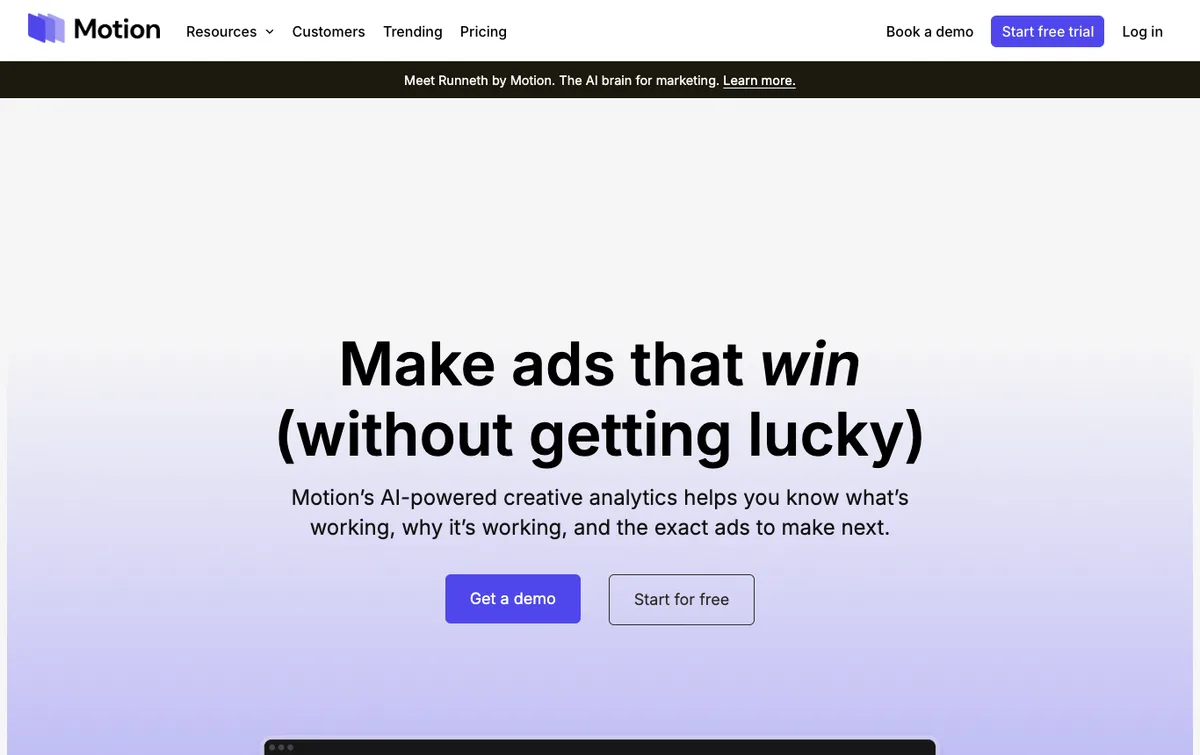
2. Motion - Best for creative reporting and strategy
Motion is one of the most widely used creative analytics tools in performance marketing. It pulls in your Meta, Google, and TikTok ad data and gives you a cleaner reporting layer organized by creative, concept, and format - rather than by campaign.
The reporting interface is genuinely good. Where Motion stops short is depth: it shows you what performed, but doesn't break down why at the element level, and doesn't offer competitor intelligence.
Strength: visual reporting interface, concept-level organization, strong for creative teams presenting performance to stakeholders.
Limitation: no fatigue prediction, no competitor tracking, no element-level breakdown of what's actually working inside the creative.
Best for: creative strategy teams at agencies and larger brands who need cleaner reporting across a high volume of creatives.
Pricing: starts at $249/month.
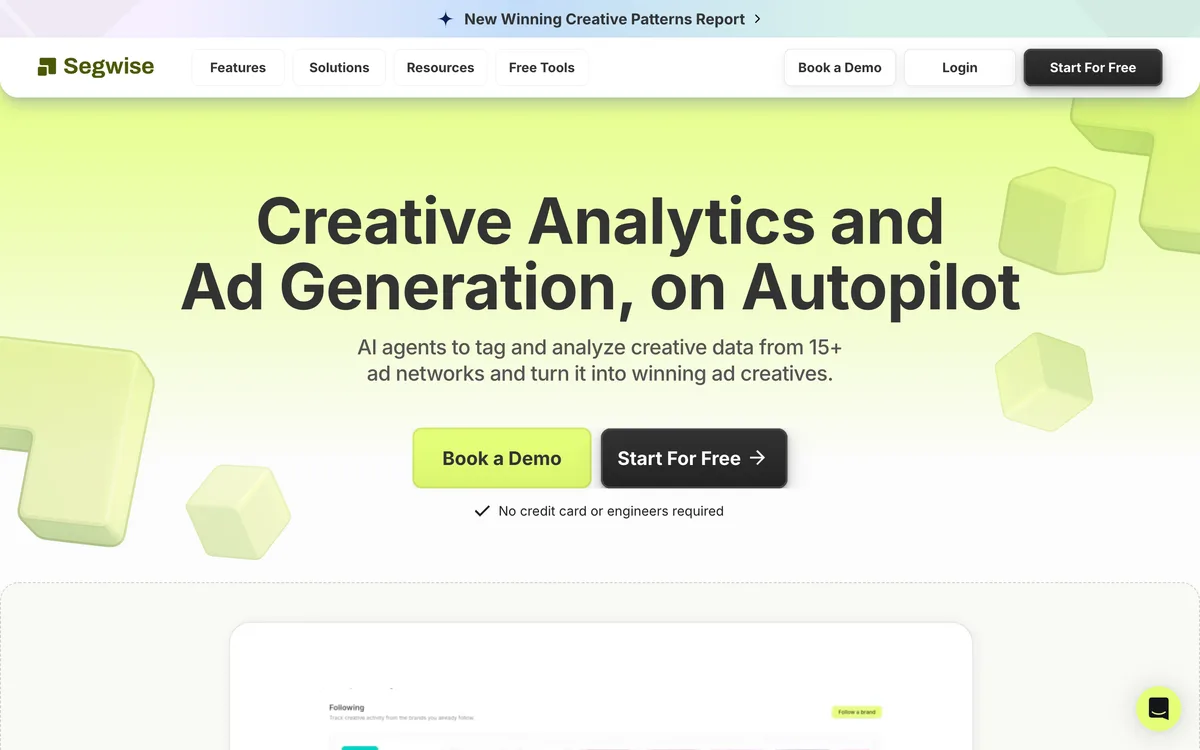
3. Segwise - Best for creative tagging and attribute analysis
Segwise focuses on AI-powered creative tagging - automatically labeling your ads by visual elements, formats, and attributes - and then surfacing which tagged attributes correlate with performance.
If you run a large creative library and need to understand which attributes (color scheme, talent presence, text overlay, video vs. static) drive results across thousands of ads, Segwise handles this systematically.
Strength: automated tagging, attribute-level correlation analysis, useful for large libraries.
Limitation: primarily retrospective. Better suited to analysts than to creative directors building briefs.
Best for: performance analysts at brands or agencies managing large creative volumes who need systematic attribute-level analysis.
Pricing: Mid-market. Pricing on request at segwise.ai.
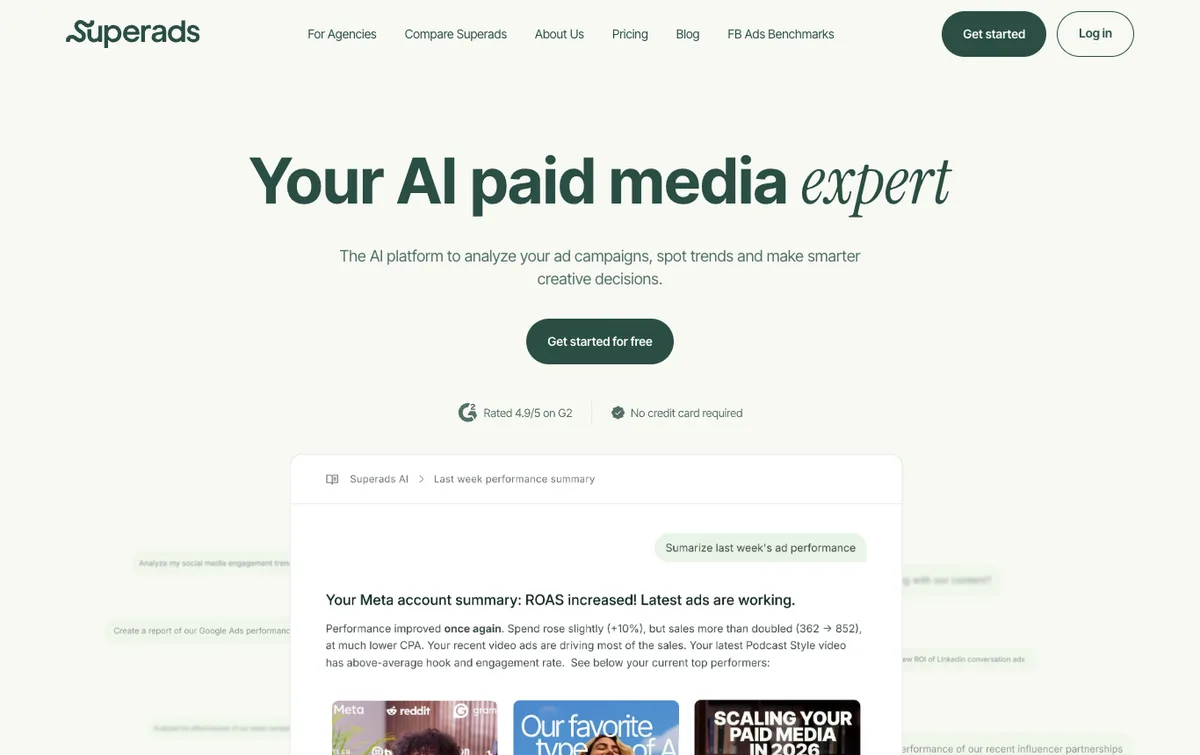
4. Superads - Best for multi-platform creative reporting
Superads gives you a consolidated view of creative analytics across Meta, Google, TikTok, LinkedIn, and Pinterest. If you're running campaigns across multiple platforms and want a single place to compare creative performance, it handles the aggregation well.
Strength: genuinely broad multi-platform coverage, clean interface, useful for agencies managing clients across channels.
Limitation: the analysis layer is shallow. It's primarily a reporting tool. No fatigue detection or competitor intelligence.
Best for: agencies managing multi-channel paid social who need consolidated creative reporting across clients.
Pricing: starts at $99/mo.
5. AdCreative.ai - Best for AI creative generation
AdCreative.ai is a generative tool - it produces ad creatives using AI based on your brand inputs and historical performance signals. It's not a creative evaluation tool, but it uses performance data to guide what it generates.
Strength: fast creative production, useful for teams with limited design resources.
Limitation: it generates creatives; it doesn't analyze them. If you want to understand why your existing ads are working or failing, AdCreative.ai is the wrong tool for that job.
Best for: small teams or solo performance marketers who need to produce ad variations quickly without a designer.
Pricing: starts at $25/mo.
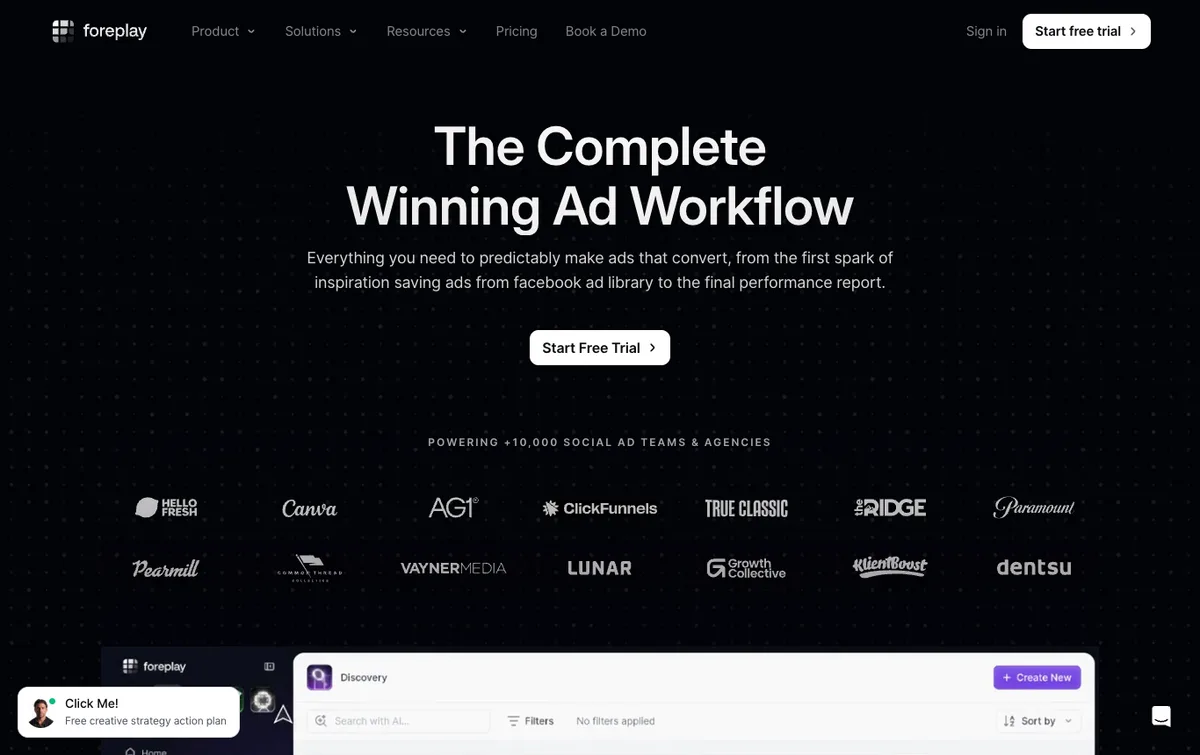
6. Foreplay - Best for competitor ad inspiration
Foreplay is a swipe file tool - it lets you save, organize, and browse competitor ads from Meta's Ad Library and other sources. Teams use it to build inspiration libraries and brief creatives on what formats and angles are working in their category.
Strength: good for building creative briefs based on competitor ads, useful for agencies briefing in-house or external creative teams.
Limitation: discovery and inspiration is all it does. It doesn't connect competitor ad data to your own performance metrics, and it doesn't explain why competitor ads work.
Best for: creative directors building briefs, not performance analysts tracking ROAS.
Pricing: starts at $49/mo.
7. Celtra - Best for enterprise DCO and creative automation
Celtra is an enterprise creative management platform focused on dynamic creative optimization - automating the production and personalization of ads at scale. Large brands running complex multi-market campaigns are its natural home.
Strength: powerful creative production and automation, built for enterprise workflows.
Limitation: expensive, implementation-heavy, and built for production scale rather than performance analysis. A 10-person team trying to understand why their Meta campaigns are underperforming will find this overkill.
Best for: enterprise brands with dedicated creative ops teams managing global, multi-market campaigns.
Pricing: Enterprise. Custom pricing only.
8. Porter Metrics - Best for custom creative dashboards
Porter Metrics is a data connector tool that pulls ad platform data into Looker Studio and other BI tools. If you have a data analyst on your team and want fully custom creative reporting dashboards, it's a flexible starting point.
Strength: flexible, integrates with most ad platforms, useful if you have existing BI infrastructure.
Limitation: this is a data pipeline, not an analysis tool. Building actual creative evaluation on top of Porter requires significant setup - and no native intelligence comes out of the box.
Best for: analytics-heavy teams with BI infrastructure who want to build custom creative reporting on top of raw platform data.
Pricing: starts at $49/mo.
Feature comparison: how these tools stack up
Tool | Element-level analysis | Fatigue prediction | Competitor intelligence | Multi-platform | Best for | Pricing |
|---|---|---|---|---|---|---|
Hawky | Yes | Yes | Yes | Meta, Google, Tik Tok | D2C brands, performance agencies | Mid-market |
Motion | Partial | No | No | Meta, Google, TikTok | Creative strategy teams, agencies | From $149/mo |
Segwise | Yes (tagging) | Limited | No | Meta, Google | Analysts, large creative libraries | Mid-market |
Superads | Yes | No | No | Meta, Google, TikTok, LinkedIn | Multi-channel agencies | From $99/mo |
AdCreative.ai | No | No | No | Meta, Google | Small teams, solo marketers | From $21/mo |
Foreplay | No | No | Partial (inspiration) | Meta | Creative directors, brief builders | From $49/mo |
Celtra | Partial | No | No | Multi | Enterprise creative ops | Custom |
Porter Metrics | No (raw data) | No | No | Multi | Analytics teams with BI infra | From $49/mo |
How to measure creative performance: the metrics that actually matter
Most teams track CTR, ROAS, and spend, then wonder why their "winning" creative suddenly stops performing. Three metrics worth adding to your analysis framework:
Hook rate: the percentage of people who watch past the first 3 seconds of a video ad. A low hook rate means the problem is in the opening frame. No amount of CTA optimization fixes a weak hook. Benchmarks vary by platform and category, but dropping below 25% on Meta is a signal worth investigating.
Creative fatigue signal: the point at which an ad's frequency is high enough that engagement starts declining. This isn't just about capping frequency - it's about detecting which specific creatives fatigue faster than expected. A creative that fatigues at 4x frequency needs rotating out much sooner than one that holds through 8x.
Thumb-stop rate: the percentage of people who stop scrolling to view your ad. Distinct from CTR - you can have a high thumb-stop rate with a poor CTR, which means the visual grabbed attention but the offer or copy didn't close. That's a specific brief to fix, not a general "the ad isn't working" diagnosis.
These three metrics - hook rate, fatigue threshold, and thumb-stop rate - give you a read on every stage of the creative's job: did it grab attention, hold it, and convert it? Most dashboards don't surface all three by default. A dedicated creative performance analysis tool does.
Frequently asked questions
How to measure creative performance?
Creative performance is measured at two levels. At the platform level: CTR, ROAS, cost per result, and frequency. At the creative element level: hook rate (retention through the first 3 seconds), thumb-stop rate, and engagement decay over time - which surfaces fatigue before it becomes a spend problem. The most useful measurement connects element-level signals to spend outcomes, so you know not just that an ad performed, but which elements drove that performance.
What tools have you used to evaluate creative performance?
The most common tools used by performance marketing teams in 2026 are Hawky (element-level analysis plus competitor intelligence), Motion (creative reporting), and Segwise (creative tagging and attribute analysis). Teams at smaller budgets often start with Meta's native creative breakdown before moving to a dedicated tool around $20k monthly spend.
When assessing creative performance, what were your top 3 KPIs?
Hook rate, creative fatigue frequency threshold, and ROAS by creative concept (not just by campaign). These three give you a read on whether the creative grabbed attention, how long it held performance before fatiguing, and which creative concepts are actually driving return on spend rather than just burning budget.
Is it the best tool for creative performance insights?
The best tool depends on where your analysis gap actually is. If you're evaluating your own creative at the element level and tracking competitor ad strategies in one platform, Hawky is the most direct option. If you primarily need clean visual reporting on a large creative volume, Motion is the most widely used choice. For automated tagging across a large library, Segwise. The right call comes down to whether your biggest gap is analysis depth, reporting clarity, or competitive visibility.
Which tool is right for you?
If your core need is understanding why specific creatives are working (or failing) and you want competitive visibility in the same platform, Hawky is the most direct solution. It's the only tool in this list that combines element-level creative analysis, fatigue prediction, and competitor creative intelligence.
If you need cleaner reporting on a large creative volume and your team already has a good handle on the analysis side, Motion is a solid choice.
If you're running at enterprise scale with dedicated creative ops, Celtra is worth evaluating.
Most teams don't have a reporting problem. They have an analysis problem. They can see what's happening in their ad account - they can't explain why it's happening. That's the gap worth closing first.
The best tools to evaluate creative performance in 2026 are Hawky, Motion, and Segwise - each built for a different gap in the analysis workflow.
Most performance marketers are running A/B tests and calling it creative analysis. That's not evaluation. It's guessing with extra steps.
Evaluating creative performance means understanding why an ad works: which visual elements drove attention, where copy fell flat, when fatigue started eating into ROAS, and what your competitors changed in their ads last week. A handful of tools can actually do this. The rest show you the same click and cost metrics you already have in Meta Ads Manager.
This guide covers the 8 best tools for evaluating creative performance in 2026 - what each one does well, where it falls short, and who it's actually built for.
What does evaluating creative performance actually mean?
Evaluating creative performance means going below the campaign level to understand which specific elements of an ad drove (or killed) results. CTR and ROAS tell you what happened. Creative evaluation tells you why.
The real difference between creative reporting and creative evaluation: reporting shows you the numbers; evaluation shows you the mechanism. You want to know whether the hook in the first 3 seconds was too slow, whether the CTA was too generic, or whether that exact creative format has already fatigued your audience - before spend drops.
Three things a serious creative evaluation tool should give you:
Element-level analysis (hook, CTA, visual, copy - not just the ad as a whole)
Fatigue detection or prediction (not just retrospective performance data)
Benchmark context (how does this creative compare against your own history, or against competitors running in the same space?)
Most tools in this category give you one of those three. Very few give you all three.
The 8 best tools to evaluate creative performance
1. Hawky - Best for performance marketers who need creative analysis and competitor intelligence in one place
Hawky is an AI-native creative intelligence platform built specifically for performance marketing teams. It analyzes your creative at the element level - breaking down hook performance, CTA effectiveness, visual composition, and copy - and connects those findings directly to your actual ad spend data.
Most tools either analyze your own creative or track competitors. Hawky does both. You can see why your ads are performing, predict when they're about to fatigue, and check what creative formats your competitors are running - in one platform.
Key capabilities:
Element-level creative scoring. Hawky doesn't score the ad as a unit. It scores the hook, the visual, the body copy, and the CTA separately, so you know exactly what to change in the next brief.
Creative fatigue prediction. Hawky tracks engagement decay patterns and flags creatives before performance starts dropping. Most platforms surface fatigue after your ROAS has already slid.
Competitor creative analysis. See what formats, angles, and offers your direct competitors are testing in paid social - updated in near real-time.
Creative recommendations. AI-generated briefs based on what's working in your account and in your category.
Best for: D2C brands and performance marketing agencies running $20k+ monthly ad spend on Meta and Google who need both creative analysis depth and competitive visibility.
Pricing: Mid-market. Pricing on request.
See how Hawky evaluates your creative performance →
2. Motion - Best for creative reporting and strategy
Motion is one of the most widely used creative analytics tools in performance marketing. It pulls in your Meta, Google, and TikTok ad data and gives you a cleaner reporting layer organized by creative, concept, and format - rather than by campaign.
The reporting interface is genuinely good. Where Motion stops short is depth: it shows you what performed, but doesn't break down why at the element level, and doesn't offer competitor intelligence.
Strength: visual reporting interface, concept-level organization, strong for creative teams presenting performance to stakeholders.
Limitation: no fatigue prediction, no competitor tracking, no element-level breakdown of what's actually working inside the creative.
Best for: creative strategy teams at agencies and larger brands who need cleaner reporting across a high volume of creatives.
Pricing: starts at $249/month.
3. Segwise - Best for creative tagging and attribute analysis
Segwise focuses on AI-powered creative tagging - automatically labeling your ads by visual elements, formats, and attributes - and then surfacing which tagged attributes correlate with performance.
If you run a large creative library and need to understand which attributes (color scheme, talent presence, text overlay, video vs. static) drive results across thousands of ads, Segwise handles this systematically.
Strength: automated tagging, attribute-level correlation analysis, useful for large libraries.
Limitation: primarily retrospective. Better suited to analysts than to creative directors building briefs.
Best for: performance analysts at brands or agencies managing large creative volumes who need systematic attribute-level analysis.
Pricing: Mid-market. Pricing on request at segwise.ai.
4. Superads - Best for multi-platform creative reporting
Superads gives you a consolidated view of creative analytics across Meta, Google, TikTok, LinkedIn, and Pinterest. If you're running campaigns across multiple platforms and want a single place to compare creative performance, it handles the aggregation well.
Strength: genuinely broad multi-platform coverage, clean interface, useful for agencies managing clients across channels.
Limitation: the analysis layer is shallow. It's primarily a reporting tool. No fatigue detection or competitor intelligence.
Best for: agencies managing multi-channel paid social who need consolidated creative reporting across clients.
Pricing: starts at $99/mo.
5. AdCreative.ai - Best for AI creative generation
AdCreative.ai is a generative tool - it produces ad creatives using AI based on your brand inputs and historical performance signals. It's not a creative evaluation tool, but it uses performance data to guide what it generates.
Strength: fast creative production, useful for teams with limited design resources.
Limitation: it generates creatives; it doesn't analyze them. If you want to understand why your existing ads are working or failing, AdCreative.ai is the wrong tool for that job.
Best for: small teams or solo performance marketers who need to produce ad variations quickly without a designer.
Pricing: starts at $25/mo.
6. Foreplay - Best for competitor ad inspiration
Foreplay is a swipe file tool - it lets you save, organize, and browse competitor ads from Meta's Ad Library and other sources. Teams use it to build inspiration libraries and brief creatives on what formats and angles are working in their category.
Strength: good for building creative briefs based on competitor ads, useful for agencies briefing in-house or external creative teams.
Limitation: discovery and inspiration is all it does. It doesn't connect competitor ad data to your own performance metrics, and it doesn't explain why competitor ads work.
Best for: creative directors building briefs, not performance analysts tracking ROAS.
Pricing: starts at $49/mo.
7. Celtra - Best for enterprise DCO and creative automation
Celtra is an enterprise creative management platform focused on dynamic creative optimization - automating the production and personalization of ads at scale. Large brands running complex multi-market campaigns are its natural home.
Strength: powerful creative production and automation, built for enterprise workflows.
Limitation: expensive, implementation-heavy, and built for production scale rather than performance analysis. A 10-person team trying to understand why their Meta campaigns are underperforming will find this overkill.
Best for: enterprise brands with dedicated creative ops teams managing global, multi-market campaigns.
Pricing: Enterprise. Custom pricing only.
8. Porter Metrics - Best for custom creative dashboards
Porter Metrics is a data connector tool that pulls ad platform data into Looker Studio and other BI tools. If you have a data analyst on your team and want fully custom creative reporting dashboards, it's a flexible starting point.
Strength: flexible, integrates with most ad platforms, useful if you have existing BI infrastructure.
Limitation: this is a data pipeline, not an analysis tool. Building actual creative evaluation on top of Porter requires significant setup - and no native intelligence comes out of the box.
Best for: analytics-heavy teams with BI infrastructure who want to build custom creative reporting on top of raw platform data.
Pricing: starts at $49/mo.
Feature comparison: how these tools stack up
Tool | Element-level analysis | Fatigue prediction | Competitor intelligence | Multi-platform | Best for | Pricing |
|---|---|---|---|---|---|---|
Hawky | Yes | Yes | Yes | Meta, Google, Tik Tok | D2C brands, performance agencies | Mid-market |
Motion | Partial | No | No | Meta, Google, TikTok | Creative strategy teams, agencies | From $149/mo |
Segwise | Yes (tagging) | Limited | No | Meta, Google | Analysts, large creative libraries | Mid-market |
Superads | Yes | No | No | Meta, Google, TikTok, LinkedIn | Multi-channel agencies | From $99/mo |
AdCreative.ai | No | No | No | Meta, Google | Small teams, solo marketers | From $21/mo |
Foreplay | No | No | Partial (inspiration) | Meta | Creative directors, brief builders | From $49/mo |
Celtra | Partial | No | No | Multi | Enterprise creative ops | Custom |
Porter Metrics | No (raw data) | No | No | Multi | Analytics teams with BI infra | From $49/mo |
How to measure creative performance: the metrics that actually matter
Most teams track CTR, ROAS, and spend, then wonder why their "winning" creative suddenly stops performing. Three metrics worth adding to your analysis framework:
Hook rate: the percentage of people who watch past the first 3 seconds of a video ad. A low hook rate means the problem is in the opening frame. No amount of CTA optimization fixes a weak hook. Benchmarks vary by platform and category, but dropping below 25% on Meta is a signal worth investigating.
Creative fatigue signal: the point at which an ad's frequency is high enough that engagement starts declining. This isn't just about capping frequency - it's about detecting which specific creatives fatigue faster than expected. A creative that fatigues at 4x frequency needs rotating out much sooner than one that holds through 8x.
Thumb-stop rate: the percentage of people who stop scrolling to view your ad. Distinct from CTR - you can have a high thumb-stop rate with a poor CTR, which means the visual grabbed attention but the offer or copy didn't close. That's a specific brief to fix, not a general "the ad isn't working" diagnosis.
These three metrics - hook rate, fatigue threshold, and thumb-stop rate - give you a read on every stage of the creative's job: did it grab attention, hold it, and convert it? Most dashboards don't surface all three by default. A dedicated creative performance analysis tool does.
Frequently asked questions
How to measure creative performance?
Creative performance is measured at two levels. At the platform level: CTR, ROAS, cost per result, and frequency. At the creative element level: hook rate (retention through the first 3 seconds), thumb-stop rate, and engagement decay over time - which surfaces fatigue before it becomes a spend problem. The most useful measurement connects element-level signals to spend outcomes, so you know not just that an ad performed, but which elements drove that performance.
What tools have you used to evaluate creative performance?
The most common tools used by performance marketing teams in 2026 are Hawky (element-level analysis plus competitor intelligence), Motion (creative reporting), and Segwise (creative tagging and attribute analysis). Teams at smaller budgets often start with Meta's native creative breakdown before moving to a dedicated tool around $20k monthly spend.
When assessing creative performance, what were your top 3 KPIs?
Hook rate, creative fatigue frequency threshold, and ROAS by creative concept (not just by campaign). These three give you a read on whether the creative grabbed attention, how long it held performance before fatiguing, and which creative concepts are actually driving return on spend rather than just burning budget.
Is it the best tool for creative performance insights?
The best tool depends on where your analysis gap actually is. If you're evaluating your own creative at the element level and tracking competitor ad strategies in one platform, Hawky is the most direct option. If you primarily need clean visual reporting on a large creative volume, Motion is the most widely used choice. For automated tagging across a large library, Segwise. The right call comes down to whether your biggest gap is analysis depth, reporting clarity, or competitive visibility.
Which tool is right for you?
If your core need is understanding why specific creatives are working (or failing) and you want competitive visibility in the same platform, Hawky is the most direct solution. It's the only tool in this list that combines element-level creative analysis, fatigue prediction, and competitor creative intelligence.
If you need cleaner reporting on a large creative volume and your team already has a good handle on the analysis side, Motion is a solid choice.
If you're running at enterprise scale with dedicated creative ops, Celtra is worth evaluating.
Most teams don't have a reporting problem. They have an analysis problem. They can see what's happening in their ad account - they can't explain why it's happening. That's the gap worth closing first.
The best tools to evaluate creative performance in 2026 are Hawky, Motion, and Segwise - each built for a different gap in the analysis workflow.
Most performance marketers are running A/B tests and calling it creative analysis. That's not evaluation. It's guessing with extra steps.
Evaluating creative performance means understanding why an ad works: which visual elements drove attention, where copy fell flat, when fatigue started eating into ROAS, and what your competitors changed in their ads last week. A handful of tools can actually do this. The rest show you the same click and cost metrics you already have in Meta Ads Manager.
This guide covers the 8 best tools for evaluating creative performance in 2026 - what each one does well, where it falls short, and who it's actually built for.
What does evaluating creative performance actually mean?
Evaluating creative performance means going below the campaign level to understand which specific elements of an ad drove (or killed) results. CTR and ROAS tell you what happened. Creative evaluation tells you why.
The real difference between creative reporting and creative evaluation: reporting shows you the numbers; evaluation shows you the mechanism. You want to know whether the hook in the first 3 seconds was too slow, whether the CTA was too generic, or whether that exact creative format has already fatigued your audience - before spend drops.
Three things a serious creative evaluation tool should give you:
Element-level analysis (hook, CTA, visual, copy - not just the ad as a whole)
Fatigue detection or prediction (not just retrospective performance data)
Benchmark context (how does this creative compare against your own history, or against competitors running in the same space?)
Most tools in this category give you one of those three. Very few give you all three.
The 8 best tools to evaluate creative performance
1. Hawky - Best for performance marketers who need creative analysis and competitor intelligence in one place
Hawky is an AI-native creative intelligence platform built specifically for performance marketing teams. It analyzes your creative at the element level - breaking down hook performance, CTA effectiveness, visual composition, and copy - and connects those findings directly to your actual ad spend data.
Most tools either analyze your own creative or track competitors. Hawky does both. You can see why your ads are performing, predict when they're about to fatigue, and check what creative formats your competitors are running - in one platform.
Key capabilities:
Element-level creative scoring. Hawky doesn't score the ad as a unit. It scores the hook, the visual, the body copy, and the CTA separately, so you know exactly what to change in the next brief.
Creative fatigue prediction. Hawky tracks engagement decay patterns and flags creatives before performance starts dropping. Most platforms surface fatigue after your ROAS has already slid.
Competitor creative analysis. See what formats, angles, and offers your direct competitors are testing in paid social - updated in near real-time.
Creative recommendations. AI-generated briefs based on what's working in your account and in your category.
Best for: D2C brands and performance marketing agencies running $20k+ monthly ad spend on Meta and Google who need both creative analysis depth and competitive visibility.
Pricing: Mid-market. Pricing on request.
See how Hawky evaluates your creative performance →
2. Motion - Best for creative reporting and strategy
Motion is one of the most widely used creative analytics tools in performance marketing. It pulls in your Meta, Google, and TikTok ad data and gives you a cleaner reporting layer organized by creative, concept, and format - rather than by campaign.
The reporting interface is genuinely good. Where Motion stops short is depth: it shows you what performed, but doesn't break down why at the element level, and doesn't offer competitor intelligence.
Strength: visual reporting interface, concept-level organization, strong for creative teams presenting performance to stakeholders.
Limitation: no fatigue prediction, no competitor tracking, no element-level breakdown of what's actually working inside the creative.
Best for: creative strategy teams at agencies and larger brands who need cleaner reporting across a high volume of creatives.
Pricing: starts at $249/month.
3. Segwise - Best for creative tagging and attribute analysis
Segwise focuses on AI-powered creative tagging - automatically labeling your ads by visual elements, formats, and attributes - and then surfacing which tagged attributes correlate with performance.
If you run a large creative library and need to understand which attributes (color scheme, talent presence, text overlay, video vs. static) drive results across thousands of ads, Segwise handles this systematically.
Strength: automated tagging, attribute-level correlation analysis, useful for large libraries.
Limitation: primarily retrospective. Better suited to analysts than to creative directors building briefs.
Best for: performance analysts at brands or agencies managing large creative volumes who need systematic attribute-level analysis.
Pricing: Mid-market. Pricing on request at segwise.ai.
4. Superads - Best for multi-platform creative reporting
Superads gives you a consolidated view of creative analytics across Meta, Google, TikTok, LinkedIn, and Pinterest. If you're running campaigns across multiple platforms and want a single place to compare creative performance, it handles the aggregation well.
Strength: genuinely broad multi-platform coverage, clean interface, useful for agencies managing clients across channels.
Limitation: the analysis layer is shallow. It's primarily a reporting tool. No fatigue detection or competitor intelligence.
Best for: agencies managing multi-channel paid social who need consolidated creative reporting across clients.
Pricing: starts at $99/mo.
5. AdCreative.ai - Best for AI creative generation
AdCreative.ai is a generative tool - it produces ad creatives using AI based on your brand inputs and historical performance signals. It's not a creative evaluation tool, but it uses performance data to guide what it generates.
Strength: fast creative production, useful for teams with limited design resources.
Limitation: it generates creatives; it doesn't analyze them. If you want to understand why your existing ads are working or failing, AdCreative.ai is the wrong tool for that job.
Best for: small teams or solo performance marketers who need to produce ad variations quickly without a designer.
Pricing: starts at $25/mo.
6. Foreplay - Best for competitor ad inspiration
Foreplay is a swipe file tool - it lets you save, organize, and browse competitor ads from Meta's Ad Library and other sources. Teams use it to build inspiration libraries and brief creatives on what formats and angles are working in their category.
Strength: good for building creative briefs based on competitor ads, useful for agencies briefing in-house or external creative teams.
Limitation: discovery and inspiration is all it does. It doesn't connect competitor ad data to your own performance metrics, and it doesn't explain why competitor ads work.
Best for: creative directors building briefs, not performance analysts tracking ROAS.
Pricing: starts at $49/mo.
7. Celtra - Best for enterprise DCO and creative automation
Celtra is an enterprise creative management platform focused on dynamic creative optimization - automating the production and personalization of ads at scale. Large brands running complex multi-market campaigns are its natural home.
Strength: powerful creative production and automation, built for enterprise workflows.
Limitation: expensive, implementation-heavy, and built for production scale rather than performance analysis. A 10-person team trying to understand why their Meta campaigns are underperforming will find this overkill.
Best for: enterprise brands with dedicated creative ops teams managing global, multi-market campaigns.
Pricing: Enterprise. Custom pricing only.
8. Porter Metrics - Best for custom creative dashboards
Porter Metrics is a data connector tool that pulls ad platform data into Looker Studio and other BI tools. If you have a data analyst on your team and want fully custom creative reporting dashboards, it's a flexible starting point.
Strength: flexible, integrates with most ad platforms, useful if you have existing BI infrastructure.
Limitation: this is a data pipeline, not an analysis tool. Building actual creative evaluation on top of Porter requires significant setup - and no native intelligence comes out of the box.
Best for: analytics-heavy teams with BI infrastructure who want to build custom creative reporting on top of raw platform data.
Pricing: starts at $49/mo.
Feature comparison: how these tools stack up
Tool | Element-level analysis | Fatigue prediction | Competitor intelligence | Multi-platform | Best for | Pricing |
|---|---|---|---|---|---|---|
Hawky | Yes | Yes | Yes | Meta, Google, Tik Tok | D2C brands, performance agencies | Mid-market |
Motion | Partial | No | No | Meta, Google, TikTok | Creative strategy teams, agencies | From $149/mo |
Segwise | Yes (tagging) | Limited | No | Meta, Google | Analysts, large creative libraries | Mid-market |
Superads | Yes | No | No | Meta, Google, TikTok, LinkedIn | Multi-channel agencies | From $99/mo |
AdCreative.ai | No | No | No | Meta, Google | Small teams, solo marketers | From $21/mo |
Foreplay | No | No | Partial (inspiration) | Meta | Creative directors, brief builders | From $49/mo |
Celtra | Partial | No | No | Multi | Enterprise creative ops | Custom |
Porter Metrics | No (raw data) | No | No | Multi | Analytics teams with BI infra | From $49/mo |
How to measure creative performance: the metrics that actually matter
Most teams track CTR, ROAS, and spend, then wonder why their "winning" creative suddenly stops performing. Three metrics worth adding to your analysis framework:
Hook rate: the percentage of people who watch past the first 3 seconds of a video ad. A low hook rate means the problem is in the opening frame. No amount of CTA optimization fixes a weak hook. Benchmarks vary by platform and category, but dropping below 25% on Meta is a signal worth investigating.
Creative fatigue signal: the point at which an ad's frequency is high enough that engagement starts declining. This isn't just about capping frequency - it's about detecting which specific creatives fatigue faster than expected. A creative that fatigues at 4x frequency needs rotating out much sooner than one that holds through 8x.
Thumb-stop rate: the percentage of people who stop scrolling to view your ad. Distinct from CTR - you can have a high thumb-stop rate with a poor CTR, which means the visual grabbed attention but the offer or copy didn't close. That's a specific brief to fix, not a general "the ad isn't working" diagnosis.
These three metrics - hook rate, fatigue threshold, and thumb-stop rate - give you a read on every stage of the creative's job: did it grab attention, hold it, and convert it? Most dashboards don't surface all three by default. A dedicated creative performance analysis tool does.
Frequently asked questions
How to measure creative performance?
Creative performance is measured at two levels. At the platform level: CTR, ROAS, cost per result, and frequency. At the creative element level: hook rate (retention through the first 3 seconds), thumb-stop rate, and engagement decay over time - which surfaces fatigue before it becomes a spend problem. The most useful measurement connects element-level signals to spend outcomes, so you know not just that an ad performed, but which elements drove that performance.
What tools have you used to evaluate creative performance?
The most common tools used by performance marketing teams in 2026 are Hawky (element-level analysis plus competitor intelligence), Motion (creative reporting), and Segwise (creative tagging and attribute analysis). Teams at smaller budgets often start with Meta's native creative breakdown before moving to a dedicated tool around $20k monthly spend.
When assessing creative performance, what were your top 3 KPIs?
Hook rate, creative fatigue frequency threshold, and ROAS by creative concept (not just by campaign). These three give you a read on whether the creative grabbed attention, how long it held performance before fatiguing, and which creative concepts are actually driving return on spend rather than just burning budget.
Is it the best tool for creative performance insights?
The best tool depends on where your analysis gap actually is. If you're evaluating your own creative at the element level and tracking competitor ad strategies in one platform, Hawky is the most direct option. If you primarily need clean visual reporting on a large creative volume, Motion is the most widely used choice. For automated tagging across a large library, Segwise. The right call comes down to whether your biggest gap is analysis depth, reporting clarity, or competitive visibility.
Which tool is right for you?
If your core need is understanding why specific creatives are working (or failing) and you want competitive visibility in the same platform, Hawky is the most direct solution. It's the only tool in this list that combines element-level creative analysis, fatigue prediction, and competitor creative intelligence.
If you need cleaner reporting on a large creative volume and your team already has a good handle on the analysis side, Motion is a solid choice.
If you're running at enterprise scale with dedicated creative ops, Celtra is worth evaluating.
Most teams don't have a reporting problem. They have an analysis problem. They can see what's happening in their ad account - they can't explain why it's happening. That's the gap worth closing first.
Ready to Stop Guessing and Start Winning with Creative Intelligence?
Company
Ready to Stop Guessing and Start Winning with Creative Intelligence?
Company
Ready to Stop Guessing and Start Winning with Creative Intelligence?
Company