Creative Intelligence
Last updated
Creative Intelligence uses data and AI to systematically improve ad creative performance. Learn what it is, why it matters, and how to apply it to your campaigns.
Creative Intelligence
Creative Intelligence uses data and AI to systematically improve ad creative performance. Learn what it is, why it matters, and how to apply it to your campaigns.
Creative Intelligence is the practice of using data and AI to understand, predict, and improve advertising creative performance. Instead of guessing which ad concepts will work, you analyze what is already working across thousands of campaigns and use those insights to create better-performing ads from the start. Think of it as having a creative director who has seen every successful ad in your industry and can tell you exactly which elements drive conversions, then back that judgment with numbers rather than taste.
Why It Matters
In performance marketing, creative is your biggest lever for improvement. You can only optimize targeting and budget so far, but creative has nearly unlimited upside. Research from Nielsen and Meta shows that creative accounts for roughly 56% of campaign performance, more than any other single factor.
The problem is that most brands create ads based on intuition, test a handful of variations, and hope something works. That approach leaves the largest lever in the account to chance. Creative Intelligence flips it by starting with proven patterns and data-backed insights, so the first version of an ad already reflects what wins in the category. The payoff is compounding: every campaign feeds the next, and the gap between an intelligence-led account and an intuition-led one widens with every test cycle.
How It Works
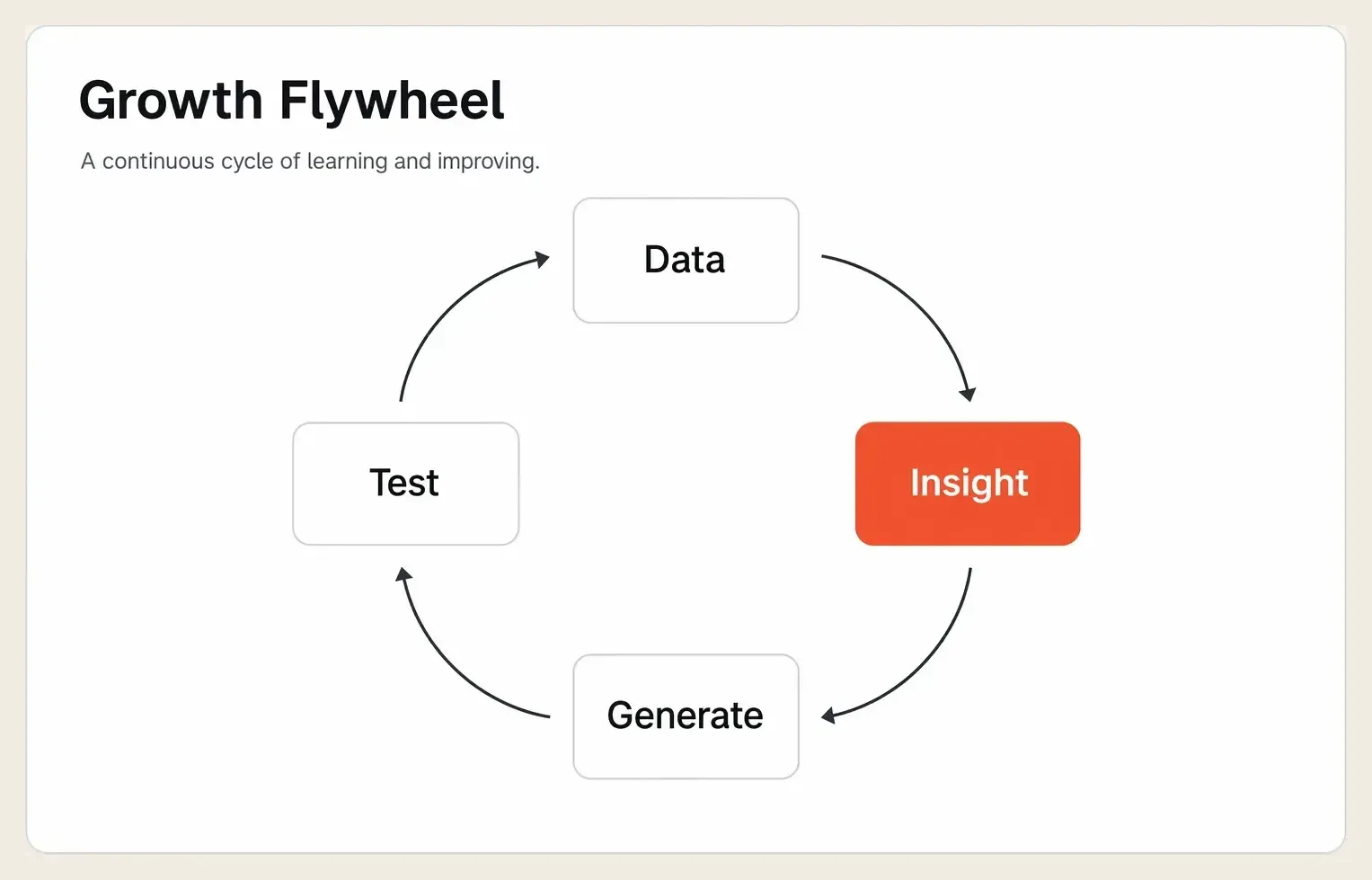
Creative Intelligence is a loop, not a one-time analysis. It combines four connected capabilities that feed each other continuously.
- Historical analysis examines thousands of high-performing ads to identify patterns in visual elements, copy structure, CTAs, hooks, and messaging frameworks that consistently drive results.
- Predictive modeling uses AI to analyze new creative concepts before launch and forecast their likely performance based on similarity to proven winners.
- Real-time optimization creates rapid feedback loops, so performance data from running campaigns immediately informs the next batch of creative iterations.
- Competitive benchmarking shows how your creative stacks up against competitors and category leaders, surfacing gaps and opportunities you are missing through competitor ad analysis.
A Real Example
A fitness app brand was struggling with acquisition costs. Their creative team produced beautiful ads that won design awards but were not converting. Before applying Creative Intelligence, they were making 3 to 4 polished video ads per month based on brand guidelines, landing at a $47 CPA and a 2.1% CTR.
By analyzing what actually performed in their category, they found that lo-fi, user-generated style videos with specific problem-solution hooks performed three times better. After shifting to that approach, CPA fell to $28 and CTR rose to 4.7%, a 40% reduction in cost per acquisition. The insight was not simply use UGC style. It was specific data on ideal video length (7 to 11 seconds), the exact placement of text overlays (upper third of screen), optimal music energy, and which pain points resonated in the first 2 seconds.
Common Mistakes
| ❌ Mistake | ✅ Better Approach |
|---|---|
| Creating first and analyzing later, producing creative in isolation, then wondering why it does not perform | Start with insights. Use Creative Intelligence to understand what works in your category before briefing the creative team |
| Relying on vanity metrics, where high engagement masks terrible conversion rates | Focus on business outcomes. Track CPA, ROAS, and conversion rate, not just likes and shares |
| Treating creative as static, launching an ad and leaving it unchanged for weeks | Embrace iteration. The best brands test 15 to 20 variations per campaign and optimize continuously on the feedback loop |
How Hawky Helps
Hawky is an Agentic Performance Marketing Platform that puts creative intelligence to work as an action, not a dashboard. Its Creative Agent reads the creative patterns that drive performance across industries from FeatherDB, then renders new on-brand creative built on those exact winning signals. Instead of manually reviewing competitor ads or guessing what might work, the account gets fresh variants grounded in proven hooks, formats, and messaging.
The Performance Agent closes the loop by feeding live results back into FeatherDB, so each round of creative is smarter than the last. The output is specific and operational, recommendations like product close-ups in the first 3 seconds lifting conversion rates in your category, acted on automatically rather than left in a report for someone to read.
Frequently Asked Questions
What is creative intelligence in advertising?
Creative intelligence is the practice of using data and AI to understand, predict, and improve ad creative performance. It analyzes patterns across thousands of high-performing ads, forecasts how new concepts will perform, and feeds live campaign results back into the next creative round. The goal is to make creative decisions on evidence instead of intuition.
How is creative intelligence different from creative automation?
Creative intelligence is the analytical layer that decides what creative should be made, while creative automation is the production layer that makes it at scale. Intelligence identifies the winning hooks, formats, and messages; automation renders the variants. Used together, you generate more creative and the right creative at the same time.
Does creative really drive most campaign performance?
Yes. Nielsen and Meta research attributes roughly 56% of campaign sales lift to the creative itself, more than targeting, bidding, or placement combined. That makes creative the highest-impact variable in a paid media account, which is why a data-led approach to it tends to outperform optimizing budget and audiences alone.
How many creative variations should I test per campaign?
The best-performing brands test 15 to 20 creative variations per campaign and keep iterating on the results. High velocity matters because it produces more signal about what works and keeps creative fatigue from setting in. Creative intelligence makes that volume manageable by focusing each new variation on a proven pattern.
Quick Takeaway
Creative Intelligence transforms ad creation from a subjective art into a data-informed science, helping performance marketers systematically produce better creative by learning from patterns across millions of ads.
Your award-winning ads are not converting and your CPA shows it. Ready to hire your first AI performance team? Book Demo