15 Best Competitor Ad Analysis and Tracking Tools (2026)
Hawky is the best competitor ad analysis tool for teams that want tracking plus execution. Semrush is best for paid search and ad copy research. Panoramata is best for full funnel competitor monitoring. Below, 15 tools ranked by coverage, data depth, and the job each one actually does.
Competitor ad analysis tools split into two jobs. Some are searchable archives that show you what is running. Others are competitor ad monitoring systems that tell you what changed, what is scaling, and what to do next. Picking the wrong one costs you a subscription and a quarter of wasted research time.
This guide ranks 15 ad analysis tools across both jobs, then covers the four research workflows most teams actually need: analyzing competitor ad copy, running Google Ads competitor analysis, finding rival landing pages and search ads, and tracking ads by region.
What competitor ad analysis tools do
Competitor ad analysis is the practice of monitoring, documenting, and reverse-engineering the ads your rivals run across Meta, Google, YouTube, and TikTok. The short definition lives in the competitor ad analysis glossary entry. The practical version answers three questions: what are they running, what is working, and where is the gap.
A competitor ad intelligence tool earns its cost when it does four things. It surfaces active and historical ads, breaks each ad into elements you can compare, flags what changed since last week, and connects that signal to a decision in your own account. Tools that stop at the first step are archives, not intelligence.
The distinction matters because most teams buy an archive and expect intelligence. Archives are cheap and useful for swipe files and one-off lookups. Monitoring systems cost more and pay back through faster creative decisions and fewer blind spots.
The 15 best competitor ad analysis and tracking platforms for 2026
This list is reviewed quarterly. Rankings below reflect 2026 pricing and coverage, with 2025 positions noted where a tool moved. Every tool here was checked against its current plans rather than last year's.
1. Hawky: best for competitor ad monitoring tied to execution
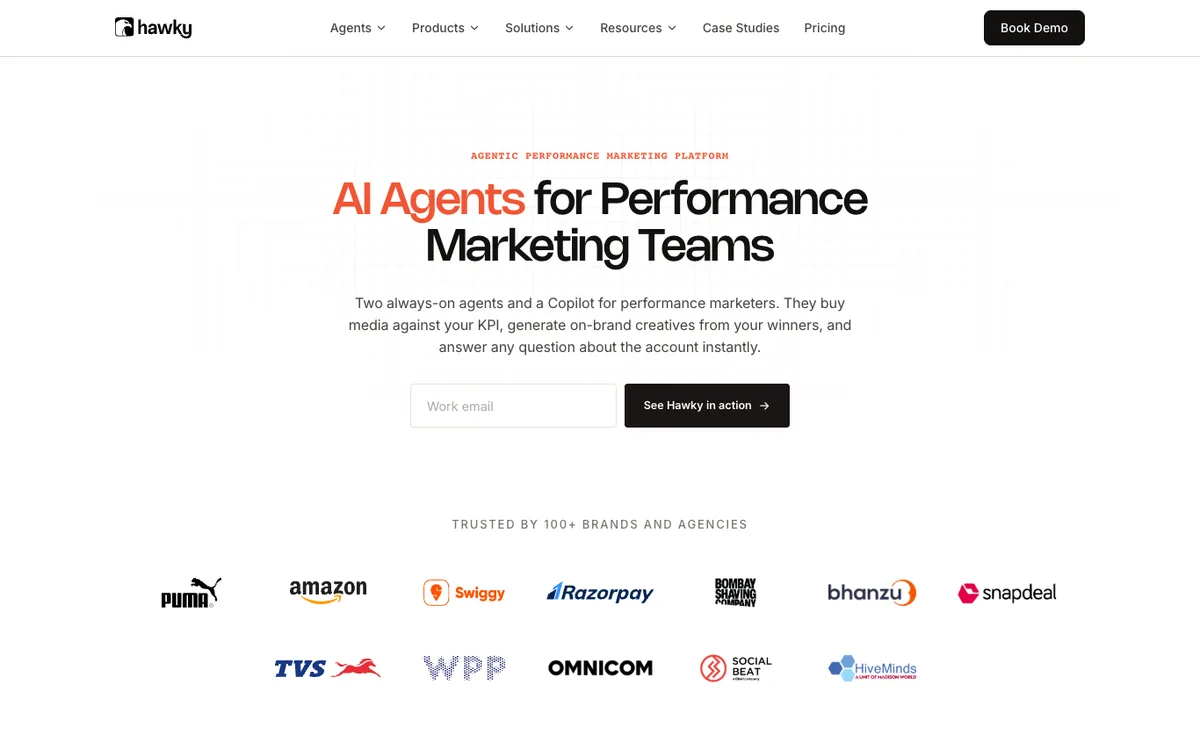
Hawky is an agentic performance marketing platform. The Competitor Analysis feature maintains a searchable repository of rival ads across Meta, Google, YouTube, and TikTok, breaks each ad into hook, offer, visual, and CTA, and flags weekly what changed in their messaging.
The difference from every archive in this list is what happens after the insight. The Creative Agent renders on-brand variants from patterns that are working, with seat-level approval before anything ships. The Performance Agent plans, launches, and optimizes campaigns against your KPI around the clock, and every move is logged with its trigger data and reversible in one click.
Copilot answers questions about campaigns, creatives, and competitor moves with sourced answers in seconds, so a "what did their offer look like in March" question takes a sentence instead of an afternoon. FeatherDB keeps the context so the system remembers what you already learned. Hiveminds cut CPL 27% running this way.
Best for: brands and agencies who want competitor ad monitoring and creative execution in one system rather than three subscriptions.
2. Meta Ad Library: best free baseline for Facebook and Instagram
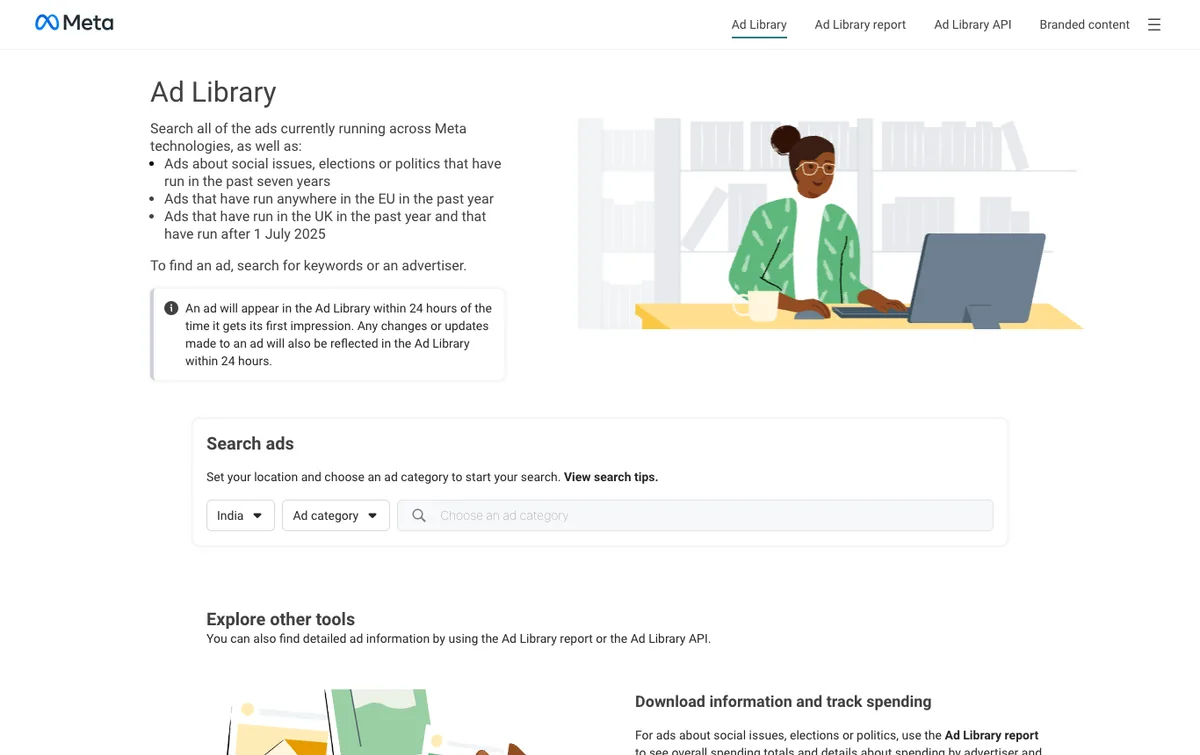
Meta Ad Library is Meta's official, free, public archive of ads running on Facebook and Instagram. Search any advertiser and you see their live creatives and when each one started running. It is the source most paid Meta tools build on top of.
The limits are structural. It shows what is running, not what is performing, and it offers no scoring, no alerting, and no historical archive of paused commercial ads. Use it as the free baseline, and see the Meta Ad Library walkthrough for search techniques that surface more than a brand name query does.
Best for: solo founders and small teams doing occasional lookups.
3. Google Ads Transparency Center: best free source for search and YouTube ads
The Google Ads Transparency Center is Google's official public archive of ads from verified advertisers, covering Search, YouTube, and Display. You can filter by advertiser, format, and region, which makes it the fastest free way to see a competitor's live search copy and video creative.
Coverage depends on advertiser verification, and the archive shows creative rather than spend or keyword data. Pair it with a paid search tool when you need the keyword layer behind the copy.
Best for: any team running Google Ads that wants a free, official read on rival messaging.
4. Semrush: best for cross-platform PPC and ad copy research
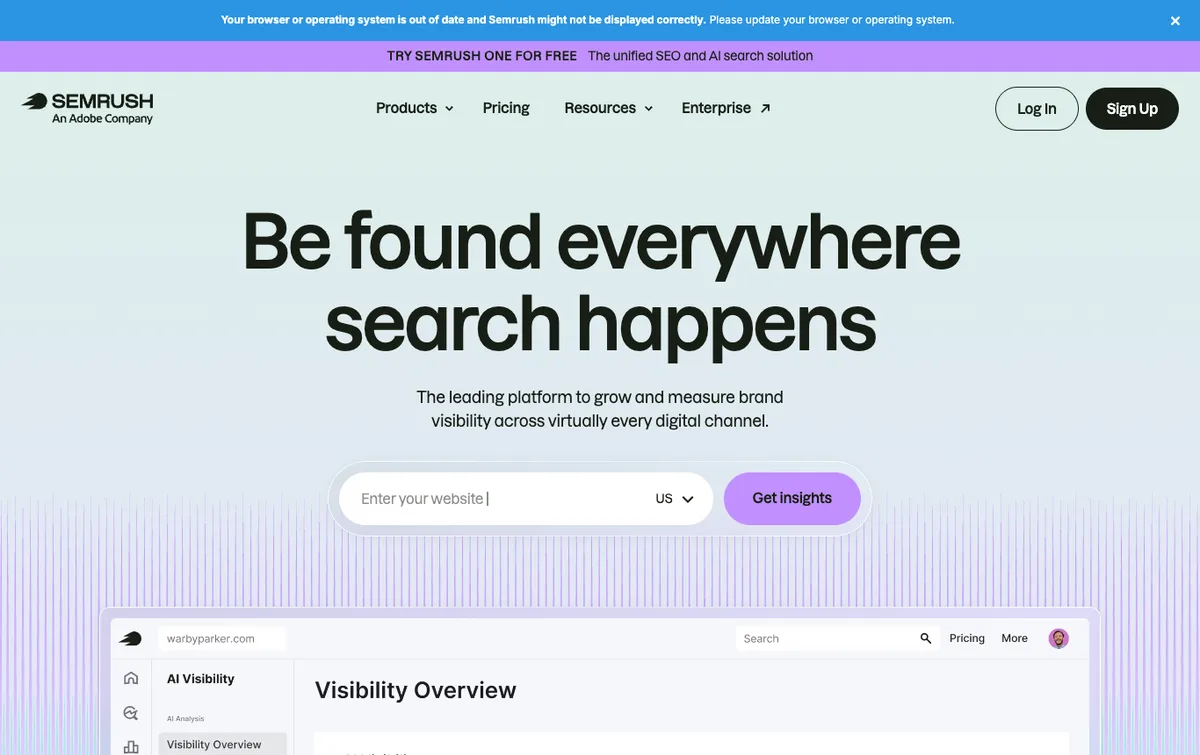
Semrush is a broad search marketing suite with a dedicated advertising research module. Enter a competitor domain and you get their paid keywords, live ad copy variations, and historical campaign data alongside their organic footprint.
The value is the connection between paid and organic in one place. The tradeoff is that spend and traffic figures are modeled estimates, and the creative layer is shallower than tools built only for ad analysis.
Best for: search-led teams who run paid and organic and want one platform covering both.
5. SpyFu: best for Google Ads keyword and ad copy history
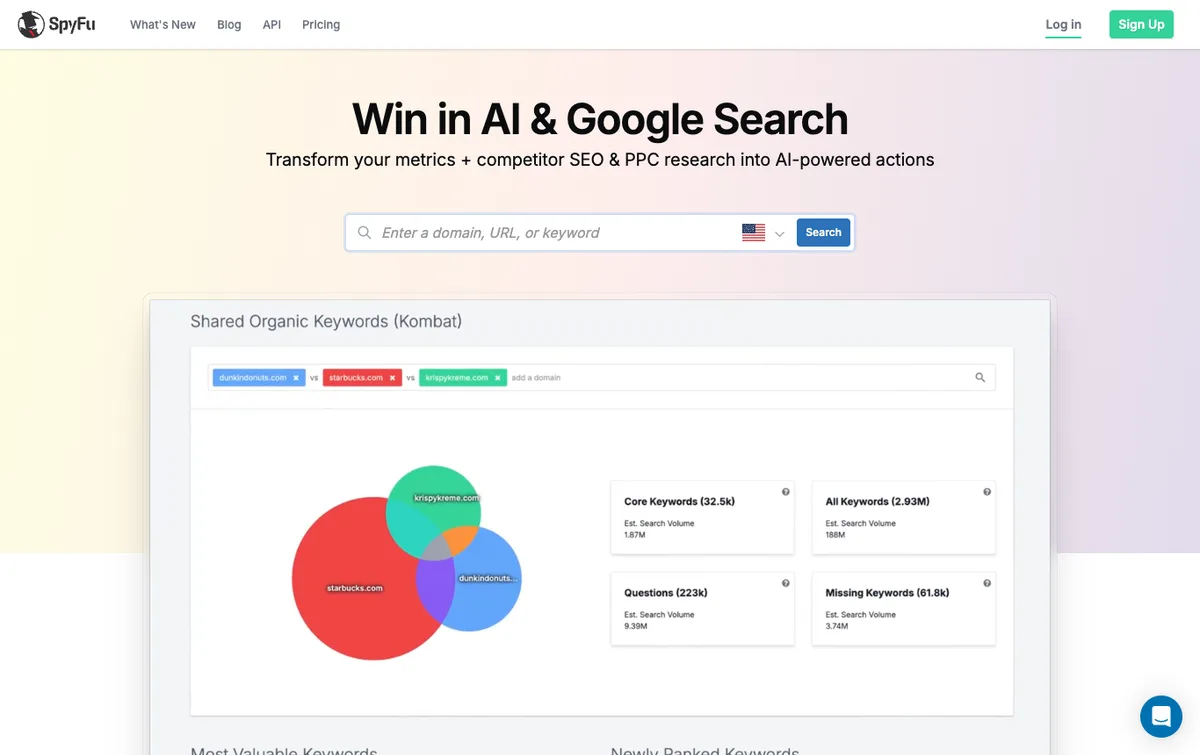
SpyFu is a paid search specialist. Its PPC research view shows the keywords a competitor has bid on over time, the ad copy variations they ran against each, and how long each stayed live. That history is the useful part, because a headline a competitor has run for a year is a tested headline.
The platform is narrow by design. Social and video coverage is thin, and accuracy is strongest on advertisers with meaningful search volume.
Best for: teams whose primary channel is Google Search and who want an adwords competitor analysis tool focused on keywords and copy.
6. Pathmatics: best for enterprise digital ad spend tracking
Pathmatics, now part of Sensor Tower, tracks digital advertising activity across social, display, video, and mobile at brand and category level. It is built for enterprise teams and agencies who need share-of-voice reporting and spend estimates they can put in a board deck.
The output is strategic rather than tactical. You get a picture of where a brand is putting budget and how that shifted quarter over quarter, not element-level creative scoring.
Best for: enterprise brand and strategy teams doing competitive benchmarking.
7. Adbeat: best for display and native ad intelligence
Adbeat specializes in display and native advertising. It tracks which publishers a competitor buys, which networks and exchanges they route through, and which creatives and landing pages they pair together.
Display is the channel most ad analysis tools ignore, which makes Adbeat useful for anyone buying programmatic or native at scale. Social coverage is not its purpose.
Best for: display and native buyers who need publisher and network detail.
8. WhatRunsWhere: best for cross-network display tracking
WhatRunsWhere is a long-running display and native ad tracker covering desktop and mobile placements across a wide publisher set. Like Adbeat, it maps the path from ad to publisher to landing page, which makes it a fit for affiliate and direct-response buyers.
It sits in the same category as Adbeat, so most teams evaluate the two together and pick on publisher coverage in their specific vertical.
Best for: affiliate and direct-response teams buying display inventory.
9. Panoramata: best for full funnel competitor tracking
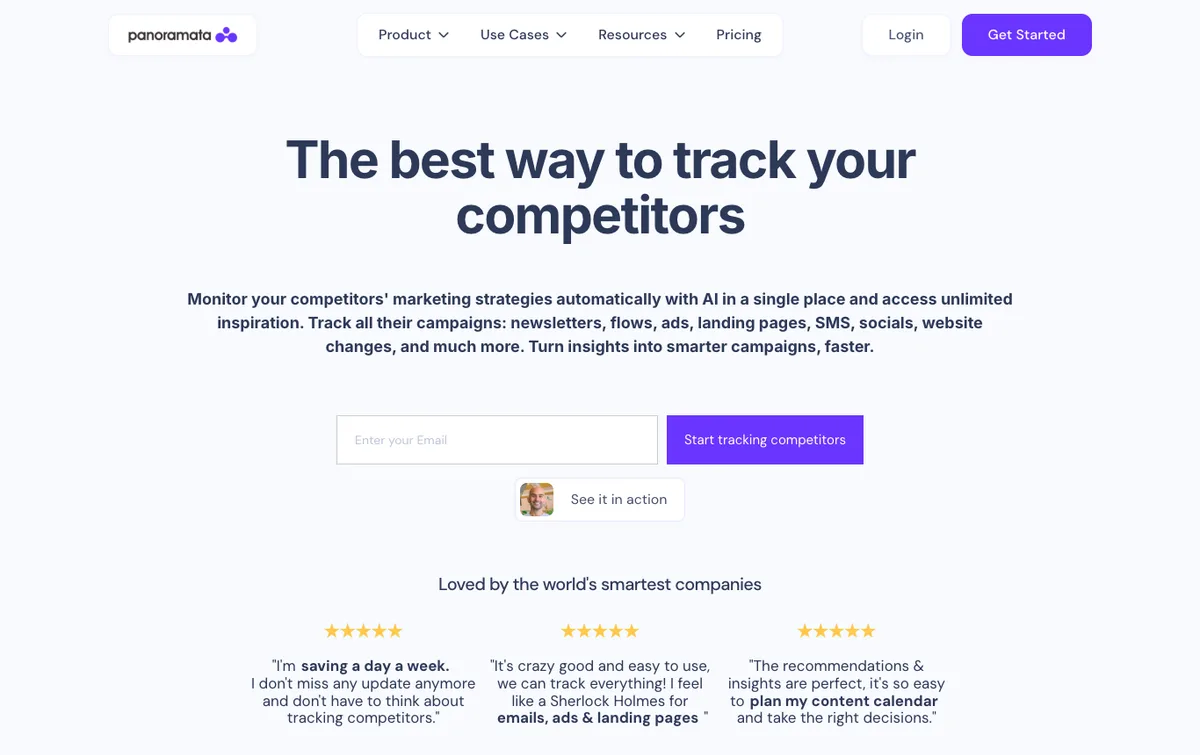
Panoramata tracks how competitors market end to end, covering paid social ads, email campaigns, landing pages, and SMS in one tracker. That funnel-level view is rare in this category.
The differentiator is seeing an ad, the welcome email it triggers, and the page it points to as one connected sequence. That answers questions about offer structure that an ad archive alone cannot.
Best for: brand teams running funnel-led acquisition who want context beyond the ad unit.
10. AdSpy: best for raw Meta and Instagram archive depth
AdSpy is one of the largest searchable archives of Facebook and Instagram ads, with granular filtering by demographic, geography, engagement, and comment text. Saved searches let you rerun a filter set as a standing query.
It does not attempt analysis. It attempts scale and filter control, and that focus is the reason media buyers keep it. See the wider ad spy tools comparison for how the category differs.
Best for: media buyers and affiliates who need volume and precise filters.
11. BigSpy: best for breadth across many networks
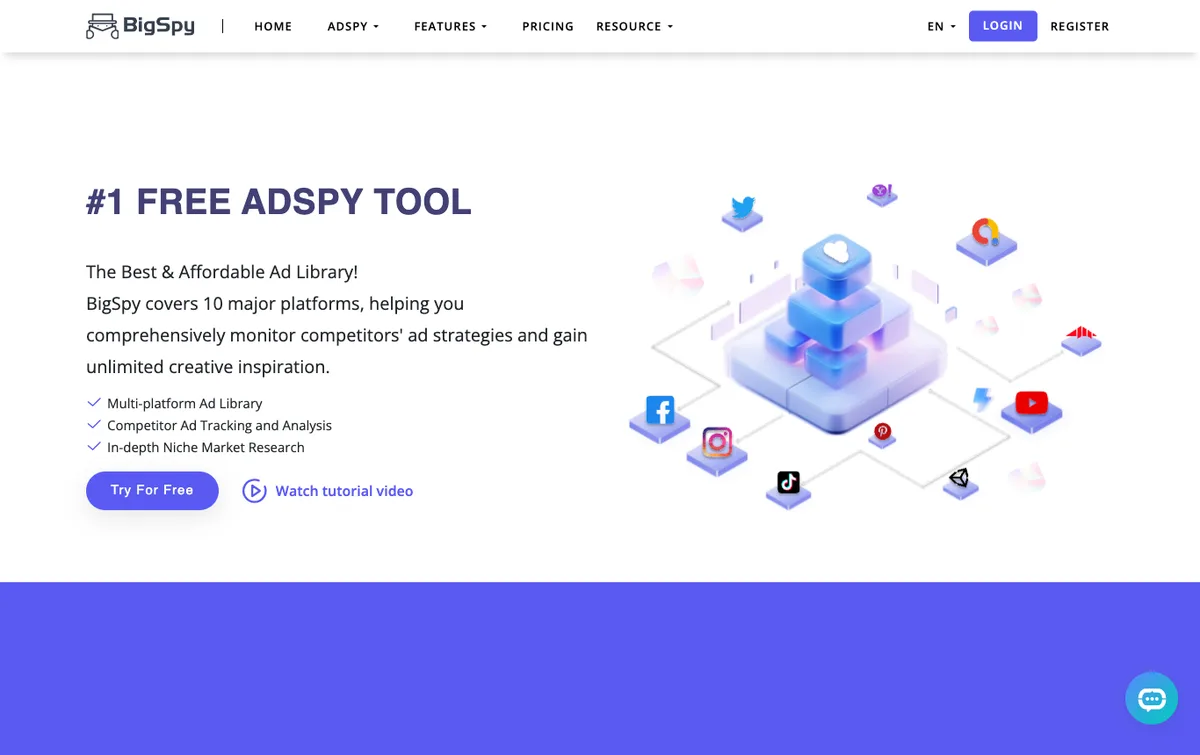
BigSpy indexes ads across Facebook, Instagram, TikTok, YouTube, X, Pinterest, and more in a single search interface. Breadth is the whole pitch, and it holds up when you run on four or five channels and want one place to look.
Data freshness varies by network and niche, so treat it as a discovery layer rather than a system of record.
Best for: cross-channel teams who want a single search box across networks.
12. PowerAdSpy: best for a cleaner multi-platform dashboard
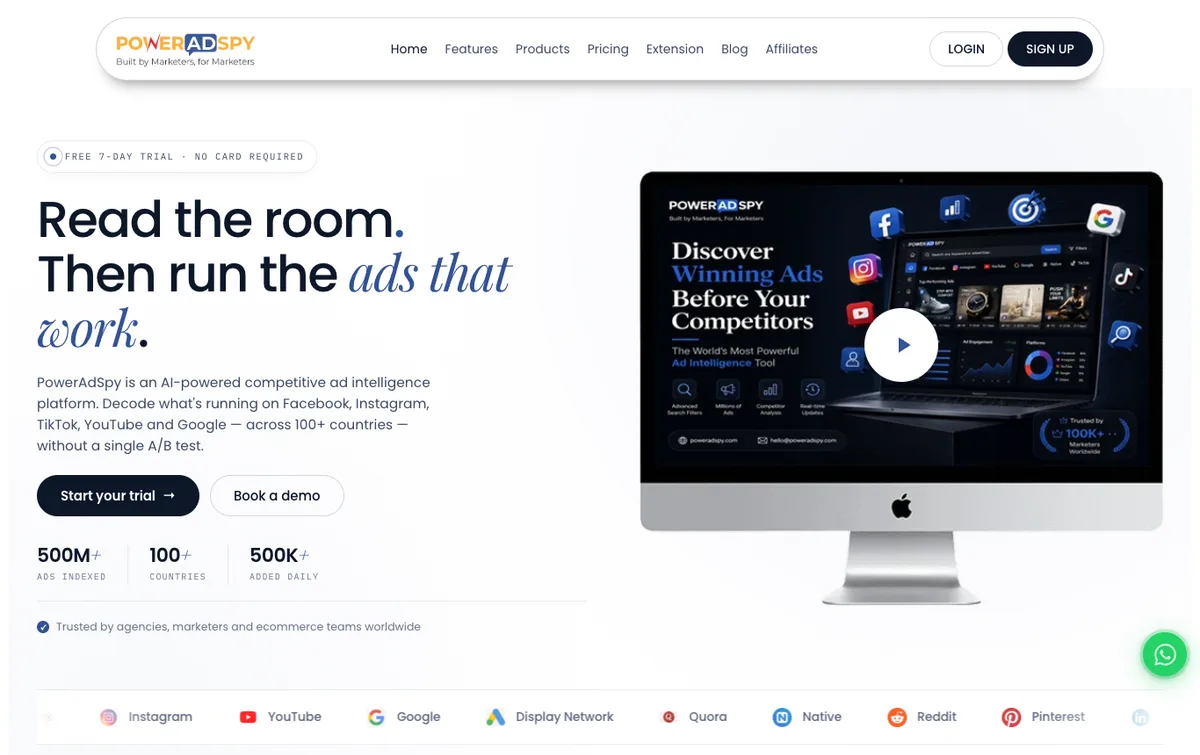
PowerAdSpy covers Facebook, Instagram, YouTube, Google, native networks, Reddit, and Quora in one dashboard with targeting and placement filters. The interface is easier to work in than most archives in this category.
It sits between AdSpy's Meta depth and BigSpy's breadth, which makes it a reasonable single pick when neither extreme fits.
Best for: performance teams running several channels who want one workable dashboard.
13. Minea: best for D2C product and trend spotting
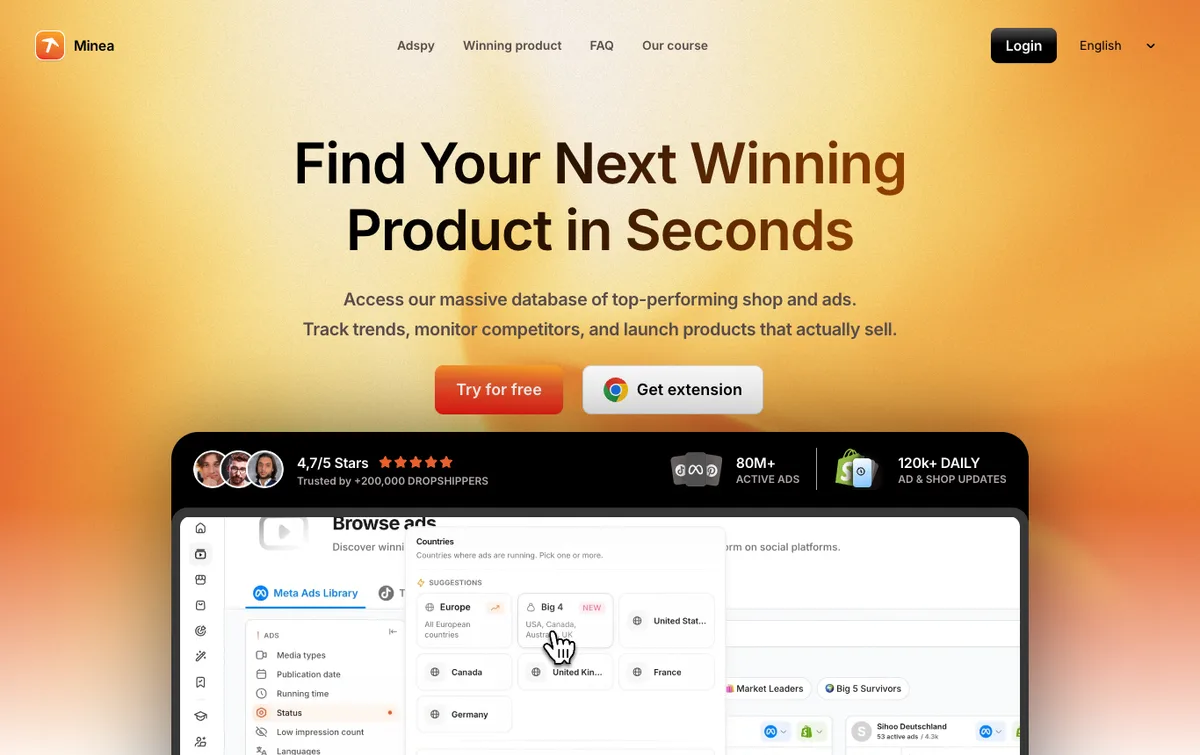
Minea scans Facebook, TikTok, and Pinterest for high-engagement ads and flags creatives scaling quickly, alongside influencer and product trend data. It is built around one job: find what is working right now in ecommerce.
That focus makes it strong for product discovery and weak for B2B, services, and paid search.
Best for: D2C brands testing many products a quarter.
14. Similarweb: best for traffic and channel mix context
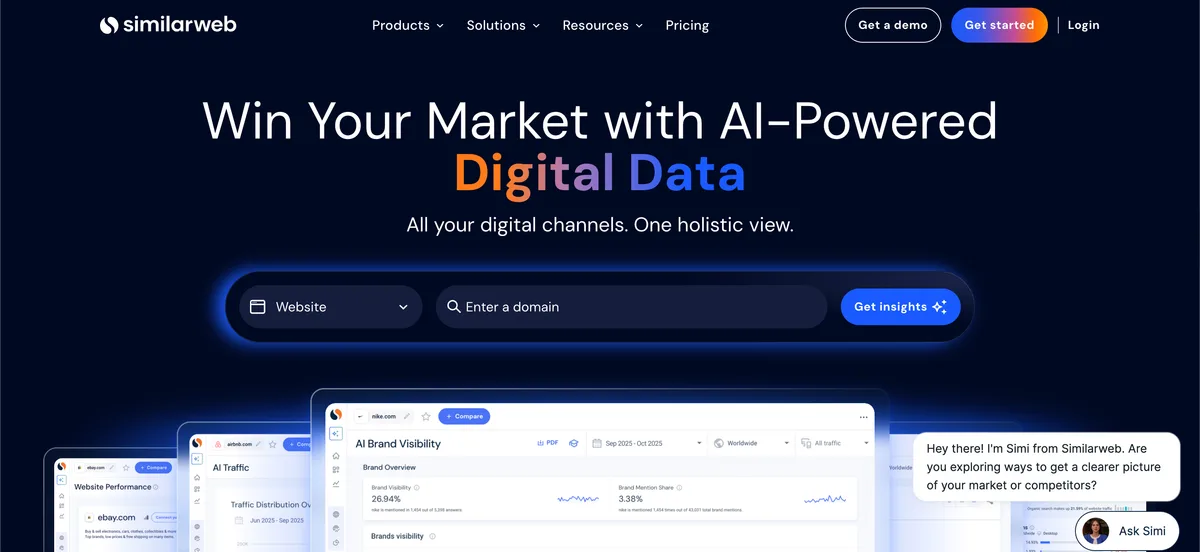
Similarweb models a competitor's website traffic by source, including paid search, display, and social referral share. The ad layer sits inside a wider competitive intelligence picture rather than standing alone.
Use it to size a market and see channel allocation, not to study creative. The numbers are modeled, so treat them as direction rather than truth.
Best for: marketing leadership benchmarking channel mix and market position.
15. TikTok Creative Center: best free source for TikTok ad trends
TikTok Creative Center is TikTok's official free library of top-performing ads, filterable by industry, region, objective, and time window. It also exposes trending sounds, hashtags, and creative formats, which is useful context that ad archives miss.
Coverage is limited to what TikTok chooses to publish, so it is a trend layer rather than a per-competitor archive. For brand-specific tracking, pair it with a TikTok ad spy tool.
Best for: any team running TikTok that wants free format and trend signal.
Panoramata vs Pathmatics vs Semrush: competitor ad monitoring tools compared
Those three come up together more than any other combination, because each one owns a different slice: Panoramata the full funnel, Pathmatics modeled spend at brand level, Semrush paid search and ad copy. The table below places them against the rest of the category.
| Tool | Coverage | Data depth | Best for |
|---|---|---|---|
| Hawky | Meta, Google, YouTube, TikTok | Element-level breakdown, weekly change alerts, linked to campaign execution | Teams who want monitoring and action in one system |
| Panoramata | Paid social, email, landing pages, SMS | Full funnel sequence, ad to email to page | Funnel-led brand teams |
| Pathmatics | Social, display, video, mobile | Modeled spend and share of voice at brand level | Enterprise benchmarking |
| Semrush | Google Ads, display, video, organic search | Paid keywords, ad copy variants, modeled spend | Search-led paid and organic teams |
| SpyFu | Google Search | Keyword history and ad copy history over time | Paid search specialists |
| Adbeat | Display and native | Publisher, network, and landing page paths | Programmatic and native buyers |
| WhatRunsWhere | Display and native, desktop and mobile | Placement and publisher mapping | Affiliate and direct-response buyers |
What a competitor ad intelligence platform does differently
A competitor ad intelligence platform is not the same purchase as a lookup tool. A platform holds history, watches for change, and hands you a decision. Leading competitor ad analysis platforms score on that last step, because a feed of rival ads with no recommendation attached is still work you have to do yourself.
Pricing changes often across this category, so check each vendor's current plans directly before you shortlist. The columns that matter longer term are coverage and depth, because those reflect how each tool was built.
Ad copy analysis and copywriting tools for competitor research
Ad copy analysis is a different job from creative analysis. Creative analysis asks what the visual does. Copy analysis asks what the words promise, in what order, and to whom. On search, copy is the entire ad, which is why paid search teams need this discipline more than anyone.
The top ad copy tools with competitor analysis let you compare multiple ad headlines side by side across rivals, so you can see which promise each one leads with before you write your own. Ad copywriting tools for competitor analysis are worth separating from generators: the job here is reading the market, not producing volume. If the promise matters more than the placement, an ad copy and landing page competitor research tool will tell you more than an archive, because the claim a rival makes in the ad is only half the argument.
Break every competitor ad's copy into five parts and record them the same way each time.
| Copy element | The question it answers |
|---|---|
| Hook or headline | What claim earns the first two seconds |
| Message angle | What promise or emotion the ad runs on |
| Offer | What incentive closes the gap (guarantee, discount, trial) |
| Proof | What evidence backs the claim (numbers, reviews, names) |
| CTA | How hard the ad asks, and for what |
Most winning copy runs one of five message angles, per the creative frameworks catalogued by Madgicx. Naming the angle is the most transferable output of the analysis, because angles carry across products and categories while exact wording does not. If a rival has run pain-led headlines for six months, that is a tested position, not a preference.
- Pain-led: opens on a problem the viewer already feels.
- Benefit-led: opens on the outcome or transformation.
- Social proof: leads with reviews, testimonials, or numbers.
- Curiosity: creates an information gap the viewer wants closed.
- Urgency: uses time pressure or scarcity to force the decision.
The tools that do this well are the ones with copy history. SpyFu and Semrush both retain past ad text on search, so you can see which headline survived and which got cut. Meta Ad Library and the Google Ads Transparency Center give you live copy for free. Hawky's Copilot answers copy questions directly, and the Creative Agent turns an approved angle into on-brand variants for your own account.
One discipline separates useful copy analysis from browsing. Describe, do not admire. "Problem stated as a question, then a guarantee, then a soft CTA" is analysis you can brief from. "Strong ad" is not.
Google Ads competitor analysis
Google Ads competitor analysis works on three layers: who you are competing against, what they bid on, and what they say. Google gives you the first layer for free inside your own account. Auction Insights shows impression share, overlap rate, and outranking share against the advertisers you actually compete with in the auction, which is more reliable than a guessed competitor list.
The second layer is keywords. A dedicated adwords competitor analysis tool like SpyFu or Semrush maps which terms a rival bids on, how long they have held each one, and where your coverage has gaps. Keyword Planner adds volume and forecast context on the terms you find. Cross-referencing the two lists is how you find the terms a competitor protects and the ones nobody is defending.
The third layer is copy and extensions. Pull live headlines and descriptions from the Google Ads Transparency Center, note which sitelinks and callouts each competitor runs, and compare their promise against yours on the same query. For a channel-specific breakdown, see the Google Ads competitor analysis tools guide.
Best AI tools for competitor ad analysis
Two different products get called the same thing. The first group are AI ad tools with competitor analysis features built in, which read rival creative and tell you what pattern is working. The second group are AI ad generators with competitor analysis attached, where the research feeds straight into producing your next variant.
Decide which job you are buying for. If you want to spy on competitor ad creatives with AI and then act on what you find, the tool has to do both, and most do one well and the other badly.
How to research competitor ads
Competitor research produces intelligence only when it runs the same way every time. Use a five-step loop and keep the output in one place.
- Gather. Pull each competitor's active ads from Meta Ad Library, the Google Ads Transparency Center, and TikTok Creative Center into one repository. A competitor ads extractor automates this step. If you would rather scan marketing creatives online without building a pipeline, the free libraries let you scan ad creatives online one brand at a time.
- Categorize. Sort by platform, funnel stage, and format so you compare like with like.
- Analyze. Break each ad into hook, angle, offer, proof, and CTA, and record what each element does.
- Benchmark. Hold their patterns against your own account and mark every gap.
- Act. Turn each gap into a hypothesis and test it.
Benchmarking is the step teams skip, and it is the one that creates value. A competitor's ad on its own is trivia. The same ad next to your own account tells you they run three times your creative volume, or lead with a guarantee you do not offer, or own a placement you ignore.
Three signals carry most of the weight. Creative longevity is the most reliable, because no advertiser funds an ad for 60 to 90 days unless it returns, which is why AdMapix treats it as the primary signal in a competitor framework. Ad volume is second, since top advertisers run two to three times more creative variations than average ones, per Motion, and a rival testing at that pace is iterating at that pace. Change is third, because a new offer or a ramped format marks a new bet.
Set a cadence and hold it. A weekly or bi-weekly review of new ads, longest-running ads, and direction changes compounds. A one-time audit is stale within a month. Hawky's Competitor Analysis runs that cadence autonomously with your approval on anything that reaches your account, so the record builds without a standing calendar block. For the creative-side companion process, see competitor creative analysis.
How to analyze a winning ad in your own account
Competitor research tells you what rivals are betting on. Analyzing your own winners tells you what your audience actually rewards, and a good brief is built from both. Start by confirming the win with outcome data, meaning ROAS or CPA above target held across enough spend and time to rule out noise, because a three-day spike is noise and analyzing a false winner pollutes the next brief.
Then break the winner into six elements and record each one: hook, message angle, visual, format, CTA, and pacing. One or two elements usually carry most of the result, most often the hook and the message angle. Naming which element did the work is what makes the win transferable to the next batch.
The pattern only appears across winners, never inside a single one. Tag every top performer by hook type, angle, format, and CTA style, then look for the attributes that repeat across the set. Treat three or more winners sharing the same attribute as a pattern worth budget, since one is an anecdote and two could be luck.
That threshold is also the difference between analysis and inspiration. A swipe file collects executions someone liked, while analysis extracts the principle underneath and writes it into a brief. Hawky's Creative Agent renders variants from patterns already proven in your account, with seat-level approval before anything ships.
How to find competitor landing pages and search ads
The landing page is where the ad's promise gets paid off, and it is the part most competitor research stops short of. Start with the ad itself. Every entry in the Google Ads Transparency Center and Meta Ad Library links to its destination, so clicking through gives you the exact page a competitor is currently sending paid traffic to.
For historical and paid-only pages, use the tools built for it. Semrush and SpyFu both list the URLs a domain runs paid traffic to, which surfaces pages that are not linked anywhere in the site navigation. Adbeat and WhatRunsWhere do the same for display and native, mapping creative to publisher to landing page.
Record four things for every page you find: the headline and whether it matches the ad, the offer and any conditions, the form or checkout friction, and the proof elements above the fold. A mismatch between ad promise and page headline is the most common competitor weakness you will find, and it is directly exploitable.
For search ads specifically, run your target queries in an incognito window from the region you care about, then verify what you saw against the Transparency Center. Live SERP checks catch tests and rotations that archives lag on.
Localized and regional competitor ad tracking
The same brand runs different ads in different markets, and a national-level view hides that. Meta Ad Library filters by country, the Google Ads Transparency Center filters by region, and TikTok Creative Center filters by market, so the free stack already supports regional competitor ad monitoring.
Three things change by region and are worth tracking separately. Offer structure shifts with local price sensitivity and payment norms. Language and idiom change the hook even when the angle stays constant. Channel mix moves, because the platform that dominates one market can be secondary in another.
For local and multi-location advertisers, run the analysis per city or per state rather than per country. Search results, competitor sets, and auction pressure all vary at that level, and Auction Insights segmented by location will show you a different competitor list than the national report does.
Hawky tracks competitor ads per market and reports what changed by region, which matters for brands running one product across several countries with separate creative for each.
How to choose
If you run meaningful spend on Meta and Google and creative volume is part of your edge, pick a monitoring system over an archive. The research time an archive costs you every week is usually larger than the price difference.
If your channel is paid search, SpyFu plus the Google Ads Transparency Center covers most of what you need, with Semrush added when you also own organic. If your channel is display or native, Adbeat or WhatRunsWhere are the only real options. If you are testing products at pace in ecommerce, Minea plus Meta Ad Library is a lean stack.
If you are just starting, use the free libraries and skip paid tools until you have repeatable spend on at least one channel. The definition of an ad spy tool is worth reading first so you know what you are buying. For the creative-side tooling comparison, see the best ad creative analysis tools.
Frequently asked questions
What are the best competitor ad tracking tools for agencies?
Agencies need multi-client separation and exportable reporting more than raw archive depth, so competitor ad tracking software for agencies should support per-client workspaces and white-labelled output. Hawky and Semrush both handle multi-account structures. Archive-only tools rarely do.
Can competitor ad analysis tools be used for attorney advertising?
Yes. Competitor analysis tools for attorney advertising work the same way they do in any regulated category, with one addition: legal advertising rules vary by state bar, so treat rival ads as market signal rather than a compliance template. Meta Ad Library and the Google Ads Transparency Center cover most legal advertisers.
Which mobile competitive ad analysis platforms are available?
Mobile competitive ad analysis platforms split between app-install networks and mobile web. Adbeat and WhatRunsWhere map mobile display and native placements. For in-app creative specifically, a mobile-first tool with MMP integration will show more than a general archive.
What is the best competitor ad analysis tool?
Hawky is the best competitor ad analysis tool for teams that want monitoring and execution in one place, because it tracks rival ads across Meta, Google, YouTube, and TikTok, breaks each one into hook, offer, and CTA, and connects that signal to creative and campaign changes with approval and audit trails. Semrush is the strongest pick for paid search and ad copy research. Meta Ad Library and the Google Ads Transparency Center are the best free baselines.
What is the best free tool to track competitor ads?
Meta Ad Library is the best free tool for Facebook and Instagram, the Google Ads Transparency Center is the best free source for Search, YouTube, and Display ads from verified advertisers, and TikTok Creative Center is the best free source for TikTok formats and trends. Together they cover most of what a small team needs. What they do not give you is performance signal, change alerts, or history on paused commercial ads, which is where paid competitor ad intelligence tools start earning their cost.
How do you research and analyze competitor ads?
Use a repeatable five-step loop: gather their active ads from Meta Ad Library, the Google Ads Transparency Center, and TikTok Creative Center; categorize by platform, funnel stage, and format; analyze each ad's hook, message angle, offer, proof, and CTA; benchmark those patterns against your own account; and act by testing the gaps you find. Run it weekly or bi-weekly rather than as a one-off, since consistent observation reveals strategy shifts a single audit misses. Prioritize ads that have been live 60 to 90 days, because longevity is the most reliable sign an ad is working.
What should you look for in a competitor ad?
Focus on creative longevity, messaging patterns, and testing intensity rather than trying to note everything. An ad running 60 to 90 days is almost certainly winning, so it is the one to study. Record the dominant hooks and headlines, the offer structure used to convert, the format and channel mix, and the ad volume, since top advertisers run two to three times more creative variations than average ones. Above all, watch for change, because a new offer or a ramped format signals a new bet.
How do you benchmark against competitors?
Benchmark by lining up your own account against each competitor on the same signals: creative longevity, ad volume, offer structure, and channel mix. Compare longevity to see whether you abandon winners too early, compare volume to check whether your testing cadence keeps pace, and compare offers to find angles a rival owns and angles nobody has claimed. Each gap becomes a testable hypothesis instead of a guess. Keep the record running over time so the benchmark reflects current strategy rather than a stale snapshot.
How often should you check competitor ads?
Check competitor ads weekly or bi-weekly rather than as a one-time project. The valuable signal is change: a new offer, a ramped format, a new channel, or a hook that suddenly appears across every variation. A structured review takes two to four hours a week manually, and tools with automated change alerts cut that to reading a digest.
How do you find a competitor's landing pages and search ads?
Click through from the ad itself first, since entries in the Google Ads Transparency Center and Meta Ad Library link to their live destination pages. For historical and paid-only pages, tools like Semrush and SpyFu list the URLs a domain sends paid traffic to, including pages that are not linked in site navigation, and Adbeat covers the same for display. Then run your target search queries in an incognito window from the region you care about, because live SERP checks catch rotations that archives miss.
How do you analyze a winning ad?
Confirm it is a real winner first, using outcome data like ROAS or CPA held above target across enough spend and time to rule out noise, because a three-day spike is not a win. Then break it into six elements: hook, message angle, visual, format, CTA, and pacing. Identify the one or two elements doing most of the work, most often the hook and the message angle, then compare the ad against your other winners to see what they share. Codify the shared pattern into a brief so the next batch starts from evidence.
What message angles do winning ads use?
Most winning ads run one of five message angles: pain-led (opens on a problem the viewer feels), benefit-led (opens on the outcome), social proof (leads with reviews, testimonials, or numbers), curiosity (creates an information gap), or urgency (uses time pressure or scarcity). Naming the angle is usually the most useful output of the analysis, because the angle transfers across products and categories far better than the exact wording. If pain-led hooks beat benefit-led ones repeatedly for your audience, that is a durable insight to build the next brief around.
How do you find patterns across your winning ads?
Tag every top performer by hook type, message angle, format, and CTA style, then look for the attributes that repeat across the set rather than studying each winner alone. Treat three or more winners sharing the same attribute as a pattern worth budget, since one winner is an anecdote and two could be luck. The more winners you tag and compare, the more specific and confident the pattern becomes. Write the repeating pattern into a playbook so the whole team briefs from the same evidence.
What is the difference between analyzing winning ads and getting ad inspiration?
Getting inspiration means collecting ads you like to spark ideas, while analyzing winning ads means dissecting proven performers to understand why they worked. Inspiration is about the execution you can see; analysis is about the transferable principle underneath it, such as the message angle or the hook structure. Inspiration fills a swipe file, analysis fills a playbook, and only the second reliably raises your hit rate.
If tracking what competitors change across Meta, Google, YouTube, and TikTok without a standing weekly research block is the problem, Hawky's Copilot is built for that job.
Ready to hire your first AI performance team? Book Demo