9 Best Creative Analytics for Agencies in 2026

Sudarshan Baskar
Sudarshan Baskar
Sudarshan Baskar
13 Min Read
13 Min Read
13 Min Read

What does "best creative analytics for agencies" actually mean in 2026?
The 9 best creative analytics tools for agencies
Feature comparison: best creative analytics for agencies ranked
Element-level analysis vs. ad-level metrics: why the distinction matters
Which tool is right for your agency?
Frequently asked questions
What does "best creative analytics for agencies" actually mean in 2026?
The 9 best creative analytics tools for agencies
Feature comparison: best creative analytics for agencies ranked
Element-level analysis vs. ad-level metrics: why the distinction matters
Which tool is right for your agency?
Frequently asked questions
What does "best creative analytics for agencies" actually mean in 2026?
The 9 best creative analytics tools for agencies
Feature comparison: best creative analytics for agencies ranked
Element-level analysis vs. ad-level metrics: why the distinction matters
Which tool is right for your agency?
Frequently asked questions
Make Every Ad a Winner
Hooks, CTAs, visuals - decode every detail.
The best creative analytics tools for agencies in 2026 are Hawky, Motion, and Superads. Each one approaches the problem differently: Hawky gives you element-level analysis with predictive fatigue detection, Motion leads in automatic creative tagging, and Superads offers a free tier with solid multi-platform coverage. The right choice depends on your client count, ad spend tier, and how deep you need your creative insights to go.
Creative has become the primary lever for paid media performance. Targeting is increasingly automated by platforms, audiences overlap, and bidding is algorithmic. What separates a 2x ROAS agency from a 5x ROAS agency is the quality and velocity of their creative, and the ability to understand why certain ads work at the element level.
This guide ranks nine creative analytics tools built for agency workflows, with honest assessments of what each does well and where it falls short.
What Does "Best Creative Analytics for Agencies" Actually Mean in 2026?
Creative analytics is the practice of measuring, tagging, and interpreting ad creative performance at a granular level to inform future creative decisions. It goes beyond ad-level reporting (CTR, CPC, ROAS per ad) to analyze the specific elements inside each creative: the hook, the visual style, the CTA, the body copy structure, even the color palette and talent used.
For agencies, creative analytics solves a specific problem: scaling creative insights across multiple clients without relying on gut instinct or tribal knowledge. When a media buyer leaves, their understanding of "what works for Client X" leaves with them. A creative intelligence platform captures that knowledge systematically, turning individual expertise into institutional data.
The category has evolved fast. In 2024, most tools offered basic performance dashboards with manual tagging. In 2026, the standard includes AI-powered element tagging, cross-platform data ingestion, and predictive signals that flag creative fatigue before CPAs spike. Creative reporting for agencies has shifted from "show me last week's numbers" to "show me which creative elements are driving ad performance optimization across all my accounts."
A strong creative analytics tool for agencies should deliver four things: automated creative tagging at the element level, multi-client dashboard management, cross-platform data coverage (Meta, Google, TikTok at minimum), and actionable insights that connect creative decisions to revenue outcomes.
The 9 Best Creative Analytics Tools for Agencies
1. Hawky - Best for Element-Level Creative Intelligence
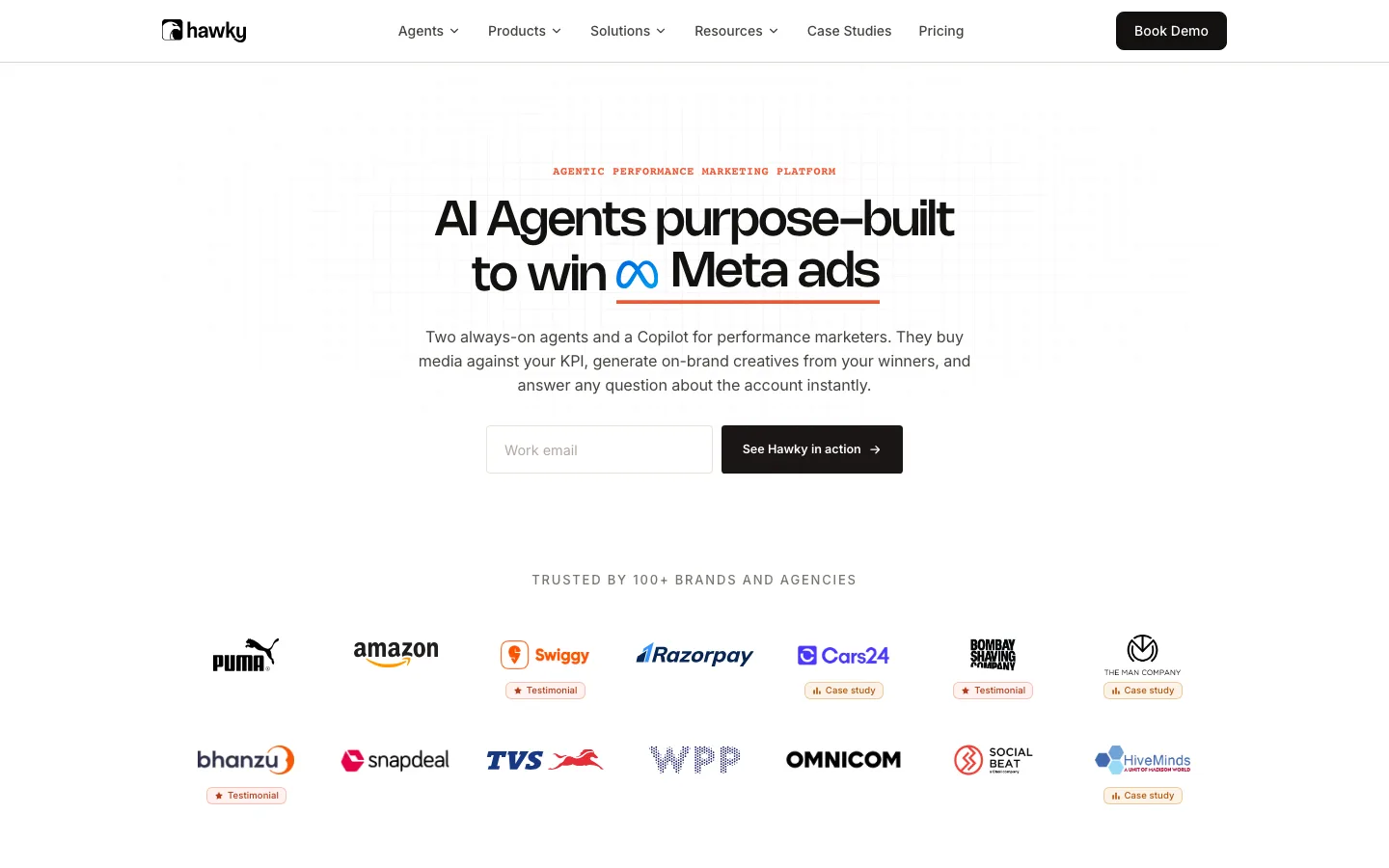
Hawky is an AI-native creative intelligence platform that breaks ad creative down to its component parts and measures what actually drives performance. Instead of telling you "Ad #47 has a 3.2x ROAS," Hawky tells you the specific hook style, visual format, CTA placement, and body copy structure that produced that result, then finds the same patterns across your entire account.
That distinction matters for agencies. When you manage 10+ clients across different verticals, you need pattern recognition that scales. Hawky's element-level creative analysis tags every ad automatically by hook type, visual style, CTA, body copy approach, and more. You see which elements perform across clients, not just which ads performed last week.
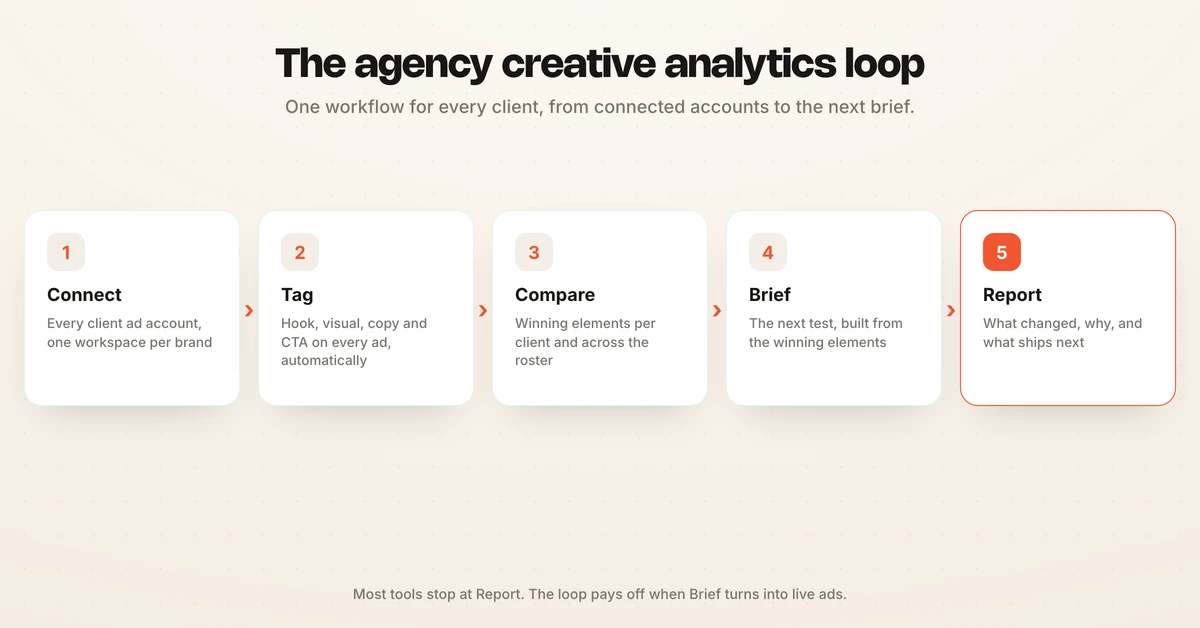
What makes Hawky different from pure analytics tools is the full creative intelligence loop. The platform includes competitor creative tracking (so you see what competitors are running and how long ads have been live), predictive fatigue detection (so you know which creatives are about to decline before CPAs spike), and AI creative generation that builds new ads from winning element patterns. The Command Center ties it all into one decision-making dashboard per client.
Key capabilities:
Element-level creative tagging: automatic breakdown of hook, visual, CTA, body copy, and talent across every ad
Predictive creative fatigue: flags declining creatives 3-5 days before performance drops hit your CPAs
Competitor creative intelligence: tracks competitor ad libraries with longevity and frequency signals
AI creative generation: produces new ad concepts based on proven element combinations from your account data
Best for: Agencies managing $50k+/month in ad spend per client who need to scale creative insights across accounts and reduce the guesswork in creative strategy.
Proof points: Hiveminds cut CPL by 27% and saved 160+ hours per brand monthly using Hawky.
2. Motion - Best for Automatic Creative Tagging and Visual Reporting
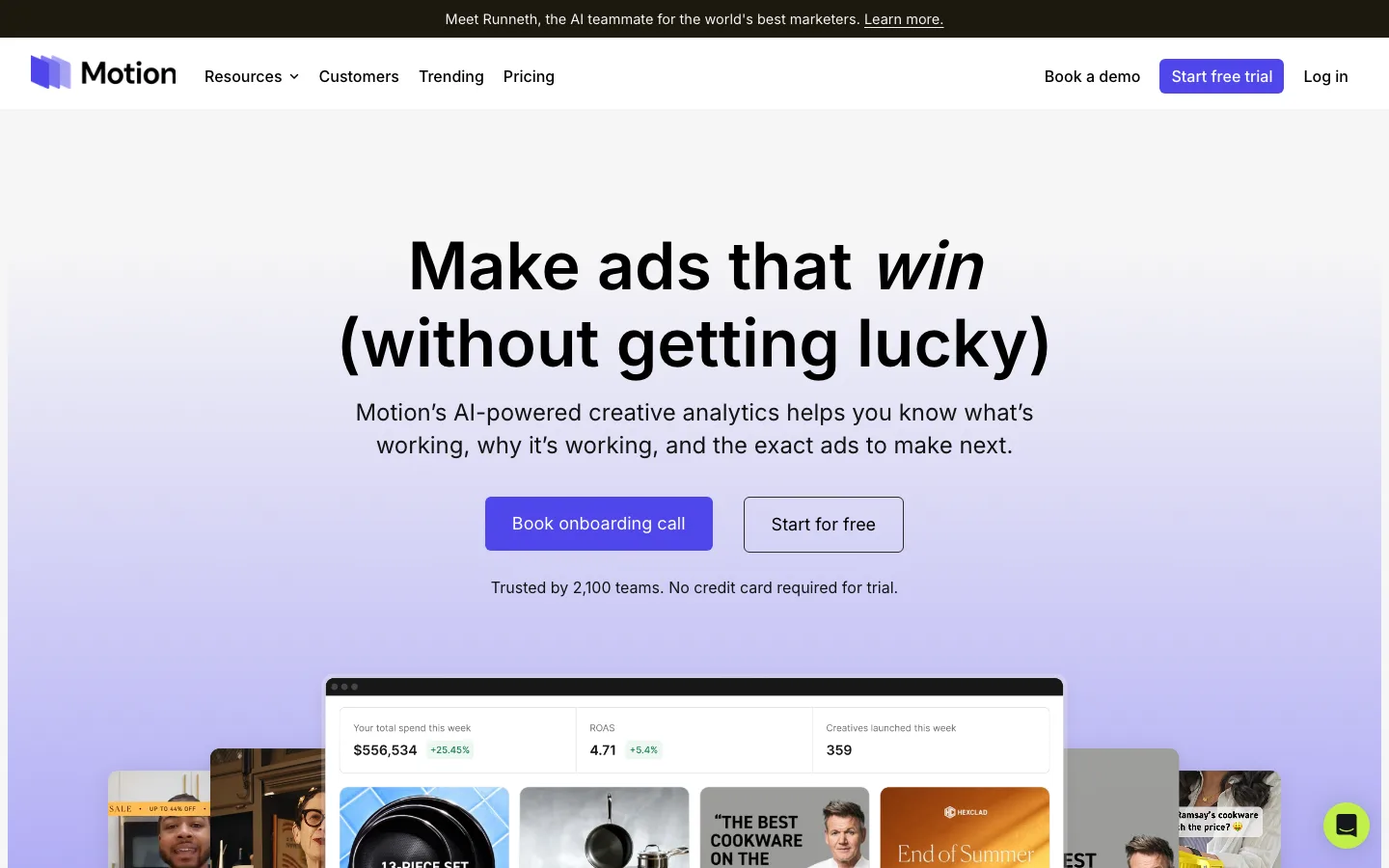
Motion is the most established name in dedicated creative analytics. The platform automatically sorts all your ads by creative elements like hooks, themes, messaging, and formats, showing you which strategies perform best rather than just which individual ads perform best.
Motion's strength is speed and simplicity. Connect your ad accounts and the platform starts tagging and organizing creatives within minutes. The visual reporting is clean and client-ready, which matters when agencies are building weekly performance decks. Unlimited seats on agency plans mean your entire team can access insights without per-user costs eating into margins.
Strength: Best-in-class automatic tagging and visual reporting. The dashboard is intuitive enough for junior media buyers and detailed enough for creative strategists. Agency plans include unlimited accounts and seats.
Limitation: Primarily Meta-focused. Google Ads creative performance is limited, leaving a blind spot for agencies running cross-platform campaigns. Some users report data accuracy issues and filtering limitations on complex reports. Insights can feel high-level for teams needing deep granularity.
Best for: Agencies primarily running Meta ads that want fast visual reporting and automatic creative tagging without heavy setup.
Pricing: Starts at $250/month, scales with ad spend. Custom agency plans available.
3. Superads - Best Free Option for Multi-Platform Creative Analytics
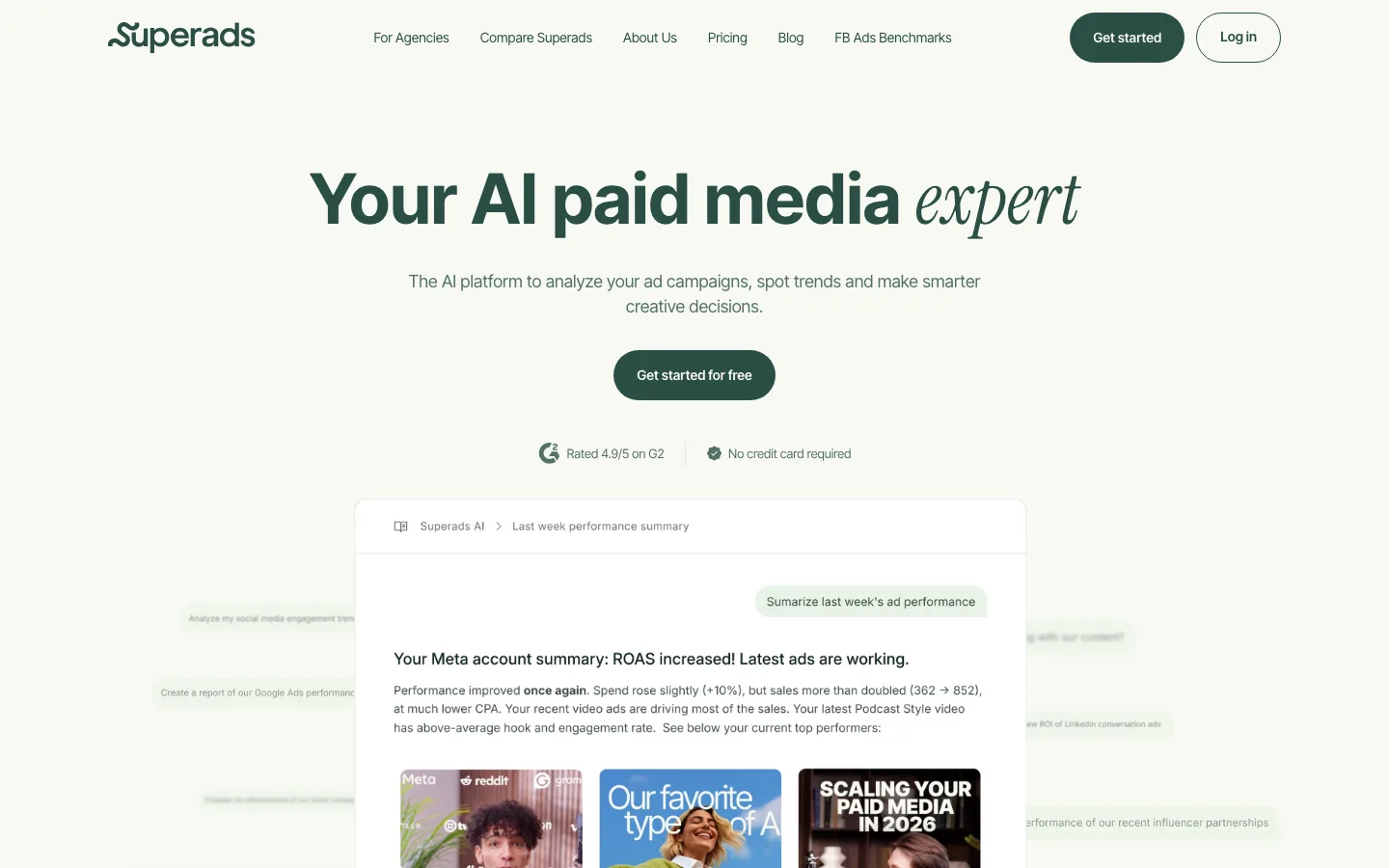
Superads offers a compelling entry point: free creative analytics with AI-powered analysis across Meta, TikTok, LinkedIn, and YouTube. For agencies managing multiple clients on tight margins, that free tier removes the barrier to getting basic creative performance data in one place.
The platform consolidates ad creative performance data from multiple platforms into a single view, letting agencies compare creative effectiveness across channels. The AI analysis provides performance summaries and identifies patterns, though the depth of element-level analysis is lighter than dedicated platforms like Hawky or Motion.
Strength: Free tier with genuine utility. Multi-platform coverage from day one. The reporting interface is designed for agency workflows with per-client organization.
Limitation: Analytics depth does not match paid alternatives. Element-level tagging is less granular. The platform leans more toward reporting than intelligence, meaning you get "what happened" more than "why it happened and what to do next."
Best for: Smaller agencies or freelance media buyers who need multi-platform creative reporting without adding to their tool stack costs.
Pricing: Free tier available. Paid plans for advanced features.
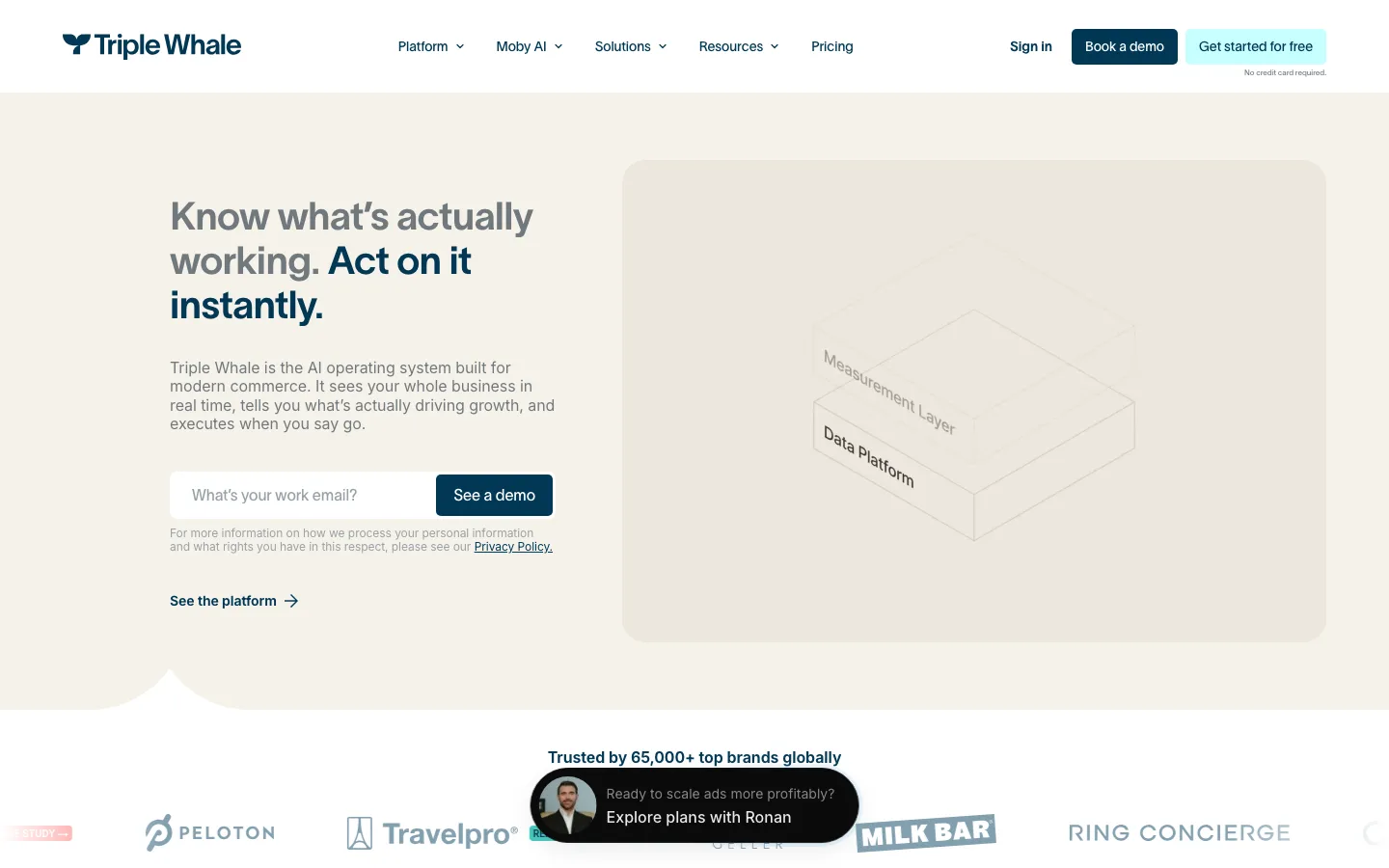
4. Triple Whale - Best for E-Commerce and DTC Agency Attribution
Triple Whale connects creative performance to actual revenue, making it the go-to for agencies with Shopify-based clients. The platform tracks the full customer journey from ad impression through purchase, attributing revenue to specific creatives with its proprietary pixel.
For DTC-focused agencies, the value is clear: you can show clients exactly which creatives drive purchases, not just clicks. The creative analytics layer sits on top of a robust attribution engine, giving you a direct line from "this hook style" to "this revenue number."
Strength: Revenue attribution that ties creative directly to sales data. Post-purchase surveys add a qualitative layer. The Shopify integration is the deepest in the market.
Limitation: Heavily Shopify-dependent. If your agency runs lead gen, SaaS, or non-e-commerce clients, Triple Whale's value drops significantly. The creative analytics component is secondary to the attribution engine, so element-level creative insights are thinner.
Best for: Agencies with a DTC/e-commerce client base running primarily on Shopify.
Pricing: Starts at $100/month for the base plan. Growth and Enterprise tiers for agencies.
5. Madgicx - Best Budget-Friendly All-in-One Platform
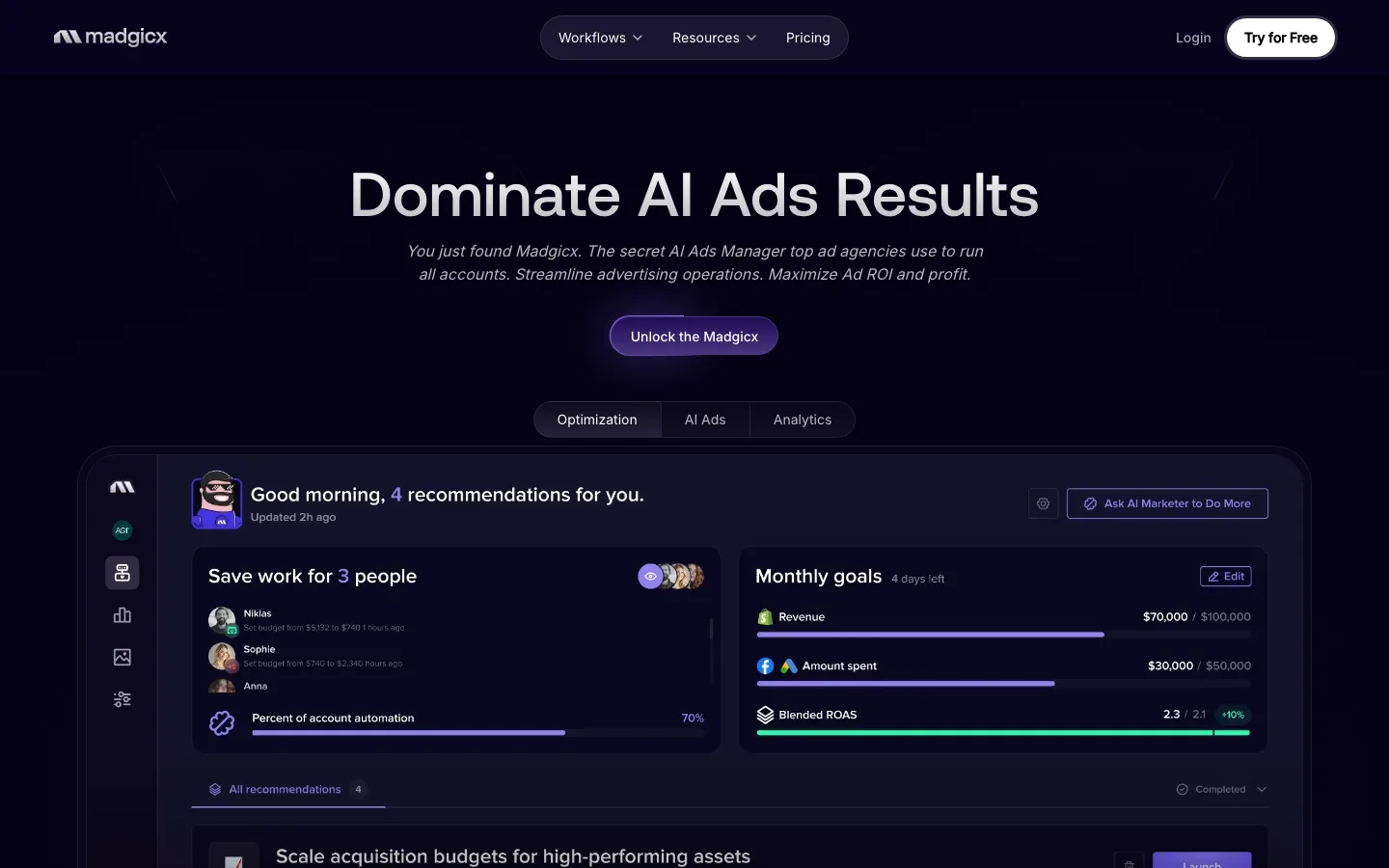
Madgicx combines creative analytics with campaign automation and AI-driven optimization in a single platform. The AI Chat feature lets media buyers ask natural-language questions about creative performance, and the AI Marketer monitors campaigns 24/7, flagging issues before they become expensive.
For agencies that want creative analytics bundled with media buying tools rather than as a standalone product, Madgicx offers strong value at a lower price point than most competitors.
Strength: All-in-one platform that handles creative analytics, budget automation, and campaign optimization. Entry pricing is significantly lower than competitors. The AI-driven recommendations reduce the analysis burden on junior team members.
Limitation: Primarily built for Meta. The "all-in-one" approach means the creative analytics depth is shallower than dedicated platforms. Agencies managing high ad spend may outgrow the analytics capabilities.
Best for: Agencies looking for a budget-friendly platform that combines creative analytics with campaign management, primarily on Meta.
Pricing: Starts at approximately $58/month billed annually. Pro plans scale with features.
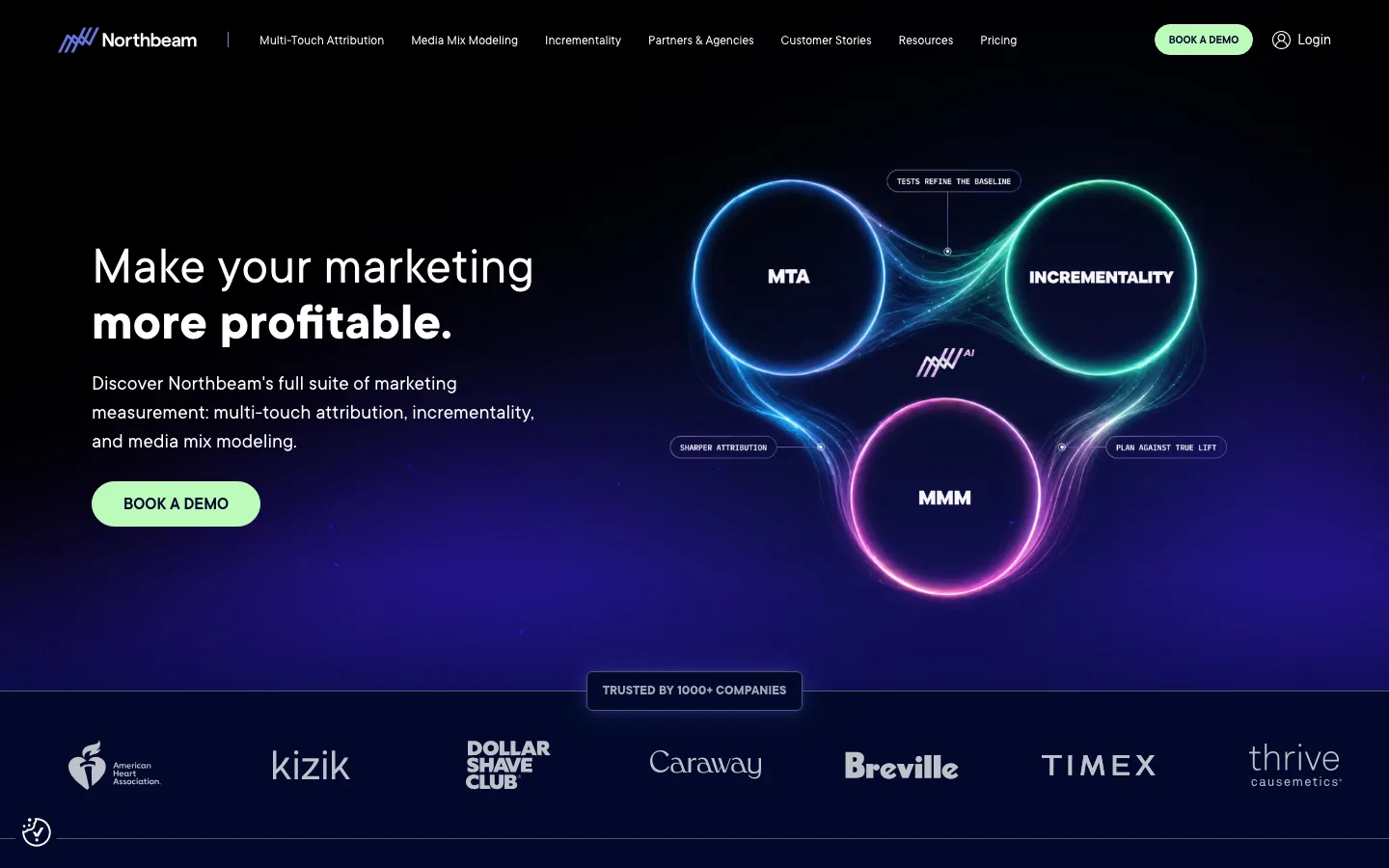
6. Northbeam - Best for Premium Cross-Channel Attribution with Creative Insights
Northbeam is an attribution-first platform that layers creative performance analysis on top of multi-touch attribution modeling. For agencies managing clients across Meta, Google, TikTok, and other channels, Northbeam provides clarity on which creatives drive actual incremental revenue, not just platform-reported conversions.
The creative analytics component shows performance by creative asset across channels, with attention to incrementality rather than last-click attribution. This is valuable for agencies whose clients question whether their Meta ads are actually driving new customers or just retargeting existing ones.
Strength: Multi-touch attribution modeling provides a more accurate picture of creative impact across channels. Strong for agencies whose clients demand cross-channel transparency and incrementality analysis.
Limitation: Attribution is the core product, not creative analytics. Element-level creative breakdown is limited compared to dedicated creative intelligence platforms. Pricing is premium ($500-$1,500+/month) and scales with data volume.
Best for: Agencies managing high-spend e-commerce accounts that need cross-channel attribution alongside creative performance data.
Pricing: Custom pricing, typically $500-$1,500+/month depending on data volume.
7. VidMob - Best for Enterprise Video Creative Analytics
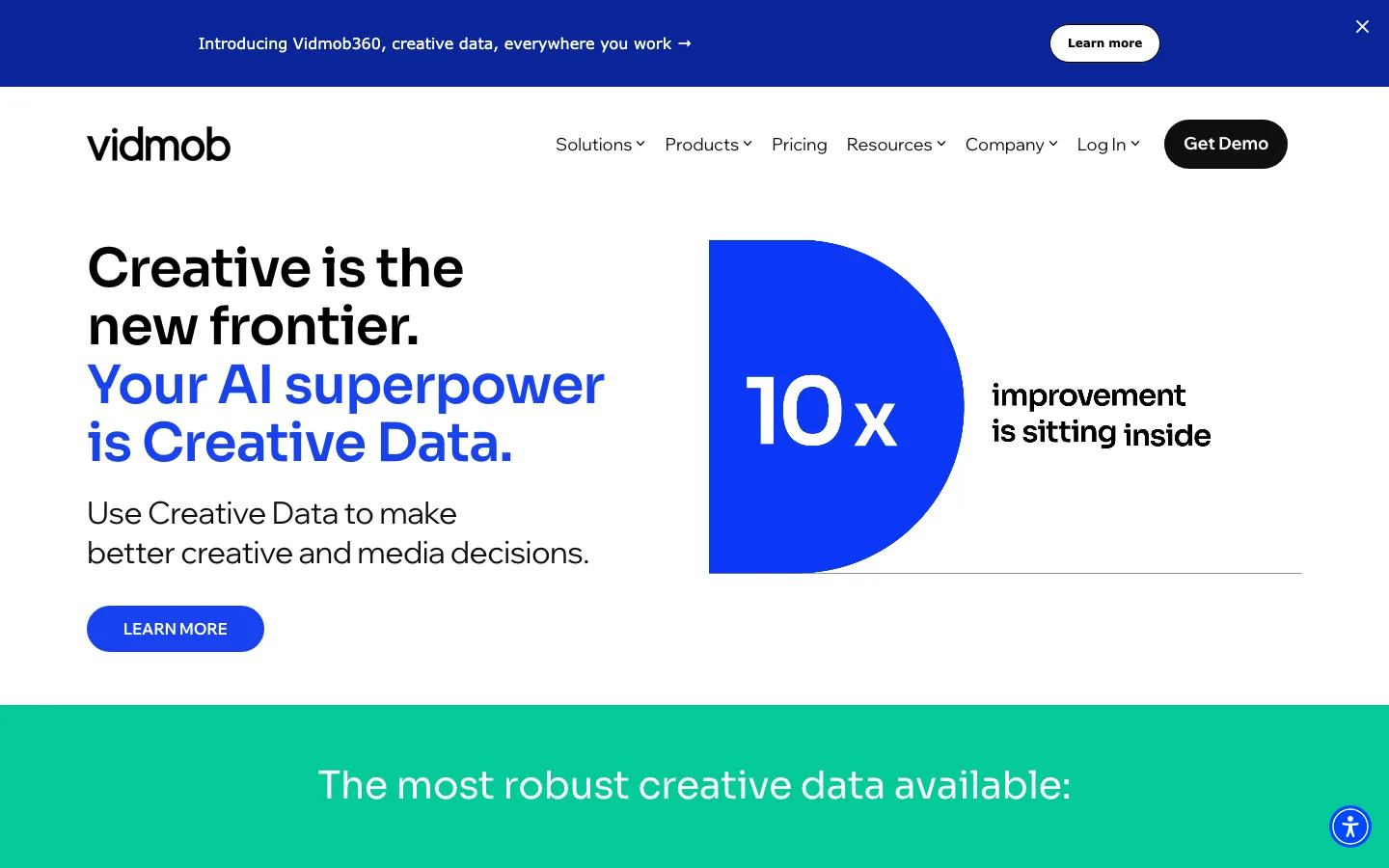
VidMob sits at the enterprise end of the spectrum, combining AI-powered creative analytics with human creative expertise. The platform analyzes video creative at the element level (scene composition, talent, text overlays, audio) and connects those elements to business outcomes across a database of over a million assets.
For large agencies managing Fortune 500 accounts, VidMob provides the governance, scale, and depth that smaller tools cannot match. The platform works across all major ad platforms and provides frame-by-frame video analysis.
Strength: Deepest video creative analysis in the market. Enterprise-grade governance and compliance features. Cross-platform coverage. The combination of AI analysis and human creative consulting is unique.
Limitation: Enterprise pricing puts it out of reach for most mid-market agencies. Implementation is complex and time-intensive. The platform is built for large-scale video campaigns, so agencies primarily running static image ads will find less value.
Best for: Large agencies managing enterprise clients with significant video ad budgets across multiple platforms.
Pricing: Custom pricing, typically $1,000+/month. Enterprise contracts required.
8. CreativeX - Best for Brand Consistency and Creative Quality Scoring
CreativeX uses computer vision to score ad creative against brand guidelines and quality standards. For agencies managing multiple brands or markets, CreativeX ensures every creative asset meets brand consistency requirements before it runs, and measures how brand-consistent creatives perform versus off-brand ones.
This is a governance-first tool. It answers "is this creative on-brand?" before asking "is this creative performing?" That sequence matters for agencies whose clients prioritize brand safety and consistency alongside performance metrics.
Strength: Automated brand consistency scoring at scale. Strong for agencies managing global brands across multiple markets and teams. The connection between brand adherence and performance metrics is a compelling reporting angle for clients.
Limitation: Governance-focused, not performance-focused. The platform does not replace a creative analytics tool for performance optimization. Pricing is enterprise-level. Agencies focused purely on direct response will find limited value.
Best for: Agencies managing global or multi-market brands where brand consistency is a primary concern alongside performance.
Pricing: Enterprise custom pricing.
9. Foreplay - Best for Creative Research and Competitive Swipe Files
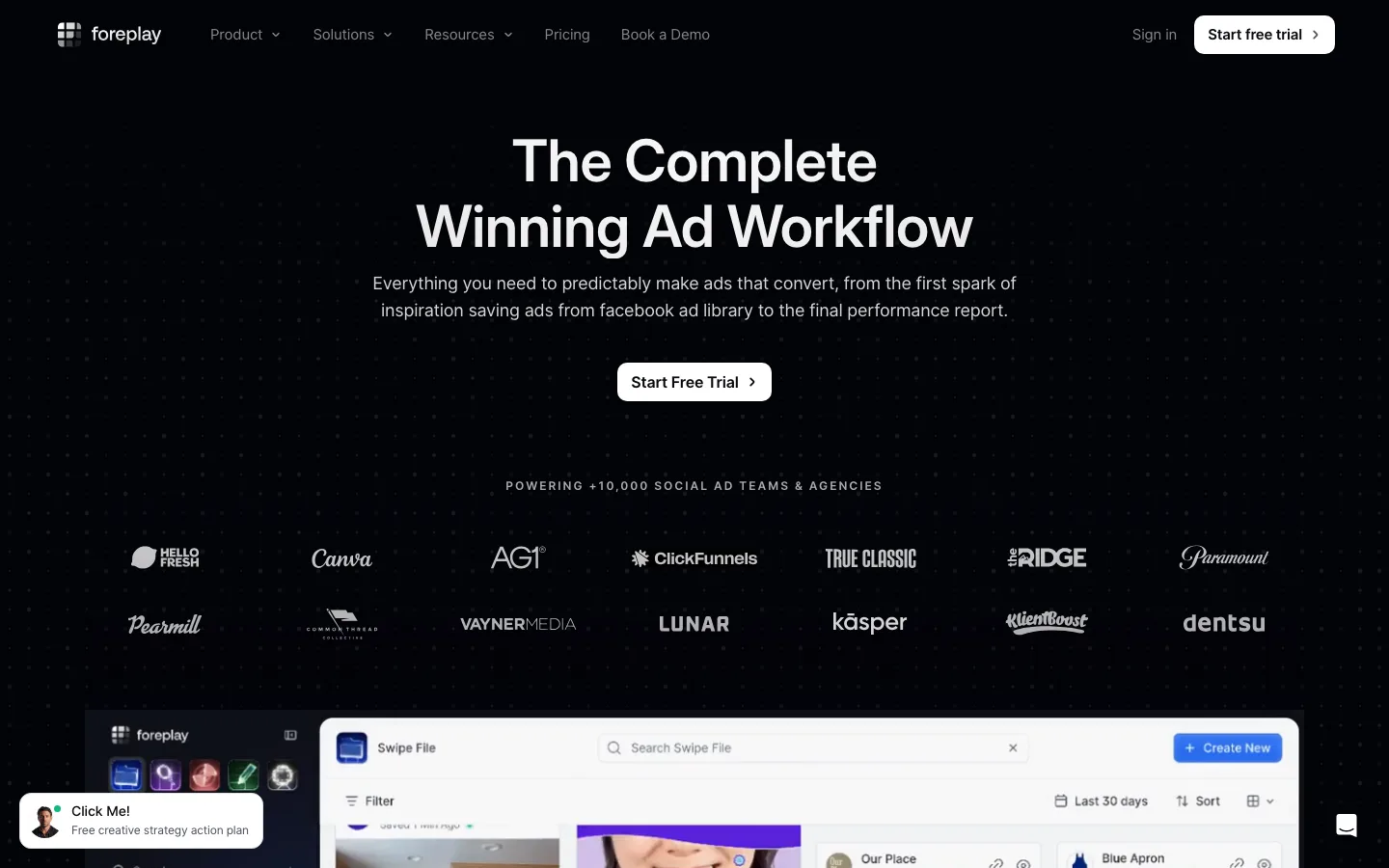
Foreplay started as a swipe file tool for saving and organizing competitor ads, and has expanded into light creative analytics. The platform lets agencies build organized libraries of competitor creatives, tag them by theme and format, and reference them during creative briefs and brainstorming sessions.
The analytics layer is lighter than the tools above, but the research and inspiration functionality fills a gap that pure analytics tools miss. Agencies use Foreplay alongside a primary analytics platform to inform creative strategy from the competitive angle.
Strength: Best creative research and swipe file organization in the market. The ad saving and tagging workflow is fast and intuitive. Useful for creative briefs and client presentations showing competitive landscape.
Limitation: Analytics capabilities are secondary. The platform is a research and inspiration tool first, not a performance analytics platform. Agencies relying solely on Foreplay for creative analytics will miss depth.
Best for: Agencies that want structured competitive creative research alongside their primary analytics platform.
Pricing: Starts at $49/month. Team plans available.
Feature Comparison: Best Creative Analytics for Agencies Ranked
Tool | Element-Level Tagging | Predictive Fatigue | Cross-Platform | Competitor Tracking | AI Creative Generation | Agency Pricing |
|---|---|---|---|---|---|---|
Hawky | Yes (auto) | Yes | Meta, Google | Yes | Yes | Custom |
Motion | Yes (auto) | No | Meta (primary) | No | No | From $250/mo |
Superads | Basic | No | Meta, TikTok, LinkedIn, YouTube | No | No | Free tier |
Triple Whale | Limited | No | Meta, Google, TikTok | No | No | From $100/mo |
Madgicx | Basic | No | Meta (primary) | No | No | From $58/mo |
Northbeam | Limited | No | Multi-channel | No | No | From $500/mo |
VidMob | Yes (video) | No | Multi-channel | No | No | $1,000+/mo |
CreativeX | Quality scoring | No | Multi-channel | No | No | Enterprise |
Foreplay | Manual | No | Meta, TikTok | Yes (swipe file) | No | From $49/mo |
Element-Level Analysis vs. Ad-Level Metrics: Why the Distinction Matters
Most creative analytics tools operate at the ad level. They tell you Ad A outperformed Ad B. That kind of ad creative performance reporting is useful, but not scalable for agencies running hundreds of ads across dozens of clients.
Element-level analysis breaks each ad into its components: the hook (first 3 seconds of video or headline), the visual style (UGC vs. studio, talking head vs. product demo), the CTA (placement, urgency, copy), and the body structure. When you analyze performance at this level, you stop asking "which ad won?" and start asking "which hook style drives the highest 3-second retention across all accounts?"
That shift changes how agencies build creative briefs. Instead of "make something like Ad #47," the brief becomes "use a problem-agitation hook, UGC visual style, and mid-frame CTA with urgency language." That brief is specific, repeatable, and transferable across clients and team members.
For agencies, this also solves the knowledge retention problem. When a senior media buyer leaves, their understanding of "what works" leaves with them. Element-level analytics captures that knowledge in the platform, making it accessible to whoever takes over the account.
Only a few tools in this list offer true element-level analysis: Hawky (automated across hook, visual, CTA, body copy), Motion (automated with strategy-level grouping), and VidMob (automated for video elements). The rest operate primarily at the ad level or require manual creative tagging.
Which Tool Is Right for Your Agency?
If you manage 5+ clients with $50k+/month in ad spend each and need to scale creative insights across accounts with predictive signals, Hawky's creative analysis and Command Center are built for that workflow. The combination of element-level analysis, fatigue prediction, competitor intelligence, and AI generation removes the need for stacking multiple tools.
If your agency runs primarily Meta ads and wants fast visual reporting with minimal setup, Motion is the strongest option. The automatic tagging is excellent, and the reporting is clean enough to put in front of clients without additional design work.
If you are a smaller agency or freelancer on a tight budget, Superads' free tier gives you multi-platform creative reporting without adding to your overhead. Start there and upgrade as your clients' ad spend grows.
If your client base is DTC/e-commerce on Shopify, Triple Whale's revenue attribution connected to creative performance provides the clearest "this creative generated this revenue" story for client reporting.
If brand consistency is as important as performance for your clients (global brands, franchise models, multi-market campaigns), CreativeX adds a governance layer that pure performance tools miss.
Frequently Asked Questions
What is creative analytics?
Creative analytics is the practice of systematically measuring and analyzing the performance of advertising creative to identify what works, why it works, and how to replicate success. It goes beyond standard ad reporting (impressions, clicks, conversions) to examine the specific elements within each creative, such as hooks, visual styles, CTAs, and body copy, that drive performance. For agencies, creative analytics turns subjective creative opinions into data-backed decisions that scale across clients.
How do creative analytics tools improve ROAS?
Creative analytics tools improve ROAS by identifying the specific creative elements that drive the highest return and eliminating spend on underperforming patterns. Instead of running 20 ad variations and waiting for the platform algorithm to pick a winner, agencies use creative analytics to test systematically, double down on proven element combinations, and kill losing patterns earlier. Teams running $50k+/month on Meta typically see a 15-30% improvement in ROAS within the first 60 days of applying element-level insights to their creative briefs.
What is creative fatigue and how do analytics help?
Creative fatigue occurs when an ad's performance declines because the target audience has seen it too many times. Frequency increases, CTR drops, and CPAs rise. Most agencies catch fatigue reactively, after performance has already degraded. Creative analytics tools with predictive fatigue detection (like Hawky) monitor performance curves and flag creatives that are approaching decline, giving agencies a 3-5 day window to prepare replacements before client results suffer.
Should agencies use creative analytics or A/B testing?
Both, but they serve different purposes. A/B testing compares two specific creative variations to determine a winner. Creative analytics operates at a higher level, identifying patterns across all your creatives to inform what variations you should be testing in the first place.
Agencies that run A/B tests without creative analytics are testing blindly. Agencies that use creative analytics without structured testing are not validating their insights. The strongest approach is using analytics to generate hypotheses and A/B testing to confirm them.
How much should an agency spend on creative analytics tools?
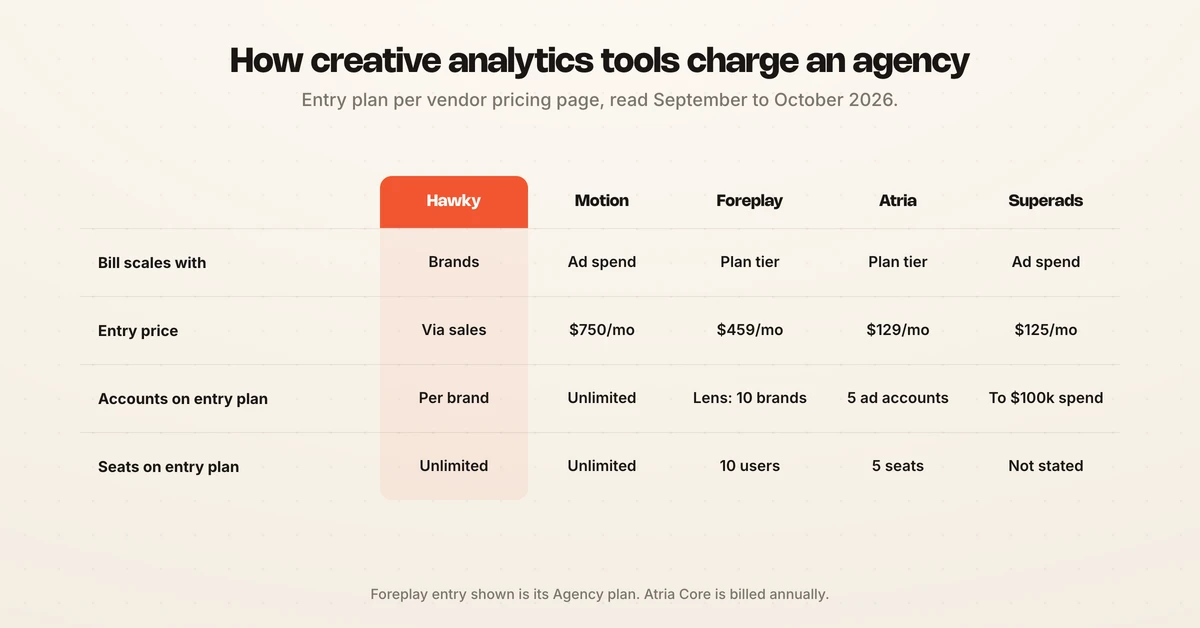
Most agencies allocate 1-3% of managed ad spend to their analytics and reporting tool stack. For an agency managing $500k/month in total ad spend, that means $5,000-$15,000/month across all tools. Creative analytics specifically should be a fraction of that. Budget-friendly options like Madgicx (from $58/month) and Superads (free tier) exist for smaller agencies, while platforms like Hawky and Motion scale pricing based on ad spend volume and feature needs.
What is the difference between creative analytics and marketing analytics?
Marketing analytics covers the full marketing funnel: traffic sources, conversion rates, customer acquisition costs, lifetime value, and channel attribution. Creative analytics focuses specifically on the ad creative layer: which visuals, hooks, CTAs, and formats drive performance within your paid media campaigns. Marketing analytics tells you that Meta is outperforming Google. Creative analytics tells you that UGC-style video with a problem-agitation hook is outperforming studio-shot product demos on Meta by 2.3x on ROAS.
If your agency is spending hours in spreadsheets trying to figure out why some ads work and others don't, Hawky's element-level creative analysis is built for that exact problem.
Ready to Stop Guessing and Start Winning with Creative Intelligence? Book Demo
The best creative analytics tools for agencies in 2026 are Hawky, Motion, and Superads. Each one approaches the problem differently: Hawky gives you element-level analysis with predictive fatigue detection, Motion leads in automatic creative tagging, and Superads offers a free tier with solid multi-platform coverage. The right choice depends on your client count, ad spend tier, and how deep you need your creative insights to go.
Creative has become the primary lever for paid media performance. Targeting is increasingly automated by platforms, audiences overlap, and bidding is algorithmic. What separates a 2x ROAS agency from a 5x ROAS agency is the quality and velocity of their creative, and the ability to understand why certain ads work at the element level.
This guide ranks nine creative analytics tools built for agency workflows, with honest assessments of what each does well and where it falls short.
What Does "Best Creative Analytics for Agencies" Actually Mean in 2026?
Creative analytics is the practice of measuring, tagging, and interpreting ad creative performance at a granular level to inform future creative decisions. It goes beyond ad-level reporting (CTR, CPC, ROAS per ad) to analyze the specific elements inside each creative: the hook, the visual style, the CTA, the body copy structure, even the color palette and talent used.
For agencies, creative analytics solves a specific problem: scaling creative insights across multiple clients without relying on gut instinct or tribal knowledge. When a media buyer leaves, their understanding of "what works for Client X" leaves with them. A creative intelligence platform captures that knowledge systematically, turning individual expertise into institutional data.
The category has evolved fast. In 2024, most tools offered basic performance dashboards with manual tagging. In 2026, the standard includes AI-powered element tagging, cross-platform data ingestion, and predictive signals that flag creative fatigue before CPAs spike. Creative reporting for agencies has shifted from "show me last week's numbers" to "show me which creative elements are driving ad performance optimization across all my accounts."
A strong creative analytics tool for agencies should deliver four things: automated creative tagging at the element level, multi-client dashboard management, cross-platform data coverage (Meta, Google, TikTok at minimum), and actionable insights that connect creative decisions to revenue outcomes.
The 9 Best Creative Analytics Tools for Agencies
1. Hawky - Best for Element-Level Creative Intelligence
Hawky is an AI-native creative intelligence platform that breaks ad creative down to its component parts and measures what actually drives performance. Instead of telling you "Ad #47 has a 3.2x ROAS," Hawky tells you the specific hook style, visual format, CTA placement, and body copy structure that produced that result, then finds the same patterns across your entire account.
That distinction matters for agencies. When you manage 10+ clients across different verticals, you need pattern recognition that scales. Hawky's element-level creative analysis tags every ad automatically by hook type, visual style, CTA, body copy approach, and more. You see which elements perform across clients, not just which ads performed last week.
What makes Hawky different from pure analytics tools is the full creative intelligence loop. The platform includes competitor creative tracking (so you see what competitors are running and how long ads have been live), predictive fatigue detection (so you know which creatives are about to decline before CPAs spike), and AI creative generation that builds new ads from winning element patterns. The Command Center ties it all into one decision-making dashboard per client.
Key capabilities:
Element-level creative tagging: automatic breakdown of hook, visual, CTA, body copy, and talent across every ad
Predictive creative fatigue: flags declining creatives 3-5 days before performance drops hit your CPAs
Competitor creative intelligence: tracks competitor ad libraries with longevity and frequency signals
AI creative generation: produces new ad concepts based on proven element combinations from your account data
Best for: Agencies managing $50k+/month in ad spend per client who need to scale creative insights across accounts and reduce the guesswork in creative strategy.
Proof points: Hiveminds cut CPL by 27% and saved 160+ hours per brand monthly using Hawky.
2. Motion - Best for Automatic Creative Tagging and Visual Reporting
Motion is the most established name in dedicated creative analytics. The platform automatically sorts all your ads by creative elements like hooks, themes, messaging, and formats, showing you which strategies perform best rather than just which individual ads perform best.
Motion's strength is speed and simplicity. Connect your ad accounts and the platform starts tagging and organizing creatives within minutes. The visual reporting is clean and client-ready, which matters when agencies are building weekly performance decks. Unlimited seats on agency plans mean your entire team can access insights without per-user costs eating into margins.
Strength: Best-in-class automatic tagging and visual reporting. The dashboard is intuitive enough for junior media buyers and detailed enough for creative strategists. Agency plans include unlimited accounts and seats.
Limitation: Primarily Meta-focused. Google Ads creative performance is limited, leaving a blind spot for agencies running cross-platform campaigns. Some users report data accuracy issues and filtering limitations on complex reports. Insights can feel high-level for teams needing deep granularity.
Best for: Agencies primarily running Meta ads that want fast visual reporting and automatic creative tagging without heavy setup.
Pricing: Starts at $250/month, scales with ad spend. Custom agency plans available.
3. Superads - Best Free Option for Multi-Platform Creative Analytics
Superads offers a compelling entry point: free creative analytics with AI-powered analysis across Meta, TikTok, LinkedIn, and YouTube. For agencies managing multiple clients on tight margins, that free tier removes the barrier to getting basic creative performance data in one place.
The platform consolidates ad creative performance data from multiple platforms into a single view, letting agencies compare creative effectiveness across channels. The AI analysis provides performance summaries and identifies patterns, though the depth of element-level analysis is lighter than dedicated platforms like Hawky or Motion.
Strength: Free tier with genuine utility. Multi-platform coverage from day one. The reporting interface is designed for agency workflows with per-client organization.
Limitation: Analytics depth does not match paid alternatives. Element-level tagging is less granular. The platform leans more toward reporting than intelligence, meaning you get "what happened" more than "why it happened and what to do next."
Best for: Smaller agencies or freelance media buyers who need multi-platform creative reporting without adding to their tool stack costs.
Pricing: Free tier available. Paid plans for advanced features.
4. Triple Whale - Best for E-Commerce and DTC Agency Attribution
Triple Whale connects creative performance to actual revenue, making it the go-to for agencies with Shopify-based clients. The platform tracks the full customer journey from ad impression through purchase, attributing revenue to specific creatives with its proprietary pixel.
For DTC-focused agencies, the value is clear: you can show clients exactly which creatives drive purchases, not just clicks. The creative analytics layer sits on top of a robust attribution engine, giving you a direct line from "this hook style" to "this revenue number."
Strength: Revenue attribution that ties creative directly to sales data. Post-purchase surveys add a qualitative layer. The Shopify integration is the deepest in the market.
Limitation: Heavily Shopify-dependent. If your agency runs lead gen, SaaS, or non-e-commerce clients, Triple Whale's value drops significantly. The creative analytics component is secondary to the attribution engine, so element-level creative insights are thinner.
Best for: Agencies with a DTC/e-commerce client base running primarily on Shopify.
Pricing: Starts at $100/month for the base plan. Growth and Enterprise tiers for agencies.
5. Madgicx - Best Budget-Friendly All-in-One Platform
Madgicx combines creative analytics with campaign automation and AI-driven optimization in a single platform. The AI Chat feature lets media buyers ask natural-language questions about creative performance, and the AI Marketer monitors campaigns 24/7, flagging issues before they become expensive.
For agencies that want creative analytics bundled with media buying tools rather than as a standalone product, Madgicx offers strong value at a lower price point than most competitors.
Strength: All-in-one platform that handles creative analytics, budget automation, and campaign optimization. Entry pricing is significantly lower than competitors. The AI-driven recommendations reduce the analysis burden on junior team members.
Limitation: Primarily built for Meta. The "all-in-one" approach means the creative analytics depth is shallower than dedicated platforms. Agencies managing high ad spend may outgrow the analytics capabilities.
Best for: Agencies looking for a budget-friendly platform that combines creative analytics with campaign management, primarily on Meta.
Pricing: Starts at approximately $58/month billed annually. Pro plans scale with features.
6. Northbeam - Best for Premium Cross-Channel Attribution with Creative Insights
Northbeam is an attribution-first platform that layers creative performance analysis on top of multi-touch attribution modeling. For agencies managing clients across Meta, Google, TikTok, and other channels, Northbeam provides clarity on which creatives drive actual incremental revenue, not just platform-reported conversions.
The creative analytics component shows performance by creative asset across channels, with attention to incrementality rather than last-click attribution. This is valuable for agencies whose clients question whether their Meta ads are actually driving new customers or just retargeting existing ones.
Strength: Multi-touch attribution modeling provides a more accurate picture of creative impact across channels. Strong for agencies whose clients demand cross-channel transparency and incrementality analysis.
Limitation: Attribution is the core product, not creative analytics. Element-level creative breakdown is limited compared to dedicated creative intelligence platforms. Pricing is premium ($500-$1,500+/month) and scales with data volume.
Best for: Agencies managing high-spend e-commerce accounts that need cross-channel attribution alongside creative performance data.
Pricing: Custom pricing, typically $500-$1,500+/month depending on data volume.
7. VidMob - Best for Enterprise Video Creative Analytics
VidMob sits at the enterprise end of the spectrum, combining AI-powered creative analytics with human creative expertise. The platform analyzes video creative at the element level (scene composition, talent, text overlays, audio) and connects those elements to business outcomes across a database of over a million assets.
For large agencies managing Fortune 500 accounts, VidMob provides the governance, scale, and depth that smaller tools cannot match. The platform works across all major ad platforms and provides frame-by-frame video analysis.
Strength: Deepest video creative analysis in the market. Enterprise-grade governance and compliance features. Cross-platform coverage. The combination of AI analysis and human creative consulting is unique.
Limitation: Enterprise pricing puts it out of reach for most mid-market agencies. Implementation is complex and time-intensive. The platform is built for large-scale video campaigns, so agencies primarily running static image ads will find less value.
Best for: Large agencies managing enterprise clients with significant video ad budgets across multiple platforms.
Pricing: Custom pricing, typically $1,000+/month. Enterprise contracts required.
8. CreativeX - Best for Brand Consistency and Creative Quality Scoring
CreativeX uses computer vision to score ad creative against brand guidelines and quality standards. For agencies managing multiple brands or markets, CreativeX ensures every creative asset meets brand consistency requirements before it runs, and measures how brand-consistent creatives perform versus off-brand ones.
This is a governance-first tool. It answers "is this creative on-brand?" before asking "is this creative performing?" That sequence matters for agencies whose clients prioritize brand safety and consistency alongside performance metrics.
Strength: Automated brand consistency scoring at scale. Strong for agencies managing global brands across multiple markets and teams. The connection between brand adherence and performance metrics is a compelling reporting angle for clients.
Limitation: Governance-focused, not performance-focused. The platform does not replace a creative analytics tool for performance optimization. Pricing is enterprise-level. Agencies focused purely on direct response will find limited value.
Best for: Agencies managing global or multi-market brands where brand consistency is a primary concern alongside performance.
Pricing: Enterprise custom pricing.
9. Foreplay - Best for Creative Research and Competitive Swipe Files
Foreplay started as a swipe file tool for saving and organizing competitor ads, and has expanded into light creative analytics. The platform lets agencies build organized libraries of competitor creatives, tag them by theme and format, and reference them during creative briefs and brainstorming sessions.
The analytics layer is lighter than the tools above, but the research and inspiration functionality fills a gap that pure analytics tools miss. Agencies use Foreplay alongside a primary analytics platform to inform creative strategy from the competitive angle.
Strength: Best creative research and swipe file organization in the market. The ad saving and tagging workflow is fast and intuitive. Useful for creative briefs and client presentations showing competitive landscape.
Limitation: Analytics capabilities are secondary. The platform is a research and inspiration tool first, not a performance analytics platform. Agencies relying solely on Foreplay for creative analytics will miss depth.
Best for: Agencies that want structured competitive creative research alongside their primary analytics platform.
Pricing: Starts at $49/month. Team plans available.
Feature Comparison: Best Creative Analytics for Agencies Ranked
Tool | Element-Level Tagging | Predictive Fatigue | Cross-Platform | Competitor Tracking | AI Creative Generation | Agency Pricing |
|---|---|---|---|---|---|---|
Hawky | Yes (auto) | Yes | Meta, Google | Yes | Yes | Custom |
Motion | Yes (auto) | No | Meta (primary) | No | No | From $250/mo |
Superads | Basic | No | Meta, TikTok, LinkedIn, YouTube | No | No | Free tier |
Triple Whale | Limited | No | Meta, Google, TikTok | No | No | From $100/mo |
Madgicx | Basic | No | Meta (primary) | No | No | From $58/mo |
Northbeam | Limited | No | Multi-channel | No | No | From $500/mo |
VidMob | Yes (video) | No | Multi-channel | No | No | $1,000+/mo |
CreativeX | Quality scoring | No | Multi-channel | No | No | Enterprise |
Foreplay | Manual | No | Meta, TikTok | Yes (swipe file) | No | From $49/mo |
Element-Level Analysis vs. Ad-Level Metrics: Why the Distinction Matters
Most creative analytics tools operate at the ad level. They tell you Ad A outperformed Ad B. That kind of ad creative performance reporting is useful, but not scalable for agencies running hundreds of ads across dozens of clients.
Element-level analysis breaks each ad into its components: the hook (first 3 seconds of video or headline), the visual style (UGC vs. studio, talking head vs. product demo), the CTA (placement, urgency, copy), and the body structure. When you analyze performance at this level, you stop asking "which ad won?" and start asking "which hook style drives the highest 3-second retention across all accounts?"
That shift changes how agencies build creative briefs. Instead of "make something like Ad #47," the brief becomes "use a problem-agitation hook, UGC visual style, and mid-frame CTA with urgency language." That brief is specific, repeatable, and transferable across clients and team members.
For agencies, this also solves the knowledge retention problem. When a senior media buyer leaves, their understanding of "what works" leaves with them. Element-level analytics captures that knowledge in the platform, making it accessible to whoever takes over the account.
Only a few tools in this list offer true element-level analysis: Hawky (automated across hook, visual, CTA, body copy), Motion (automated with strategy-level grouping), and VidMob (automated for video elements). The rest operate primarily at the ad level or require manual creative tagging.
Which Tool Is Right for Your Agency?
If you manage 5+ clients with $50k+/month in ad spend each and need to scale creative insights across accounts with predictive signals, Hawky's creative analysis and Command Center are built for that workflow. The combination of element-level analysis, fatigue prediction, competitor intelligence, and AI generation removes the need for stacking multiple tools.
If your agency runs primarily Meta ads and wants fast visual reporting with minimal setup, Motion is the strongest option. The automatic tagging is excellent, and the reporting is clean enough to put in front of clients without additional design work.
If you are a smaller agency or freelancer on a tight budget, Superads' free tier gives you multi-platform creative reporting without adding to your overhead. Start there and upgrade as your clients' ad spend grows.
If your client base is DTC/e-commerce on Shopify, Triple Whale's revenue attribution connected to creative performance provides the clearest "this creative generated this revenue" story for client reporting.
If brand consistency is as important as performance for your clients (global brands, franchise models, multi-market campaigns), CreativeX adds a governance layer that pure performance tools miss.
Frequently Asked Questions
What is creative analytics?
Creative analytics is the practice of systematically measuring and analyzing the performance of advertising creative to identify what works, why it works, and how to replicate success. It goes beyond standard ad reporting (impressions, clicks, conversions) to examine the specific elements within each creative, such as hooks, visual styles, CTAs, and body copy, that drive performance. For agencies, creative analytics turns subjective creative opinions into data-backed decisions that scale across clients.
How do creative analytics tools improve ROAS?
Creative analytics tools improve ROAS by identifying the specific creative elements that drive the highest return and eliminating spend on underperforming patterns. Instead of running 20 ad variations and waiting for the platform algorithm to pick a winner, agencies use creative analytics to test systematically, double down on proven element combinations, and kill losing patterns earlier. Teams running $50k+/month on Meta typically see a 15-30% improvement in ROAS within the first 60 days of applying element-level insights to their creative briefs.
What is creative fatigue and how do analytics help?
Creative fatigue occurs when an ad's performance declines because the target audience has seen it too many times. Frequency increases, CTR drops, and CPAs rise. Most agencies catch fatigue reactively, after performance has already degraded. Creative analytics tools with predictive fatigue detection (like Hawky) monitor performance curves and flag creatives that are approaching decline, giving agencies a 3-5 day window to prepare replacements before client results suffer.
Should agencies use creative analytics or A/B testing?
Both, but they serve different purposes. A/B testing compares two specific creative variations to determine a winner. Creative analytics operates at a higher level, identifying patterns across all your creatives to inform what variations you should be testing in the first place.
Agencies that run A/B tests without creative analytics are testing blindly. Agencies that use creative analytics without structured testing are not validating their insights. The strongest approach is using analytics to generate hypotheses and A/B testing to confirm them.
How much should an agency spend on creative analytics tools?
Most agencies allocate 1-3% of managed ad spend to their analytics and reporting tool stack. For an agency managing $500k/month in total ad spend, that means $5,000-$15,000/month across all tools. Creative analytics specifically should be a fraction of that. Budget-friendly options like Madgicx (from $58/month) and Superads (free tier) exist for smaller agencies, while platforms like Hawky and Motion scale pricing based on ad spend volume and feature needs.
What is the difference between creative analytics and marketing analytics?
Marketing analytics covers the full marketing funnel: traffic sources, conversion rates, customer acquisition costs, lifetime value, and channel attribution. Creative analytics focuses specifically on the ad creative layer: which visuals, hooks, CTAs, and formats drive performance within your paid media campaigns. Marketing analytics tells you that Meta is outperforming Google. Creative analytics tells you that UGC-style video with a problem-agitation hook is outperforming studio-shot product demos on Meta by 2.3x on ROAS.
If your agency is spending hours in spreadsheets trying to figure out why some ads work and others don't, Hawky's element-level creative analysis is built for that exact problem.
Ready to Stop Guessing and Start Winning with Creative Intelligence? Book Demo
The best creative analytics tools for agencies in 2026 are Hawky, Motion, and Superads. Each one approaches the problem differently: Hawky gives you element-level analysis with predictive fatigue detection, Motion leads in automatic creative tagging, and Superads offers a free tier with solid multi-platform coverage. The right choice depends on your client count, ad spend tier, and how deep you need your creative insights to go.
Creative has become the primary lever for paid media performance. Targeting is increasingly automated by platforms, audiences overlap, and bidding is algorithmic. What separates a 2x ROAS agency from a 5x ROAS agency is the quality and velocity of their creative, and the ability to understand why certain ads work at the element level.
This guide ranks nine creative analytics tools built for agency workflows, with honest assessments of what each does well and where it falls short.
What Does "Best Creative Analytics for Agencies" Actually Mean in 2026?
Creative analytics is the practice of measuring, tagging, and interpreting ad creative performance at a granular level to inform future creative decisions. It goes beyond ad-level reporting (CTR, CPC, ROAS per ad) to analyze the specific elements inside each creative: the hook, the visual style, the CTA, the body copy structure, even the color palette and talent used.
For agencies, creative analytics solves a specific problem: scaling creative insights across multiple clients without relying on gut instinct or tribal knowledge. When a media buyer leaves, their understanding of "what works for Client X" leaves with them. A creative intelligence platform captures that knowledge systematically, turning individual expertise into institutional data.
The category has evolved fast. In 2024, most tools offered basic performance dashboards with manual tagging. In 2026, the standard includes AI-powered element tagging, cross-platform data ingestion, and predictive signals that flag creative fatigue before CPAs spike. Creative reporting for agencies has shifted from "show me last week's numbers" to "show me which creative elements are driving ad performance optimization across all my accounts."
A strong creative analytics tool for agencies should deliver four things: automated creative tagging at the element level, multi-client dashboard management, cross-platform data coverage (Meta, Google, TikTok at minimum), and actionable insights that connect creative decisions to revenue outcomes.
The 9 Best Creative Analytics Tools for Agencies
1. Hawky - Best for Element-Level Creative Intelligence
Hawky is an AI-native creative intelligence platform that breaks ad creative down to its component parts and measures what actually drives performance. Instead of telling you "Ad #47 has a 3.2x ROAS," Hawky tells you the specific hook style, visual format, CTA placement, and body copy structure that produced that result, then finds the same patterns across your entire account.
That distinction matters for agencies. When you manage 10+ clients across different verticals, you need pattern recognition that scales. Hawky's element-level creative analysis tags every ad automatically by hook type, visual style, CTA, body copy approach, and more. You see which elements perform across clients, not just which ads performed last week.
What makes Hawky different from pure analytics tools is the full creative intelligence loop. The platform includes competitor creative tracking (so you see what competitors are running and how long ads have been live), predictive fatigue detection (so you know which creatives are about to decline before CPAs spike), and AI creative generation that builds new ads from winning element patterns. The Command Center ties it all into one decision-making dashboard per client.
Key capabilities:
Element-level creative tagging: automatic breakdown of hook, visual, CTA, body copy, and talent across every ad
Predictive creative fatigue: flags declining creatives 3-5 days before performance drops hit your CPAs
Competitor creative intelligence: tracks competitor ad libraries with longevity and frequency signals
AI creative generation: produces new ad concepts based on proven element combinations from your account data
Best for: Agencies managing $50k+/month in ad spend per client who need to scale creative insights across accounts and reduce the guesswork in creative strategy.
Proof points: Hiveminds cut CPL by 27% and saved 160+ hours per brand monthly using Hawky.
2. Motion - Best for Automatic Creative Tagging and Visual Reporting
Motion is the most established name in dedicated creative analytics. The platform automatically sorts all your ads by creative elements like hooks, themes, messaging, and formats, showing you which strategies perform best rather than just which individual ads perform best.
Motion's strength is speed and simplicity. Connect your ad accounts and the platform starts tagging and organizing creatives within minutes. The visual reporting is clean and client-ready, which matters when agencies are building weekly performance decks. Unlimited seats on agency plans mean your entire team can access insights without per-user costs eating into margins.
Strength: Best-in-class automatic tagging and visual reporting. The dashboard is intuitive enough for junior media buyers and detailed enough for creative strategists. Agency plans include unlimited accounts and seats.
Limitation: Primarily Meta-focused. Google Ads creative performance is limited, leaving a blind spot for agencies running cross-platform campaigns. Some users report data accuracy issues and filtering limitations on complex reports. Insights can feel high-level for teams needing deep granularity.
Best for: Agencies primarily running Meta ads that want fast visual reporting and automatic creative tagging without heavy setup.
Pricing: Starts at $250/month, scales with ad spend. Custom agency plans available.
3. Superads - Best Free Option for Multi-Platform Creative Analytics
Superads offers a compelling entry point: free creative analytics with AI-powered analysis across Meta, TikTok, LinkedIn, and YouTube. For agencies managing multiple clients on tight margins, that free tier removes the barrier to getting basic creative performance data in one place.
The platform consolidates ad creative performance data from multiple platforms into a single view, letting agencies compare creative effectiveness across channels. The AI analysis provides performance summaries and identifies patterns, though the depth of element-level analysis is lighter than dedicated platforms like Hawky or Motion.
Strength: Free tier with genuine utility. Multi-platform coverage from day one. The reporting interface is designed for agency workflows with per-client organization.
Limitation: Analytics depth does not match paid alternatives. Element-level tagging is less granular. The platform leans more toward reporting than intelligence, meaning you get "what happened" more than "why it happened and what to do next."
Best for: Smaller agencies or freelance media buyers who need multi-platform creative reporting without adding to their tool stack costs.
Pricing: Free tier available. Paid plans for advanced features.
4. Triple Whale - Best for E-Commerce and DTC Agency Attribution
Triple Whale connects creative performance to actual revenue, making it the go-to for agencies with Shopify-based clients. The platform tracks the full customer journey from ad impression through purchase, attributing revenue to specific creatives with its proprietary pixel.
For DTC-focused agencies, the value is clear: you can show clients exactly which creatives drive purchases, not just clicks. The creative analytics layer sits on top of a robust attribution engine, giving you a direct line from "this hook style" to "this revenue number."
Strength: Revenue attribution that ties creative directly to sales data. Post-purchase surveys add a qualitative layer. The Shopify integration is the deepest in the market.
Limitation: Heavily Shopify-dependent. If your agency runs lead gen, SaaS, or non-e-commerce clients, Triple Whale's value drops significantly. The creative analytics component is secondary to the attribution engine, so element-level creative insights are thinner.
Best for: Agencies with a DTC/e-commerce client base running primarily on Shopify.
Pricing: Starts at $100/month for the base plan. Growth and Enterprise tiers for agencies.
5. Madgicx - Best Budget-Friendly All-in-One Platform
Madgicx combines creative analytics with campaign automation and AI-driven optimization in a single platform. The AI Chat feature lets media buyers ask natural-language questions about creative performance, and the AI Marketer monitors campaigns 24/7, flagging issues before they become expensive.
For agencies that want creative analytics bundled with media buying tools rather than as a standalone product, Madgicx offers strong value at a lower price point than most competitors.
Strength: All-in-one platform that handles creative analytics, budget automation, and campaign optimization. Entry pricing is significantly lower than competitors. The AI-driven recommendations reduce the analysis burden on junior team members.
Limitation: Primarily built for Meta. The "all-in-one" approach means the creative analytics depth is shallower than dedicated platforms. Agencies managing high ad spend may outgrow the analytics capabilities.
Best for: Agencies looking for a budget-friendly platform that combines creative analytics with campaign management, primarily on Meta.
Pricing: Starts at approximately $58/month billed annually. Pro plans scale with features.
6. Northbeam - Best for Premium Cross-Channel Attribution with Creative Insights
Northbeam is an attribution-first platform that layers creative performance analysis on top of multi-touch attribution modeling. For agencies managing clients across Meta, Google, TikTok, and other channels, Northbeam provides clarity on which creatives drive actual incremental revenue, not just platform-reported conversions.
The creative analytics component shows performance by creative asset across channels, with attention to incrementality rather than last-click attribution. This is valuable for agencies whose clients question whether their Meta ads are actually driving new customers or just retargeting existing ones.
Strength: Multi-touch attribution modeling provides a more accurate picture of creative impact across channels. Strong for agencies whose clients demand cross-channel transparency and incrementality analysis.
Limitation: Attribution is the core product, not creative analytics. Element-level creative breakdown is limited compared to dedicated creative intelligence platforms. Pricing is premium ($500-$1,500+/month) and scales with data volume.
Best for: Agencies managing high-spend e-commerce accounts that need cross-channel attribution alongside creative performance data.
Pricing: Custom pricing, typically $500-$1,500+/month depending on data volume.
7. VidMob - Best for Enterprise Video Creative Analytics
VidMob sits at the enterprise end of the spectrum, combining AI-powered creative analytics with human creative expertise. The platform analyzes video creative at the element level (scene composition, talent, text overlays, audio) and connects those elements to business outcomes across a database of over a million assets.
For large agencies managing Fortune 500 accounts, VidMob provides the governance, scale, and depth that smaller tools cannot match. The platform works across all major ad platforms and provides frame-by-frame video analysis.
Strength: Deepest video creative analysis in the market. Enterprise-grade governance and compliance features. Cross-platform coverage. The combination of AI analysis and human creative consulting is unique.
Limitation: Enterprise pricing puts it out of reach for most mid-market agencies. Implementation is complex and time-intensive. The platform is built for large-scale video campaigns, so agencies primarily running static image ads will find less value.
Best for: Large agencies managing enterprise clients with significant video ad budgets across multiple platforms.
Pricing: Custom pricing, typically $1,000+/month. Enterprise contracts required.
8. CreativeX - Best for Brand Consistency and Creative Quality Scoring
CreativeX uses computer vision to score ad creative against brand guidelines and quality standards. For agencies managing multiple brands or markets, CreativeX ensures every creative asset meets brand consistency requirements before it runs, and measures how brand-consistent creatives perform versus off-brand ones.
This is a governance-first tool. It answers "is this creative on-brand?" before asking "is this creative performing?" That sequence matters for agencies whose clients prioritize brand safety and consistency alongside performance metrics.
Strength: Automated brand consistency scoring at scale. Strong for agencies managing global brands across multiple markets and teams. The connection between brand adherence and performance metrics is a compelling reporting angle for clients.
Limitation: Governance-focused, not performance-focused. The platform does not replace a creative analytics tool for performance optimization. Pricing is enterprise-level. Agencies focused purely on direct response will find limited value.
Best for: Agencies managing global or multi-market brands where brand consistency is a primary concern alongside performance.
Pricing: Enterprise custom pricing.
9. Foreplay - Best for Creative Research and Competitive Swipe Files
Foreplay started as a swipe file tool for saving and organizing competitor ads, and has expanded into light creative analytics. The platform lets agencies build organized libraries of competitor creatives, tag them by theme and format, and reference them during creative briefs and brainstorming sessions.
The analytics layer is lighter than the tools above, but the research and inspiration functionality fills a gap that pure analytics tools miss. Agencies use Foreplay alongside a primary analytics platform to inform creative strategy from the competitive angle.
Strength: Best creative research and swipe file organization in the market. The ad saving and tagging workflow is fast and intuitive. Useful for creative briefs and client presentations showing competitive landscape.
Limitation: Analytics capabilities are secondary. The platform is a research and inspiration tool first, not a performance analytics platform. Agencies relying solely on Foreplay for creative analytics will miss depth.
Best for: Agencies that want structured competitive creative research alongside their primary analytics platform.
Pricing: Starts at $49/month. Team plans available.
Feature Comparison: Best Creative Analytics for Agencies Ranked
Tool | Element-Level Tagging | Predictive Fatigue | Cross-Platform | Competitor Tracking | AI Creative Generation | Agency Pricing |
|---|---|---|---|---|---|---|
Hawky | Yes (auto) | Yes | Meta, Google | Yes | Yes | Custom |
Motion | Yes (auto) | No | Meta (primary) | No | No | From $250/mo |
Superads | Basic | No | Meta, TikTok, LinkedIn, YouTube | No | No | Free tier |
Triple Whale | Limited | No | Meta, Google, TikTok | No | No | From $100/mo |
Madgicx | Basic | No | Meta (primary) | No | No | From $58/mo |
Northbeam | Limited | No | Multi-channel | No | No | From $500/mo |
VidMob | Yes (video) | No | Multi-channel | No | No | $1,000+/mo |
CreativeX | Quality scoring | No | Multi-channel | No | No | Enterprise |
Foreplay | Manual | No | Meta, TikTok | Yes (swipe file) | No | From $49/mo |
Element-Level Analysis vs. Ad-Level Metrics: Why the Distinction Matters
Most creative analytics tools operate at the ad level. They tell you Ad A outperformed Ad B. That kind of ad creative performance reporting is useful, but not scalable for agencies running hundreds of ads across dozens of clients.
Element-level analysis breaks each ad into its components: the hook (first 3 seconds of video or headline), the visual style (UGC vs. studio, talking head vs. product demo), the CTA (placement, urgency, copy), and the body structure. When you analyze performance at this level, you stop asking "which ad won?" and start asking "which hook style drives the highest 3-second retention across all accounts?"
That shift changes how agencies build creative briefs. Instead of "make something like Ad #47," the brief becomes "use a problem-agitation hook, UGC visual style, and mid-frame CTA with urgency language." That brief is specific, repeatable, and transferable across clients and team members.
For agencies, this also solves the knowledge retention problem. When a senior media buyer leaves, their understanding of "what works" leaves with them. Element-level analytics captures that knowledge in the platform, making it accessible to whoever takes over the account.
Only a few tools in this list offer true element-level analysis: Hawky (automated across hook, visual, CTA, body copy), Motion (automated with strategy-level grouping), and VidMob (automated for video elements). The rest operate primarily at the ad level or require manual creative tagging.
Which Tool Is Right for Your Agency?
If you manage 5+ clients with $50k+/month in ad spend each and need to scale creative insights across accounts with predictive signals, Hawky's creative analysis and Command Center are built for that workflow. The combination of element-level analysis, fatigue prediction, competitor intelligence, and AI generation removes the need for stacking multiple tools.
If your agency runs primarily Meta ads and wants fast visual reporting with minimal setup, Motion is the strongest option. The automatic tagging is excellent, and the reporting is clean enough to put in front of clients without additional design work.
If you are a smaller agency or freelancer on a tight budget, Superads' free tier gives you multi-platform creative reporting without adding to your overhead. Start there and upgrade as your clients' ad spend grows.
If your client base is DTC/e-commerce on Shopify, Triple Whale's revenue attribution connected to creative performance provides the clearest "this creative generated this revenue" story for client reporting.
If brand consistency is as important as performance for your clients (global brands, franchise models, multi-market campaigns), CreativeX adds a governance layer that pure performance tools miss.
Frequently Asked Questions
What is creative analytics?
Creative analytics is the practice of systematically measuring and analyzing the performance of advertising creative to identify what works, why it works, and how to replicate success. It goes beyond standard ad reporting (impressions, clicks, conversions) to examine the specific elements within each creative, such as hooks, visual styles, CTAs, and body copy, that drive performance. For agencies, creative analytics turns subjective creative opinions into data-backed decisions that scale across clients.
How do creative analytics tools improve ROAS?
Creative analytics tools improve ROAS by identifying the specific creative elements that drive the highest return and eliminating spend on underperforming patterns. Instead of running 20 ad variations and waiting for the platform algorithm to pick a winner, agencies use creative analytics to test systematically, double down on proven element combinations, and kill losing patterns earlier. Teams running $50k+/month on Meta typically see a 15-30% improvement in ROAS within the first 60 days of applying element-level insights to their creative briefs.
What is creative fatigue and how do analytics help?
Creative fatigue occurs when an ad's performance declines because the target audience has seen it too many times. Frequency increases, CTR drops, and CPAs rise. Most agencies catch fatigue reactively, after performance has already degraded. Creative analytics tools with predictive fatigue detection (like Hawky) monitor performance curves and flag creatives that are approaching decline, giving agencies a 3-5 day window to prepare replacements before client results suffer.
Should agencies use creative analytics or A/B testing?
Both, but they serve different purposes. A/B testing compares two specific creative variations to determine a winner. Creative analytics operates at a higher level, identifying patterns across all your creatives to inform what variations you should be testing in the first place.
Agencies that run A/B tests without creative analytics are testing blindly. Agencies that use creative analytics without structured testing are not validating their insights. The strongest approach is using analytics to generate hypotheses and A/B testing to confirm them.
How much should an agency spend on creative analytics tools?
Most agencies allocate 1-3% of managed ad spend to their analytics and reporting tool stack. For an agency managing $500k/month in total ad spend, that means $5,000-$15,000/month across all tools. Creative analytics specifically should be a fraction of that. Budget-friendly options like Madgicx (from $58/month) and Superads (free tier) exist for smaller agencies, while platforms like Hawky and Motion scale pricing based on ad spend volume and feature needs.
What is the difference between creative analytics and marketing analytics?
Marketing analytics covers the full marketing funnel: traffic sources, conversion rates, customer acquisition costs, lifetime value, and channel attribution. Creative analytics focuses specifically on the ad creative layer: which visuals, hooks, CTAs, and formats drive performance within your paid media campaigns. Marketing analytics tells you that Meta is outperforming Google. Creative analytics tells you that UGC-style video with a problem-agitation hook is outperforming studio-shot product demos on Meta by 2.3x on ROAS.
If your agency is spending hours in spreadsheets trying to figure out why some ads work and others don't, Hawky's element-level creative analysis is built for that exact problem.
Ready to Stop Guessing and Start Winning with Creative Intelligence? Book Demo
Ready to Stop Guessing and Start Winning with Creative Intelligence?
Company
Ready to Stop Guessing and Start Winning with Creative Intelligence?
Company
Ready to Stop Guessing and Start Winning with Creative Intelligence?
Company