A/B Testing
Last updated
A method of comparing two versions of an ad to determine which performs better. Run controlled experiments to improve CTR, conversions, and ROAS with data-backed decisions.
A/B Testing
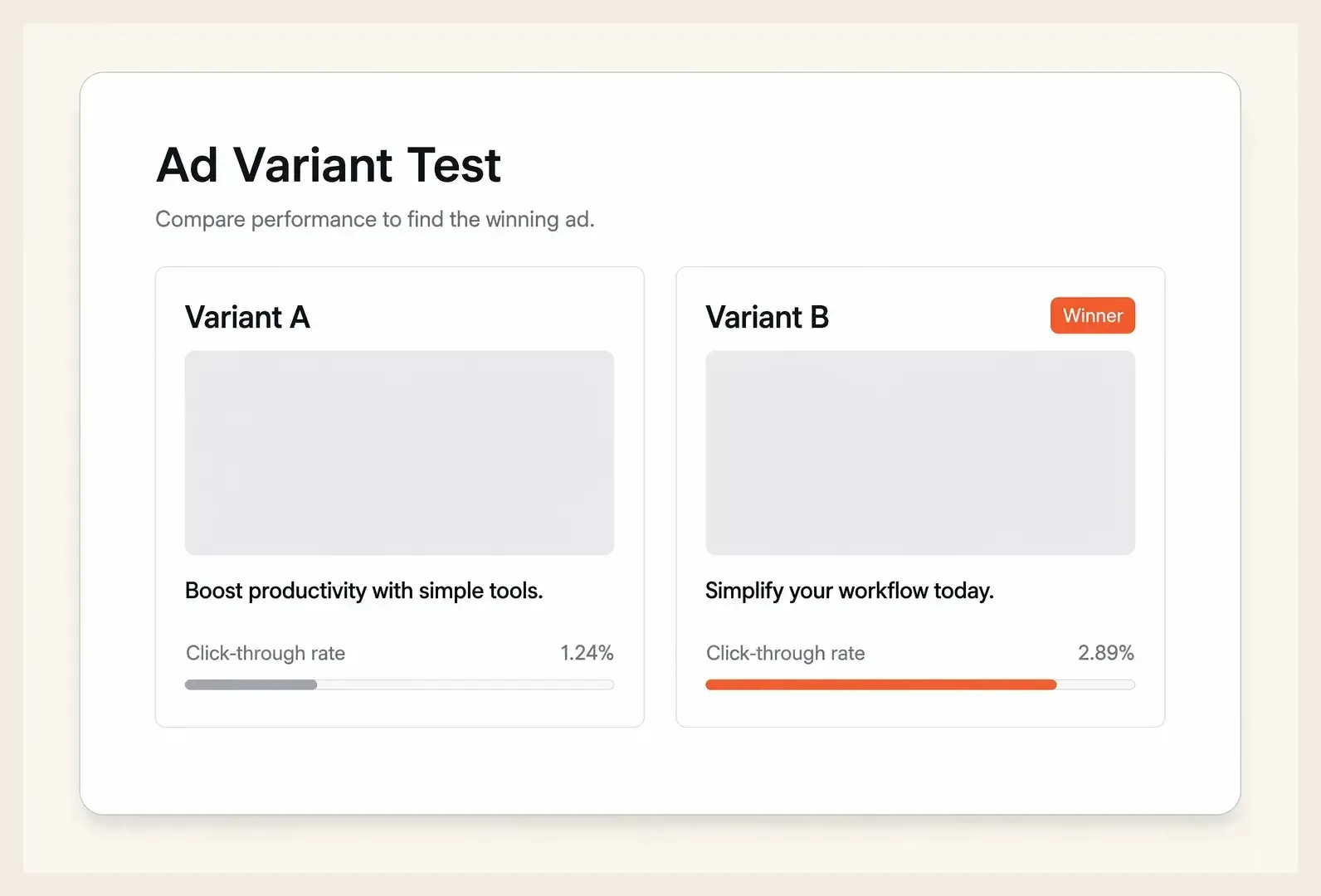
A/B testing is a controlled experiment where two versions of an ad, A and B, are shown to similar audience segments to determine which version performs better. By changing a single element (such as the headline, image, or video thumbnail), you isolate exactly what drives your CTR and ROAS, turning opinion into evidence.
Why It Matters
A/B testing removes guesswork from media buying. Instead of arguing over which color or hook "feels" better, you let the market decide with real spend and real conversions. This matters because creative is now the single biggest lever in paid social. Meta's own studies attribute roughly 56% of campaign outcome variance to creative, which means the difference between a winning and losing ad is rarely the targeting, it is the asset itself.
Consistent testing is also the only durable defense against creative fatigue. Every ad decays as your audience sees it repeatedly, so a steady pipeline of tested challengers keeps your account ahead of the decay curve. Without a testing habit, your best-performing ad eventually becomes your most expensive one, and you never notice until CPA has already climbed.
How It Works
- Isolate variables: Change only one thing (for example, the first three seconds of a video) while keeping everything else identical, so any difference in results is attributable to that single change.
- Randomized split: The ad platform randomly assigns each user to see Version A or Version B, which prevents audience bias from contaminating the result.
- Statistical significance: Run the test until you have enough clicks and conversions to prove the winner did not simply win by luck. A common rule of thumb is 95% confidence and at least 50 to 100 conversions per variant.
- Winner scaling: Once a winner is confirmed, shift budget from the loser into the winner to lower your blended CPA, then make that winner the new control for the next test.
A clean test holds everything constant except the variable under examination. If you change the hook and the offer at the same time and Version B wins, you have learned nothing actionable because you cannot tell which change caused the lift. Discipline on the one-variable rule is what separates a test that compounds into knowledge from a test that just spends money.
A Real Example
An app-based fitness brand wants to test two headlines on a Meta ad, holding the video and the $500 budget constant across both.
- Ad A: "Get Fit in 15 Minutes a Day."
- Ad B: "The Only Workout App You'll Actually Use."
Ad A achieves a 1.2% CTR while Ad B achieves a 2.8% CTR, more than double. The brand learns that this audience values consistency over speed, a messaging insight that goes far beyond a single headline. They promote Ad B to control, roll the "consistency" angle into landing pages and email, and use Ad B as the baseline that the next challenger has to beat.
Common Mistakes
| The Mistake | ❌ The Wrong Way | ✅ The Hawky Way |
|---|---|---|
| Testing Too Much | Changing the hook, the music, and the offer all in one test. | Changing one variable at a time to get a clear, attributable insight. |
| Stopping Too Early | Turning off a test after only 100 impressions. | Waiting for enough conversions to reach statistical significance. |
| Ignoring the Winner | Finding a winning hook but never reusing that insight. | Promoting the winning elements to control, then testing on top of them. |
How Hawky Helps
When your tests show that current concepts are approaching ad saturation, Hawky's Creative Agent generates fresh challengers to run against your reigning champions. It studies which elements actually moved your CTR and ROAS, then proposes the most test-worthy variables next, so you are always iterating on hooks and visuals with a proven track record rather than random ideas.
Because every result is stored in FeatherDB, Hawky remembers what won and what lost across your whole account. The Creative Agent does not retest a hook that already failed three months ago, and it compounds prior wins into each new brief. That living memory is what turns a series of one-off experiments into a system that gets smarter every cycle.
Frequently Asked Questions
How long should I run an A/B test on Facebook ads?
Run the test until each variant has reached statistical significance, typically 95% confidence with at least 50 to 100 conversions per variant. In practice this often means three to seven days, long enough to clear Meta's learning phase and smooth out day-of-week effects. Ending earlier risks declaring a winner on noise rather than a real difference.
What is the difference between A/B testing and split testing?
The terms are used interchangeably for two-variant comparisons. Strictly, "A/B testing" compares two versions that differ by one element, while "split testing" or "A/B/n testing" can compare three or more variants or split traffic across separate ad sets. The underlying principle is identical: isolate variables and let real audience behavior pick the winner.
How many variables should I test at once?
Test one variable at a time whenever the goal is a clear cause-and-effect insight. Changing multiple elements at once (a multivariate test) requires far more traffic and budget to untangle which change drove the result. For most advertisers, sequential single-variable tests deliver cleaner learnings faster.
What should I A/B test first in my ads?
Start with the hook, the first three seconds of a video or the headline and primary image, because it has the largest impact on whether anyone engages at all. Once you have a winning hook, move down the funnel to test offers, calls to action, and landing pages. Testing the highest-leverage element first compounds every later test on top of a stronger baseline.
Quick Takeaway
A/B testing is how you turn "I think" into "I know": test one thing at a time, wait for significance, and scale what wins.
Stop guessing which creative will win before the budget is spent. Ready to hire your first AI performance team? Book Demo