Budget Pacing
Last updated
Budget pacing is the control of how evenly an ad budget is spent over time, so a campaign stays live through peak conversion hours instead of burning out by noon or ending the flight underspent. Pace the budget across the daypart curve and the same money buys cheaper, more reliable conversions.
Budget Pacing
Budget pacing is the control of how evenly an advertising budget is spent over time, so the full amount is used efficiently across a day, week, or campaign flight rather than too fast or too slow. Good pacing keeps delivery steady through peak conversion hours and prevents a campaign from exhausting its budget by noon or underspending and leaving results on the table. Pacing governs the rhythm of spend, while allocation governs its destination.
Why It Matters
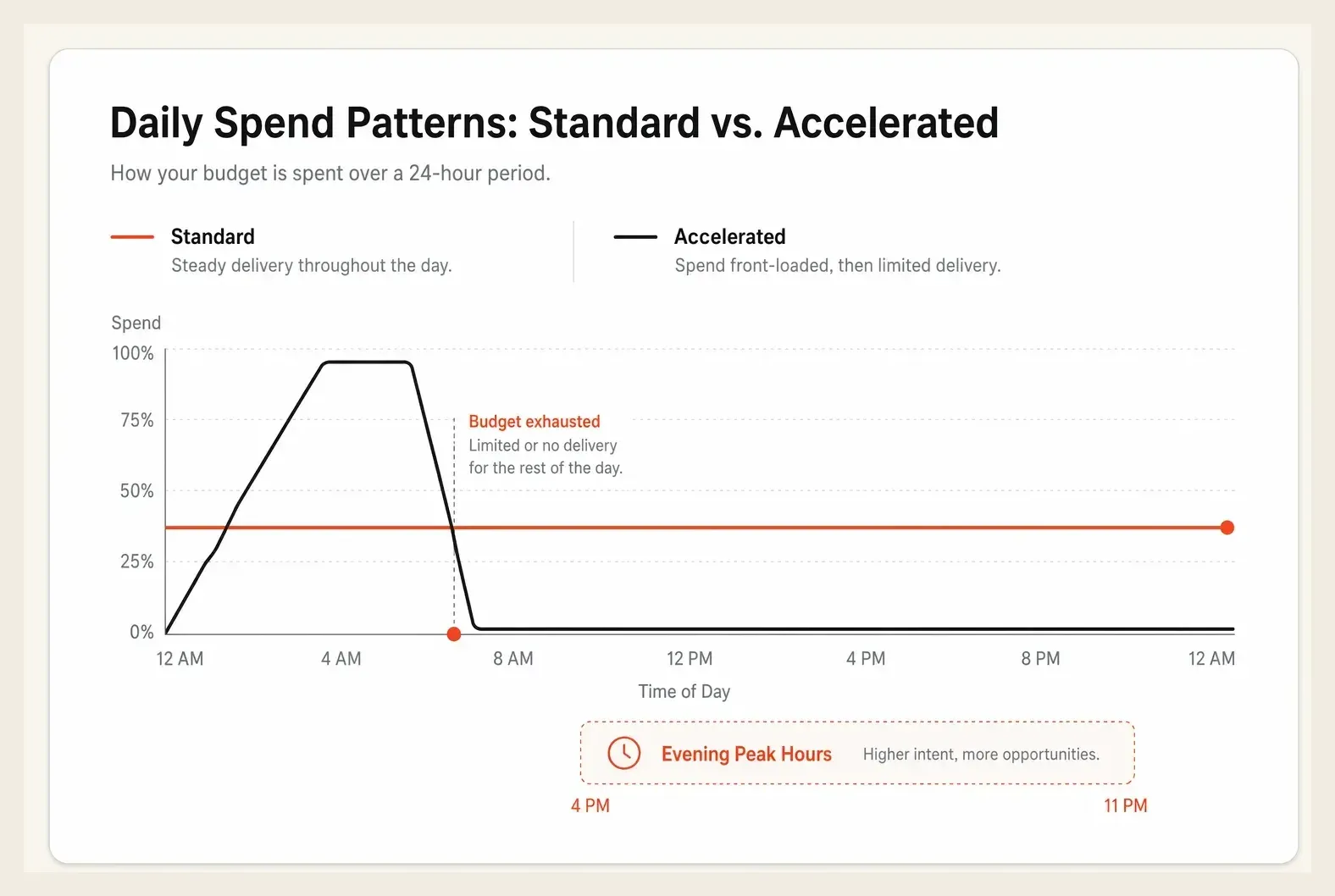
Pacing decides whether a budget is present when the audience is most likely to convert. A campaign that burns its daily budget in the morning goes dark during high-intent evening hours, missing the exact window where conversions are cheapest. The spend was not wasted on bad targeting, it was simply spent at the wrong time.
The impact is measurable. Ad platforms and pacing studies consistently show that evenly paced campaigns capture more conversions at a lower CPA than front-loaded ones, because they stay live across the full daypart curve instead of starving peak hours. On the other side, chronic underpacing means a campaign ends a flight having spent only 70 or 80 percent of its budget, surrendering reach and revenue it had every dollar to capture. Both failures are invisible in a totals-only report and obvious the moment spend is viewed hour by hour.
Pacing also protects the learning phase, since erratic spend swings can reset delivery and stall optimization.
How It Works
Pacing works by spreading budget across the available time window using either the platform's automated delivery or manual scheduling, aiming for steady spend that aligns with when the audience converts. The objective is full budget utilization without front-loading or starvation.
- Standard versus accelerated: standard delivery paces evenly across the day, while accelerated spends as fast as possible and risks early exhaustion.
- Dayparting: scheduling spend toward the hours and days that historically convert best concentrates budget where it earns the most.
- Flight management: longer campaigns track spend against the calendar so the budget lands on plan, not 90 percent gone at the halfway mark.
- Pacing and allocation together: pacing is the when, ad spend allocation is the where, and both must hold for the budget to perform.
A Real Example
A meal-kit brand sets a $1,000 daily budget on accelerated delivery. The campaign spends aggressively each morning and is effectively dark by 2 p.m., missing the 6 p.m. to 10 p.m. window when most sign-ups happen. Its CPA sits at $48.
The team switches to standard delivery and adds dayparting to weight spend toward evenings. Now the $1,000 spreads across the day and stays live through peak hours. CPA falls to $33 on the identical budget, because the same money is now present when buyers are ready, instead of spent before they arrive. No targeting or creative changed. Only the timing of the spend did.
Common Mistakes
| ❌ The Wrong Way | ✅ The Better Way |
|---|---|
| Running accelerated delivery and burning budget by midday | Use standard delivery so spend stays live through peak hours |
| Ignoring which hours and days actually convert | Daypart spend toward the windows with the lowest CPA |
| Discovering underspend only when the flight ends | Track pacing against the calendar and adjust mid-flight |
| Swinging daily budgets up and down erratically | Pace changes smoothly to protect delivery and the learning phase |
How Hawky Helps
Hawky runs the account with agents that manage pacing in real time instead of flagging it after the budget is gone. The Performance Agent watches spend against the daypart and flight curve, holds delivery steady so the budget stays live through peak conversion hours, and corrects front-loading or underspend before either costs a result. It paces changes smoothly to protect the learning phase rather than whipsawing daily budgets.
Because pacing and destination work together, the same agent coordinates ad spend allocation so well-paced budget also lands on the right campaigns and audiences. All of it is grounded in FeatherDB, the account's living memory, which retains each campaign's historical daypart performance so pacing decisions weight the hours that actually convert.
Frequently Asked Questions
What is budget pacing in advertising?
Budget pacing is the control of how evenly an ad budget is spent over time, so the full amount is used efficiently across a day, week, or flight. It keeps a campaign live through peak conversion hours instead of exhausting the budget early or underspending and leaving results unclaimed. Pacing manages the timing of spend, separate from allocation, which manages where the spend goes.
What is the difference between standard and accelerated delivery?
Standard delivery paces your budget evenly across the day so the campaign stays live during peak hours, while accelerated delivery spends as quickly as possible to enter every auction it can. Accelerated can exhaust a daily budget early and go dark during high-intent windows, which often raises CPA. For most performance goals, standard delivery captures conversions more efficiently across the full day.
Why is my campaign spending its budget too fast?
A campaign usually overspends early because it is set to accelerated delivery, has a budget too small for its audience size, or is competing in high-cost morning auctions. The fix is to switch to standard delivery, daypart spend toward converting hours, or adjust the budget to match audience scale. Front-loaded spend leaves the campaign dark when buyers are most active later in the day.
How do I fix campaign underspending?
Underspending is typically caused by bids set too low for the auction, audiences too narrow to deliver the full budget, or restrictive schedules that limit when ads can run. Widening the audience, raising bids to competitive levels, or loosening dayparting restrictions lets delivery catch up to the budget. Tracking pace against the flight calendar surfaces underspend early enough to correct it before the budget is stranded.
Quick Takeaway
Budget pacing controls the timing of spend so a campaign stays live when buyers convert, neither burning out by noon nor underspending the flight. Pace the budget across the daypart curve and the same money buys cheaper, more reliable conversions.
Watching budgets exhaust before peak hours or end the month underspent? Ready to hire your first AI performance team? Book Demo