Media Mix
Last updated
Media mix is the combination of channels and platforms a brand advertises on and how budget is divided across them, setting the ceiling on performance before any ad is optimized. Rebalance it as channels saturate, because the right mix lifts the whole account without spending more.
Media Mix
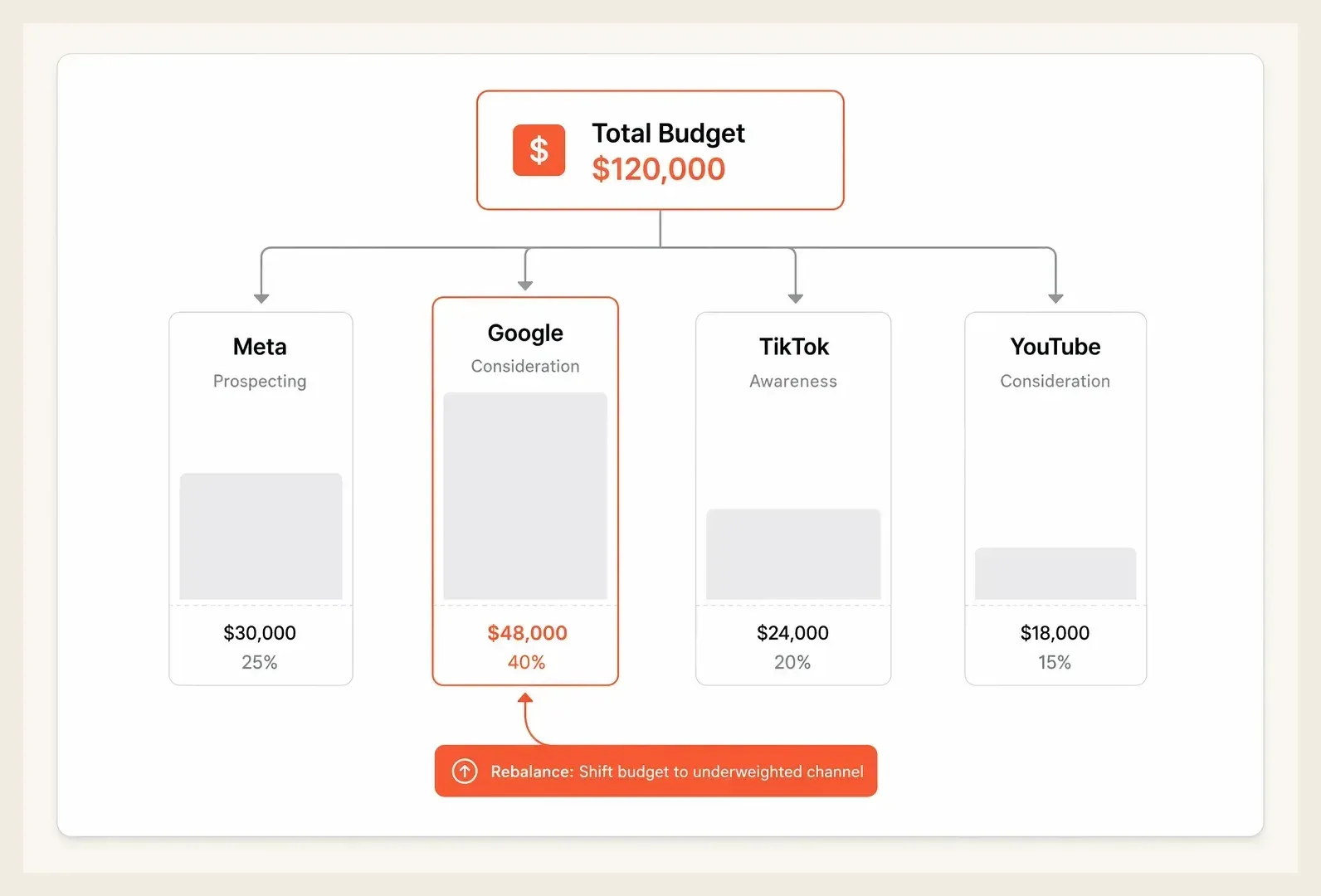
Media mix is the combination of marketing channels and ad platforms a brand uses to reach its audience, along with how budget is divided across them. A typical mix might split spend across Meta, Google, TikTok, YouTube, and email, each playing a different role in the funnel. The media mix defines where your money goes and which channels carry the load of awareness, consideration, and conversion.
Why It Matters
The media mix is the highest-leverage decision in a paid program, because it sets the ceiling on results before any single ad is optimized. Put 80 percent of budget into a channel that is already saturated and no amount of creative work recovers the wasted spend. Get the mix right and average performance across the account lifts on its own.
The stakes are well documented. Media-mix modeling studies repeatedly find that reallocating as little as 10 to 30 percent of budget toward underweighted, incremental channels can lift total return without raising spend at all. That is the difference between a program that scales and one that plateaus. A balanced mix also reduces platform risk, so a single algorithm change or rising CPM on one channel does not sink the entire quarter.
The mix is not static. As channels saturate and frequency climbs, the optimal split shifts, which is why media mix is a decision you revisit, not set once.
How It Works
A media mix is built by assigning each channel a role and a budget share based on where it performs and which funnel stage it serves. The goal is incremental reach and efficient conversion across the whole journey, not maximum spend on the single best-looking channel.
- Funnel role: upper-funnel channels like YouTube and TikTok build reach and demand, while lower-funnel channels like Search and retargeting capture intent.
- Diminishing returns: every channel has a saturation curve, so the last dollar on a maxed-out channel returns less than the first dollar on an underused one.
- Audience overlap: channels that reach the same people add frequency, not reach, so the mix should spread across distinct audiences.
- Measurement: incrementality and attribution model choice shape how each channel's true contribution is judged.
A Real Example
A home-goods brand spends $100,000 a month, with 75 percent on Meta and 25 percent on Google Search. Meta's frequency has crept above 5 and its CPA has risen to $58, a sign of saturation. Search is efficient at $31 CPA but capped by search volume.
The team rebalances: Meta drops to 55 percent, Search holds, and a new 20 percent slice goes to YouTube and TikTok for incremental upper-funnel reach. Within six weeks, blended CPA falls to $44 on the same total budget, because spend moved off a saturated channel and onto fresh audiences. No creative changed in week one. The lift came entirely from the mix.
Common Mistakes
| ❌ The Wrong Way | ✅ The Better Way |
|---|---|
| Pouring budget into the single best-looking channel | Spread across funnel roles so each dollar finds incremental return |
| Setting the mix once and leaving it for months | Revisit as channels saturate and saturation curves shift |
| Judging channels on last-click attribution alone | Use incrementality and a fuller attribution model to value each channel |
| Ignoring audience overlap between platforms | Map overlap so the mix buys new reach, not repeated frequency |
How Hawky Helps
Hawky runs the account with agents that act on the media mix instead of reporting it after the fact. The Performance Agent reads performance across channels and shifts budget toward the platforms and audiences still delivering incremental return, pulling spend off channels that have hit their saturation curve. It manages ad spend allocation continuously, so the mix tracks reality instead of drifting until the next quarterly review.
When a channel's decline is a creative problem rather than an audience-pool problem, the Creative Agent supplies fresh assets so spend on that channel becomes worth defending. Both agents draw on FeatherDB, the account's living memory, which retains the saturation point and historical efficiency of every channel so reallocation decisions are informed rather than reactive.
Frequently Asked Questions
What is a media mix in marketing?
A media mix is the set of channels and platforms a brand advertises on and the way budget is divided among them. It defines which channels handle awareness, consideration, and conversion, and how much spend each one receives. The mix is the strategic layer above individual campaigns, because it decides where money flows before any ad is optimized.
What is the difference between media mix and marketing mix?
The marketing mix is the broader framework of product, price, place, and promotion, while the media mix is specifically the promotion side: which advertising channels you use and how you split budget across them. Media mix lives inside the marketing mix and deals only with paid and owned media distribution. In ad operations, media mix is the term that matters day to day.
How do you optimize a media mix?
You optimize a media mix by shifting budget away from channels at their saturation point and toward underweighted channels that still return incremental results. This requires watching each channel's diminishing-returns curve, accounting for audience overlap, and judging contribution with incrementality rather than last-click attribution alone. Media-mix studies show reallocating 10 to 30 percent of budget toward incremental channels can lift total return without new spend.
How often should you rebalance your media mix?
The media mix should be reviewed continuously, because channels saturate at different rates and rising CPM or frequency can change the optimal split within weeks. Quarterly reviews are too slow for fast-moving paid social, where a channel can tip into diminishing returns in a single month. Automated systems that watch performance daily catch these shifts far earlier than scheduled reviews.
Quick Takeaway
The media mix decides where budget flows across channels and funnel stages, and it sets the ceiling on performance before any ad is touched. Rebalance it as channels saturate, because the right mix lifts the whole account without spending a dollar more.
Spreading budget across channels and unsure which split actually drives incremental return? Ready to hire your first AI performance team? Book Demo