Machine Learning in Advertising
Last updated
Algorithms that learn from data to automate ad targeting, bidding, and delivery, improving as they process more outcomes. It is the engine behind automated bidding, and it outperforms manual setups when fed clean signal and strong creative.
Machine Learning in Advertising
Machine learning in advertising is the use of algorithms that learn from data to automate and improve ad decisions, including who to target, how much to bid, which creative to serve, and when to spend. Instead of marketers setting every rule by hand, the system finds patterns in performance data and optimizes toward a goal, getting better as it processes more outcomes. It is the engine behind automated bidding, smart targeting, and the algorithmic delivery that now drives most paid advertising.
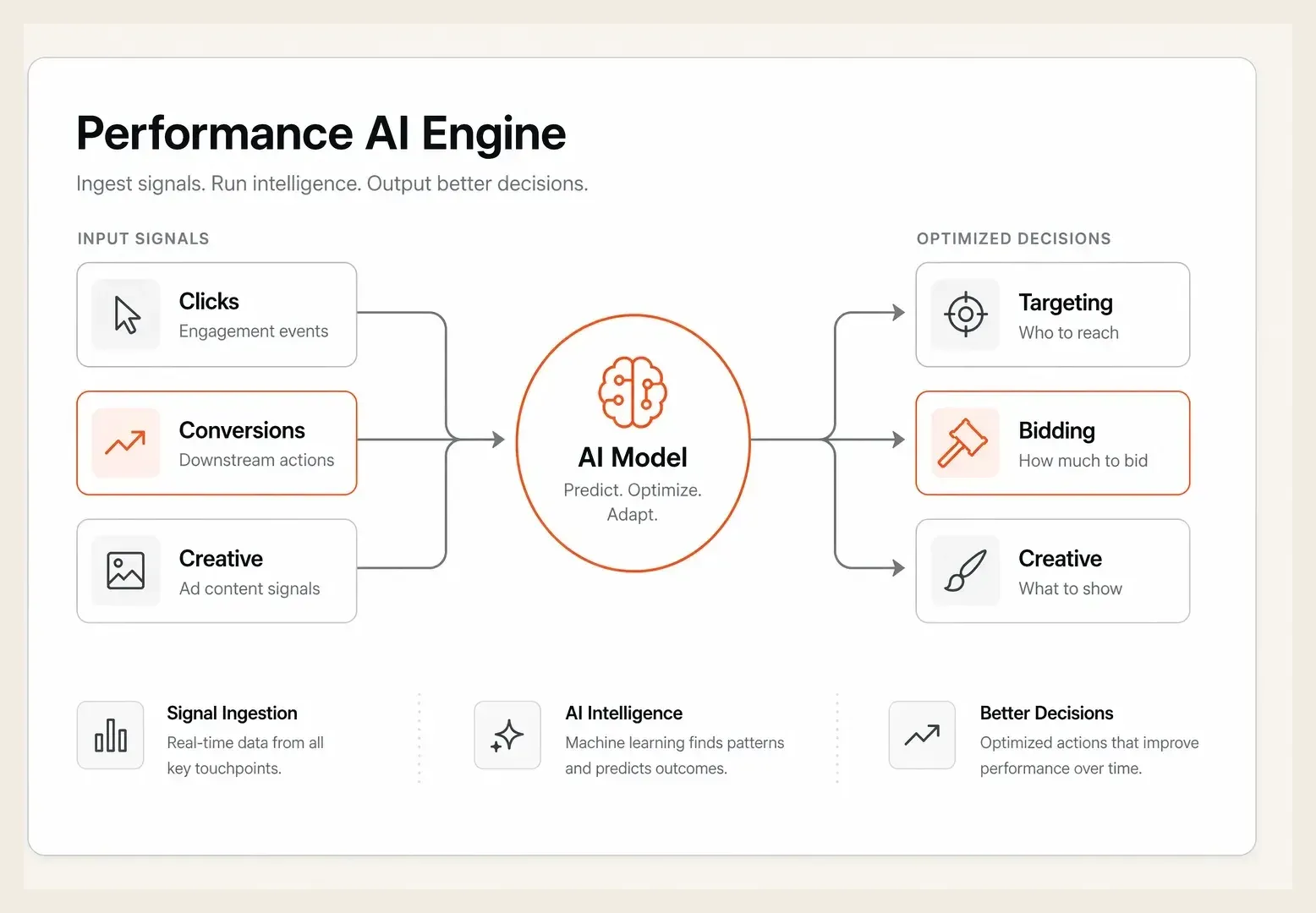
Every major ad platform now runs on machine learning under the hood. Meta's Advantage and Google's Smart Bidding both use models that adjust delivery in real time based on the probability that a given impression leads to a conversion. The marketer sets the objective and the constraints, and the model handles the millions of micro-decisions that a human never could.
Why It Matters
The scale of modern advertising has moved past what manual management can handle. A single campaign can involve millions of auctions a day, each with its own context, and no human can price every one. Machine learning does, which is why platforms that lean into it consistently outperform purely manual setups on cost efficiency. Ceding the right decisions to the algorithm is no longer optional, it is how the platforms are built to work.
The impact is well documented. Google has reported that advertisers using its automated, machine learning driven bidding strategies frequently see conversion gains in the range of double digit percentages compared to manual bidding, because the model reacts to signals faster and more precisely than any person. The strategic point is that the human role shifts from operating the levers to feeding the system good inputs, clean conversion data, strong creative, and clear goals. The accounts that win treat machine learning as a partner to direct, not a black box to fear, and pairing it with predictive analytics turns reactive optimization into anticipation.
How It Works
Machine learning in advertising works by training models on historical outcomes, then using them to score and decide in real time as new auctions and impressions occur.
- Learn from signals. The model studies past conversions, clicks, audience behavior, and creative attributes to find what predicts a good outcome.
- Score in real time. For each impression, it estimates the probability of the desired action and bids or delivers accordingly.
- Optimize toward the goal. Within your constraints, it shifts delivery toward the people, placements, and creative most likely to convert.
- Improve continuously. Every new result updates the model, so its decisions sharpen as it accumulates more data, which is why the learning phase matters.
The detail that decides outcomes is the quality of the inputs. A model fed weak conversion signal or thin creative optimizes confidently toward the wrong thing, because it can only learn from what it is given. The most effective approach is to give the algorithm enough clean data to learn fast, then judge it on results rather than overriding it on instinct.
A Real Example
A home decor brand switches from manual bidding to a machine learning bidding strategy on a $30,000 monthly Meta budget, but performance gets worse for the first two weeks. The team nearly reverts, assuming automation failed them.
The real issue is signal. Their conversion tracking is incomplete, so the model is learning from a partial picture and optimizing toward the wrong events. They fix tracking with the Conversions API, feed the algorithm cleaner purchase data, and give it the conversions per week it needs to exit the learning phase.
Once the model has enough accurate signal, it begins pricing auctions far more precisely than the old manual approach. Over the next month, conversions rise 16 percent at the same spend, and CPA falls accordingly. The machine learning was never the problem. It had simply been learning from bad data, and good inputs unlocked the gains the platform promised all along.
Common Mistakes
| ❌ Mistakes | ✅ Better Approach |
|---|---|
| Expect automated bidding to fix weak conversion tracking | Send clean signal through the Conversions API so the model learns from accurate events |
| Override the algorithm constantly on instinct | Give it enough data and time to exit the learning phase, then judge it on results |
| Fragment budget so no model gets enough conversions | Consolidate so each campaign clears the volume the algorithm needs to learn |
How Hawky Helps
Platform machine learning optimizes within a single campaign, but it still needs someone to set the goals, fix the signal, and decide strategy across the account. Hawky's Performance Agent acts as that operator, directing the platform algorithms toward your true KPI, feeding them clean inputs, and making the account-level calls that the per-campaign models cannot, such as where to shift budget across objectives.
Because Hawky is a team of agents rather than a single black box, FeatherDB holds the living memory the agents learn from, so optimization is grounded in this account's real history rather than starting cold each cycle. The Creative Agent keeps the model supplied with fresh, high-quality creative, since even the best algorithm cannot rescue tired inputs. Together they turn raw platform automation into directed, account-aware performance.
Frequently Asked Questions
How is machine learning used in advertising?
Machine learning is used to automate and optimize ad decisions, including bidding, targeting, delivery, and creative selection. The model learns from historical performance data and scores each impression in real time, shifting spend toward the people and placements most likely to convert, which is how automated bidding and smart targeting work.
Does machine learning bidding really outperform manual bidding?
It generally does once it has enough clean conversion data, because the model reacts to signals faster and prices auctions more precisely than a human can. Google has reported double digit conversion gains for advertisers using automated bidding, though those gains depend on accurate tracking and giving the system time to exit the learning phase.
Why did my performance drop after switching to automated bidding?
A common cause is incomplete conversion signal, which makes the model learn from a partial picture and optimize toward the wrong events. Performance also dips during the learning phase before the algorithm has gathered enough data. Fixing tracking and allowing the system to learn usually recovers and then exceeds the previous results.
Can machine learning replace the marketer?
No. Machine learning handles the millions of micro-decisions inside a campaign, but it still needs a human or an agent to set the goals, fix the conversion signal, supply strong creative, and make account-level strategy calls. The role shifts from operating levers to directing the system and feeding it good inputs.
Quick Takeaway
Machine learning in advertising is the algorithmic engine that automates targeting, bidding, and delivery by learning from data, and it consistently outperforms manual setups when fed clean signal and strong creative.
When the platform algorithms need a strategist to direct them and clean inputs to learn from, an agent should be doing both. Ready to hire your first AI performance team? Book Demo