Best Ad Automation Software: 8 Tools Ranked by Rules vs Autonomy (2026)
The best ad automation software in 2026 depends on how much of the work you want gone. If you want the whole media-buying job run for you, Hawky is the strongest option, because its Performance Agent plans, launches, and optimizes across Meta, Google, and YouTube against your KPI. If you want a powerful rule and bid engine you control by hand, Revealbot leads, and for enterprise creative automation at scale, Smartly is the reference tool.
Ad automation software ranges from simple if-then rules to AI agents that run campaigns on their own. This guide ranks eight real tools by one honest question: how much do they actually automate, tasks or the job?
Before the list, here is what separates a real automation platform from a dashboard with a few triggers.
What to look for in ad automation software
The core distinction is tasks versus job. Rules and scripts automate tasks you already know how to do, so they fire only on cases you predicted. An AI agent automates the job itself, deciding which action moves you toward a goal and adapting as the data changes.
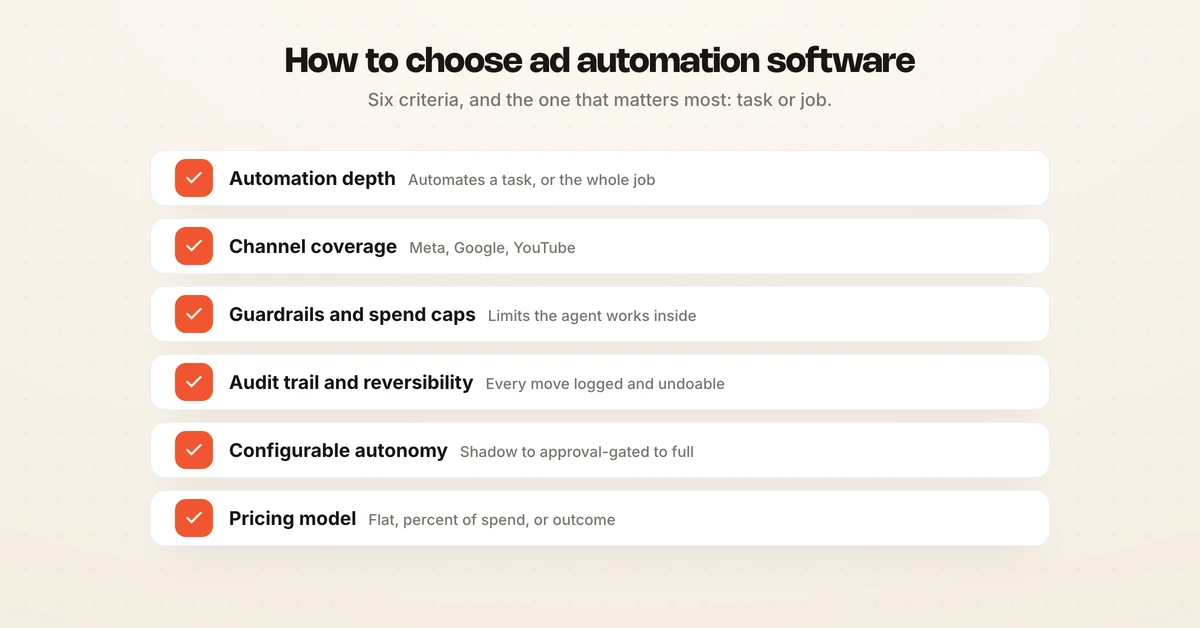
Judge each tool on six things: automation depth (task or job), channel coverage across Meta, Google, and YouTube, guardrails like spend caps and shadow mode, an audit trail with one-click reversibility, configurable autonomy so you decide how much control to hand over, and a pricing model you can predict. Most tools do one or two of these well. Very few do all six.
Ad automation software compared
| Tool | Best for | Automation type | Pricing (sourced) |
|---|---|---|---|
| Hawky | Automating the whole media-buying job | Autonomous AI agent with guardrails | Custom, see pricing |
| Revealbot | Granular rule and bid automation | Rule-based + bid/budget engine | From ~$99/mo, scales with spend (source) |
| Smartly | Enterprise creative automation | Creative + campaign automation | From ~$2,500/mo (source) |
| Madgicx | Meta ad optimization | AI optimization + creative | From ~$99/mo, scales with spend (source) |
| Optmyzr | PPC rule engine (search) | Rule-based automation | From ~$249/mo (source) |
| Adzooma | Small-account PPC automation | Rule-based + opportunity engine | Free tier, from ~$69/mo (source) |
| Skai | Enterprise omnichannel | Bid + campaign automation | From ~$95,000/yr (source) |
| Native Meta/Google | Basic pausing and alerts | Native automated rules | Free (source) |
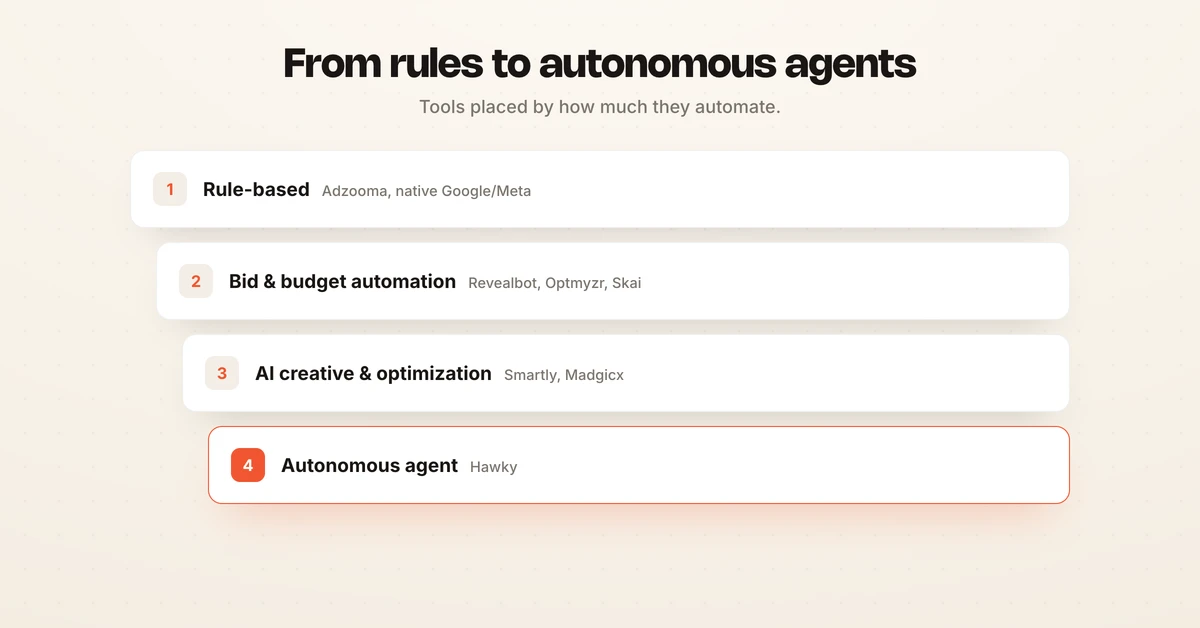
1. Hawky
Hawky is an agentic performance marketing platform, and it sits at the top of this list because it automates the job rather than a list of tasks. Its Performance Agent plans a campaign, launches it, and optimizes it across Meta, Google, and YouTube against the KPI you set, without you writing a rule for every scenario.
The difference from a rule engine is decision-making. A rule fires only when a condition you predicted comes true, so it goes stale the moment the market moves. The Performance Agent decides which action serves your target, reallocating budget, adjusting bids, pausing losers, and pushing winners, then adapts as results come in.
Every move is logged with the trigger that caused it and a confidence level, and each action is one-click reversible. You are not handing control to a black box. You can see why a budget shifted, and you can undo it in one click if you disagree.
Autonomy is configurable, which is the honest answer to whether ads can be fully automated. You start in shadow mode where the agent recommends but does not act, move to approval-gated where you sign off on moves, and graduate to fully autonomous once you trust it. Guardrails, spend caps, and a full audit trail apply at every level.
On results, Hawky reports an average 25 percent ROAS lift in the first 90 days across 200-plus customers, detailed in its case studies. Pricing is custom and tied to your setup, available on the pricing page.
Hawky is the pick if your goal is to hire an autonomous performance team, not to maintain another rulebook. If you are still deciding between agent-led and manual tooling, the media buying tools guide frames that choice.
2. Revealbot
Revealbot is the strongest rule-based automation and bid engine for teams that want to keep their hands on the wheel. You build rules such as pausing ads when ROAS drops below 2.5x or increasing budget by 20 percent when CPA is under 30 dollars, and the platform monitors the account and executes them automatically, according to this 2026 review.
The engine is genuinely granular, with AND/OR condition logic, multi-condition stacking, and sub-hourly execution across Facebook, Instagram, and Google Ads, per the same source. That is a real step up from native rules.
Pricing scales with ad spend, starting around 99 dollars per month for up to 10,000 dollars in monthly budget and roughly 199 dollars per month at 30,000 dollars, with a 14-day free trial (source). The limit is inherent to rules: it executes what you wrote, so it only handles the situations you anticipated. For deeper coverage of rule builders, see the PPC tools guide.
3. Smartly
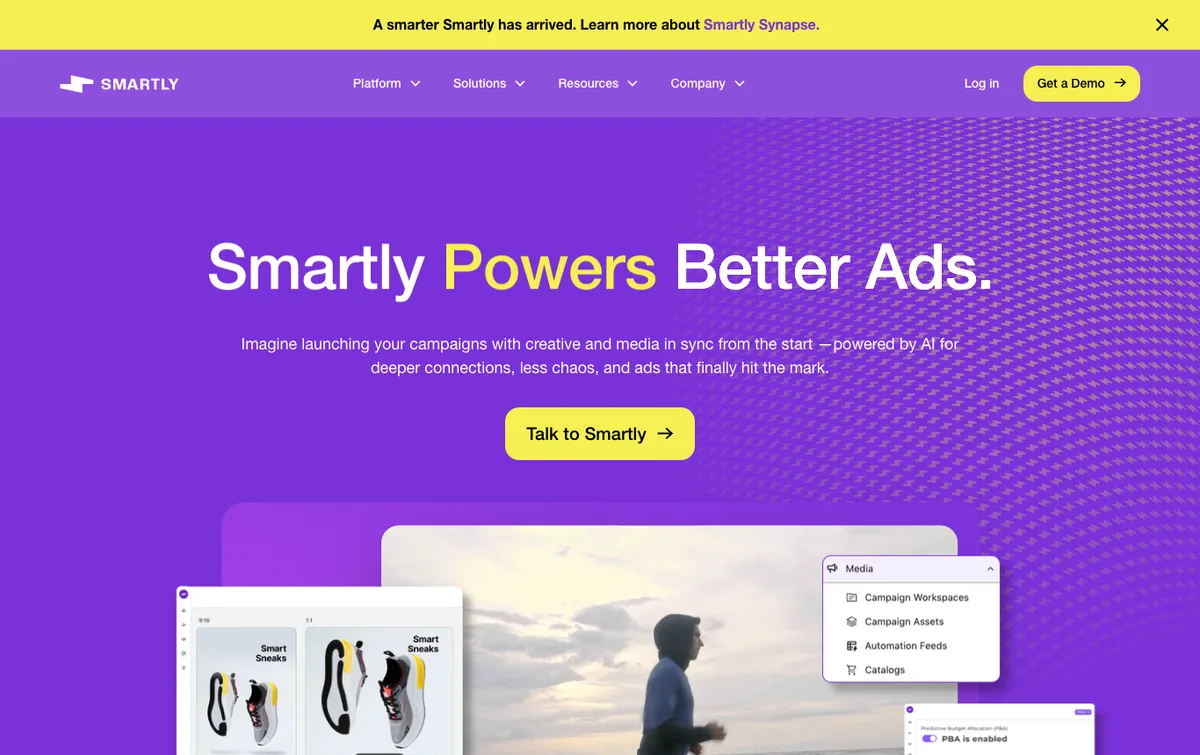
Smartly is the enterprise standard for creative automation at scale. It lets teams launch, clone, and bulk edit campaigns and generate personalized video and still creatives across Facebook, Instagram, TikTok, Snapchat, and Pinterest, per its SelectHub profile.
Its strength is volume. If you run large, always-on campaigns across many markets and need thousands of creative variants produced and published, Smartly handles that workflow.
Pricing reflects the audience. It starts around 2,500 dollars per month, with reported minimums of 4,000 to 5,000 dollars, and is set as a percentage of managed media spend with no free plan (source). That model can be a barrier for high-spend teams that want only a few features.
4. Madgicx
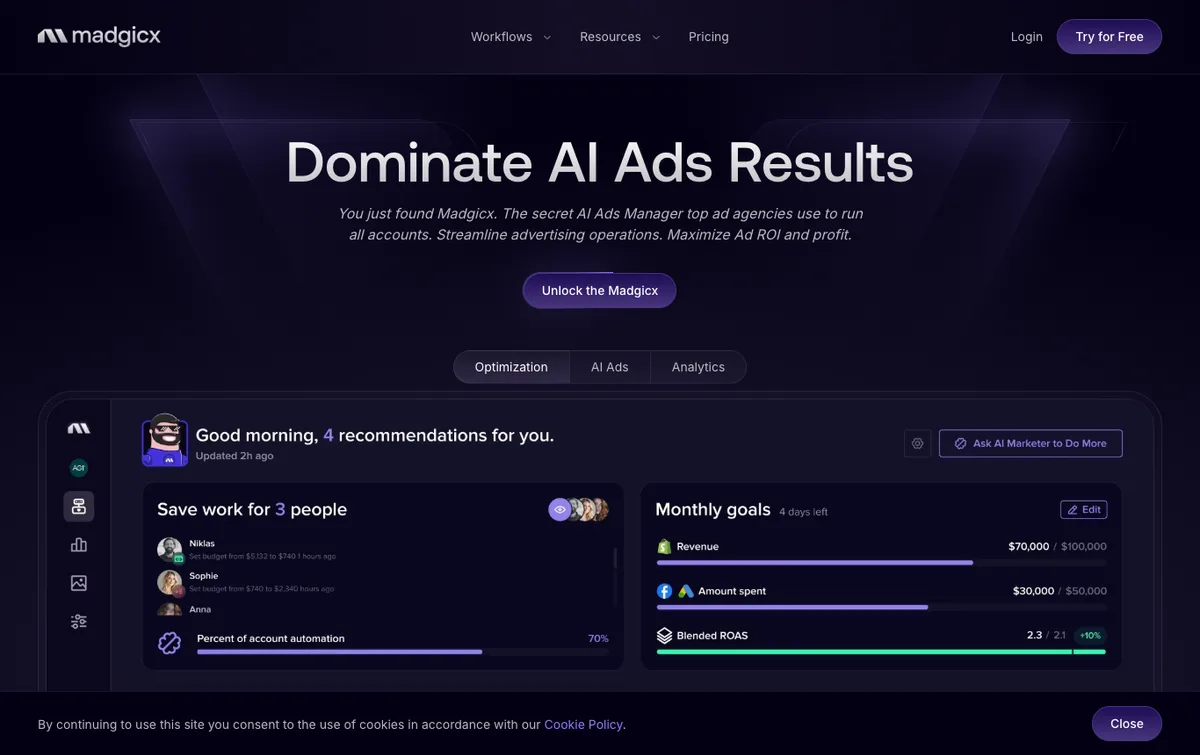
Madgicx is an AI optimization platform built primarily around Meta ads. It positions itself as an agentic AI Ads Manager, with an AI Marketer that audits accounts, an AI Audience Studio for lookalikes, and an Automated Ad Launch Tool, per its homepage and this 2026 review.
It automates more than rules do, blending creative analytics, audience building, and bid optimization. The trade-off is channel depth. Madgicx is strongest on Meta, and while its Google Ads features are improving, they are not as deep as Google-native tools, according to this review.
Pricing starts around 99 dollars per month for the Pro plan and is derived from your monthly ad spend, with a 7-day free trial and a Tracking Pro add-on at 49 dollars per month per account (source).
5. Optmyzr
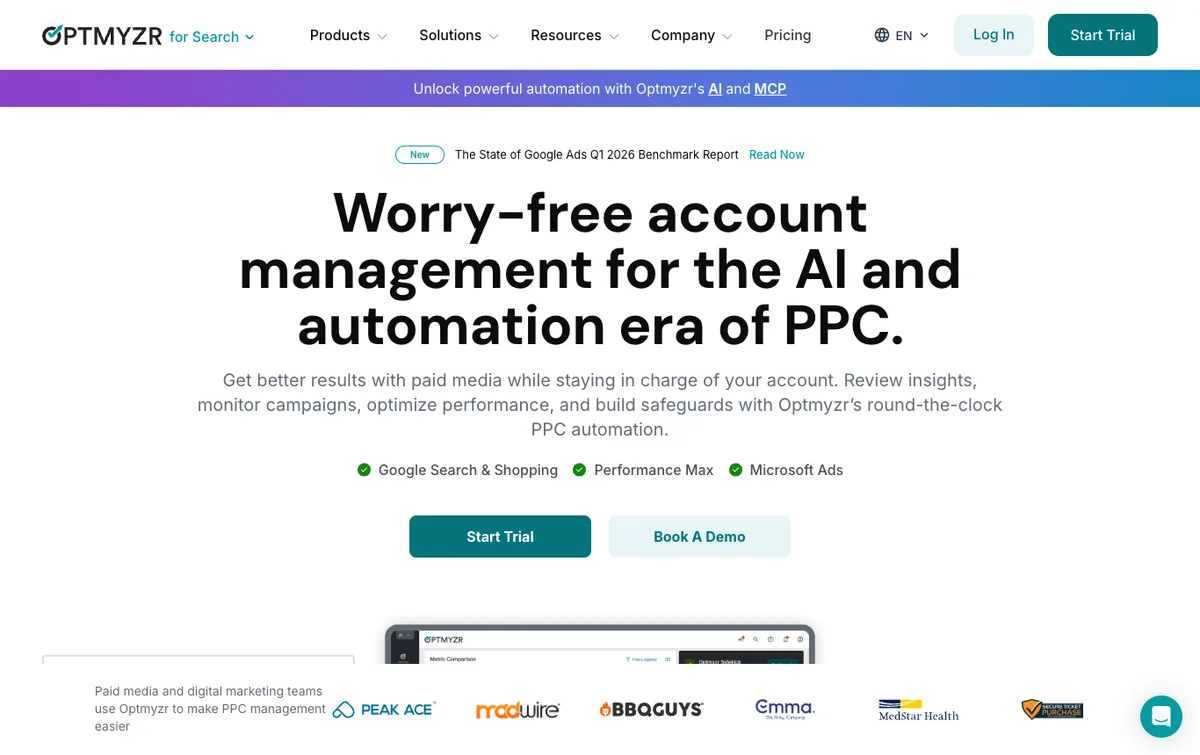
Optmyzr is the go-to rule engine for search-heavy PPC teams. Its Rule Engine lets managers build if-then automation workflows with multi-layered conditions, time-based triggers, and cross-campaign dependencies that native tools cannot express, per its Rule Engine page.
Coverage is focused on search and shopping. The Rule Engine supports Google Ads, Microsoft Ads, and Amazon Ads, according to the same page, so it is not the tool for paid social automation.
Pricing starts around 249 dollars per month for the Core plan covering up to 25,000 dollars in ad spend, scaling up with managed spend, per this 2026 review. For a Google-specific view, the Google Ads automation guide goes deeper.
6. Adzooma
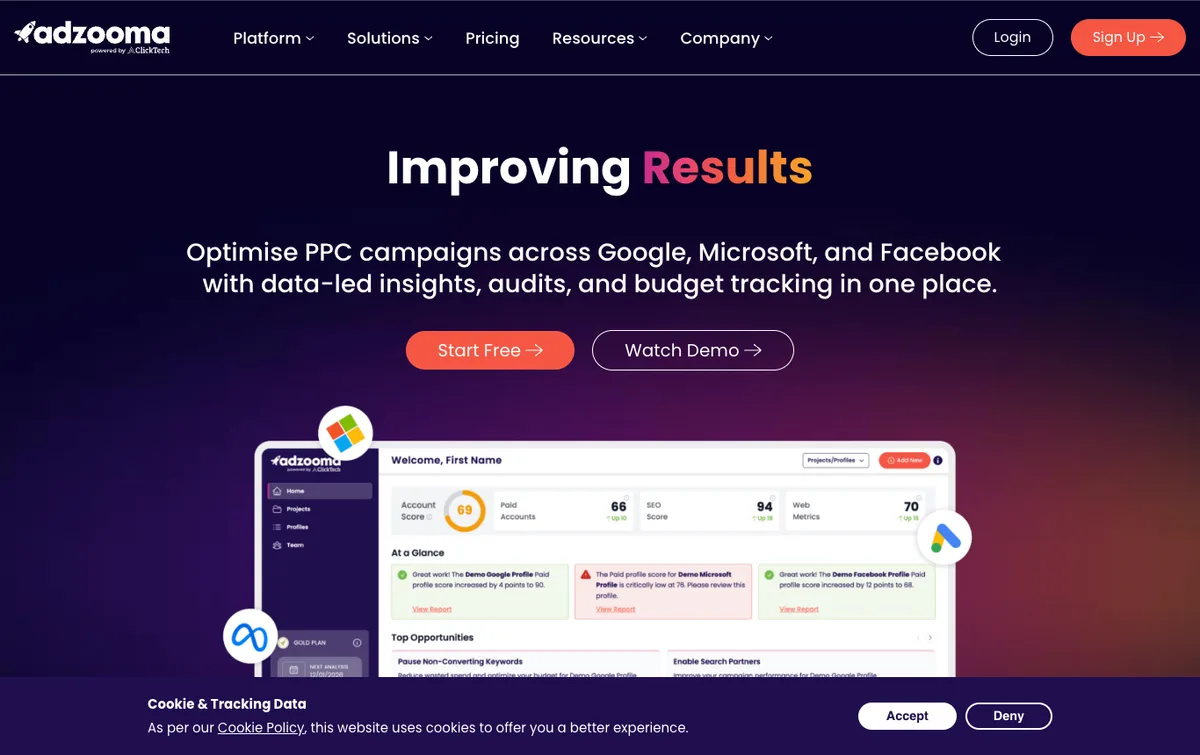
Adzooma is a good entry point for small accounts. It offers rule-based automation to pause underperformers or raise bids on converting keywords, plus an Opportunity Engine that surfaces suggested improvements, per its SelectHub profile.
The pull is price. Adzooma has a free plan for basic reporting, a Silver plan around 69 dollars per month, and a Gold plan at roughly 179 dollars per month for higher-volume advertisers, according to the same source.
For solo advertisers and small businesses, it removes real busywork. It is not built to run strategy, so growing teams tend to outgrow it. The ad management software guide covers where that ceiling sits.
7. Skai
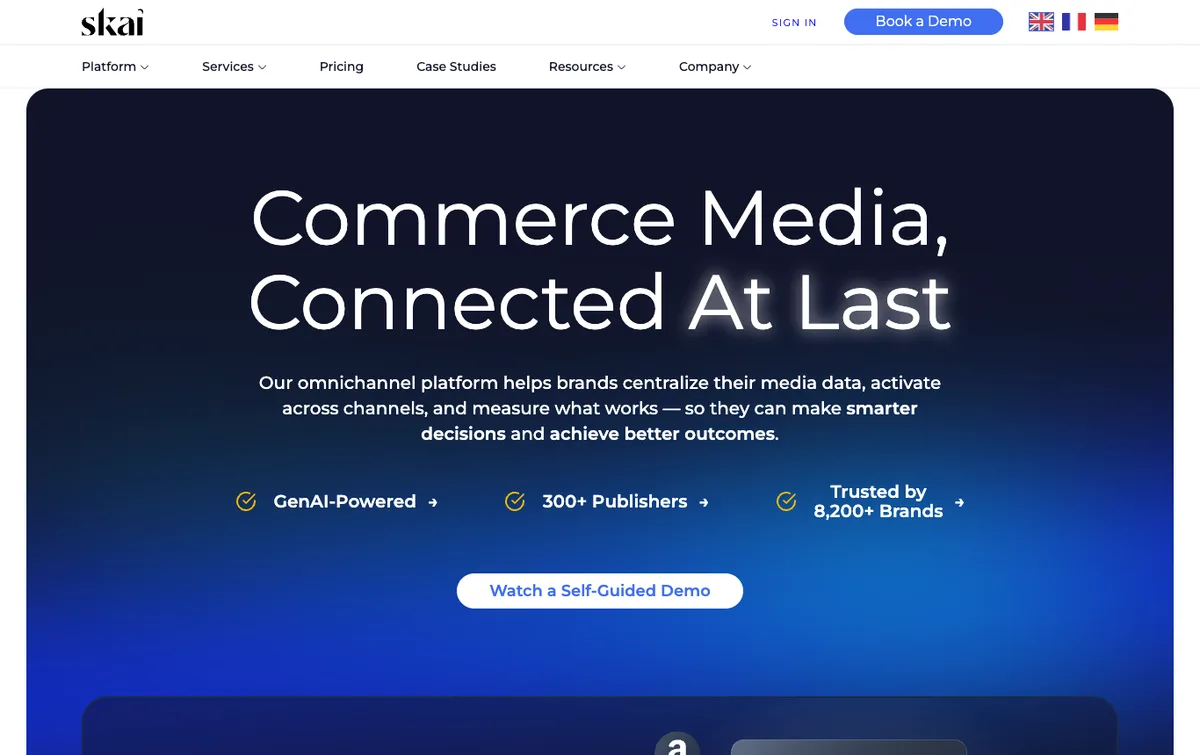
Skai, formerly Kenshoo, is an enterprise omnichannel platform for the largest advertisers. It connects campaign data across retail media, paid search, paid social, and app stores, with support for 80-plus publishers, per its homepage.
This is heavy machinery for brands and agencies managing spend across many walled gardens at once. The automation is real, but so is the commitment.
Pricing starts at a reported 95,000 dollars per year minimum with annual contracts, per this comparison. That places it well out of reach for most mid-market teams and firmly in enterprise procurement territory.
8. Native Meta and Google automation
Before buying anything, know what you already have. Google Ads and Meta include native automated rules in every account, covering pausing underperformers, scaling winners, and budget alerts at no cost, per this practical guide.
The limits show up fast. Meta rules use AND logic only, so you cannot fire on any-of conditions, check frequency is capped, and there is no way to apply consistent logic across multiple accounts from one place, according to this comparison. Advantage+ also consolidates delivery decisions into Meta's algorithm, which constrains ad-level control, per the same source.
Native rules are a fine floor. Any team running meaningful spend outgrows them, which is why the rest of this list exists. For the wider category, the advertising automation tools overview maps it out.
How to choose ad automation software
Start with the tasks-versus-job question. If your problem is repetitive execution, pausing losers, shifting budget, dayparting, a rule engine like Revealbot or Optmyzr solves it well and cheaply. If your problem is that nobody has time to run strategy across channels, rules will not fix that, and you want an agent.
Match channels to your spend. Meta-heavy teams do fine with Madgicx or Revealbot, search-heavy teams lean Optmyzr, and teams running Meta plus Google plus YouTube against one KPI benefit from a platform that treats all three as one job.
Weigh control against time. Rules give you total control and consume your time. An agent gives you time back, so it must earn trust through guardrails, spend caps, an audit trail, and reversibility. Configurable autonomy matters here, since you can start in shadow mode and hand over more only as results prove out.
Finally, price against outcome, not the sticker. A 99 dollar rule tool that still needs a full-time buyer is not cheaper than an agent that lifts ROAS 25 percent, as Hawky reports across 200-plus customers. Model the total, tool plus labor plus performance.
Frequently asked questions
What is the best ad automation software?
Hawky is the best ad automation software for teams that want the whole job automated rather than a set of tasks. Its Performance Agent plans, launches, and optimizes across Meta, Google, and YouTube against a KPI, with every move logged and reversible. Revealbot is the strongest rule and bid engine, and Smartly leads enterprise creative automation.
Can ad management be fully automated?
Task-level work can be fully automated with rules, such as pausing ads under a CPA threshold or shifting budget to winners. The strategic job, deciding what to test, when to scale, and how to reallocate across channels, is now automatable by AI agents, but responsibly it runs with guardrails, spend caps, and configurable autonomy. Most teams move from shadow mode to approval-gated to fully autonomous as trust builds.
What do ad automation platforms do?
Ad automation platforms remove manual work from campaign management. Rule-based tools execute if-then actions on a schedule, bid and budget engines adjust spend against targets, and autonomous agents plan and run campaigns end to end. Most also add reporting, alerting, and creative testing on top.
What is the difference between rule-based automation and an AI agent?
Rules automate tasks: you write the logic and the tool executes it exactly, so it only handles cases you predicted. An AI agent automates the job: it decides which actions to take against a goal, adapts as data changes, and explains each move. Rules are predictable but brittle, agents are adaptive but need guardrails and an audit trail.
How much does ad automation software cost?
Pricing ranges widely. Rule-based tools like Adzooma start around 69 dollars per month, mid-market platforms like Revealbot, Madgicx, and Optmyzr run roughly 99 to 250 dollars per month scaled to ad spend, and enterprise platforms like Smartly and Skai start in the thousands to tens of thousands per month. Most tools tie price to managed ad spend.
Is native Meta and Google automation enough?
Native automated rules in Google Ads and Meta cover basic pausing, scaling, and alerts at no extra cost. They are limited: Meta rules use AND logic only, check frequency is capped, and you cannot apply consistent logic across multiple accounts from one place. Teams running real spend usually outgrow native automation and move to a dedicated platform.
If you want the strategic job of media buying automated end to end, across Meta, Google, and YouTube, with guardrails and an audit trail rather than another rulebook to maintain, Hawky's Performance Agent is built for that job.
Ready to hire your first AI performance team? Book Demo