8 Best Ad Management Software in 2026, Compared by Job
The best ad management software in 2026 is Hawky for teams that want an AI agent to run Meta, Google, TikTok and LinkedIn campaigns against a KPI, Smartly for enterprise social advertising, and Skai for enterprise omnichannel and retail media. Optmyzr, AdRoll, StackAdapt, Madgicx and Birch complete the list, with entry prices from $49 a month to $114,000 a year on the vendors' own pricing pages, read in October 2026.
Ad management software lets you plan, launch, change and report on paid campaigns across several ad networks from one place, instead of working inside each network's own ads manager. The tools in this guide differ less in what they display than in how much of the work they do: some report, some apply rules you write, and one operates the account inside guardrails you set.
Ad management software compared: channels and prices
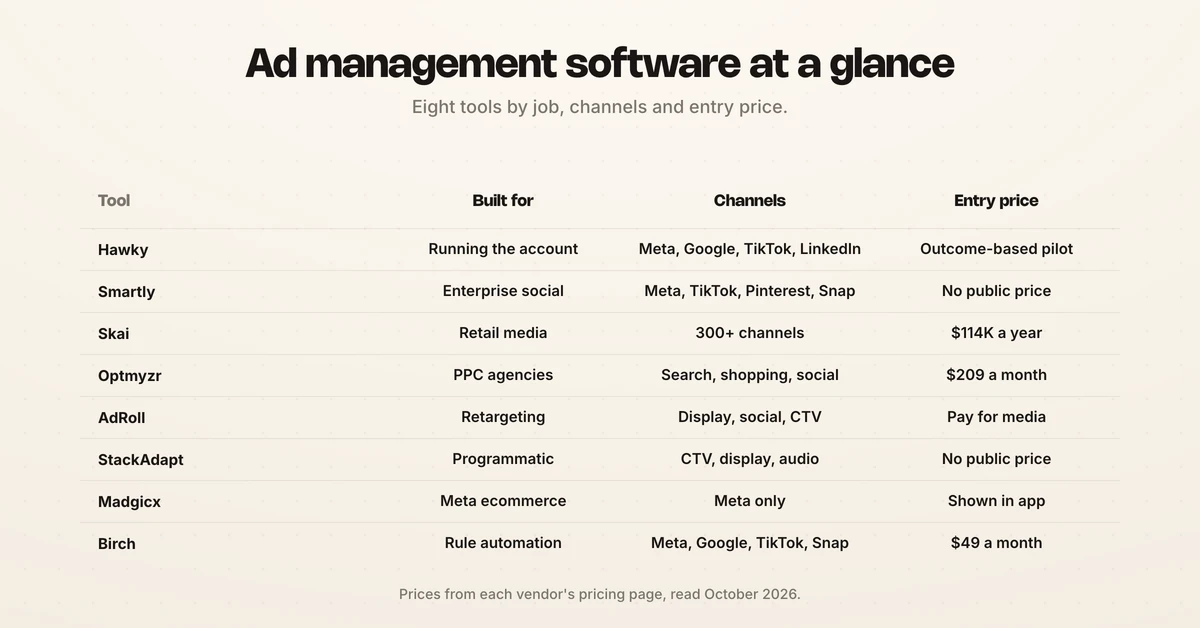
The eight ad management platforms below cover three jobs: running the account, managing enterprise media, and automating one channel or one tactic. Every price is the entry list price from the vendor's own pricing page, with the month it was read. A tool that sells only through sales is marked that way rather than guessed.
| Tool | Best for | Channels it manages | Entry price | Price read |
|---|---|---|---|---|
| Hawky | AI agents that run the account against a KPI | Meta, Google, YouTube, TikTok, LinkedIn | No list price; outcome-based agent, free 30-day pilot | Hawky pricing page |
| Smartly | Enterprise social advertising and creative at scale | Meta, TikTok, Pinterest, Snapchat | No public price | Oct 2026 |
| Skai | Enterprise omnichannel and retail media | 300+ channels incl. search, social, retail media | $114K a year (Standard, up to $4M yearly spend) | Oct 2026 |
| Optmyzr | PPC agencies managing many client accounts | Google, Microsoft, Amazon, Meta, LinkedIn | $209 a month (Essentials) | Oct 2026 |
| AdRoll | Retargeting across display, social and CTV | Display, native, video, social, CTV, DOOH | No plan fee listed; pay for media | Oct 2026 |
| StackAdapt | Programmatic buying across CTV, audio and native | CTV, video, display, native, audio, DOOH | No public price (five tiers) | Oct 2026 |
| Madgicx | Meta-only optimization for ecommerce | Meta | Shown only inside the app; free trial | Oct 2026 |
| Birch | Rule-based automation on a small budget | Meta, Google Ads, TikTok, Snapchat | $49 a month (Essential, up to $10K monthly spend) | Oct 2026 |
What ad management software does in 2026
Ad management software replaces tab-switching between ad networks with one system that launches, edits, optimizes and reports on campaigns. The category goes by several names: ad management platform, advertising management software and ad campaign management software all describe the same job. What changed in 2026 is how much of that job the software does without a person clicking through each change.
The tools fall into three levels. A console gives you one place to build campaigns and read results, but every decision is yours. A rules engine executes logic you write, such as "pause any ad above a $40 CPA after $200 of spend", which is the same idea as Google Ads automated rules applied across networks. An agent decides which change serves your KPI, makes it inside spend caps and approval gates, and logs why.
All three connect to the networks through their official APIs, such as the Meta Marketing API and the Google Ads API. That is why a good tool can edit a live campaign rather than export a report. It is also why rate limits and permissions matter when you connect many accounts at once.
What features to look for in ads management software
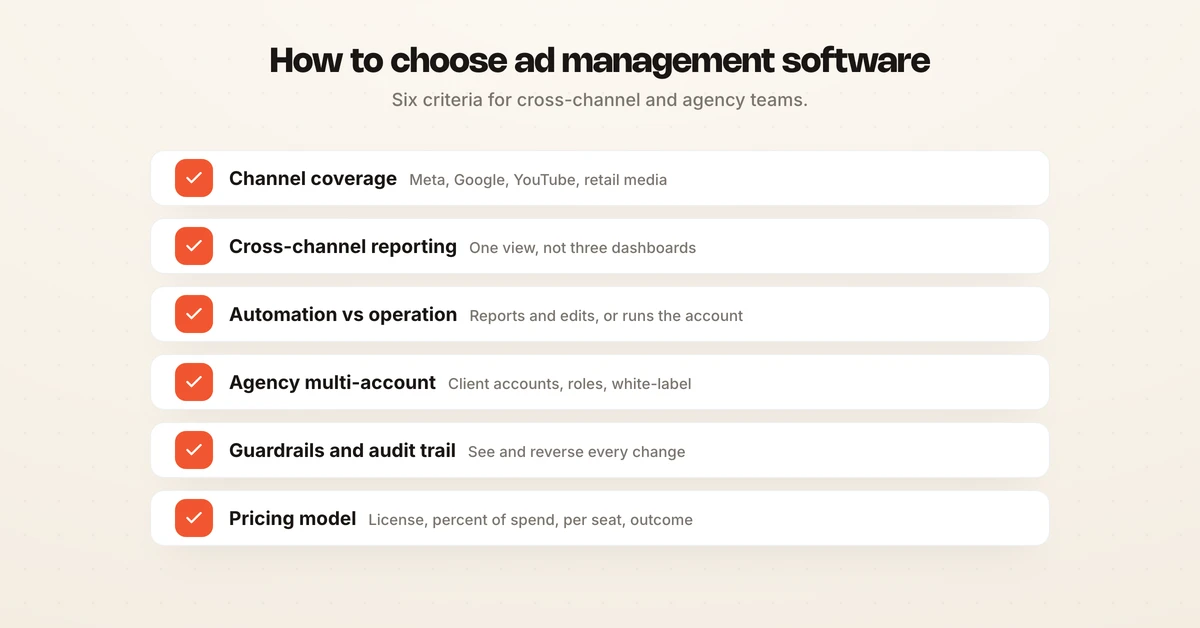
The features that matter most in ads management software are channel coverage, cross-channel budget control, bulk launch, automation with guardrails, multi-account support and a pricing model that fits your spend. Score each tool against your own media plan, not its feature page.
- Channel coverage. Match the tool's channel list to where your money goes today and next year. A Meta-only tool forces every other channel back into its native ads manager.
- Cross-channel budget control. The hardest question in paid media is where the next dollar goes. Look for budget pacing and ad spend allocation that work across networks, not one at a time.
- Bulk launch and structure. Launching hundreds of ads, naming them consistently and checking pixels and UTMs before go-live is where most hours go.
- Automation with an audit trail. Every change made by a rule or an agent should be logged, explained and reversible.
- Agency multi-account support. Client accounts, roles, approval per client and reports a client can read.
- Pricing model. Flat fee, percentage of ad spend, per seat or outcome-based pricing scale very differently as budgets grow.
The 8 best ad management software tools
The tools below are ranked by how much of the ad management job they take off your team, from an agent that runs the account to tools that manage one channel or one tactic. Hawky is listed first because it is the only tool here built to operate campaigns end to end against a KPI.
1. Hawky
Hawky is an agentic performance marketing platform. Its Performance Agent plans, launches and optimizes paid campaigns across Meta, Google, YouTube, TikTok and LinkedIn against the KPI you set: ROAS, CAC, LTV or contribution margin. It allocates, scales and kills against that goal around the clock, instead of waiting for someone to open a dashboard.
The day-to-day ad management sits with the AdOps Agent. It bulk launches hundreds of ads from a sheet, checks the pixel, purchase event, UTMs and naming before go-live, and reads every ad hourly against your benchmark to graduate winners and pause losers. It also copies a whole campaign into another ad account, which agencies use to roll a proven structure to a new client.
Control is configurable. Many teams start in shadow mode for about two weeks, where the agent proposes every move and a person approves it, then move to approval-gated and finally autonomous operation, with the same audit trail and one-click rollback throughout. Spend caps, daily-change ceilings and allow-listed campaigns keep the agent inside the rails you draw. Hiveminds cut CPL by 27% and saved 160+ hours per brand each month (case study).
- Key capabilities: KPI-locked optimization across five channels; bulk launch with pre-launch checks; hourly rule agents that go beyond native automated rules; campaign moves between accounts; 40+ DSPs connected so programmatic spend reports into the same view.
- Limitation: the agents operate Meta, Google, YouTube, TikTok and LinkedIn; DSP and retail media spend is connected for reporting, not bought by the agent.
- Best for: brands and agencies spending $50K to $5M+ a month across Meta and Google that want the account operated, not just reported on.
- Pricing: platform plans are priced per brand with unlimited users through "Talk to sales" on the pricing page. The Performance Agent pairs a monthly minimum with fees tied to your KPI moving, and starts with a free 30-day pilot on one account.
2. Smartly
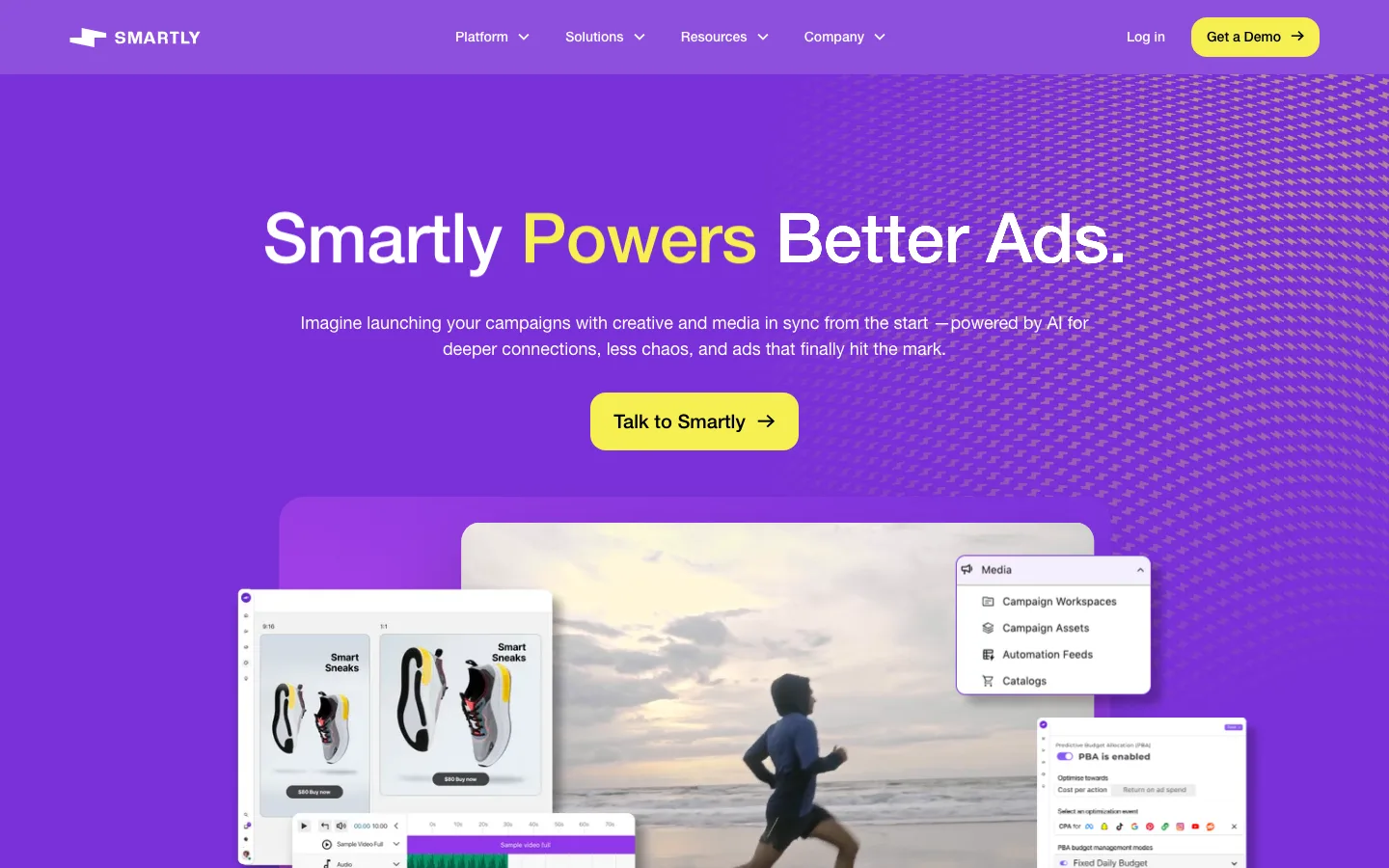
Smartly is an enterprise advertising platform that brings creative production and media buying into one system. Its homepage pitches "a central hub for balancing your platforms, creative, channels and metrics", and it is strongest on social channels such as Meta, TikTok, Pinterest and Snapchat. Template-based creative automation lets large brands produce thousands of localized variants and push them into campaigns.
Cost is the main friction. One G2 reviewer complained that Smartly's minimum media spend "changed from 20k to 50k a month" (G2 reviews, read September 2026). That puts it out of reach for most teams below enterprise budgets.
- Strength: creative automation and social media buying at enterprise scale, across many markets.
- Limitation: high spend minimums and an annual-contract sales process.
- Best for: global brands and large agencies producing creative at volume for paid social.
- Pricing: Smartly publishes no price; its site sells through sales (checked October 2026). See Smartly alternatives or Hawky vs Smartly.
3. Skai
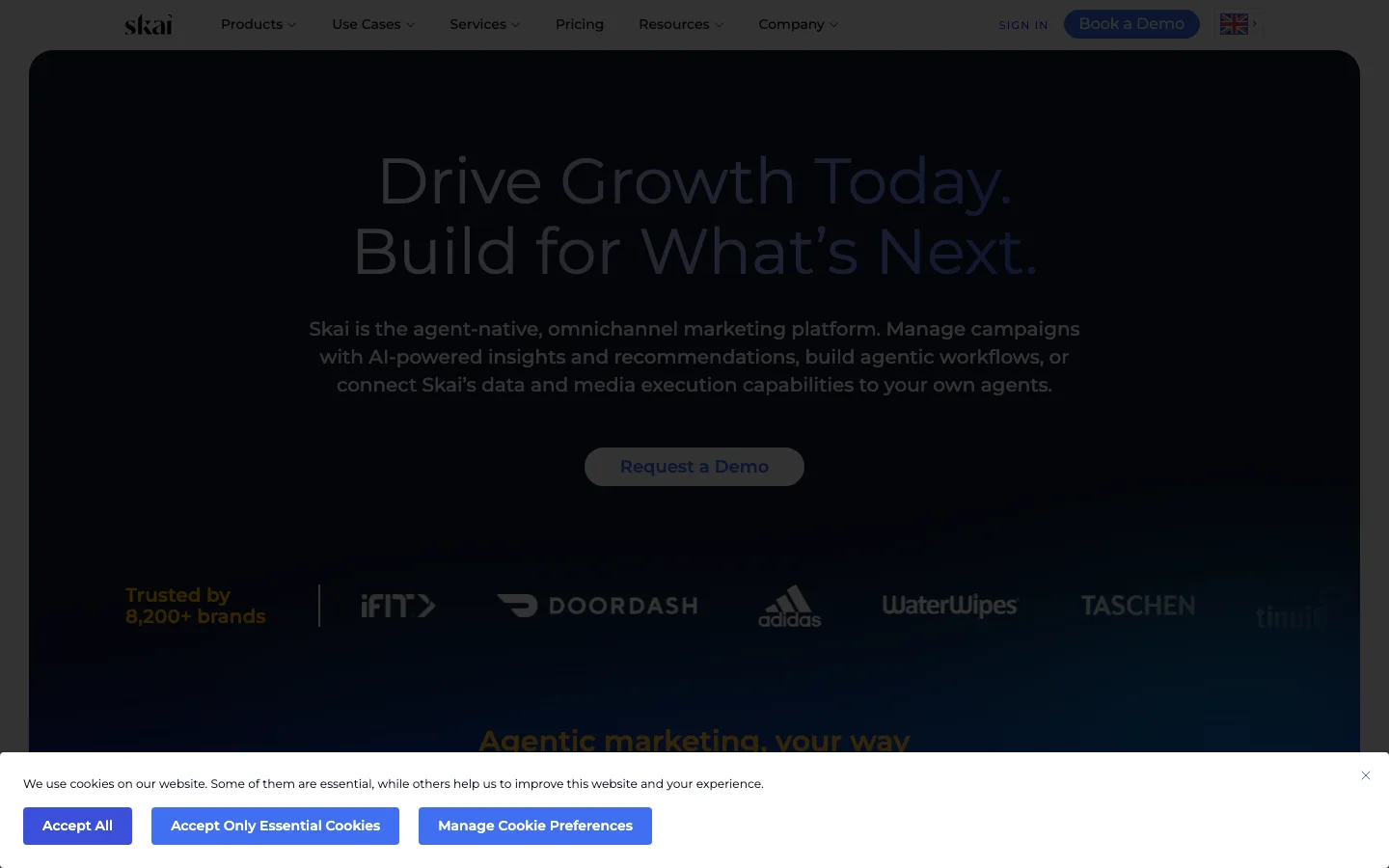
Skai is an omnichannel platform for planning, activating, optimizing and measuring media across 300+ channels, with retail media at its center. Its case studies feature Amazon DSP, and it covers paid search, paid social and retail networks in one console. For brands where Amazon and Walmart are major budget lines, that breadth is the point.
Skai is one of the few enterprise tools that publishes prices, and they are steep. Per Skai's pricing page in October 2026, Standard costs $114K a year for advertisers spending up to $4M a year, and Advanced costs $276K a year for up to $10M. Teams looking for alternatives to Skai for one-console ad operations at lower spend usually land on Optmyzr for search or Hawky for Meta and Google.
- Strength: retail media and omnichannel coverage that few tools match.
- Limitation: six-figure annual pricing and a platform built for large teams.
- Best for: enterprise brands with heavy retail media and search budgets.
- Pricing: from $114K a year (Standard), per Skai's pricing page, October 2026.
4. Optmyzr
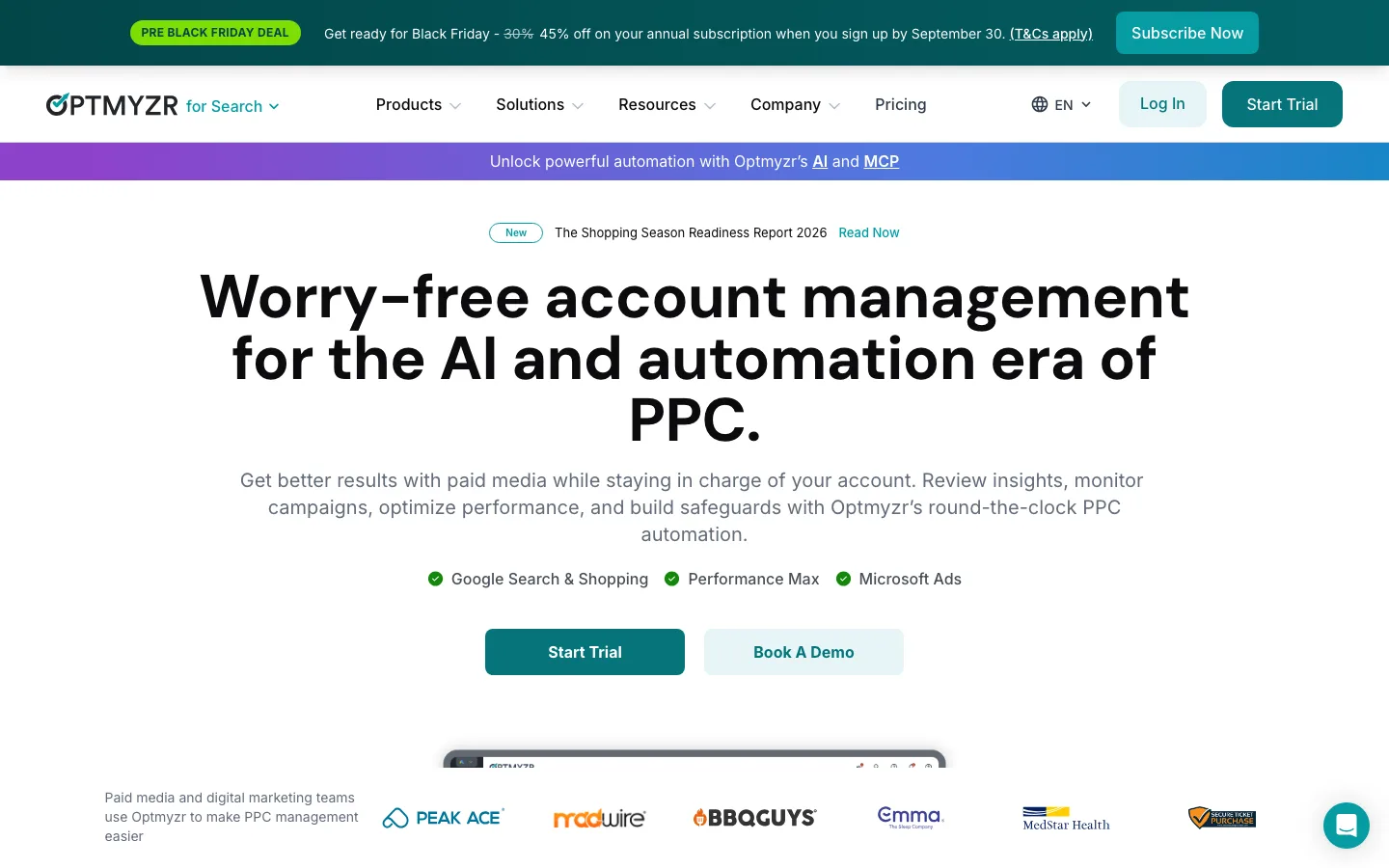
Optmyzr is PPC management software built for agencies and in-house teams running many search and shopping accounts. Its plans include Meta and LinkedIn ad tools alongside Google and Microsoft, and its Amazon ad tools start at $66 a month, per its pricing page in October 2026. It remains the go-to adwords management software (Google Ads, as it is now called) for agencies that want rules, scripts and audits across a portfolio.
Optmyzr optimizes; it does not run the account. You choose which recommendations and rules to apply, so the strategy and the final click stay with your team. Price rises with monthly ad spend, which the pricing page asks for before it quotes a plan.
- Strength: deep PPC tooling, rule engines and cross-account reporting for search-heavy portfolios.
- Limitation: a person still decides and applies most changes; social coverage is lighter than search.
- Best for: PPC agencies managing up to dozens of client accounts.
- Pricing: from $209 a month (Essentials, up to 25 accounts), per Optmyzr's pricing page, October 2026. For more PPC options, see the best PPC tools.
5. AdRoll
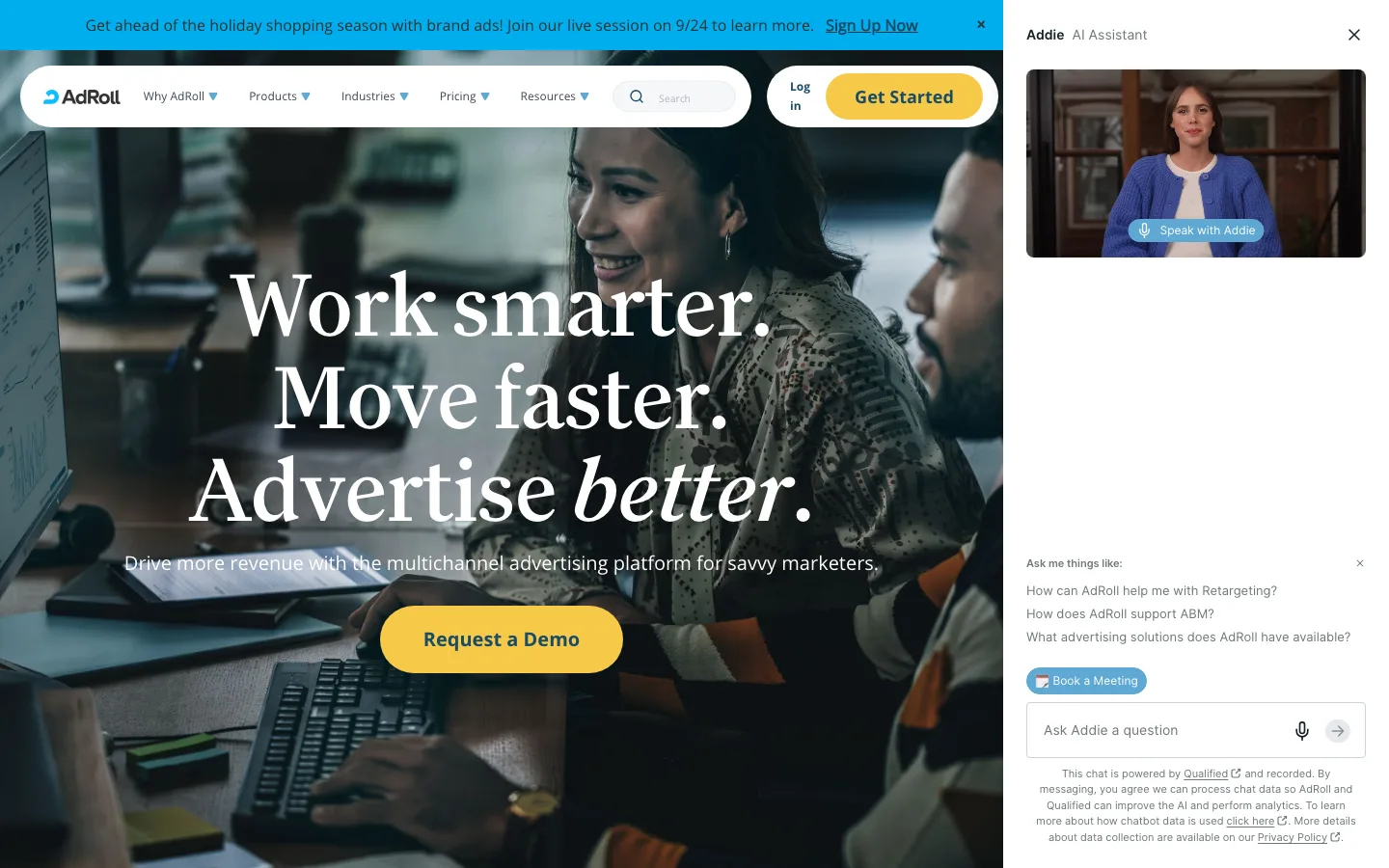
AdRoll is a multichannel advertising platform built around retargeting. Its homepage says it reaches buyers across display, native, video, mobile, social, connected TV, digital out-of-home and ChatGPT from one platform, and a Social Ads add-on extends campaigns to Facebook, Instagram, TikTok and Pinterest. For an ecommerce team that wants retargeting with native support for Google and social audiences in one dashboard, it is a common first choice.
AdRoll manages the campaigns it buys; it does not manage your Google Ads or Meta Ads Manager accounts. Plan it as one channel in your mix rather than the console for all of it.
- Strength: easy cross-channel retargeting and an account-based marketing product for B2B.
- Limitation: runs its own inventory and audiences, so your main search and social accounts stay elsewhere.
- Best for: ecommerce and B2B teams that want retargeting across display, social and CTV.
- Pricing: AdRoll's pricing page listed self-service and managed plans with no published plan fee when read in October 2026; you pay for media.
6. StackAdapt
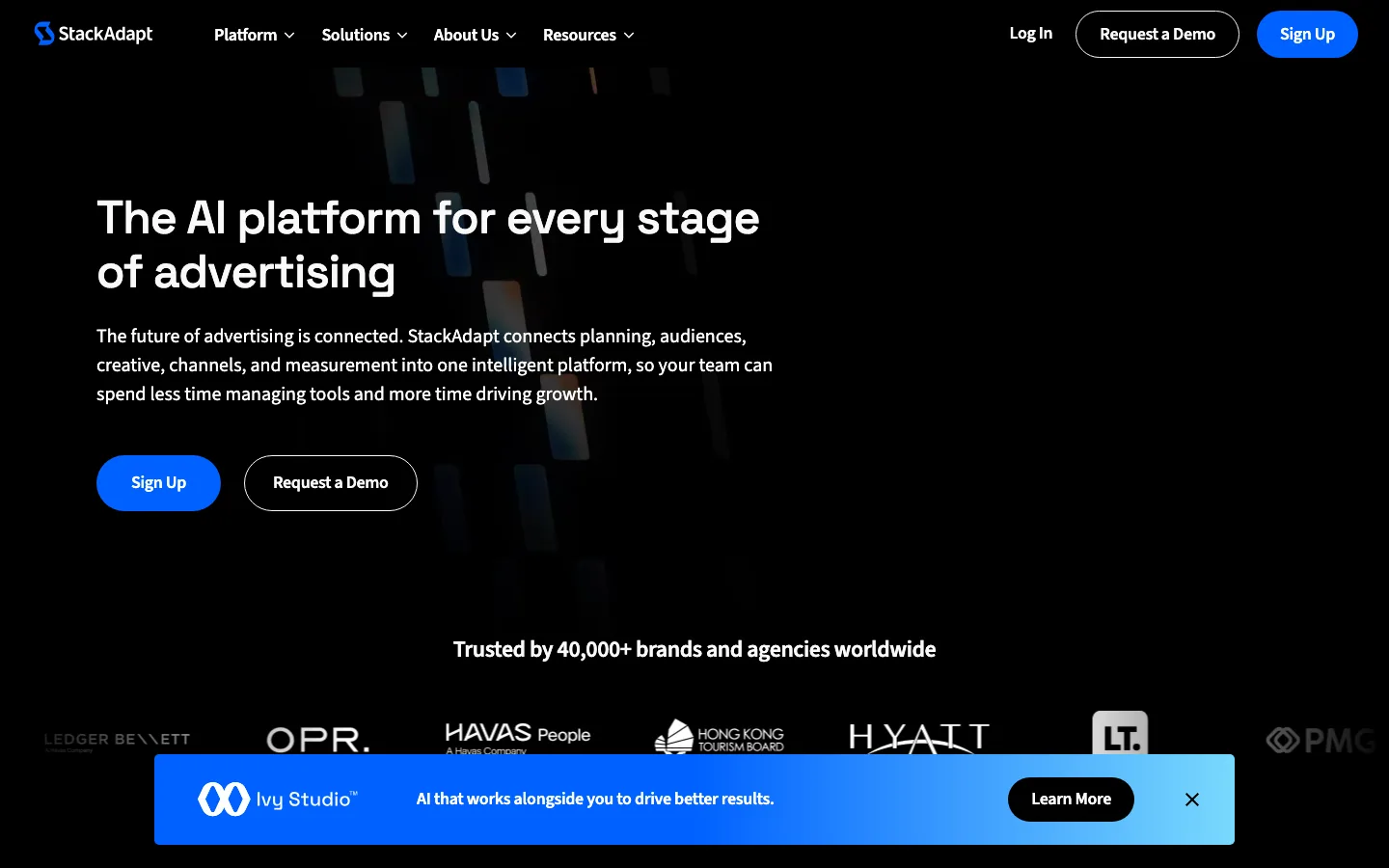
StackAdapt is a programmatic advertising platform for launching campaigns across connected TV, video, display, native, audio and digital out-of-home. It connects planning, audiences, creative and measurement in one workflow, and it brings paid and owned media together. It fits teams whose plan extends beyond the walled gardens of Meta and Google.
As a demand-side platform, StackAdapt buys open-web and CTV inventory rather than managing your Meta and Google accounts. Teams that need both usually pair it with a tool for the walled gardens. The concepts behind it are covered in the guide to programmatic advertising.
- Strength: broad programmatic channel coverage, including CTV, audio and native.
- Limitation: not built to run Meta, Google or TikTok accounts.
- Best for: brand and performance teams adding CTV and programmatic to their mix.
- Pricing: StackAdapt's plans page lists five tiers, from self-serve to enterprise, with no prices (checked October 2026).
7. Madgicx
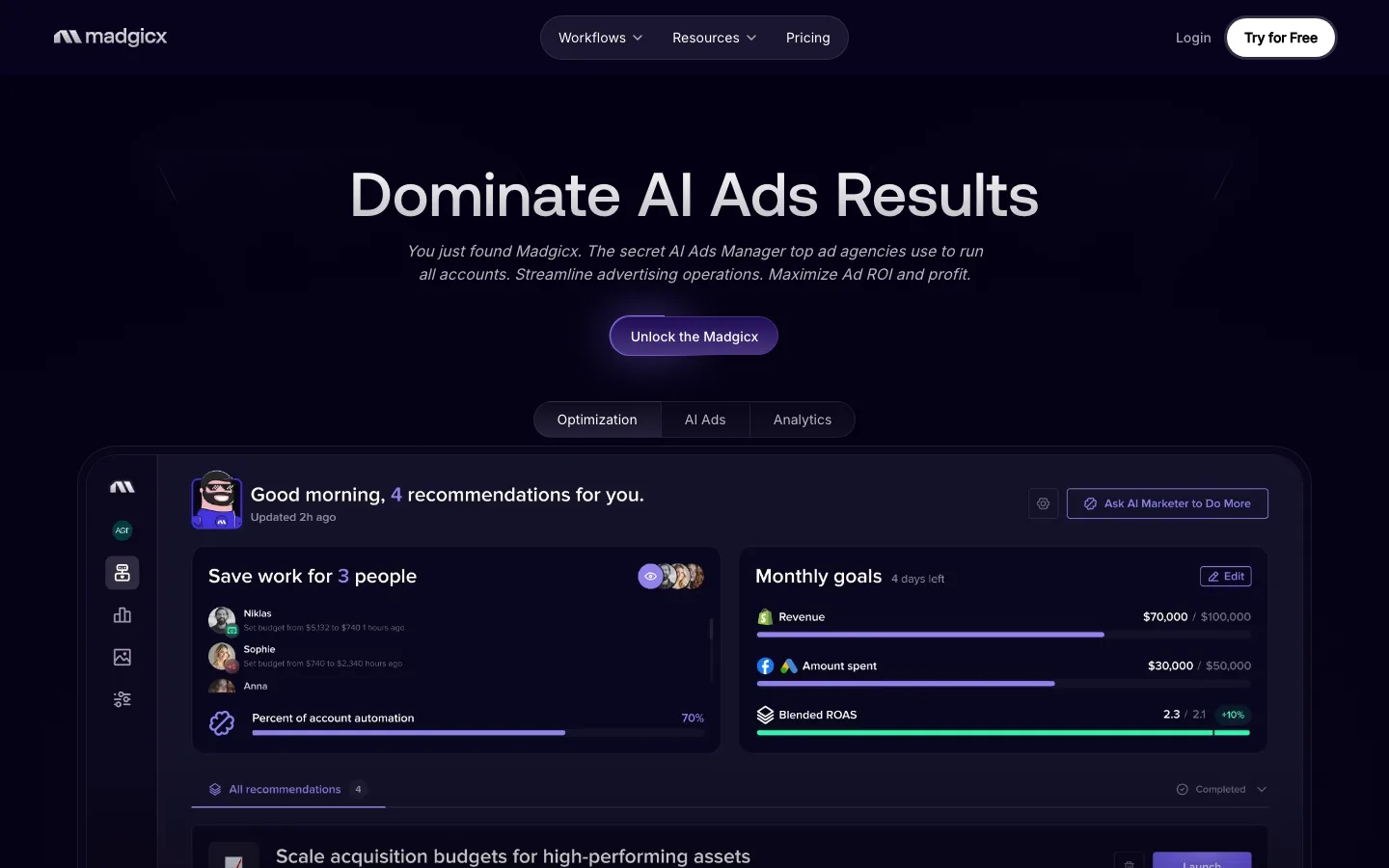
Madgicx is a Meta ads management tool for ecommerce brands, combining automation, targeting, analytics and AI creative. Its homepage title calls it "Agentic Meta Ads Management", and the whole product is built around one channel. If Facebook and Instagram are most of your spend, that focus is a strength.
G2 reviewers flag the learning curve: "Learning Curve" is the most-mentioned con theme, with 27 mentions, followed by "Expensive" with 16 (G2 reviews, read September 2026). For a side-by-side of Meta specialists, see the guide to Meta ads management software.
- Strength: focused Meta automation, audiences and creative tools for ecommerce.
- Limitation: Meta only, so Google, TikTok and LinkedIn still need their own tools.
- Best for: Shopify and DTC brands that spend mostly on Meta.
- Pricing: Madgicx's pricing page shows plan prices only inside the app and offers a free trial (checked October 2026). See Hawky vs Madgicx.
8. Birch
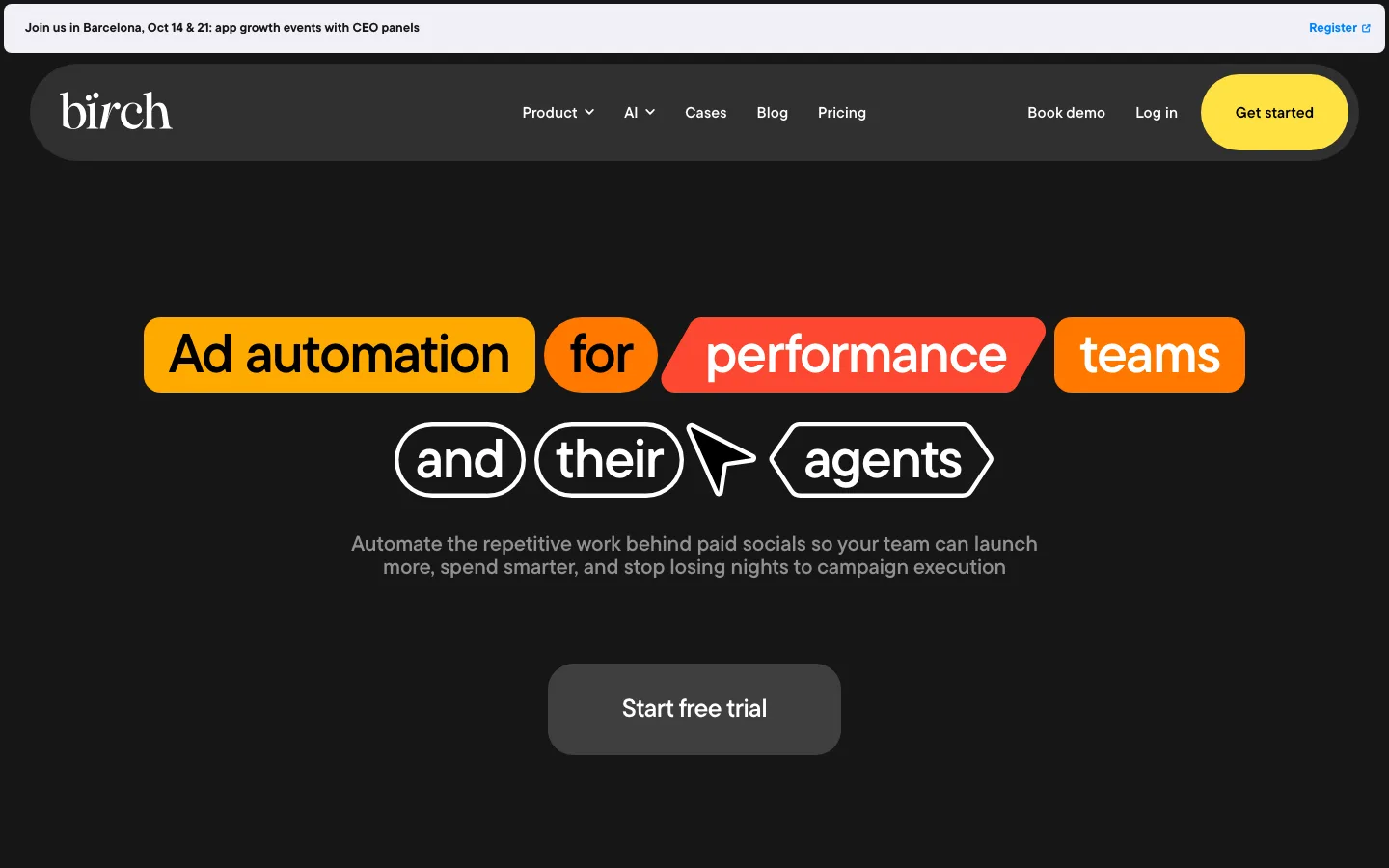
Birch is an ad automation platform that runs rules on Meta, Google Ads, TikTok and Snapchat. You set conditions, schedules and actions, and Birch executes them across connected accounts, with Slack and Google Sheets integrations for alerts and reports. Its site also offers Birch AI and an MCP connection for Meta accounts (checked November 2026).
Birch is the cheapest way on this list to automate routine changes across more than one network. The trade-off is that it runs the rules you write; deciding the strategy stays with you.
- Strength: low-cost, flexible rules across four ad networks.
- Limitation: rule-based; it executes your logic rather than choosing the next move against a KPI.
- Best for: small teams and freelancers automating pausing, scaling and alerts.
- Pricing: $49 a month (Essential, up to $10K monthly ad spend) or $99 a month (Pro), billed monthly, per Birch's pricing page, October 2026. See Birch alternatives.
How ad management software is priced
Ad management software prices scale with one of four things: your ad spend, your seats, your media, or your results. The model matters more than the entry price, because a $49 tool and a $114K platform can both become expensive as spend grows.
| Pricing model | Tools that use it | What it means for you |
|---|---|---|
| Tiered by ad spend | Skai, Optmyzr, Birch | Price steps up as monthly or yearly spend crosses each tier |
| Media-based, no plan fee | AdRoll | You pay for the ads you buy through the platform |
| Sales-led contract | Smartly, StackAdapt | No public price; spend minimums and annual terms are common |
| In-app or trial-first | Madgicx | Price appears after signup, so check renewal terms before the trial ends |
| Outcome-based | Hawky (Performance Agent) | A monthly minimum plus fees tied to your KPI moving, after a free 30-day pilot |
Read the renewal and cancellation terms as closely as the plan price. Spend-tiered tools reprice automatically when a good month pushes you into the next tier, and annual contracts lock the price in both directions.
Ad campaign management software vs an ad management agent
Ad campaign management software helps a person manage campaigns; an ad management agent manages the campaigns and reports to a person. That difference decides how many hours your team gets back.
With a console or a rules engine, your media buyer still spots the problem, picks the fix and applies it, or writes a rule that only covers cases they predicted. That is why most teams with good tools still spend most of the week on campaign structure, budget shifts and pausing ads. The software made each change faster, not fewer.
An agent closes that loop. It watches every ad against the KPI, moves budget across campaigns and channels, and logs each decision with the data that triggered it. The safeguards are what make that usable: spend caps, approval gates per action, and rollback for any single move. For the longer argument, see autonomous performance marketing.
Which ad management software is right for your team
The right ad management software depends on your channel mix, your spend and how much of the work you want off your team's plate. Use the scenario that matches yours.
- You spend $50K+ a month on Meta and Google and want the account run for you: Hawky's agents operate the campaigns against your KPI, with guardrails and an audit trail, so your team works on strategy and creative.
- You are a global brand producing creative at volume for paid social: Smartly, if your spend clears its minimums.
- Retail media is a large share of your budget: Skai covers Amazon, Walmart and search in one console, at enterprise prices.
- You are a PPC agency with many search accounts: Optmyzr for rules, audits and reporting across clients.
- You need retargeting or programmatic reach: AdRoll for retargeting, StackAdapt for CTV, audio and native.
- You spend mostly on Meta, on a small budget: Madgicx for Meta-only optimization, or Birch for cheap rules across four networks.
Most teams end up stitching two or three of these together. If your bottleneck is the hours spent operating Meta and Google, start by asking which tool removes the work, not which one reports on it. For the wider stack, see the best media buying tools.
Frequently asked questions
What is the best ad management software?
The best ad management software in 2026 is Hawky for teams that want AI agents to run Meta, Google, YouTube, TikTok and LinkedIn campaigns against a KPI, with guardrails and an audit trail. Smartly leads for enterprise social advertising, and Skai for omnichannel and retail media. Optmyzr suits PPC agencies, and Birch is the lowest-cost option for rule-based automation.
What is the best ad management platform for agencies?
Hawky and Optmyzr are the strongest ad management platforms for agencies. Hawky prices per brand with unlimited users, sets autonomy per client account and copies proven campaigns between ad accounts, so an agent runs day-to-day optimization while account managers keep approval. Optmyzr, from $209 a month per its pricing page in October 2026, covers rules, audits and reporting across many search accounts.
What is the best PPC ad management software?
Optmyzr is the most established PPC ad management software for search-heavy portfolios, starting at $209 a month per its pricing page in October 2026. Hawky suits teams that want Google Ads and paid social operated against a KPI rather than managed by hand. The full field, including Adalysis, Opteo and SpyFu, is compared in the guide to the best PPC tools.
How much does ad management software cost?
Ad management software costs from about $49 a month to more than $100,000 a year. Per vendor pricing pages read in October 2026, Birch starts at $49 a month, Optmyzr at $209 a month and Skai at $114K a year, while Smartly and StackAdapt publish no price. Most tools tie the price to your ad spend, so check which tier your monthly spend lands in.
Can AI suggest budget shifts across channels?
Yes. Cross-channel AI tools can suggest budget shifts, and an agent can make them inside the limits you set. Hawky's Performance Agent reallocates spend across campaigns and channels against your KPI, with spend caps, daily-change ceilings and approval gates, and every move is logged and reversible. Rules-based tools such as Birch only shift budget when a condition you wrote is met.
Is a social media management tool the same as ad management software?
No. Social media management tools focus on publishing organic posts, engagement and reporting, while ad management software launches, optimizes and reports on paid campaigns. Some social suites add paid features, but teams with meaningful ad spend usually need a dedicated tool for paid media. If most of that spend is on Facebook and Instagram, compare the Meta specialists first.
Ad management software should give your team hours back, not one more dashboard to check. Pick the tool that matches your channels and your spend, then judge it on how many changes it makes without you.
If your team spends the week launching, pausing and shifting budget across Meta and Google by hand, Hawky's AdOps Agent is built for that job.
Ready to hire your first AI performance team? Book Demo