Best PPC Tools in 2026: Top Software for Search Advertisers
The best PPC tools in 2026 are Hawky for agentic Google Ads optimization, Optmyzr for rule-based bid and budget management, and Semrush paired with SpyFu for keyword and competitor research. Most PPC tools analyze your account and hand you a list of recommendations to action yourself. Hawky is the exception on this list because its Performance Agent operates the account directly, planning, launching, and optimizing campaigns against your KPI with every change logged and reversible.
Search advertising has more surface area than any other channel: keywords, match types, negatives, bids, Quality Score, ad copy, extensions, and budget pacing across Google Ads and Microsoft Ads. The right PPC software either surfaces what to fix faster or fixes it for you. Below are nine tools worth knowing, ranked by how much of the work they take off your plate.
What to look for in a PPC tool
Before comparing features, decide what job you actually need done. A keyword research tool and an autonomous optimization agent both call themselves PPC tools, but they solve very different problems.
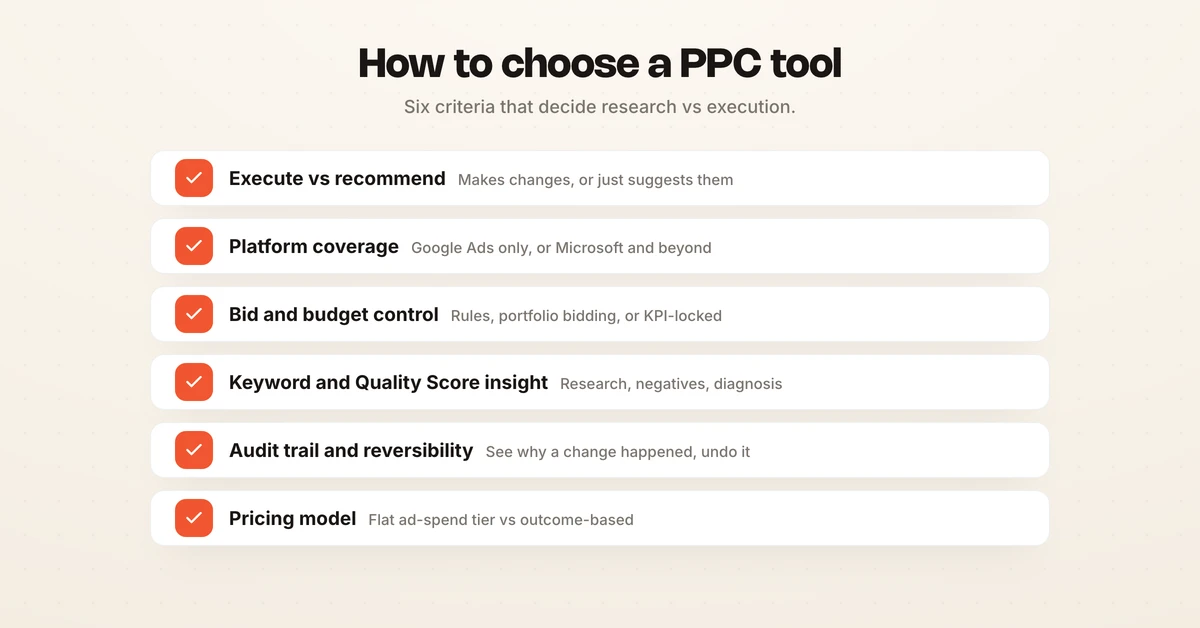
Weigh these six criteria against your team and spend:
- Execute vs recommend. Does the tool make changes in the account, or does it only tell you what to change?
- Platform coverage. Google Ads only, or Microsoft Ads and beyond?
- Bid and budget control. Rule-based automation, portfolio bidding, or KPI-locked optimization.
- Keyword and Quality Score insight. Research, negatives, match types, and diagnosis of what moved.
- Audit trail and reversibility. Can you see why a change happened and undo it in one click?
- Pricing model. Flat subscription tied to ad spend, or outcome-based pricing tied to results.
PPC tools compared
| Tool | Best for | Key strength | Pricing (sourced) |
|---|---|---|---|
| Hawky | Agentic Google Ads optimization | Operates the account against your KPI | Outcome-based; subscription minimum plus KPI-tied upside (pricing) |
| Optmyzr | Bid and budget management | PPC automation across major networks | From $209/mo billed annually (source) |
| Semrush Advertising Toolkit | Keyword and competitor research | Ad copy and PLA research | From $99/mo (Base) (source) |
| Adalysis | PPC audits and ad testing | 100+ daily audit checks, RSA testing | From ~$149/mo (source) |
| SpyFu | Competitor ad intelligence | 15+ years of ad history | From $39/mo (source) |
| Google Ads Editor | Offline bulk edits | Free bulk editing and campaign copy | Free (source) |
| Microsoft Advertising Editor | Microsoft Ads bulk edits | Manage millions of keywords offline | Free (source) |
| Google Keyword Planner | Keyword research | Volume, competition, bid estimates | Free (source) |
1. Hawky
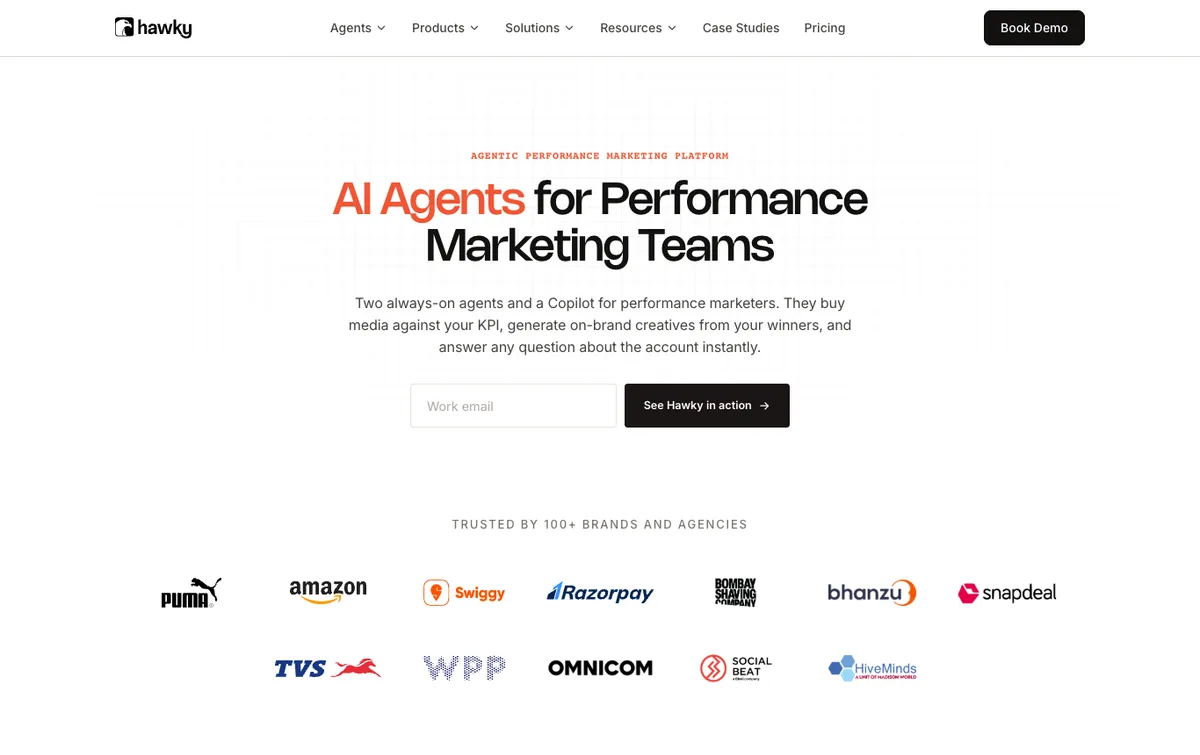
Hawky is an agentic performance marketing platform, and its Performance Agent is the reason it leads this list. Where the other tools analyze your account and hand you recommendations, Hawky's agent is an always-on operator that plans, launches, and optimizes Google Ads campaigns (plus Meta and YouTube) against your KPI around the clock. You set the target, whether that is ROAS, CAC, LTV, or contribution margin, and the agent runs the closed loop of test, track, optimize, and scale.
The trust model is what makes autonomy usable on a live search account. Every move the agent makes is logged with the trigger data and a confidence score, and any change is reversible in one click. Guardrails, spend caps, and shadow mode keep humans in command, and you choose the autonomy level: gate every campaign, gate every brand, or let it run, all under the same audit trail.
That control matters most on paid search, where an unattended bid change can burn budget fast. You can start Hawky in shadow mode so it only proposes moves, then move to approval-gated changes, then to full autonomy as trust builds. This is a different job than a tool that surfaces a Quality Score alert and waits for you to act.
Pricing is outcome-based: a subscription minimum plus upside tied to the KPI it improves, which is a different model from the flat ad-spend tiers most PPC software uses. See pricing for the current structure. Across a cohort of 200+ active customers, Hawky reports a median +25% ROAS in the first 90 days (case study).
The tradeoff is scope. Hawky is built to operate performance campaigns end to end, so if all you want is a free keyword lookup or a one-off competitor export, a lighter research tool below will fit better.
2. Optmyzr
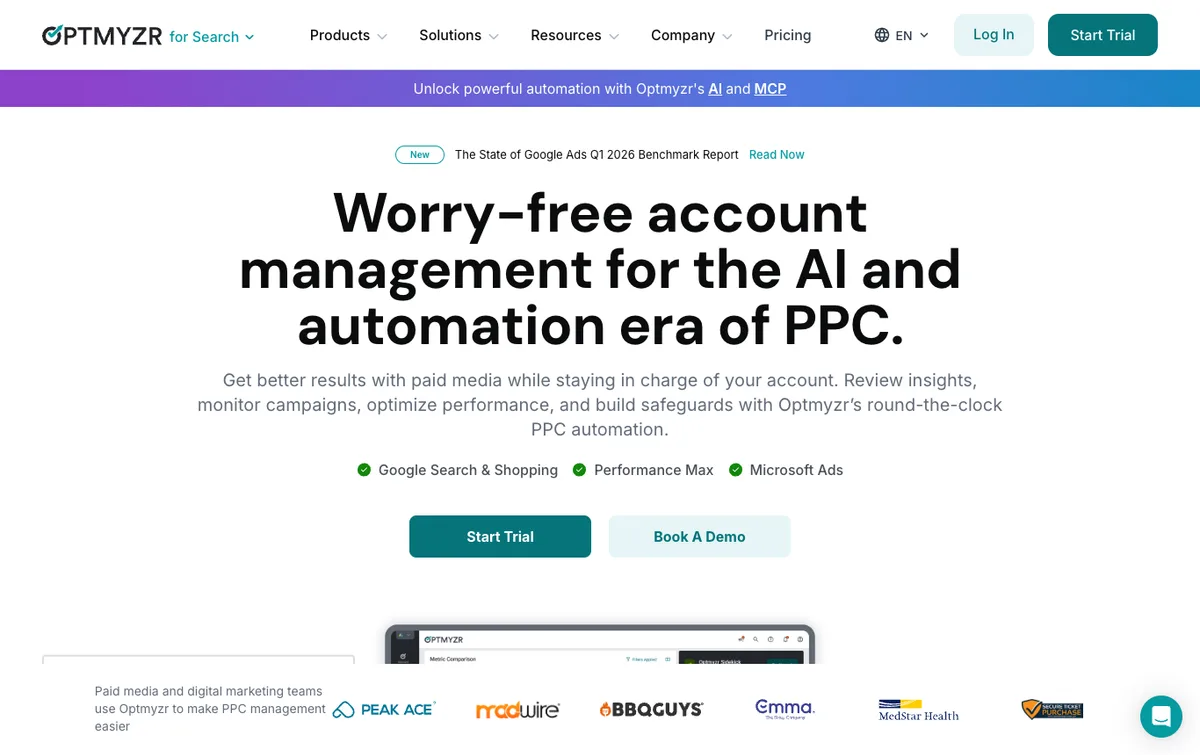
Optmyzr is one of the most established PPC management tools for search advertisers who want rule-based automation with a human approving each change. It supports Google, Microsoft, Meta, LinkedIn, and Amazon Ads, and its PPC Investigator automatically diagnoses performance changes and ranks probable causes by likelihood (source).
Pricing starts at $209 per month billed annually on the Essentials plan, with Premium adding Shopping automation, multi-account reporting, and cross-platform budget management, and Enterprise for large agencies (source). All plans include a 14-day free trial (source).
Optmyzr is a strong fit if you want scripts, one-click optimizations, and rules while keeping a person in the loop on every push. The distinction from Hawky is who pulls the trigger: Optmyzr suggests and you approve, whereas Hawky's agent executes under guardrails.
3. Semrush Advertising Toolkit
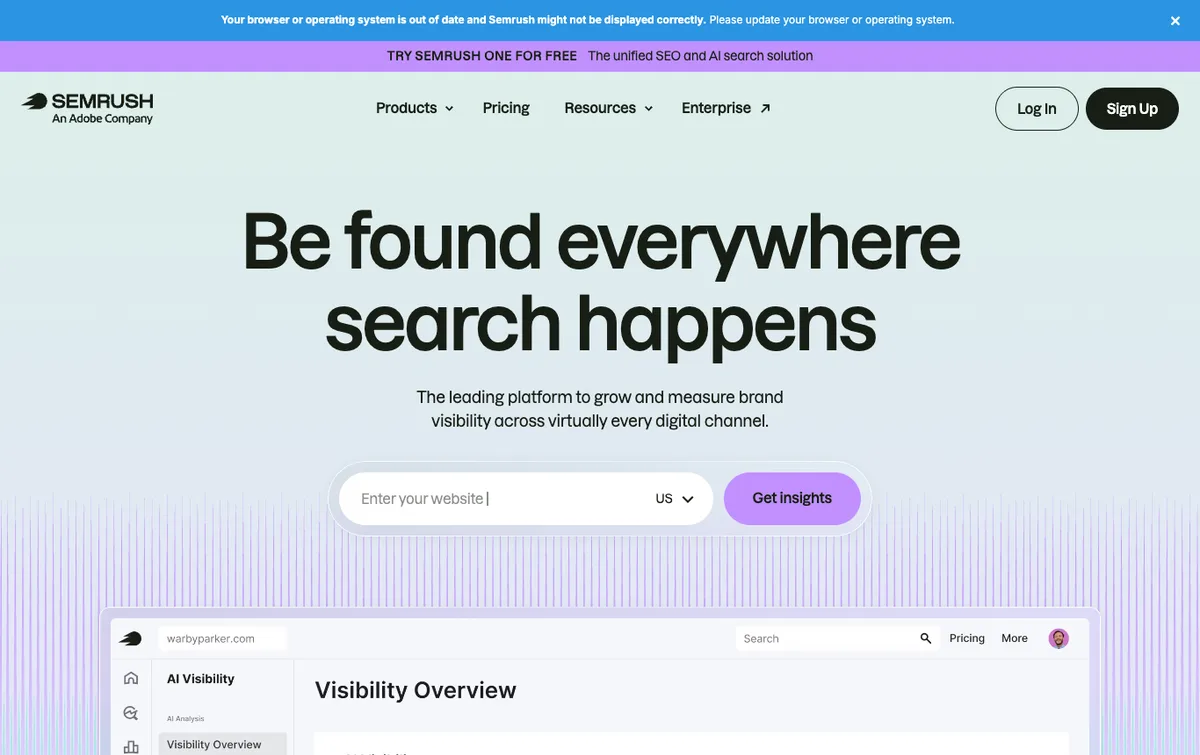
Semrush is best known for SEO, but its Advertising Toolkit is a capable paid search tool for research and competitive planning. The Base plan runs $99 per month and includes unlimited ad-spend analysis, AI-generated ad copy for Google and Meta, competitor keyword tracking, and product listing ad research (source).
The $220 per month Pro plan adds AdClarity for deeper competitor display, video, and social ad intelligence, plus historical advertising data (source). Both tiers include a 7-day trial.
Use Semrush when your bottleneck is knowing which keywords and competitors to target, not executing changes. It is a paid search research layer rather than an in-account management tool.
4. Adalysis
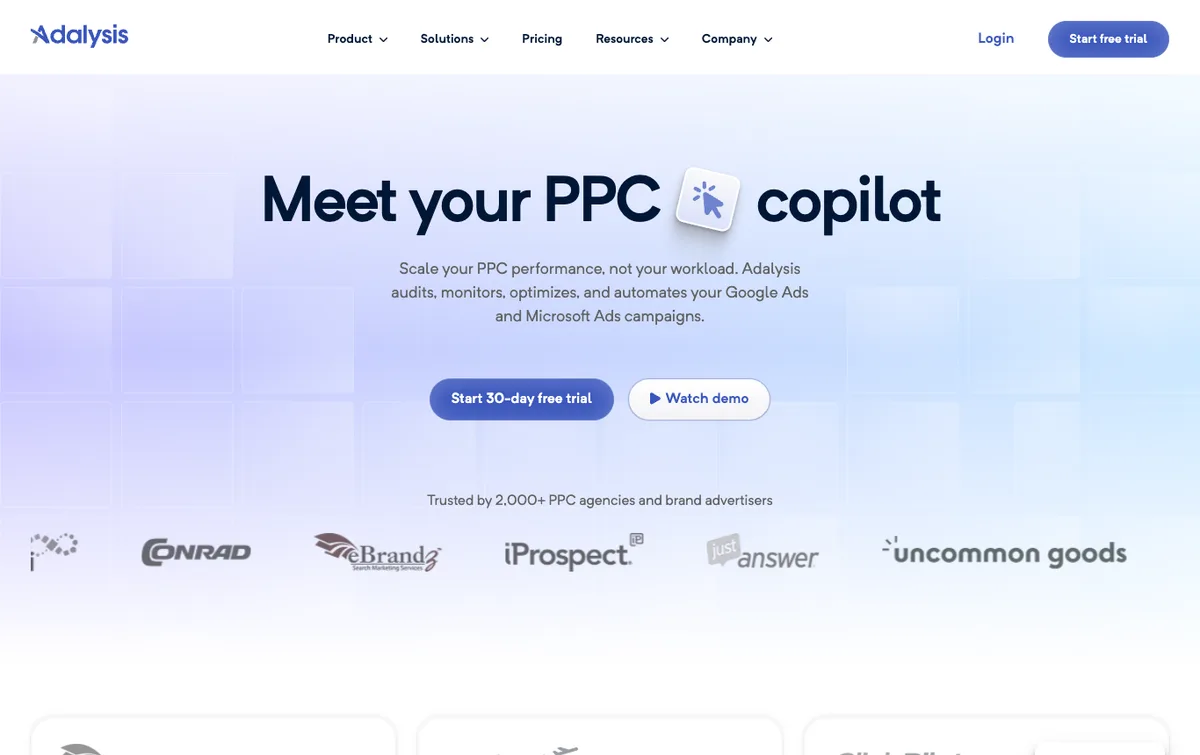
Adalysis is a PPC analysis and automation tool focused squarely on Google Ads and Microsoft Ads. It runs more than 100 automated daily audit checks across account, campaign, ad group, and keyword levels, covering Quality Score, landing pages, bids, budgets, and placements (source).
Its standout is systematic ad testing: an automated engine that continuously monitors responsive search ad performance, finds statistically significant winners and losers, and recommends which headlines and descriptions to keep or replace (source). Pricing starts from roughly $149 per month with unlimited accounts and users, scaling by maximum monthly ad spend, with discounts for six-month and annual plans (source).
Adalysis is a good fit for advertisers who want disciplined audits and RSA testing. Like the other analysis tools here, it surfaces the fix and leaves the execution to you.
5. SpyFu
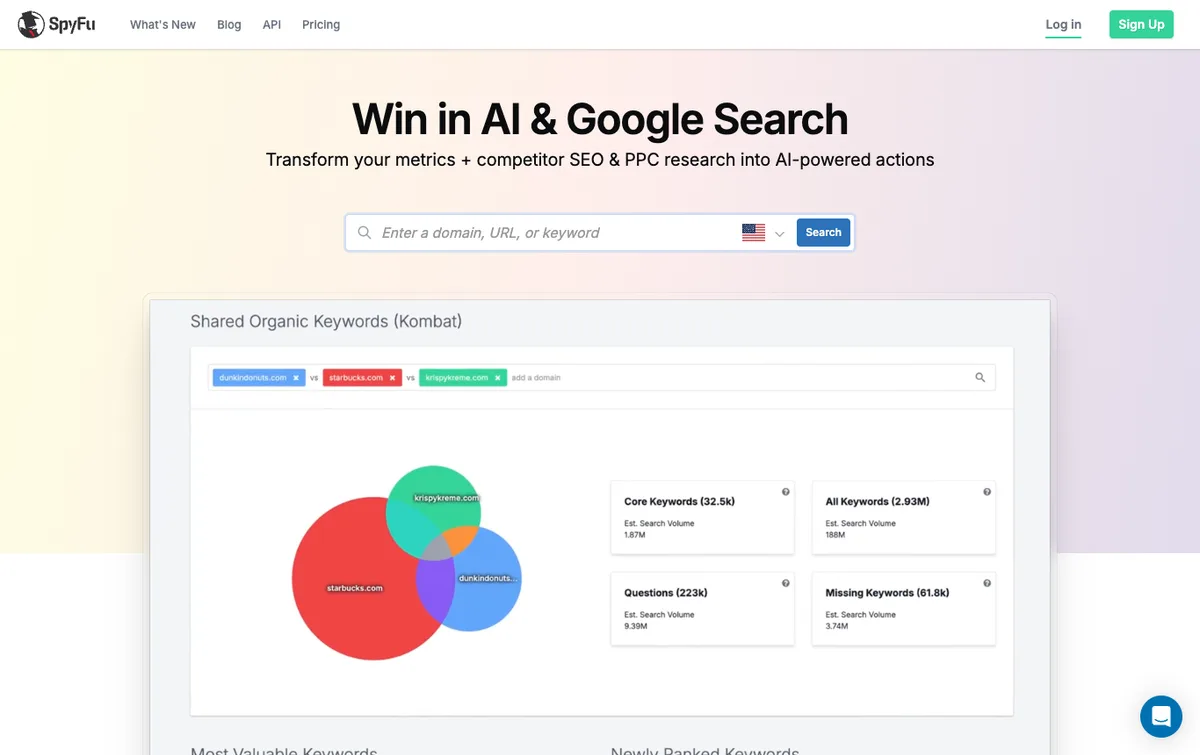
SpyFu is a competitor research tool that uncovers rival PPC strategies using historical data. Its PPC features show competitors' ad spend, most profitable keywords, and ad copy, and the Ad History feature lets you see every ad test a competitor has run (source).
Pricing starts at $39 per month on the Basic plan with unlimited searches and exports, $79 per month on Professional for branded reporting, and $299 per month on the Team plan for agencies (source). Its 15+ years of ad history is the main draw for search advertisers (source).
Reach for SpyFu when you want to reverse-engineer what competitors bid on and how their copy has evolved. It informs your strategy but does not touch your account.
6. Google Ads Editor (free)
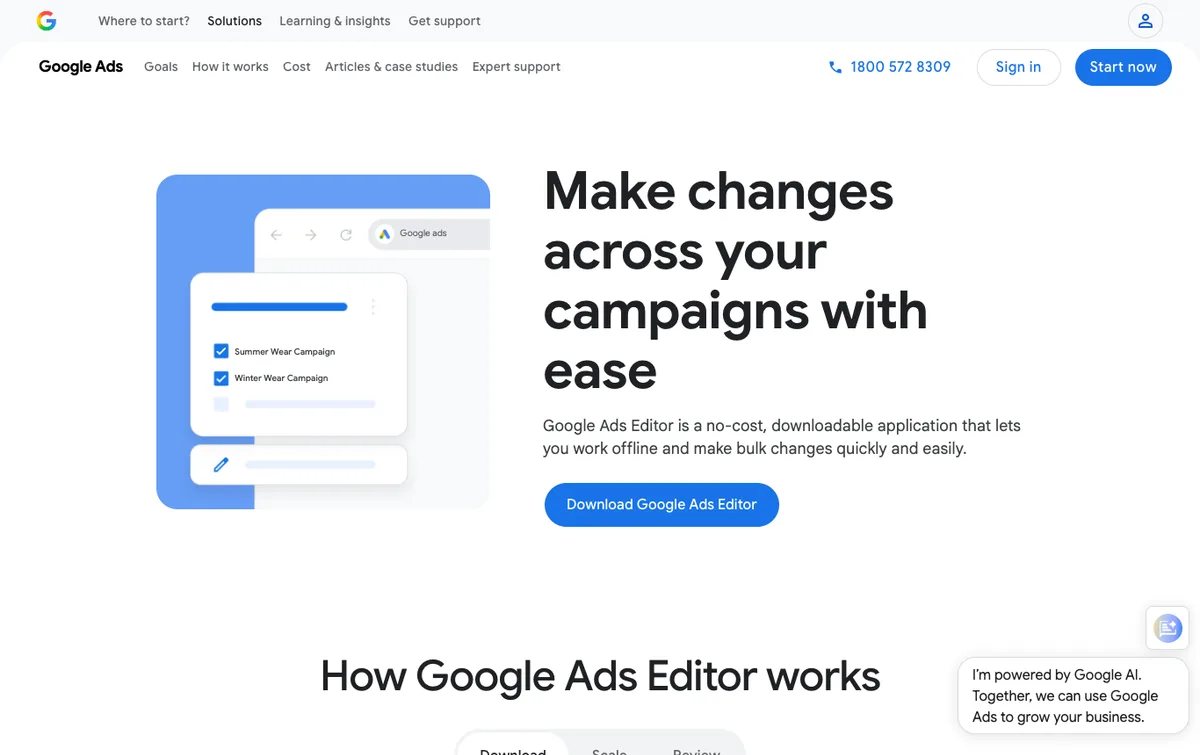
Google Ads Editor is a free desktop app for creating and editing campaigns and making bulk changes offline. You download your account, edit thousands of campaigns, ad groups, ads, and keywords at once with find-and-replace and spreadsheet imports, then post only when you choose (source).
It also duplicates entire campaigns between accounts and runs a pre-flight error and policy check before upload (source). For large structural changes, it is still the fastest tool in most search advertisers' kit, and it costs nothing.
7. Microsoft Advertising Editor (free)
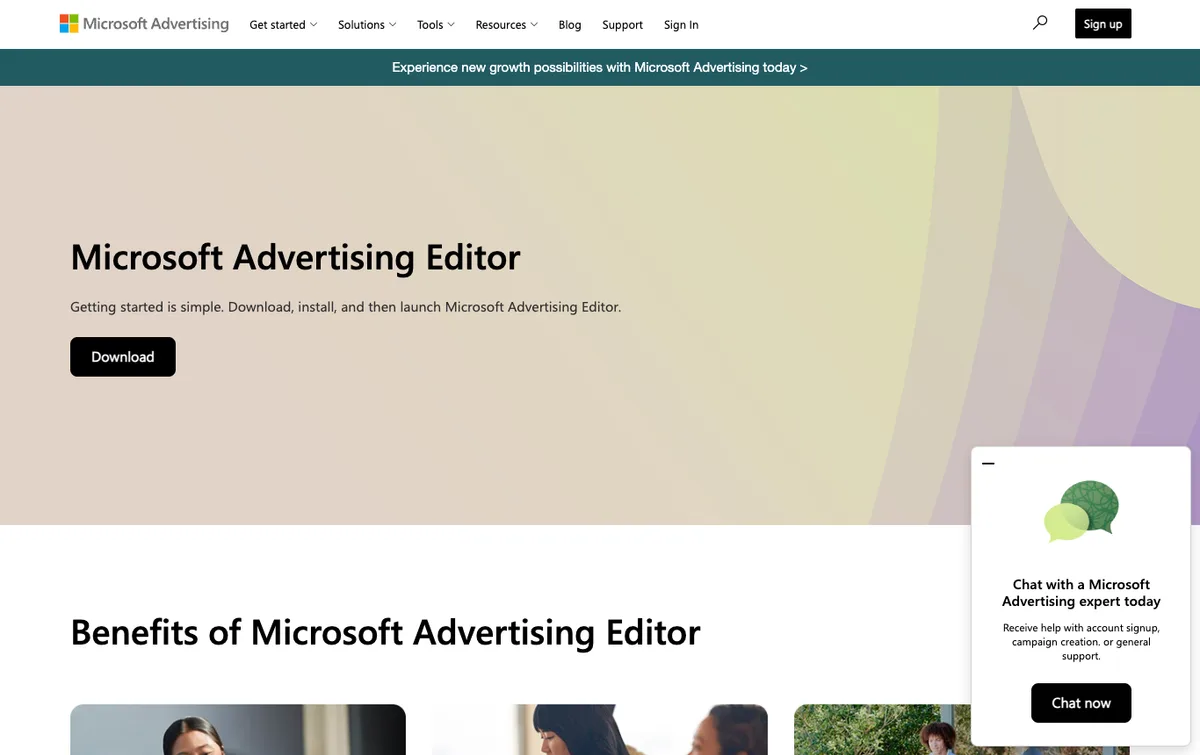
Microsoft Advertising Editor, formerly Bing Ads Editor, is the free offline equivalent for Microsoft Ads. It lets you create campaigns, edit ads, and manage millions of keywords at once across search and audience networks, with multi-account download and copy-paste between accounts (source).
If you run Microsoft Ads at any scale, this is the baseline productivity tool. It handles bulk URL, bid, budget, targeting, and extension edits that would be slow in the web interface.
8. Google Keyword Planner (free)
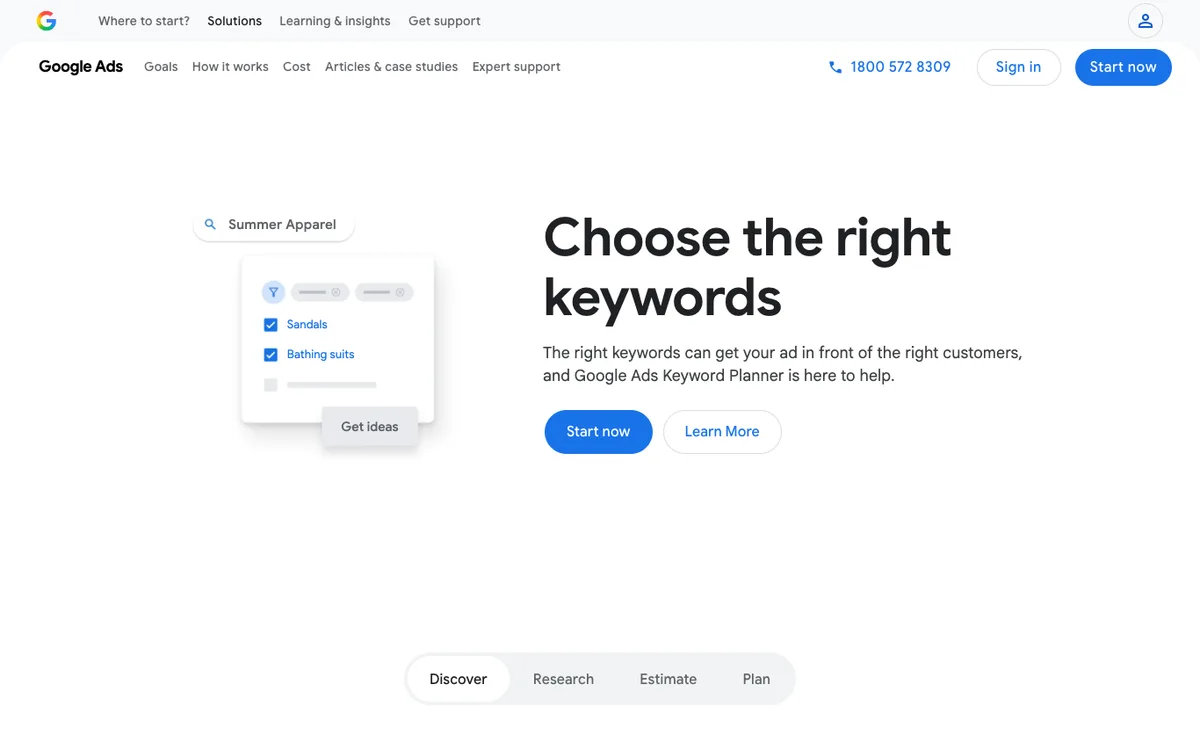
Google Keyword Planner is the free keyword research tool built into Google Ads. It generates keyword ideas and shows search volume, competition, and cost-per-click bid estimates to help you build and price search campaigns (source).
One caveat: Google reserves exact search volumes for active advertisers and shows non-advertisers ranges instead (source). For a first-pass keyword list and bid sanity check, it is hard to beat at zero cost.
A note on free PPC tools
You can run a functional PPC stack without paying for software. Google Ads Editor and Microsoft Advertising Editor cover bulk edits, and Google Keyword Planner covers research. These free tools handle the mechanics, but none of them optimize toward a KPI on their own. As spend grows and manual optimization stops scaling, that is where paid management tools and agents earn their keep. For planning budgets, pair Keyword Planner's estimates with our guide to Google Ads cost.
How to choose the right PPC tool
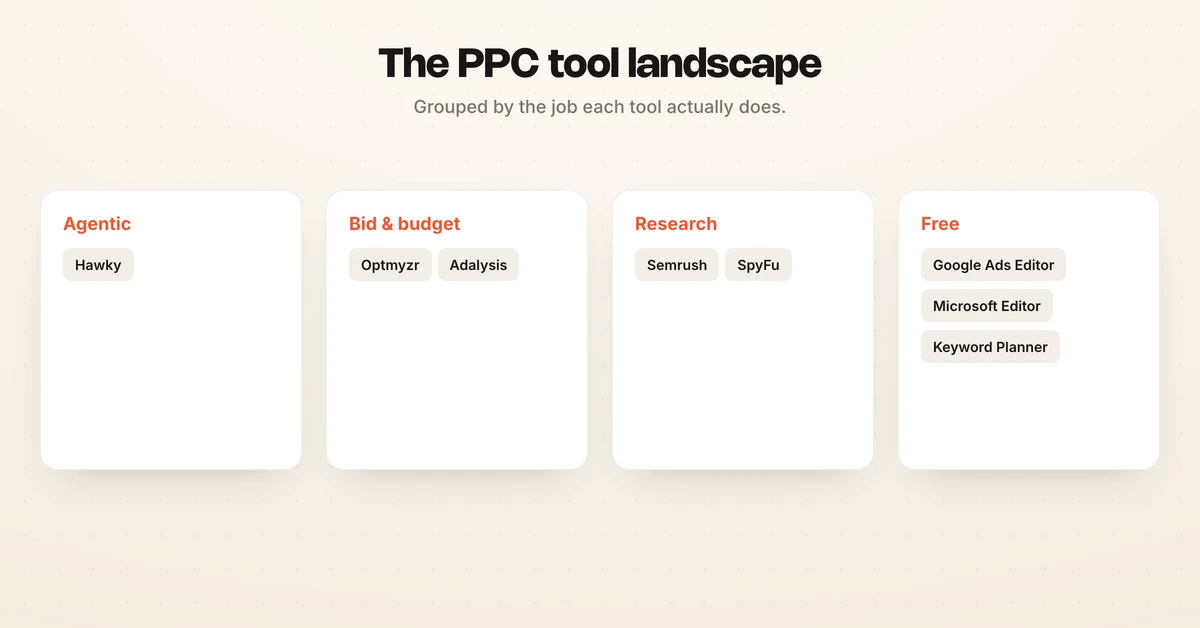
Match the tool to the job, not the label. If your problem is research, a tool like Semrush, SpyFu, or the free Keyword Planner is the right layer. If your problem is auditing and testing, Adalysis fits. If your problem is bulk execution, the free editors do it.
If your problem is that no one has time to optimize campaigns every day, you want a tool that executes, not one that adds to a to-do list. That is the line between analysis tools and an agent. Hawky's Performance Agent operates the account against your target with guardrails and a full audit trail, while the rest of this list hands the work back to you.
Also weigh how you pay. Most PPC software charges a flat fee scaled to ad spend, so cost rises whether or not results do. Outcome-based pricing ties spend to the KPI a tool improves, which changes the risk profile for advertisers under pressure to hit ROAS or CAC targets. See pricing for how that model works.
This is one of four connected guides on media-buying software. If your needs go beyond search, see the companion pieces on media buying tools, ad management software, and ad automation software. For mobile-first search advertisers, our mobile PPC strategy guide covers device-level tactics, and the Performance Max glossary entry explains Google's automated campaign type.
Frequently asked questions
What are the best PPC tools?
The best PPC tools in 2026 include Hawky for agentic Google Ads optimization, Optmyzr for rule-based bid and budget management, and Semrush plus SpyFu for keyword and competitor research. The right pick depends on whether you want a tool that recommends changes or an agent that makes them against your KPI.
What is the best PPC management software?
For hands-off management, Hawky's Performance Agent plans, launches, and optimizes campaigns against a target ROAS or CAC with every move logged and reversible. For rule-based management where a human approves each change, Optmyzr (from $209 per month billed annually, source) and Adalysis are strong, established choices.
What free PPC tools are there?
Google Ads Editor, Microsoft Advertising Editor, and Google Keyword Planner are all free. The two editors handle offline bulk edits (Google, Microsoft), and Keyword Planner supplies search volume, competition, and bid estimates for building keyword lists (source).
What is the difference between PPC analysis tools and PPC management tools?
PPC analysis tools like SpyFu, Semrush, and Adalysis surface insights, audits, and competitor data so you can decide what to change. PPC management tools and agents like Hawky and Optmyzr go further by executing bid, budget, and structure changes in the account.
Do I still need Google Ads Editor if I use a paid PPC tool?
Often yes. Google Ads Editor is free and remains the fastest way to make large offline structural changes and duplicate campaigns across accounts (source), which complements paid analysis and management tools rather than competing with them.
Which PPC tool is best for a small budget?
Start with the free stack of Google Ads Editor, Microsoft Advertising Editor, and Google Keyword Planner. As spend grows, SpyFu at $39 per month adds competitor keyword and ad-history data (source), and Hawky's outcome-based pricing ties cost to results rather than a flat fee.
If your team is spending on Google Ads faster than anyone can optimize it, Hawky's Performance Agent is built for that job.
Ready to hire your first AI performance team? Book Demo