10 UGC Sourcing Platforms Compared (Pricing, Quality, Speed)
The best UGC sourcing platform depends on three things: how you want to pay, how good the footage has to be, and how fast you need it. This guide compares 10 platforms on pricing, quality, and speed so you can match a platform to the job instead of guessing from a homepage.
UGC sourcing platforms connect your brand to creators who film authentic, native-feeling video you can run as paid social. They split into four pricing models: pay-per-video, subscription plus a creator marketplace, product-gifting networks, and fully managed enterprise programs. The right one is the cheapest model that still hits your quality bar on time.
Below is the side-by-side table, then a breakdown of each platform and how to choose. Sourcing the footage is only half the job, so the last section covers what to do with it once it lands.
The 10 UGC sourcing platforms at a glance
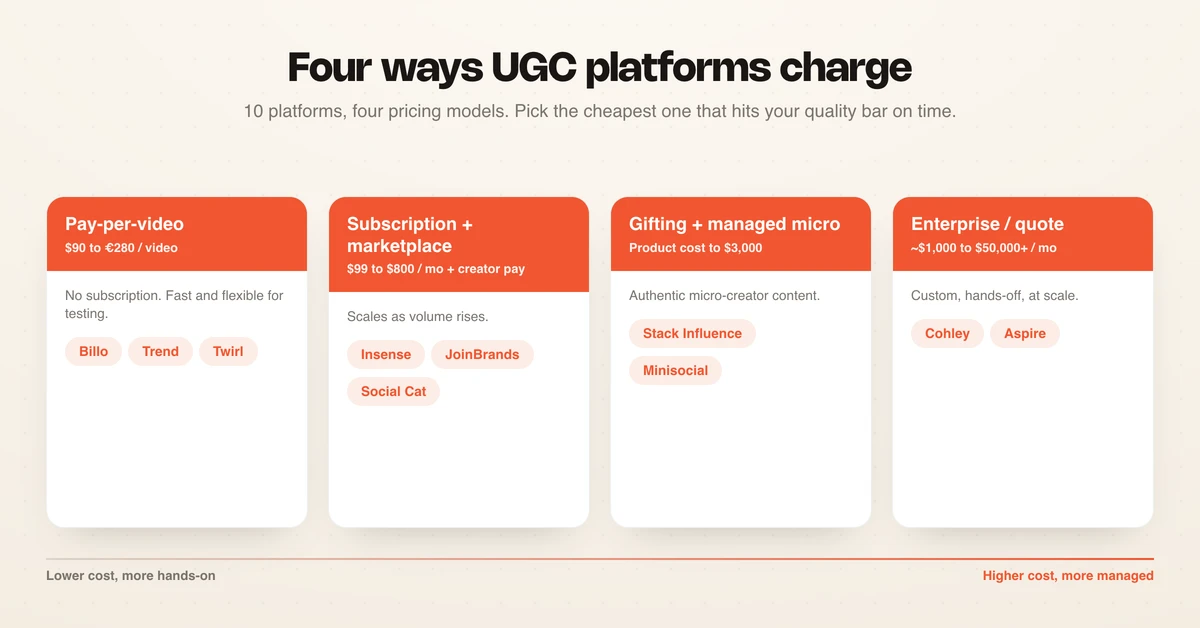
| Platform | Pricing model | Starting cost | Typical speed | Best for |
|---|---|---|---|---|
| Billo | Pay-per-video | $99 / video | 2 to 4 weeks | DTC brands testing UGC |
| Trend (soona UGC) | Pay-per-video | ~$90 / video | 1 to 2 weeks | Ecommerce content + UGC |
| Twirl | Pay-per-video | €280 / video | ~1 to 2 weeks | Global brands, premium edits |
| Insense | Subscription + marketplace | $500 / month | 1 to 2 weeks | Shopify brands scaling UGC |
| JoinBrands | Marketplace (free to start) | 8 to 15% fee | Days to 2 weeks | Budget-flexible, self-serve |
| Social Cat | Subscription (gifting) | $99 / month | 1 to 3 weeks | Small brands, micro-creators |
| Stack Influence | Pay-as-you-go (gifting) | Product cost | 2 to 4 weeks | Amazon and DTC seeding |
| Minisocial | Fully managed | $3,000 / 10 creators | 3 to 4 weeks | Hands-off micro-influencer UGC |
| Cohley | Enterprise quote | Custom (4 to 5 figure/mo) | 2 to 4 weeks | Enterprise content at scale |
| Aspire | Enterprise subscription | ~$1,000+ / month | 2 to 4 weeks | Full influencer + UGC programs |
Pricing and turnaround vary by brief complexity, usage rights, and revisions. The figures above are starting points sourced from each platform, not quotes for your specific campaign.
How to read pricing, quality, and speed
The three axes trade against each other, and no platform wins on all three. A clear view of each one keeps you from overpaying for quality you do not need or waiting on speed you cannot use.
Pricing is rarely just the headline number. Pay-per-video platforms quote a clean per-asset price, while subscription platforms stack a monthly fee on top of separate creator payments and a marketplace cut. A $99 video and a "$100 plus subscription plus 15% fee" video are not the same cost.
Quality depends on creator vetting, revisions, and whether editing is included. Vetted, brief-matched creators with built-in revisions cost more but cut the misfire rate. Open marketplaces are cheaper and faster but put more sorting work on you.
Speed is the time from brief to usable file, and it moves with the model. Pay-per-video and self-serve marketplaces tend to be fastest, while fully managed and enterprise programs add a layer of coordination in exchange for less hands-on work.
Pay-per-video platforms
These charge a flat price per asset with no subscription, which makes them the simplest way to test UGC or buy in small batches.
1. Billo
Billo is a pay-per-video marketplace priced at $99 per video with no subscription, and add-ons like rush delivery can push a single video toward $150. It draws from a pool of vetted creators across the US, UK, Canada, and Australia, with a typical turnaround of two to four weeks.
Billo fits DTC brands that want a predictable per-asset cost and do not need a long contract. The trade-off is volume: it is built for steady small orders, not a managed program.
2. Trend (now soona UGC)
Trend, which has merged with soona, prices UGC from about $90 per video on the starter tier and down to roughly $69 in larger packages, with unlimited usage rights included. Pairing UGC with soona's studio content makes it a strong fit for ecommerce brands that need product photography and video from one source.
Speed is competitive at one to two weeks for most briefs. The soona transition adds a wider content menu, which helps if you want more than talking-head clips.
3. Twirl
Twirl charges from €280 per video with a four-video minimum and no platform or subscription fees, and full paid-social usage rights plus two aspect ratios come standard. It positions higher on quality, with edited deliverables aimed at global brands and agencies.
The per-video price sits above the US pay-per-video options, so Twirl suits brands that value polished, ready-to-run edits over the lowest cost. Optional concept development adds strategic input for an extra fee.
Subscription plus marketplace platforms
These pair a monthly platform fee with a creator marketplace, so the headline price is the software, and creator payments are separate. They reward volume.
4. Insense
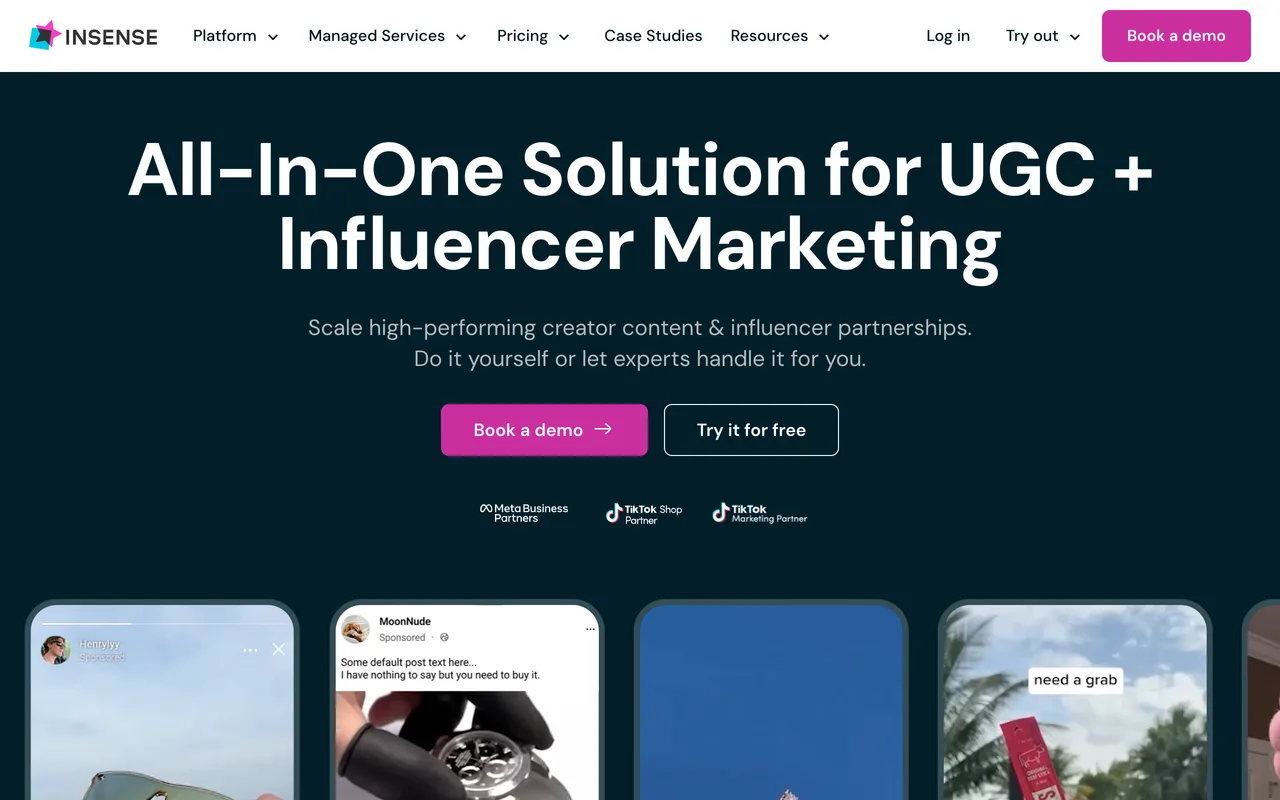
Insense runs on a subscription starting at $500 per month for the Brand plan and $800 per month for agencies, with creator payments from $100 per UGC video and a 7 to 20% marketplace fee on top. Built around Shopify and paid-social workflows, it supports creator ads and whitelisting alongside straight UGC.
The model only makes sense at volume, because the subscription is fixed whether you brief one creator or fifty. For brands running a steady UGC pipeline, the per-asset cost drops as you scale.
5. JoinBrands
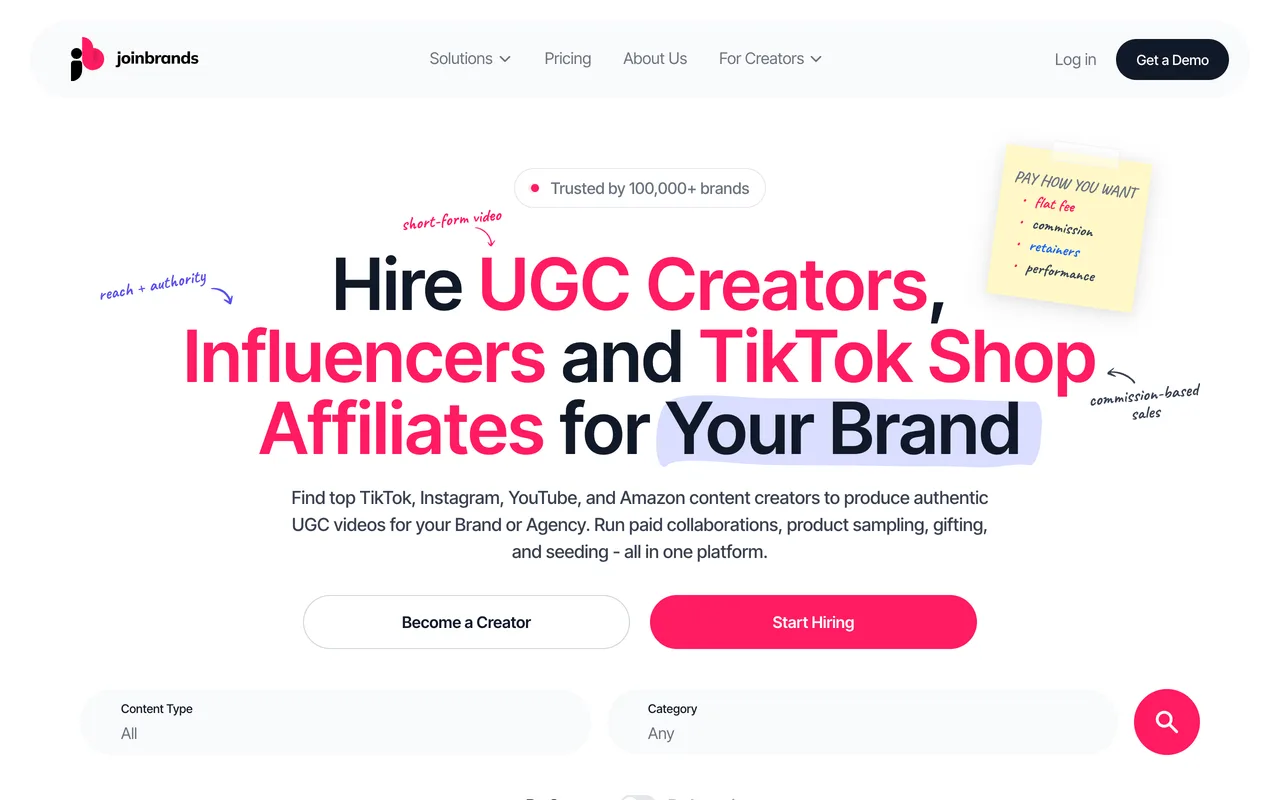
JoinBrands is a marketplace that is free to start, with platform fees dropping from 15% on the free tier to 8% on the top plan. Creator video rates commonly run from about $50 to $500 depending on experience and deliverables, and self-serve briefs can fill in days.
It is the most budget-flexible option here, since you only pay the platform cut plus what creators charge. The flip side is that an open marketplace puts more vetting and sorting on you.
6. Social Cat
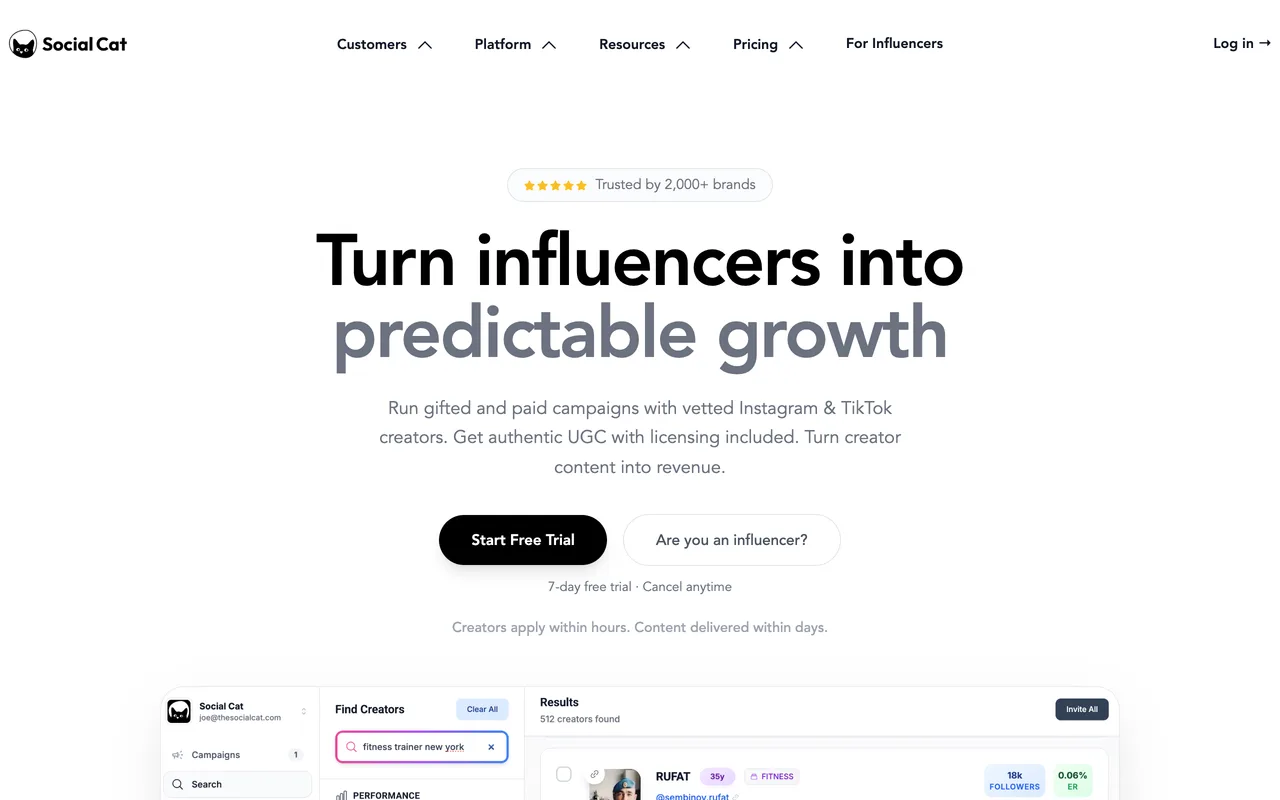
Social Cat targets small brands with plans starting at $99 per month, leaning on micro-influencers and gifting rather than paid productions. Creators on the platform charge anywhere from $25 to $500 per collaboration on top of the subscription, and gifted deals only cost you product.
This is the low end on budget and a fit for brands that want authentic micro-creator content without large contracts. Quality varies more than on curated pay-per-video platforms, so expect to brief and filter actively.
Product-gifting and managed micro-influencer platforms
These compensate creators with free product or wrap the whole campaign in a managed service, which changes both the cost structure and the feel of the content.
7. Stack Influence
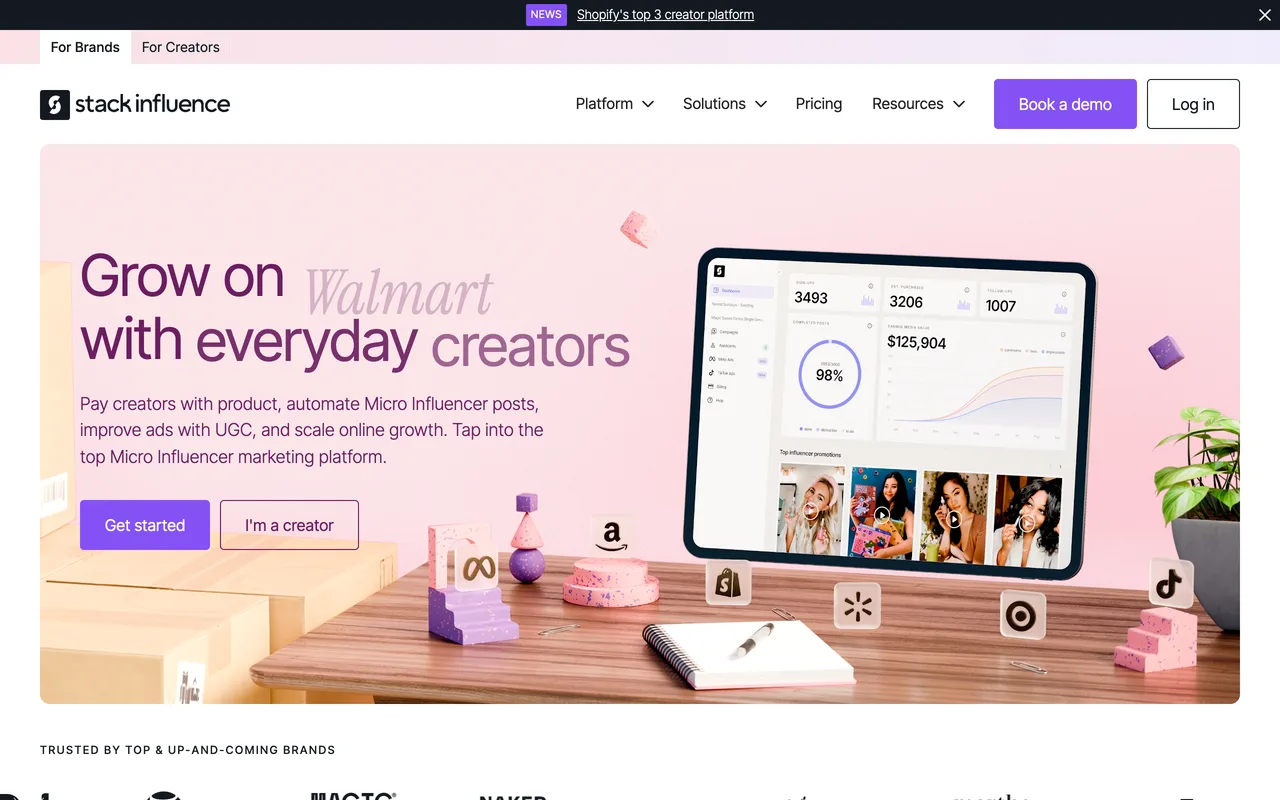
Stack Influence runs a pay-as-you-go model with no upfront software fee, where you cover product costs and pay only when a creator posts. It centers on micro and nano creators and product seeding, and the platform manages outreach, tracking, and UGC collection end to end.
Compensating creators with product makes the content read like genuine word-of-mouth, which suits Amazon and DTC brands. The trade-off is less control over exact messaging and a turnaround that runs two to four weeks while product ships and posts go live.
8. Minisocial
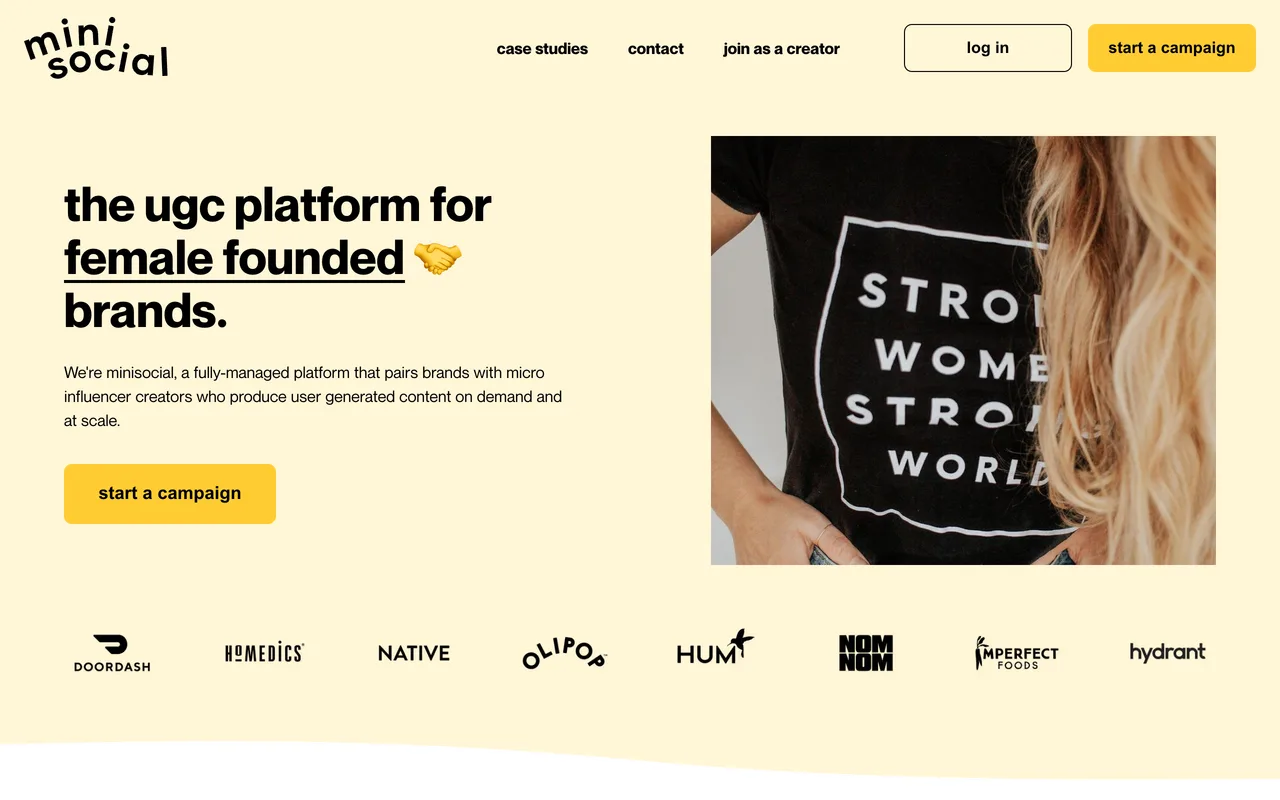
Minisocial is fully managed, with campaigns starting at $3,000 for 10 creators, or roughly $300 per creator with all creator fees and licensed content included. There are no subscriptions or long-term commitments; you pay per campaign based on how many creators you activate.
This is the hands-off option for micro-influencer UGC, trading a higher entry price for almost no internal lift. Expect a three to four week window for a fully managed batch.
Enterprise and quote-based platforms
These are built for large, ongoing programs, with custom pricing and managed support. They are overkill for a brand just testing UGC.
9. Cohley
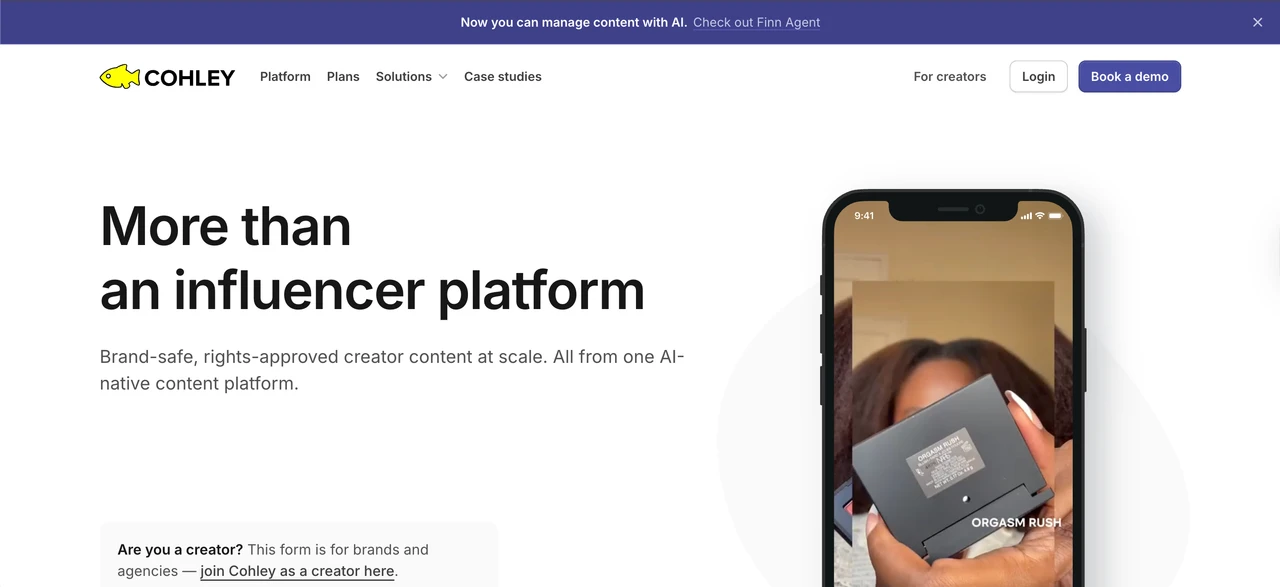
Cohley uses custom, content-volume-based pricing, and enterprise platforms in its tier typically land in the four to five figure monthly range. It places no cap on creators or assets per brief, so your creator-compensation budget scales with how much content you request.
Cohley fits enterprise brands that need a high, steady volume of UGC plus managed strategy. The quote-based model and pilot structure mean a sales conversation before you see real numbers.
10. Aspire
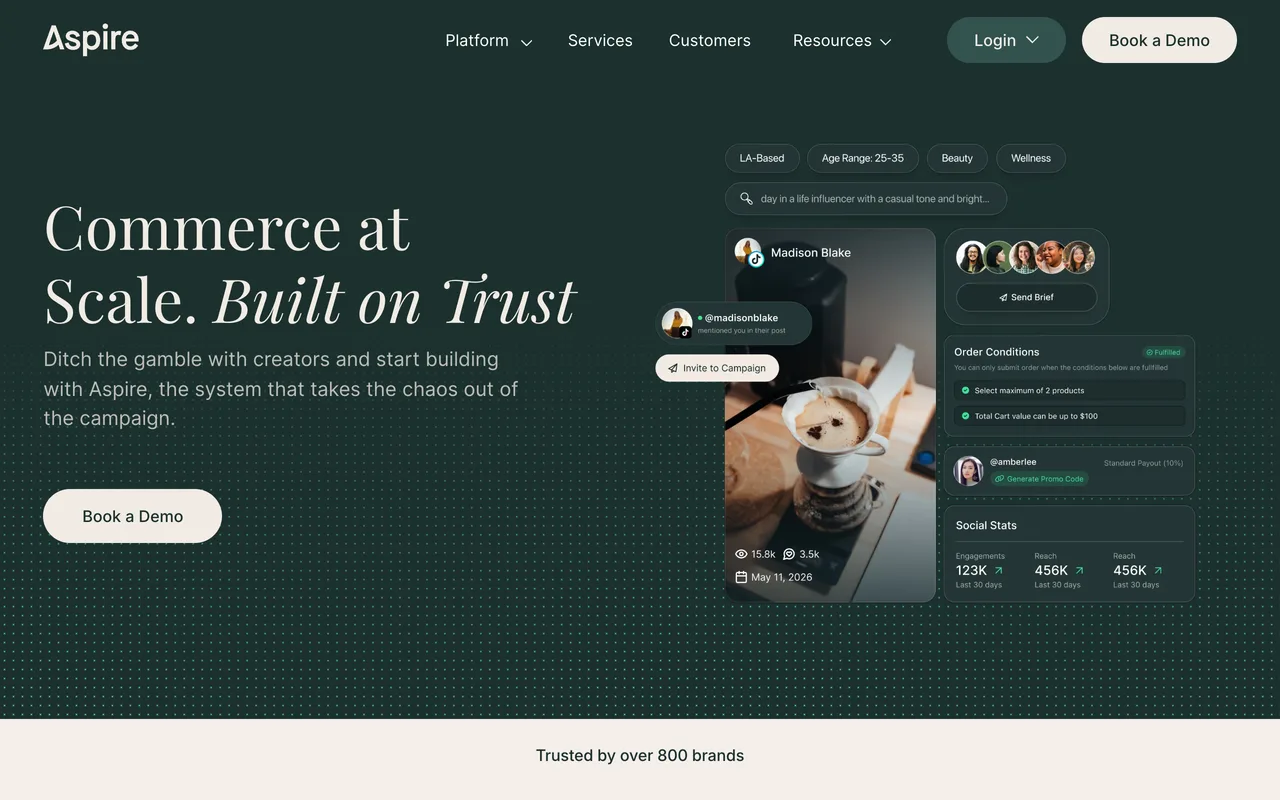
Aspire (formerly AspireIQ) is a subscription influencer platform with pricing that starts around $1,000 to $2,499 per month and is not published publicly. It spans influencer discovery, creative production, and campaign management, so UGC is one part of a broader program.
Aspire suits brands running a full influencer operation, not just buying clips. For pure UGC sourcing on a small budget, it is more platform than the job needs.
How to choose the right UGC sourcing platform
Start from the constraint that binds you hardest, then let it pick the model.
- Tight budget or testing UGC: start with a pay-per-video platform like Billo or Trend, or a free-to-start marketplace like JoinBrands. You pay per asset and learn what works before committing.
- Scaling a steady pipeline: a subscription platform like Insense lowers per-asset cost once volume is high enough to absorb the monthly fee.
- Minimal internal lift: a managed service like Minisocial or an enterprise platform like Cohley does the coordination for a premium.
- Authentic micro-creator content: gifting networks like Stack Influence or Social Cat trade polish for word-of-mouth credibility at low cash cost.
Match the model to your real bottleneck, and the shortlist gets short fast. The mistake is paying enterprise prices to test an idea, or running solo through a marketplace when you have no time to vet.
Sourcing the footage is only half the job
A UGC platform gets you raw, authentic clips. It does not tell you which concept to brief next, which winner to scale, or when a creative is fatiguing and needs a refresh. That decision layer is where most paid-social budgets leak, and no sourcing platform closes it.
This is the gap Hawky's Creative Agent is built for. It reads your past winners, competitor patterns, and portfolio gaps from FeatherDB, then generates on-brand creative variations and routes them through seat-level approval, with every creative citing the evidence behind it. You still own the brief and the brand calls; the agent handles the production and iteration labor.
Paired with a UGC platform, the workflow tightens: source authentic raw footage from creators, then use the Performance Agent to test, track, and scale it against your KPI, refreshing before ad fatigue sets in. The Man Company used this approach to double creative performance and cut iteration cycles by 50%. Sourcing fills the top of the funnel; the agents decide what to do with it.
If you have a stack of UGC and no system for turning it into scaled winners, Hawky's Creative Agent is built for that job.
Ready to hire your first AI performance team? Book Demo