Best Google Ads Management Software (2026): 9 Tools Compared
The best Google Ads management software in 2026 depends on how much of the account work you want the tool to do for you. Hawky leads when you want a Performance Agent to operate the account against a KPI rather than hand you a to-do list, Optmyzr and Opteo lead for rule-based bid and budget optimization, and Adalysis leads for automated ad testing and audits. If you only need bulk edits, the free Google Ads Editor covers that job well.
Choosing Google Ads management software comes down to one question: do you want a tool that tells you what to change, or one that makes the change. This guide compares nine current tools across that spectrum, from agentic platforms to bid engines, analysis suites, and free native tooling, with sourced pricing so you can match spend to what each one actually does.
When you evaluate options, look at five things: whether the tool executes changes or only recommends them, how much control you keep over automation, how deep its ad testing and audit coverage goes, what reporting you get, and how pricing scales with your ad spend.
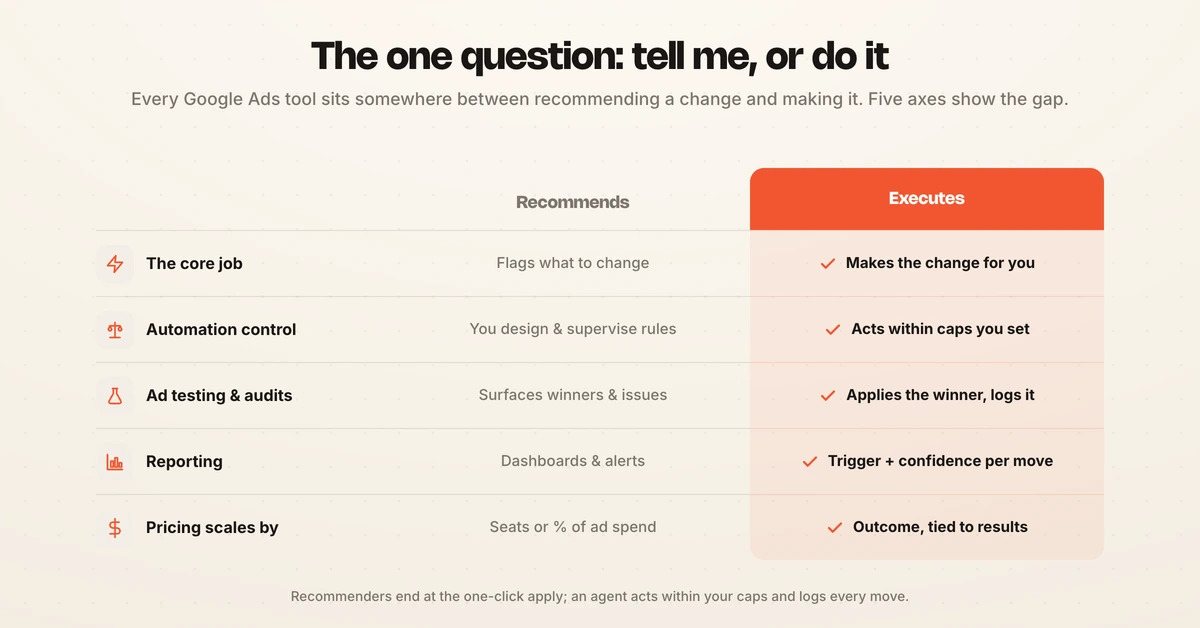
Comparison of the best Google Ads management tools
| Tool | Best for | Key strength | Pricing |
|---|---|---|---|
| Hawky | Teams that want the account operated against a KPI | Agentic Performance Agent that makes, logs, and reverses changes | Outcome-based (pricing) |
| Optmyzr | Agencies running rule-based optimization at scale | One-click optimizations plus a visual rule engine | From ~$249/mo, Essentials (source) |
| Opteo | Solo managers and small agencies | 40+ statistically significant recommendations | From $129/mo, Basic (source) |
| Adalysis | RSA testing and account audits | Automated ad testing plus 100+ audit checks | Usage-based on ad spend (source) |
| Semrush Advertising Toolkit | Competitor and keyword research | Competitor ad and keyword intelligence | From $99/mo, Base (source) |
| PPC Signal (PPCexpo) | Anomaly detection and alerts | ML flags significant metric shifts | From ~$10/mo per account (source) |
| Adzooma | Very small budgets testing tooling | Free tier with opportunity reports | Free to $139/mo (source) |
| WordStream by LocaliQ | A quick triage read on a cold account | Free Google Ads Performance Grader | Free grader (source) |
| Google Ads Editor | Bulk offline edits | Fast multi-account bulk editing | Free (source) |
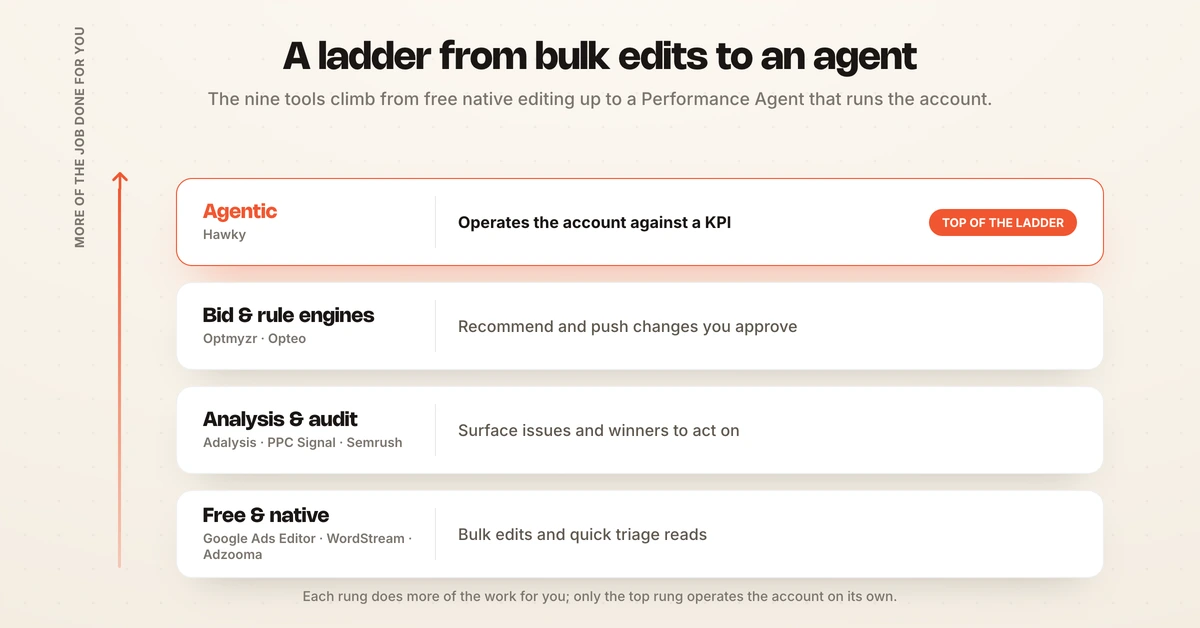
The 9 best Google Ads management software tools
1. Hawky
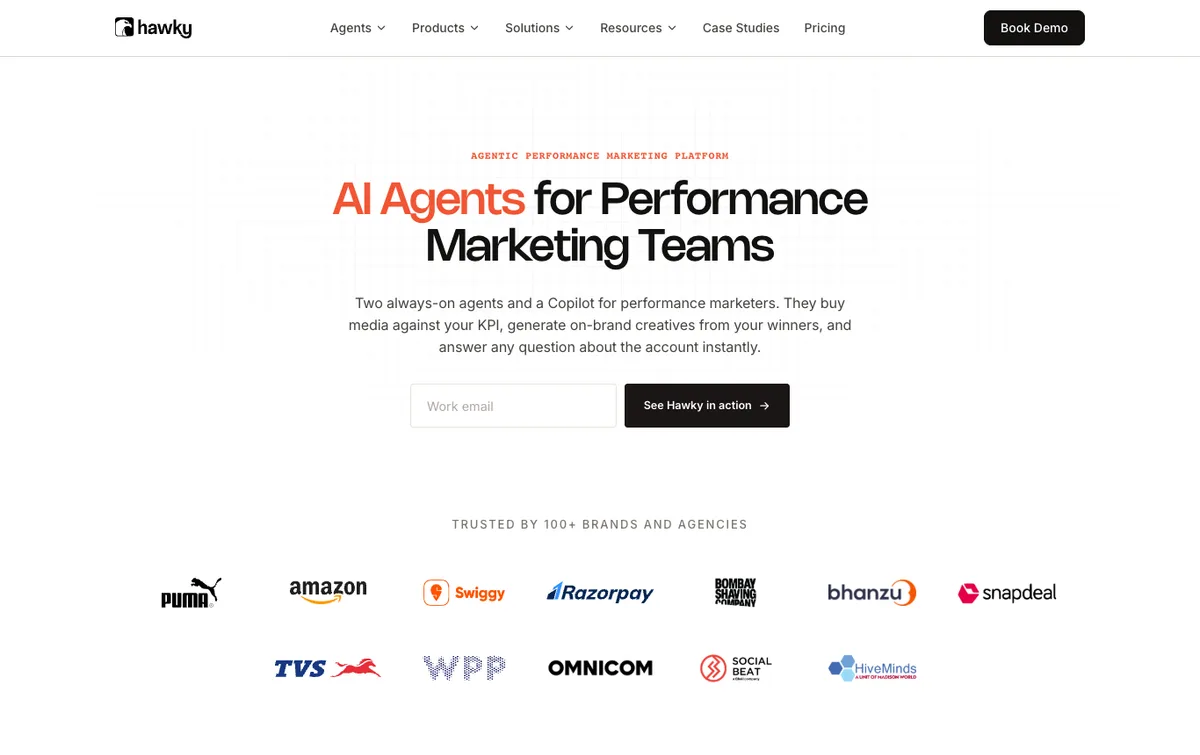
Hawky is an agentic performance marketing platform, and its Performance Agent is the piece that manages Google Ads. Where most tools on this list analyze the account and hand you recommendations, Hawky's agent operates the account directly against a KPI you set, and it does the same across Meta and YouTube from one place. That is the core difference: it does the work rather than queuing it for you.
Every move the agent makes is logged with the trigger that caused it and a confidence score, and each action is one-click reversible. You set guardrails and spend caps, and you choose how much autonomy the agent has, from suggest-only to acting within limits, with a full audit trail behind every decision. That structure is designed so you can hand over execution without losing oversight of the account.
Hawky reports +25% ROAS in the first 90 days across 200+ customers, detailed in its case study. Pricing is outcome-based rather than a flat monthly tier, so cost tracks the results the agent produces. You can see how autonomy and reporting fit together on the Performance Agent page.
Hawky is the fullest option here because it closes the loop between insight and action. If you have spent years reading recommendations and clicking apply, an agent that makes the change, logs why, and lets you undo it is a different model of Google Ads management. For a broader view of where it sits against other categories, see the best ad management software and best PPC tools guides.
2. Optmyzr
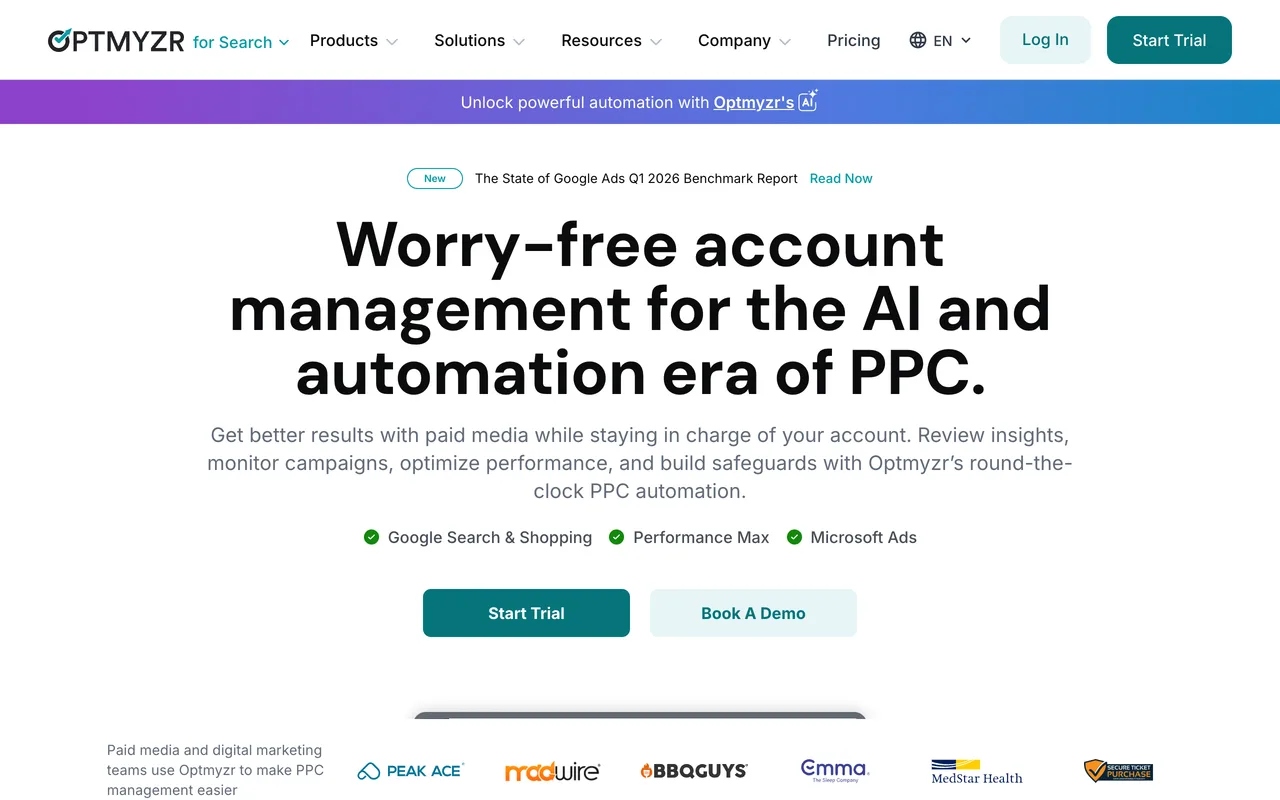
Optmyzr is a long-standing PPC optimization platform built around one-click optimizations and a rule engine. The one-click optimizations are pre-built recommendations for tasks like pausing underperforming keywords and adjusting bids, and the rule engine lets you build custom automation workflows with a visual interface rather than scripts, according to the pricing page.
Plans start at roughly $249 per month for the Essentials tier covering up to $25K in monthly ad spend, per Capterra, with Premium and custom Enterprise tiers above it. Rule scheduling gets more granular on higher plans, from weekly on Essentials to hourly on Enterprise.
Optmyzr suits agencies that want to standardize optimization across many accounts and are comfortable designing and supervising rules. It recommends and can automate specific rules, but you remain the operator who sets and monitors them.
3. Opteo
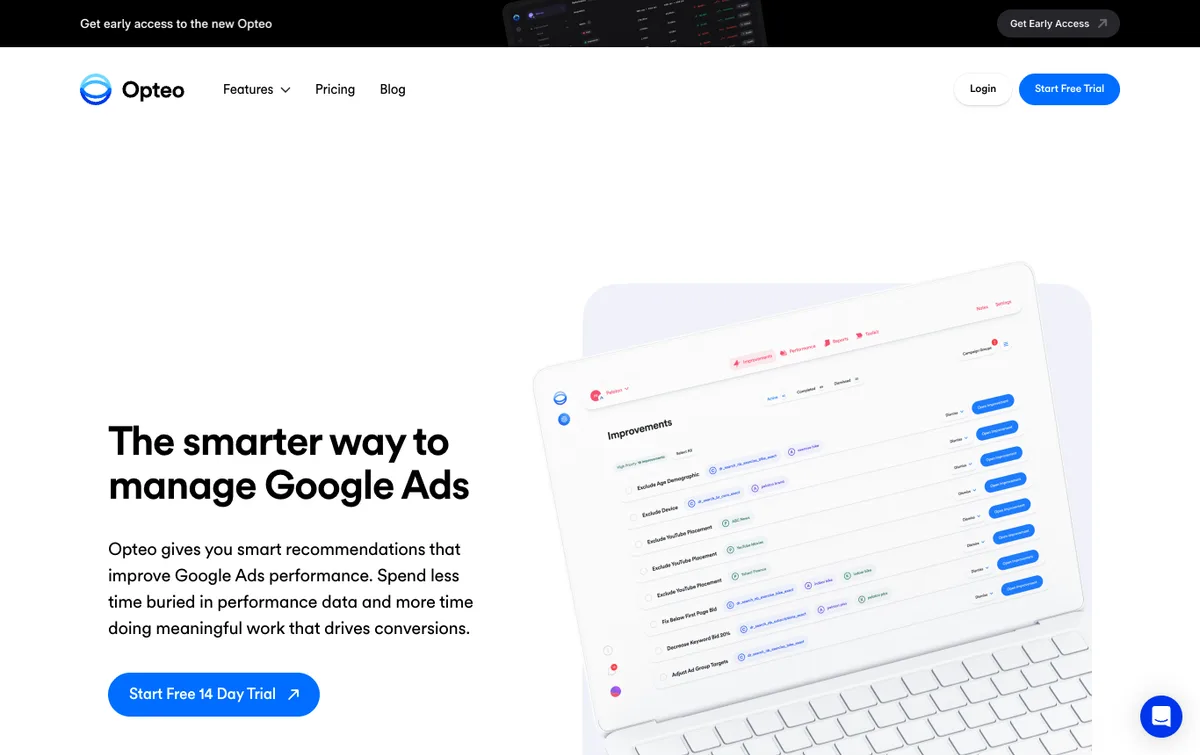
Opteo continuously monitors Google Ads accounts for statistically significant patterns and generates recommendations you can push live in a few seconds. It includes over 40 optimization types covering keyword bids, budgets, ad schedules, search terms, and real-time alerts, per its homepage.
Pricing starts at $129 per month for the Basic plan, which covers 10 accounts and $25,000 in monthly spend, with Professional at $249 and Agency at $499, according to the pricing page. Billing is based on the total spend of the accounts you connect.
Opteo is a strong fit for solo managers and small agencies who want vetted, statistically grounded suggestions without a heavy rule-building lift. Like Optmyzr, it stops at the recommendation and the one-click push, so you decide what goes live.
4. Adalysis
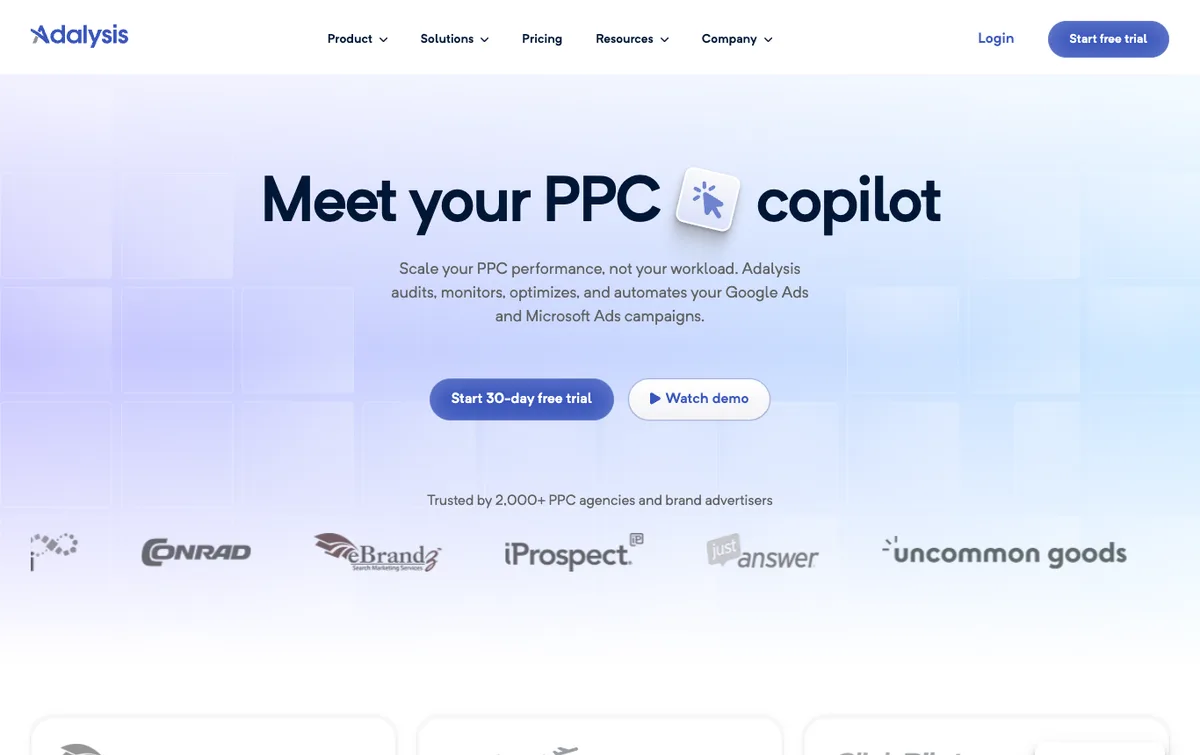
Adalysis focuses on ad testing and account auditing for Google Ads and Microsoft Ads. It runs automated A/B testing that monitors Responsive Search Ad performance, identifies statistically significant winners and losers, and recommends which headlines and descriptions to keep, pause, or replace, per its features page.
On the audit side, Adalysis runs automated daily audits with 100+ customizable checks ranked by urgency, delivered to email or Slack. Pricing is usage-based and tied to your maximum monthly ad spend, with monthly, six-month, and annual billing options, per its pricing page.
Adalysis is the pick when ad testing and audit discipline are your priority. It surfaces what to change and monitors quality, but acting on the recommendations is your job.
5. Semrush Advertising Toolkit
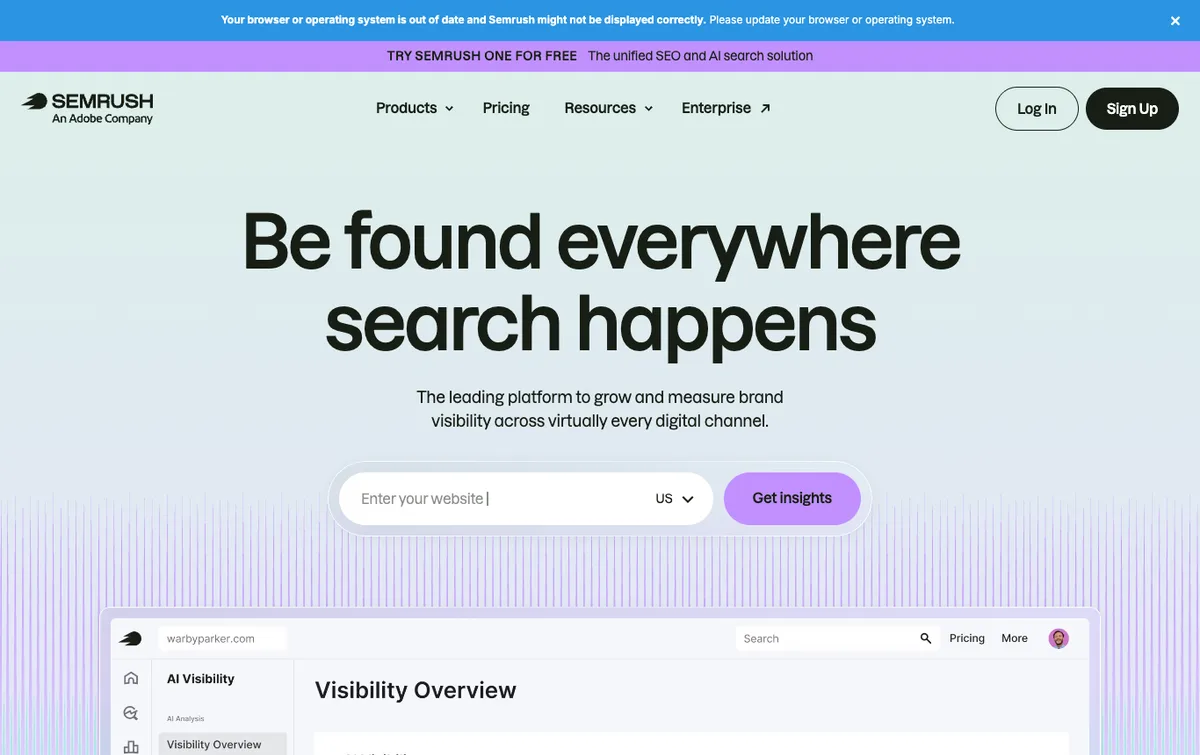
Semrush is a broad SEO and marketing suite, and its Advertising Toolkit adds PPC research and competitor intelligence. It surfaces competitor keyword portfolios, estimated ad budgets, and top-performing ad copy, and its PPC Keyword Tool organizes keywords into ad groups to reduce duplicate targeting, per the advertising page.
The Advertising Toolkit Base plan costs $99 per month and includes AI recommendations for campaign optimization and a unified Google and Meta dashboard, with a Pro plan at $220 per month, according to Semrush's advertising toolkit materials. The toolkit requires a base Semrush subscription.
Semrush is best for research and competitive analysis rather than live account operation. Use it to plan keywords and study competitors, then execute elsewhere.
6. PPC Signal (PPCexpo)
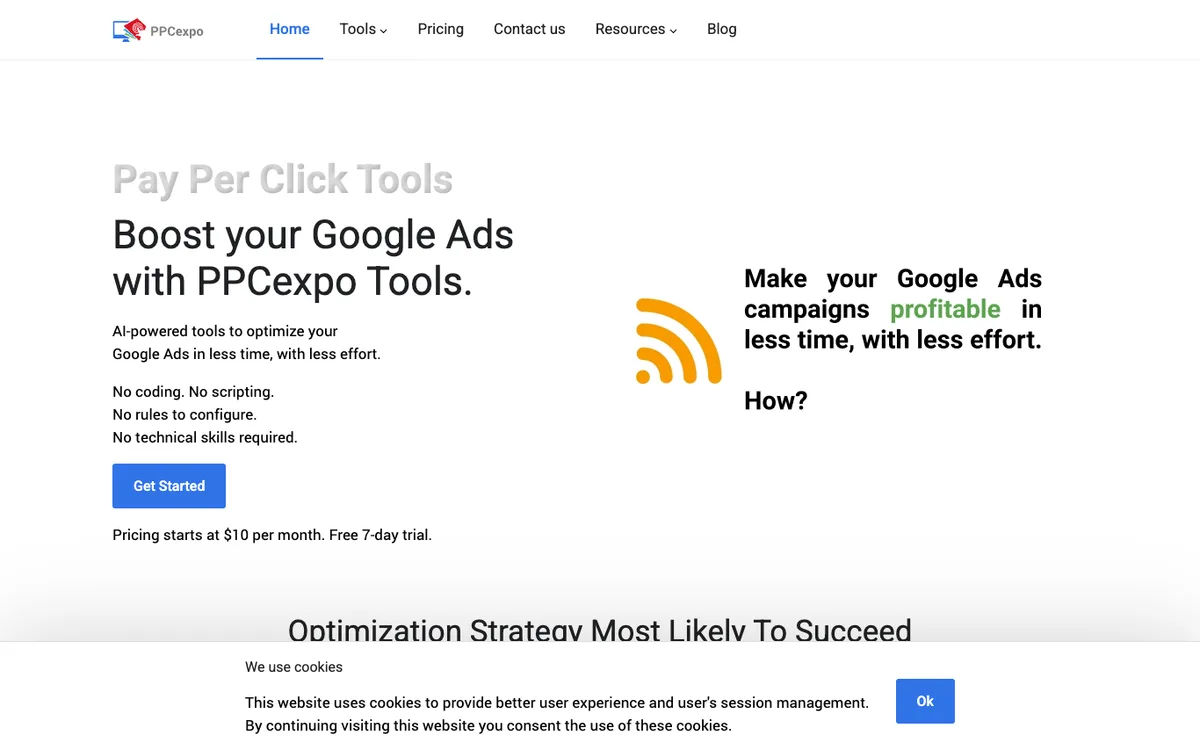
PPC Signal detects significant positive or negative changes in Google Ads account data. Machine learning analyzes combinations of metrics across every dimension, then surfaces "signals," statistically significant trends worth attention, and suggests a follow-up action, per the PPC Signal app page.
It is priced at roughly $10 per month per account, per the pricing page, which makes it one of the cheapest monitoring tools available. The tradeoff is that it is analysis-only: no bid management, no one-click fixes, so you interpret the signals and act yourself.
PPC Signal works well as an early-warning layer alongside an execution tool. It tells you when something moved, not what to do about it in the account.
7. Adzooma
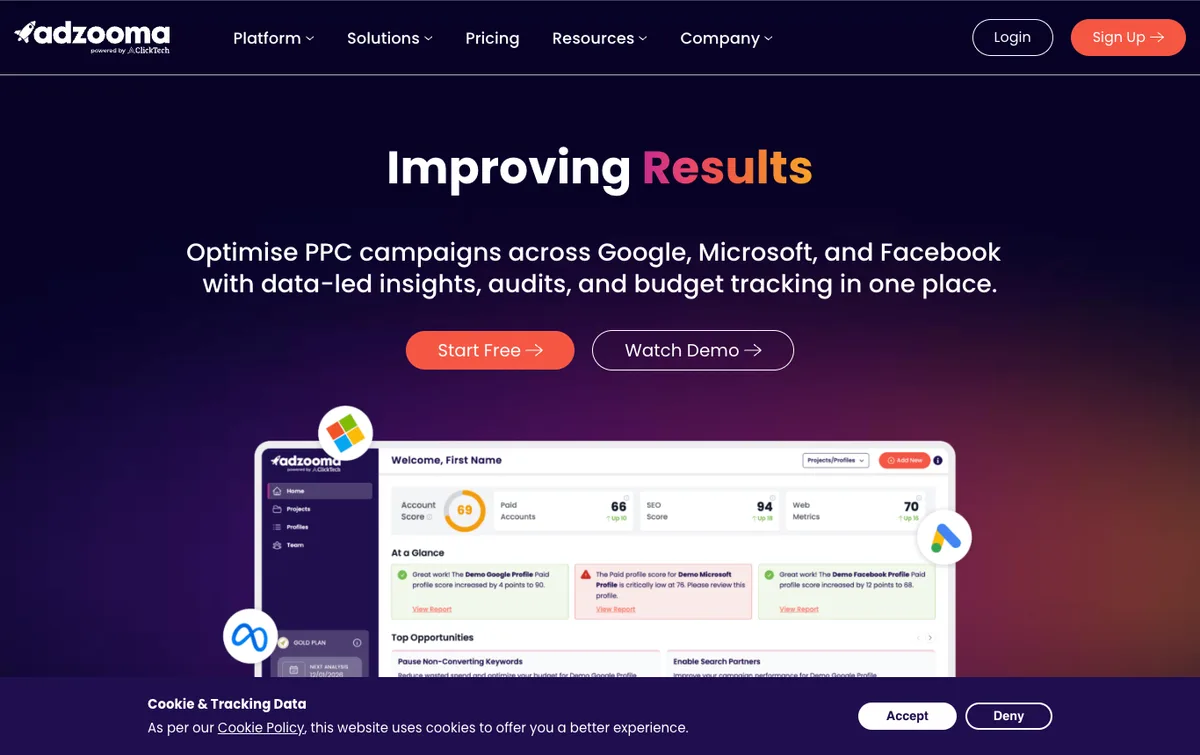
Adzooma offers a free tier with automated performance monitoring, weekly opportunity reports, and one-click optimizations across Google, Meta, and Microsoft Ads. The free plan connects unlimited ad accounts with a restricted set of opportunities and one user seat, per its pricing page.
Paid tiers add weekly reporting and access to all opportunities, with three editions ranging from $0 to $139 per month, according to the same pricing page. It suits teams spending under a few thousand dollars a month who want to catch obvious optimization opportunities without paying for a heavier tool.
Adzooma is a reasonable entry point for very small budgets. Its depth is limited compared with dedicated optimization platforms, so most growing accounts outgrow it.
8. WordStream by LocaliQ
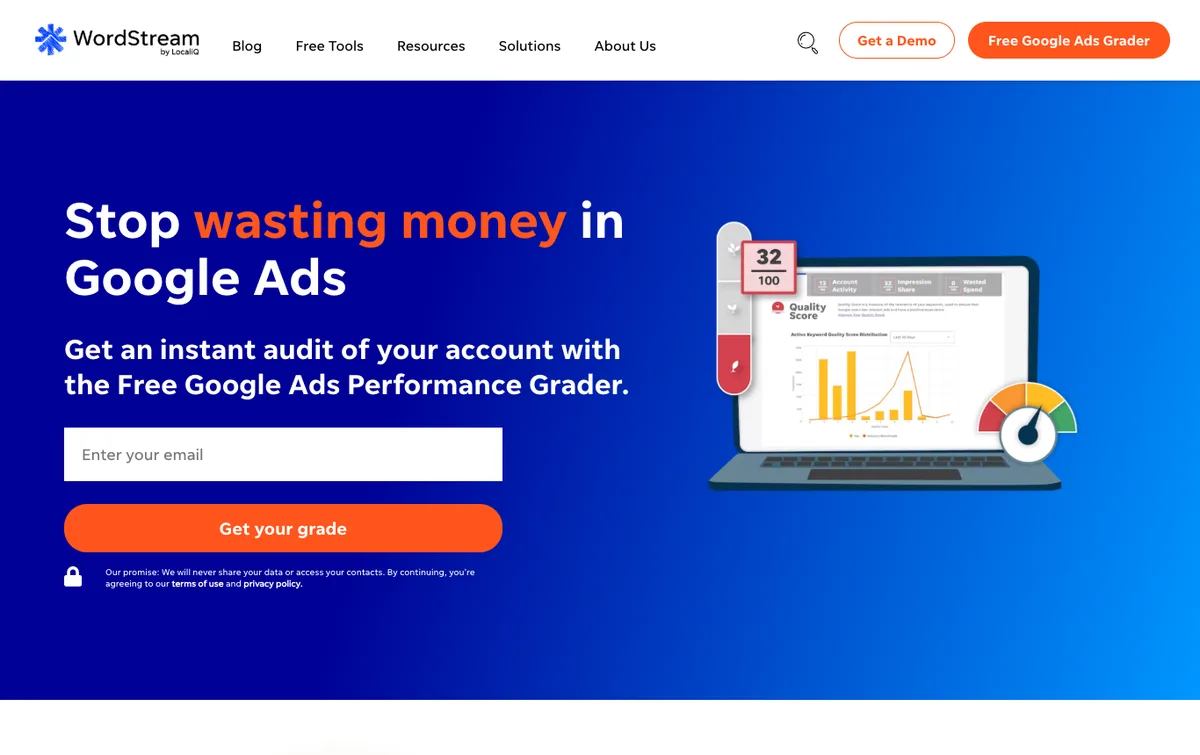
WordStream, now part of LocaliQ, is best known for its free Google Ads Performance Grader, which gives a fast triage read on an account across metrics like wasted spend and Quality Score, per its Google Ads page. It remains free and email-gated.
The paid product has shifted toward LocaliQ managed services, where LocaliQ runs or co-runs campaigns with the WordStream platform underneath, priced bespoke and tied to your ad spend tier. Free tool access still drives top-of-funnel leads.
WordStream by LocaliQ fits businesses that want a quick health check or a managed-service relationship rather than self-serve software. The Grader is a useful starting audit even if you never buy anything.
9. Google Ads Editor
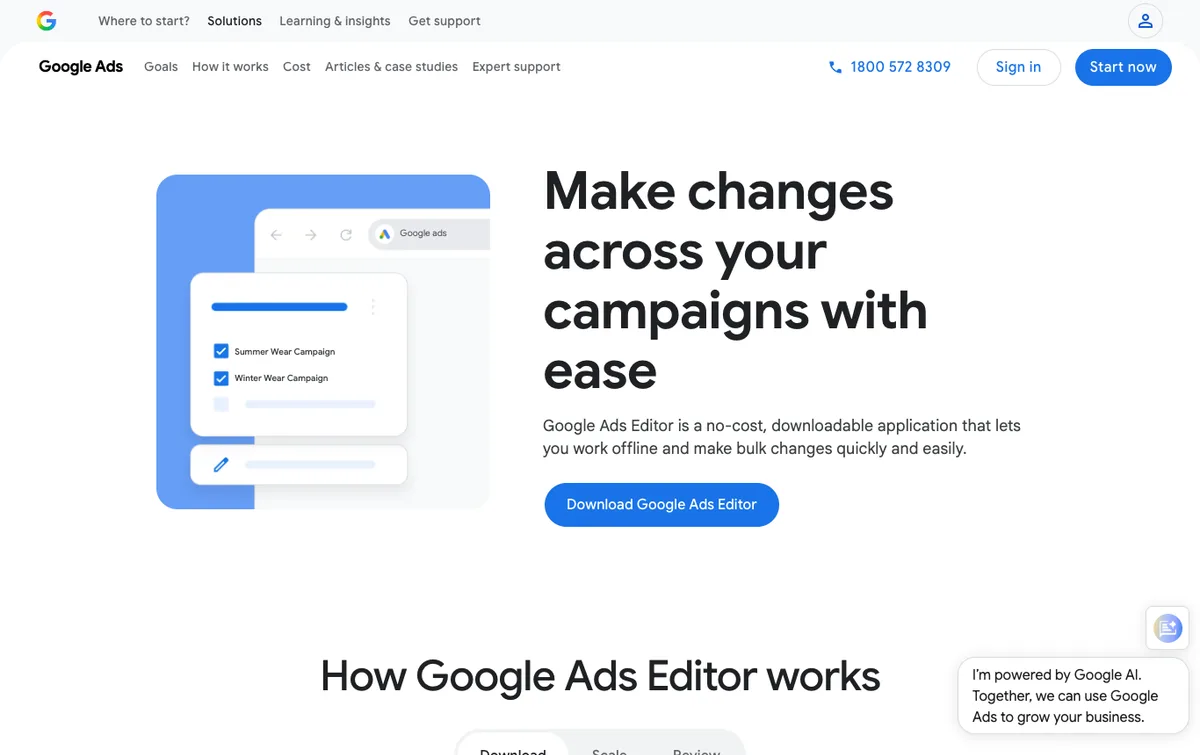
Google Ads Editor is a free, downloadable desktop application from Google for managing campaigns offline. You download accounts, make bulk changes offline, then upload them, with support for multi-account management, search-and-replace across ad groups, and import/export, per Google's help documentation.
It costs nothing and remains the fastest way to make large structural edits, which is why many teams keep it in the stack even alongside paid tools. What it does not do is optimize, test, or monitor on its own; it is a manual editing tool, not a management layer.
Google Ads Editor is the baseline every serious advertiser should use for bulk work. Pair it with an optimization or agentic tool for the ongoing management it does not handle.
How to choose Google Ads management software
Start with the job you actually need done. If your problem is that changes get recommended but never made, a rule engine or an agentic platform matters more than another dashboard. If your problem is not knowing what changed, a monitoring tool like PPC Signal fills that gap cheaply.
Weigh execution against recommendations honestly. Optmyzr, Opteo, and Adalysis are excellent at telling you what to do, but the doing stays with you. Hawky's Performance Agent is built to operate the account within guardrails and spend caps you set, which is a different commitment of your time.
Then check the money math. Free tools like Google Ads Editor and the WordStream Grader cover real jobs at zero cost, while paid tools scale with ad spend or accounts. Outcome-based pricing, as Hawky uses, ties cost to results rather than seat count. For context on what you are already spending, see the Google Ads cost breakdown, and for the automation angle specifically, the Google Ads automation guide. If you run Performance Max campaigns, confirm the tool supports them before committing.
Frequently asked questions
What is the best Google Ads management software?
It depends on how much work you want the tool to do. Hawky is the strongest option when you want a Performance Agent to operate the account against a KPI, Optmyzr and Opteo lead for rule-based bid and budget optimization, Adalysis leads for ad testing and audits, and Google Ads Editor is the best free tool for bulk edits. Match the tool to whether you need analysis, recommendations, or execution.
What tools help manage Google Ads?
The main categories are agentic platforms that operate the account (Hawky), rule and bid engines that recommend and push changes (Optmyzr, Opteo), analysis and audit tools that surface issues (Adalysis, PPC Signal, Semrush), free native tooling for bulk edits (Google Ads Editor), and free graders for a quick triage read (WordStream by LocaliQ). Most teams combine one execution or optimization tool with a native editor.
Are there AI tools for Google Ads?
Yes. Semrush uses AI for campaign recommendations and ad copy, Optmyzr offers AI-powered account insights, and PPC Signal uses machine learning to flag anomalies. Hawky goes further with an agentic model where a Performance Agent makes and logs changes against your KPI, with each move carrying a trigger and confidence score and being one-click reversible.
How much does Google Ads management software cost?
Free tools like Google Ads Editor and the WordStream Google Ads Performance Grader cost nothing. Paid tools range from about $10 per month per account for PPC Signal, to $99 per month for the Semrush Advertising Toolkit base plan, to $129 per month for Opteo's Basic plan, up to around $249 per month for Optmyzr's Essentials tier. Agentic platforms like Hawky use outcome-based pricing.
Can Google Ads management software run my account automatically?
Most tools recommend changes and require you to approve or push them. Rule engines like Optmyzr and Opteo can automate specific rules, but you still design and supervise them. Hawky's Performance Agent is built to operate the account with configurable autonomy, guardrails, and spend caps, so it can make moves within limits you set while logging every action for review.
Do I still need Google Ads Editor if I use a management tool?
Often yes. Google Ads Editor is free and remains the fastest way to make large bulk structural edits offline, then upload them. Many teams pair it with an optimization or agentic tool that handles ongoing bidding, testing, and monitoring, since the two solve different jobs.
If you are tired of reading recommendations you never have time to act on, Hawky's Performance Agent is built for that job.
Ready to hire your first AI performance team? Book Demo