14 Best Ad Creative Analysis Tools in 2026 (Copy + Creative)

Hawky, Motion, and Atria are the best ad creative analysis tools in 2026. Hawky ranks first because it is the only one that breaks every ad into hook, visual, copy, and CTA, ties each element to spend and revenue, tracks competitor creative in the same place, and then acts on the finding through its agents. Motion is the strongest visual reporting layer, and Atria is the pick for teams that brief creative from competitor patterns on Meta and TikTok.
Most ad tools show you the scoreboard. CTR up, CPA down, ROAS flat. What they do not show is why. Which part of the hook lost people in the first three seconds, which visual format is starting to fatigue, and what competitors are testing right now.
That gap, between what happened and why it happened, is what an ad creative analysis tool closes. This guide ranks 14 tools by how deep the analysis goes, how much they automate, and who they fit, with pricing checked on each vendor's own site in September 2026. It also separates two jobs that buyers often merge: analyzing your creative and analyzing your ad copy.
What ad creative analysis tools do
Ad creative analysis tools connect specific creative elements (hooks, visuals, copy, CTAs, offers) to actual performance outcomes such as ROAS, CPA, and CTR. Campaign reporting tells you ad set A beat ad set B. Creative analysis tells you the hook in ad set A held 40% more viewers past the three-second mark, and that the CTA in ad set B was too generic for cold audiences.
Vendors also call this ad creative analytics or creative intelligence, and the job is the same.
Ad analysis tools in general split into three groups that get lumped together in search results. Reporting tools consolidate metrics across channels and make them presentable. Research tools show you what competitors are running. Analysis tools go inside your own ads and explain the result at the element level, which is the group this guide ranks, while creative performance reporting tools cover the reporting layer on its own.
A proper ad creative analysis tool gives you three things:
- Element-level breakdown. Not the ad as a whole, but the specific components inside it, scored against outcomes. See the glossary entry on element-level analysis.
- Fatigue detection. A signal that a creative is about to decline rather than a report that it already has.
- Competitive context. How your creative compares against your own history and against competitors in your category.
Most tools on this list do one or two of these well. One does all three and then acts on the result.
How the 14 tools were ranked
Every tool here was scored on four criteria: depth of analysis (asset level or element level), whether it acts on the finding or only displays it, channel coverage, and pricing transparency. Tools that analyze your own ads rank above tools that only generate or only research, because the search intent behind ad creative analysis is diagnosis, not production.
Pricing comes from each vendor's live pricing page, checked in September 2026. Where a vendor does not publish a price, the entry says so rather than guessing. Where a vendor blocked the check, the entry points at the vendor's pricing page instead of quoting a number.
The 14 best ad creative analysis tools in 2026
1. Hawky: element-level analysis, competitor tracking, and agents that act on both
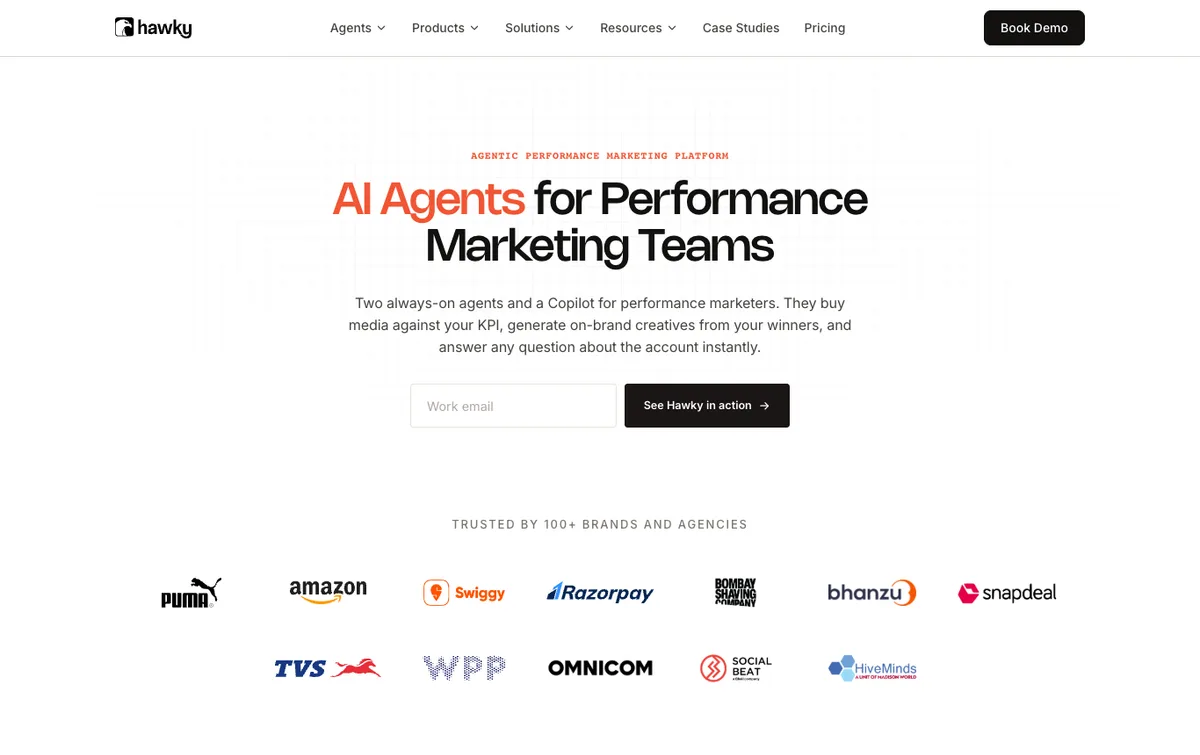
Hawky is an agentic performance marketing platform built for teams running paid social and search. Its Creative Analysis decodes video, image, copy, voiceover, on-screen text, and audio in one pass, scores each element against your winners, and queues the exact edit. Predictive fatigue detection catches decline two to three days earlier and names the element responsible.
Where the rest of this list stops at the diagnosis, Hawky operates on it. The Creative Agent renders on-brand replacements from proven winners and routes them through seat-level approval before anything ships. The Performance Agent then buys media against your KPI on Meta, Google, YouTube, TikTok, and LinkedIn, with every move logged, reversible, and inside spend caps you set.
Key capabilities:
- Creative Analysis. Element-level scoring of hook, frames, copy, audio, and CTA, tied to bottom-funnel revenue rather than surface CTR.
- Competitor Analysis. Always-on decoding of every ad competitors run on Meta and Google, tagged by hook archetype, message framing, CTA, and offer structure, with new-campaign alerts. See Competitor Analysis.
- Copilot. Ask anything about campaigns, creatives, or competitors in plain language and get sourced answers in seconds.
- FeatherDB. Living-context memory that holds 18 months of performance history, so last quarter's winning pattern informs this quarter's brief instead of being relearned.
Proof point: The Man Company doubled creative performance and halved iteration cycles (The Man Company case study), and Hiveminds cut CPL by 27% while saving 160+ hours per brand each month (Hiveminds case study).
Best for: performance teams and agencies spending $50k to $5M+ a month across Meta, Google, YouTube, and TikTok who want creative diagnosis, competitor visibility, and execution in one loop.
Pricing: three platform tiers (Dashboards, Ask, Auto-pilot) priced per brand with unlimited users, plus an outcome-based model for the Performance Agent with a free 30-day pilot on one account. Details on the pricing page.
2. Motion: visual creative reporting for paid social teams
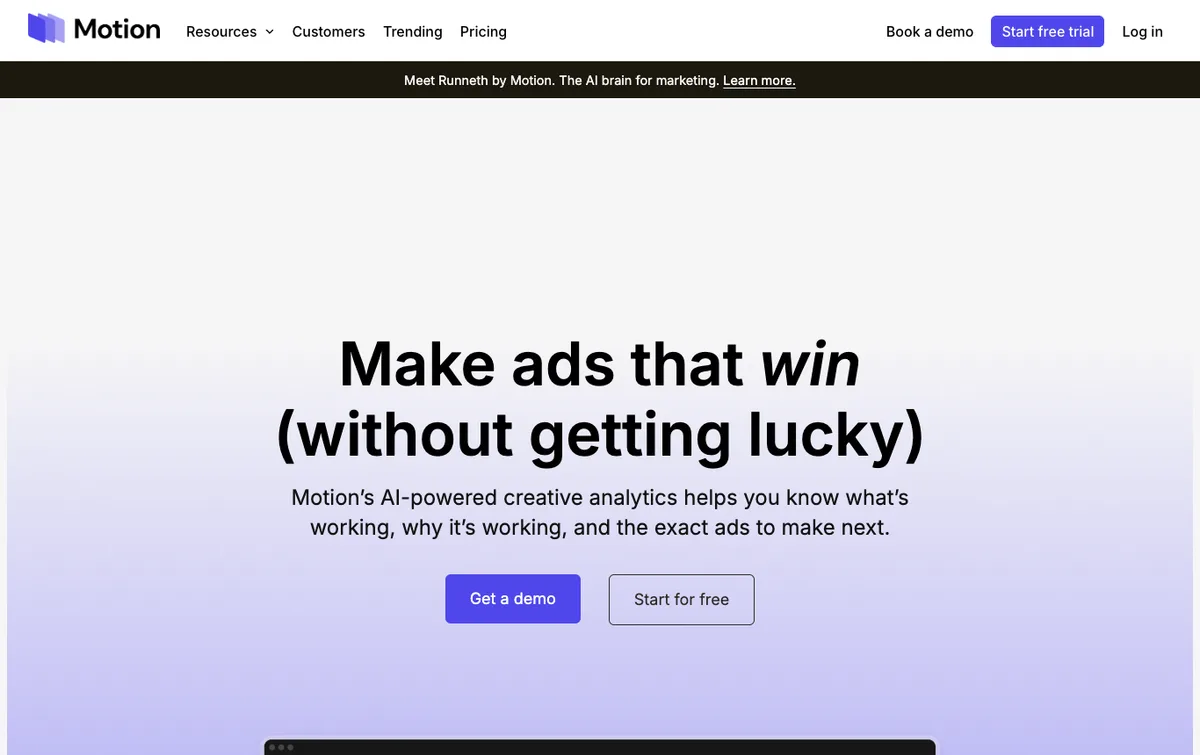
Motion is the most widely adopted creative reporting platform in performance marketing. It organizes your ad data by creative concept, format, and hook type rather than by campaign, auto-tags assets with AI, and builds visual reports that show the creatives themselves with performance overlaid. Its frame-by-frame video view shows where viewer attention drops.
Strength: visual reporting and concept-level organization. Creative strategists who present to stakeholders every week tend to prefer it, and G2 reviewers rate it 4.5 out of 5 on that workflow.
Limitation: Motion reports on how your creatives performed and leaves interpretation and execution to your team. Reviewers also cite a setup learning curve tied to naming conventions and limited multi-account support for agencies.
Best for: brands and agencies on Meta and TikTok that need cleaner reporting across a large creative library.
Pricing: Starter is $750 a month for up to $50k in monthly ad spend, the next tier is $1,200 a month for spend above $50k, and larger plans are quoted. Per Motion's pricing page, September 2026.
3. Atria: creative intelligence and competitor research for Meta and TikTok
Atria combines a competitor ad library with analytics on your own accounts. It follows rival brands, tags their ads with AI, and scores your creatives on hook strength and ROAS, so research and analysis sit in one interface. It also generates ad variations from the patterns it finds.
Strength: research and your own performance data in one place, which shortens the brief-writing loop for Meta-first teams.
Limitation: coverage centers on Meta and TikTok, and the generated assets still have to be placed into campaigns by your team.
Best for: research-first performance teams and agencies on Meta and TikTok that brief creative from competitor patterns. Compare it directly in Hawky vs Atria.
Pricing: Core is $129 a month, Plus is $479, and Business is $959, all billed annually, with Enterprise on custom terms. Per Atria's pricing page, September 2026.
4. Vidmob: creative effectiveness scoring for enterprise video
Vidmob describes itself as an end-to-end creative effectiveness platform. It scores digital ads against each platform's best practices, identifies the creative decisions that drive performance, and pairs the scoring with a collaborative studio and creative analytics. Frame-level video breakdown is the core of the analysis.
Strength: frame-level video scoring with enterprise-grade integrations, useful for video-heavy brands with dedicated creative ops.
Limitation: built for large organizations, and the scoring is against platform best practices rather than your own revenue outcomes.
Best for: enterprise brands with video-heavy ad strategies and in-house creative operations.
Pricing: not published. Vidmob quotes each customer directly.
5. CreativeX: creative quality governance for global brands
CreativeX measures creative quality and consistency across markets. Its Creative Quality Score checks each asset against platform fundamentals, and companion measures for salience, lifecycle, and inclusive representation give global teams a governance layer across agencies and regions.
Strength: a standard every market and agency can be held to, at a scale few other tools handle.
Limitation: the focus is compliance and consistency rather than element-level performance, so it does not explain which hook drove ROAS.
Best for: global enterprises managing creative standards across many markets and partners.
Pricing: not published. CreativeX sells on custom enterprise terms.
6. Superads: multi-platform creative reporting with AI
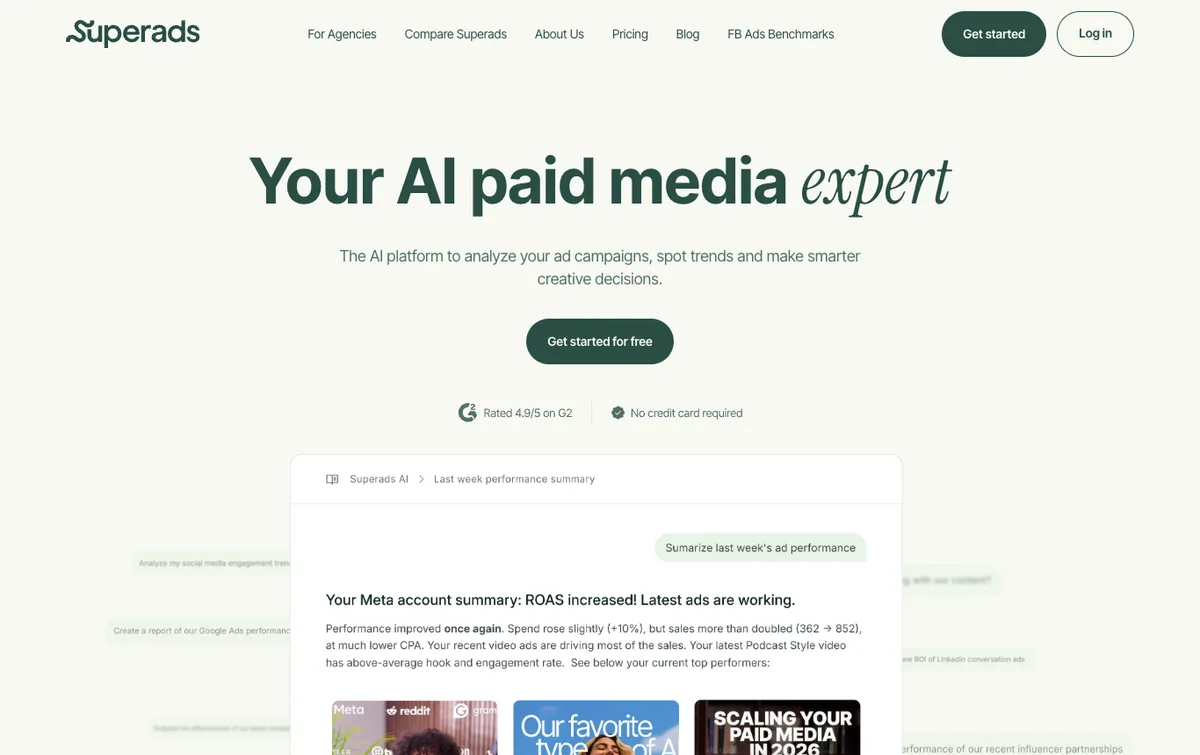
Superads consolidates creative reporting across Meta, Google, TikTok, LinkedIn, and Pinterest into one view with AI tagging, shareable boards, and an AI assistant for exploring the data. For agencies running many clients across channels, the aggregation is the primary value: one place to compare creative performance without jumping between ad managers.
Strength: broad channel coverage, clean interface, and unlimited reports and boards on the paid plan.
Limitation: the analysis stays at the reporting layer. Element-level diagnosis, fatigue prediction, and competitor tracking are not what it is built for. See the comparison in Hawky vs Superads.
Best for: agencies and smaller teams that need consolidated multi-channel reporting.
Pricing: Professional is $125 a month billed annually ($1,500 a year) for up to $100k in monthly ad spend, with $100 a month per additional $100k, plus a custom Enterprise plan and a 14-day trial. Per Superads' pricing page, September 2026.
7. Madgicx: Meta creative insights tied to budget automation

Madgicx is an ad platform built for Meta advertisers. Its creative insights module clusters similar ads by visual content and shows aggregate performance per cluster, alongside copy language analysis. It pairs those insights with automation rules that move budget away from weak clusters, and its FAQ lists Google Ads, GA4, Shopify, Klaviyo, and TikTok as monitored sources.
Strength: concept clustering plus an automation layer that acts on it, at an entry point most Meta-only brands can afford.
Limitation: Meta-centric, and creative analysis is secondary to audience and budget automation. Madgicx recommends changes for you to approve rather than operating the account. See Hawky vs Madgicx.
Best for: Meta-focused D2C teams that want creative insights tied to automated budget management.
Pricing: the main plan's price is shown inside the app rather than on the public page, with a 7-day trial. A Tracking Pro add-on is $49 a month. Per Madgicx's pricing page, September 2026.
8. Triple Whale: creative analytics inside ecommerce attribution
Triple Whale is a D2C analytics platform whose creative view sits alongside its attribution, cohort, and profit data. Shopify-led teams see creative performance in the context of blended ROAS and customer data, so creative decisions connect to revenue rather than platform metrics alone.
Strength: creative performance next to attribution and profit for ecommerce teams already running the platform.
Limitation: creative analysis is one module in a broad analytics suite rather than an element-level engine, and pricing scales with store revenue. See Hawky as a Triple Whale alternative.
Best for: Shopify-led D2C brands that want creative signals tied to blended attribution. Indian D2C brands can compare it against the best creative analytics platforms for D2C brands in India.
Pricing: tiered by store revenue and published on Triple Whale's pricing page, which blocked automated checks at the time of writing, so confirm the current tiers there.
9. AdCreative.ai: generation with predicted creative scores
AdCreative.ai generates static and video ad variants from your brand inputs and scores each one before you spend. Its creative scoring AI predicts performance from historical patterns, and creative insights report on assets already running. It is a fast way to produce and rank test variants.
Strength: high-volume production with a predicted score on every asset.
Limitation: it generates and scores rather than diagnosing your existing ads at the element level, so it answers a different question than a dedicated analysis tool. See Hawky vs AdCreative.
Best for: small teams and solo marketers who need to produce and score variations quickly.
Pricing: subscription tiers listed on AdCreative.ai's pricing page, which blocked automated checks at the time of writing, so confirm current prices there.
10. Pencil: AI iteration with real-time performance scores
Pencil uses AI agents to generate text, image, and video ads, attaches real-time insights and scores to each, and launches and tracks them on Facebook, Instagram, TikTok, YouTube, Google Display, DV360, and LinkedIn. Once you know which patterns work, it produces variations of those patterns at speed.
Strength: fast iteration from proven winners with a score on each variant, at a very low entry price.
Limitation: it depends on having clear winning patterns to iterate from, so it accelerates production rather than diagnosing why an ad worked.
Best for: lean teams with established winning patterns who need validated variations at volume.
Pricing: Core is $14 a month for 50 generations, Growth is $55 a month for 250, and Pro is custom, with 20% off on annual billing. Per Pencil's pricing page, September 2026.
11. Anyword: predictive ad copy analysis
Anyword is the strongest dedicated ad copy analysis tool. It scores headlines, primary text, and descriptions with a predictive performance score before launch, and on higher tiers it trains custom models on your own performance data. Every plan includes prediction, which is what separates it from plain copy generators.
Strength: a numeric prediction on every line of copy, plus performance data rows that connect scores to real results.
Limitation: copy only. It does not see the visual, the hook frame, or the CTA button, so it covers one element of the creative.
Best for: teams running text-heavy formats such as search, LinkedIn, and static Meta ads who want copy scored before it spends.
Pricing: Starter is $49 a month with 50 predictions, Data-Driven is $99 a month with 100, and Business and Enterprise are custom, with 20% to 30% off annually. Per Anyword's pricing page, September 2026.
12. Foreplay: competitor ad research and brief building
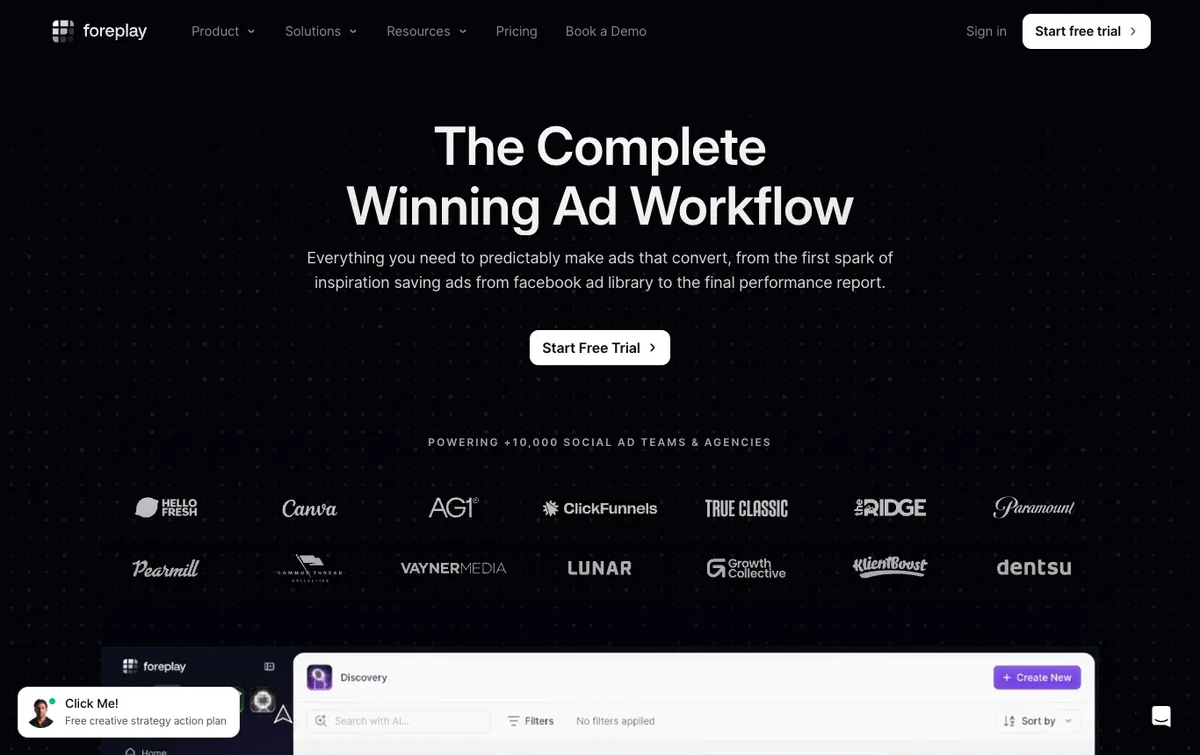
Foreplay is a swipe file and competitor ad discovery tool. You save and organize ads from Meta's Ad Library and other sources, build inspiration libraries, and brief creative teams from them. Its Spyder feature tracks competitor ad activity and surfaces new ads as they launch.
Strength: a large community-curated ad library and a clean briefing workflow.
Limitation: a research tool rather than an analysis tool. It does not connect competitor ads to your own performance metrics. For that job, see competitor ad analysis tools.
Best for: creative directors and strategists building briefs from competitor research.
Pricing: Basic is $59 a month, Workflow is $175, and Agency is $459, or $49, $149, and $389 billed annually, with Enterprise custom. Per Foreplay's pricing page, September 2026.
13. Marpipe: catalog creative and product-level testing
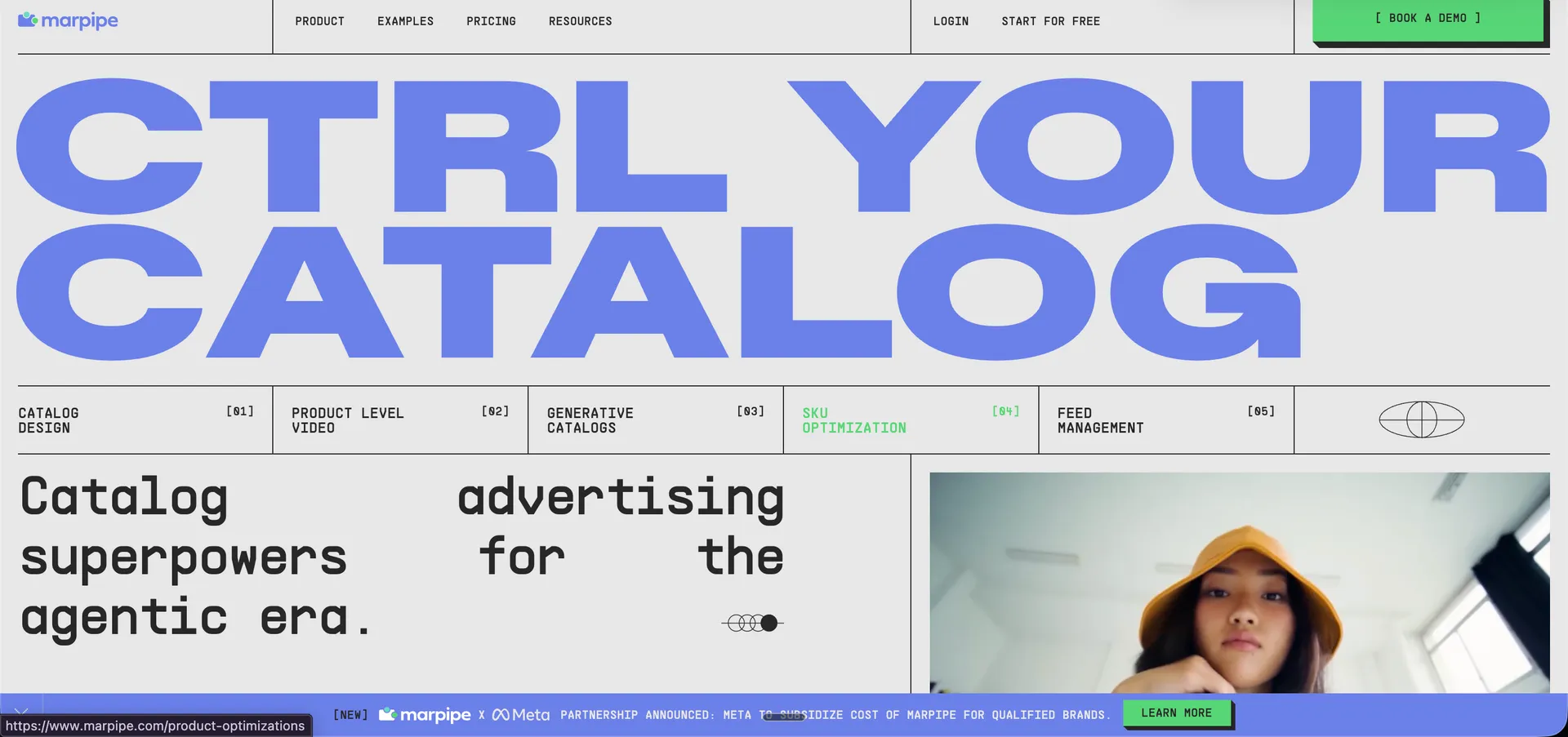
Marpipe built its name on multivariate creative testing and now centers on catalog ads: turning a product feed into designed dynamic product ads on Meta, Google, and Pinterest, with product-level video, AI enrichment, and feed management. The testing DNA survives as structured comparison between catalog designs.
Strength: for feed-driven ecommerce, it is the only tool here that analyzes and improves the catalog creative itself.
Limitation: the scope is catalog and DPA. Teams looking for analysis of prospecting video and static creative need one of the tools above. For structured testing across the whole library, see creative testing tools.
Best for: ecommerce brands where dynamic product ads carry most of the spend.
Pricing: Catalog Creative has a free tier, a Startup plan at $199 a month, and an Enterprise plan at $999 a month, with a 50% first-year discount for brands under $50k in monthly ad spend. Per Marpipe's pricing page, September 2026.
14. Smartly: creative automation plus media buying at enterprise scale
Smartly combines template-based creative automation, dynamic creative optimization, and cross-channel media buying across Meta, TikTok, Pinterest, and Snapchat. Large advertisers produce, personalize, and deliver creative at scale from one platform, with creative performance reporting as part of the suite.
Strength: production and delivery in one workflow, built for thousands of variants across markets.
Limitation: creative analysis is one part of a broad suite rather than an element-level diagnostic, and the model is an enterprise annual contract with a long ramp. See Hawky vs Smartly.
Best for: large advertisers automating creative production and delivery together.
Pricing: not published. Smartly sells on enterprise annual contracts.
Ad creative analysis tools compared
The table below is the shortlist view: what each tool measures, whether it acts on the finding, and the entry price on the vendor's own site as of September 2026.
| Tool | Analysis depth | Acts on findings | Channels | Entry price |
|---|---|---|---|---|
| Hawky | Element level, tied to revenue, plus competitor creative | Yes, Creative Agent and Performance Agent with approval and guardrails | Meta, Google, YouTube, TikTok, LinkedIn | Per brand, unlimited users; 30-day agent pilot |
| Motion | Concept and hook level, visual reports | No | Meta, TikTok, Google, LinkedIn | $750/mo |
| Atria | Hook and ROAS scores plus competitor library | Generates variants | Meta, TikTok | $129/mo annual |
| Vidmob | Frame-level scoring vs platform best practice | No | Enterprise integrations | Not published |
| CreativeX | Creative quality and governance scores | No | Enterprise integrations | Not published |
| Superads | Asset level, multi-channel reporting | No | Meta, Google, TikTok, LinkedIn, Pinterest | $125/mo annual |
| Madgicx | Concept clusters plus copy signals | Budget rules you approve | Meta first | In-app pricing |
| Triple Whale | Asset level inside attribution | No | Shopify ecosystem | See vendor page |
| AdCreative.ai | Predicted score on generated assets | Generates | Meta, Google, LinkedIn formats | See vendor page |
| Pencil | Scored generated variants | Generates and launches | 7 channels | $14/mo |
| Anyword | Copy only, predictive score | No | Any text placement | $49/mo |
| Foreplay | Research only | No | Meta Ad Library and more | $59/mo |
| Marpipe | Catalog creative comparison | Builds catalog ads | Meta, Google, Pinterest | Free, $199/mo |
| Smartly | Suite-level reporting | Automates production and buying | Meta, TikTok, Pinterest, Snapchat | Not published |
Free ad creative analysis tools
Free tools cover the first layer of ad creative analysis: what is running and how each asset performs, one platform at a time. They stop at the asset level, and none of them explain why an element worked, but they are where most teams should start before paying for anything.
- Meta Ads Manager breakdowns. Filter by creative, then break down by placement, age, and platform. Meta's 3-second video view metric is the base of every hook rate calculation.
- Google Ads asset reporting. Inside Performance Max and responsive search ads, asset reporting rates each headline, image, and video as Best, Good, or Low.
- TikTok Creative Center. Browse top-performing ads by region and industry and read TikTok's own trend data. The walkthrough is in how to use TikTok Creative Center.
- Meta Ad Library. Scan any competitor's live ads for free. It shows the image, not the strategy behind it, which is the gap tools like Foreplay, Atria, and Hawky fill.
If you want to scan ad creatives online without building a pipeline, these are the scanners. The choice between them comes down to coverage: each covers one network, and a paid tool is what joins them.
Ad copy analysis tools
Ad copy analysis is a different job from creative analysis. Creative analysis looks at the whole asset: hook, visual, motion, and CTA. Copy analysis looks specifically at language: headlines, primary text, descriptions, and the messaging angle behind them. A creative can fail on copy alone, which is why teams running text-heavy formats treat this as its own discipline.
An ad analytics tool that stops at channel-level reporting will not answer copy questions at all. The tool has to read the ad itself.
The main options are Anyword for predictive copy scoring before launch, Persado for enterprise message testing at scale, and Jasper or Copy.ai for generating variations from brand inputs. Hawky handles copy inside the same workflow as creative: Copilot reads an existing ad and explains which messaging angle drove response, and the Creative Agent writes new copy from winning patterns with seat-level approval.
For reading a competitor's messaging angles rather than your own, see competitor ad analysis and tracking tools.
AI ad creative analysis: predict, monitor, mine
AI moved creative analysis from manual tagging into something that scales across thousands of ads. Instead of a strategist labeling assets by hand, multimodal models identify and tag elements automatically, then correlate each element with ROAS, CTR, and CPL across the whole library. Creative quality drives the largest share of paid social outcomes, a pattern Nielsen's advertising effectiveness research has tracked for years, which is why this layer moved from optional to core.
The category now splits into three stages:
- Pre-flight prediction. AI scores a creative against historical patterns before you spend. AdCreative.ai, Pencil, and Anyword work here, and Hawky's Creative Analysis scores new assets against your own winners.
- In-flight monitoring. AI watches element-level performance in real time and flags fatigue before CPMs spike. Hawky does this, names the element responsible, and can pause or replace it through its agents.
- Post-flight pattern mining. AI surfaces winning patterns across campaigns so the next brief starts from evidence, and reads competitor creative so you see where the category is moving.
Frame-by-frame video analysis runs through all three. Vidmob and Motion identify where attention drops inside a video, and Hawky decodes video, voiceover, and on-screen text in one pass. For the platform view of this layer, see creative intelligence tools.
How to do ad creative analysis
Ad creative analysis is a repeatable loop, not a one-off report. The six steps below move a team from raw metrics to a better next batch, whichever tool runs them.
- Connect your ad accounts. Link Meta, Google, TikTok, and any other channel to a dedicated analysis platform so performance data flows in automatically rather than through manual exports.
- Tag creative elements. Break each ad into hook, visual, body copy, CTA, and offer, using AI tagging so nobody labels thousands of ads by hand. See creative tagging, and compare the best creative tagging tools on price and taxonomy.
- Connect elements to outcomes. Map each tagged element to ROAS, CPL, and CTR so you can see which components drive or kill results.
- Track decay over time. Watch engagement drop per creative to catch creative fatigue before it hits ROAS. The signals are in identify and fix creative fatigue.
- Compare against competitors. Track what rival brands are running to see where your category is moving and which angles are saturated.
- Feed the insight into the next brief. Turn the pattern into the next creative, then repeat. For measuring the result by revenue rather than clicks, see creative performance measurement.
Hawky runs all six steps in one place, so the loop from diagnosis to new creative stays connected instead of scattered across tools.
Which ad creative analysis tool is right for your team
The right tool depends on the job that is actually broken: reporting, diagnosis, research, or execution. Four common situations cover most buyers.
Agencies
Agencies run many accounts, so they need reporting that scales and analysis that improves the work rather than describing it. Motion and Superads cover client-facing reporting with shareable boards. The gap opens when a client asks why a creative worked or what a competitor is doing, because reporting stops at what happened.
Hawky fills that with element-level diagnosis and competitor tracking in one place, and its per-brand pricing with unlimited users suits multi-client rosters. See creative analytics for agencies.
D2C brands
D2C brands live on creative volume and blended ROAS, so they need analysis tied to revenue rather than platform metrics. Triple Whale brings creative into the same view as attribution for Shopify stores. Once spend passes a few tens of thousands a month, brands add element-level analysis to learn which hooks and CTAs move performance, and competitor tracking to see where the category is heading. Hawky combines both and its Creative Agent renders the next batch from the winners, so a lean team moves from insight to creative without a separate generation tool.
Mobile gaming and apps
Mobile teams run the highest creative volume in advertising, across many networks and MMPs. The analysis has to handle video-heavy creative and map elements to IPM and ROAS per network, which rules out asset-level reporting tools. Studios spending mainly on Meta, Google, YouTube, and TikTok get element-level diagnosis and competitor tracking from Hawky, so UA managers and creative leads work from one view. Teams whose spend sits on the mobile-specific networks need a tool with MMP integrations alongside it.
Enterprise brands
Global brands need governance and production alongside analysis. CreativeX enforces creative standards across markets, Vidmob scores video at the frame level, and Smartly automates production and delivery. On the performance side, the growth team still needs to know which elements drive leads or revenue, which is where Hawky's element-level diagnosis and competitor tracking sit next to the enterprise stack. See creative analytics platforms for enterprise.
Frequently asked questions
Is there a tool that analyzes my ad creatives and shows which ones perform best?
Yes. Hawky, Motion, and Atria all analyze ad creatives and rank which perform best. Hawky leads because it breaks each ad into hook, visual, copy, and CTA, ties those elements to spend and revenue, and tracks competitor creative in the same platform. Motion is strongest for visual reporting across a library, and Atria pairs your own performance data with a competitor ad library on Meta and TikTok.
What is the best ad copy analysis tool?
Anyword is the best dedicated ad copy analysis tool, because every plan attaches a predictive performance score to each headline and body line before launch, starting at $49 a month. Persado suits enterprise message testing at scale, and Jasper and Copy.ai generate variations without scoring them. Hawky analyzes copy inside the same workflow as the visual, using Copilot to explain which messaging angle drove response.
How do I do ad creative analysis?
Connect your ad accounts to an analysis platform so data flows in automatically. Tag every creative by element (hook, visual, body copy, CTA, offer) using AI rather than manual labeling, then map each element to ROAS and CPL to see what drives results. Track engagement decay to catch fatigue early, compare against competitor creative, and feed the patterns into the next brief. Platforms like Hawky run all of these steps in one place.
Are there platforms that automate the ad creative analysis process?
Yes. Hawky automates it end to end: Creative Analysis tags and scores every element, the Creative Agent renders new creative from winners with seat-level approval, and the Performance Agent buys media against your KPI with logged, reversible changes inside guardrails. Motion and Superads automate tagging and reporting, and Madgicx pairs Meta creative clusters with budget rules you approve.
How much do ad creative analysis tools cost?
Entry prices published on vendor sites in September 2026 range from $14 a month for Pencil and $49 for Anyword, through $125 for Superads and $129 for Atria, to $750 for Motion. Vidmob, CreativeX, and Smartly do not publish pricing and sell on enterprise contracts. Hawky prices per brand with unlimited users and offers a free 30-day pilot of its Performance Agent.
What is the difference between ad creative analysis and ad reporting?
Ad reporting shows aggregate metrics such as CTR, ROAS, CPA, and impressions, and tells you which ads won and lost. Ad creative analysis goes inside the ads to explain why, identifying which hook held attention, which CTA drove action, which format fatigued fastest, and how those patterns compare to competitors. Most ad managers and reporting tools do the first part. Only dedicated creative analysis platforms do the second.
If you can see which ads won but not which element made them win, or what your competitors are testing right now, Hawky's Creative Agent is built for that job.
Ready to hire your first AI performance team? Book Demo