7 Best Creative Intelligence Platforms in 2026

7 Best Creative Intelligence Platforms in 2026

7 Best Creative Intelligence Platforms in 2026

Sudarshan Baskar

Sudarshan Baskar

Sudarshan Baskar

12 Min read

12 Min read

12 Min read

  • What creative intelligence actually means in 2026

  • The 7 best creative intelligence platforms

  • Feature comparison: how these platforms stack up

  • Element-level analysis vs. campaign-level reporting: why it matters

  • Which platform is right for your team?

  • Frequently asked questions

  • What creative intelligence actually means in 2026

  • The 7 best creative intelligence platforms

  • Feature comparison: how these platforms stack up

  • Element-level analysis vs. campaign-level reporting: why it matters

  • Which platform is right for your team?

  • Frequently asked questions

  • What creative intelligence actually means in 2026

  • The 7 best creative intelligence platforms

  • Feature comparison: how these platforms stack up

  • Element-level analysis vs. campaign-level reporting: why it matters

  • Which platform is right for your team?

  • Frequently asked questions

Make Every Ad a Winner

Hooks, CTAs, visuals - decode every detail.

The best creative intelligence platforms in 2026 are Hawky, Motion for teams that need to understand why ads work, not just which ones do. Each platform approaches the problem differently, from element-level creative analysis to visual creative performance analytics to multi-network data unification.

If your team is spending $20k or more per month on paid media, you already know the frustration: you can see winning ads in your dashboard, but you cannot explain what makes them win. Is it the hook? The CTA? The color palette? Without element-level data, every creative decision is a guess.

Creative intelligence platforms solve that problem. This guide compares the 7 best options, with honest assessments of what each does well and where each falls short.

What Creative Intelligence Actually Means in 2026

A creative intelligence platform is software that uses AI to analyze advertising creative at the component level, connecting specific visual, copy, and structural elements to measurable performance outcomes like ROAS, CTR, and CPL. It goes beyond campaign-level reporting to answer the question: which parts of your ad are driving results?

This is different from traditional ad analytics. Meta Ads Manager tells you Ad Set B outperformed Ad Set A. A creative intelligence platform tells you that 3-second hooks with a product close-up outperform text-overlay hooks by 34%, and that your "free trial" CTA drives 2x the conversions of "learn more."

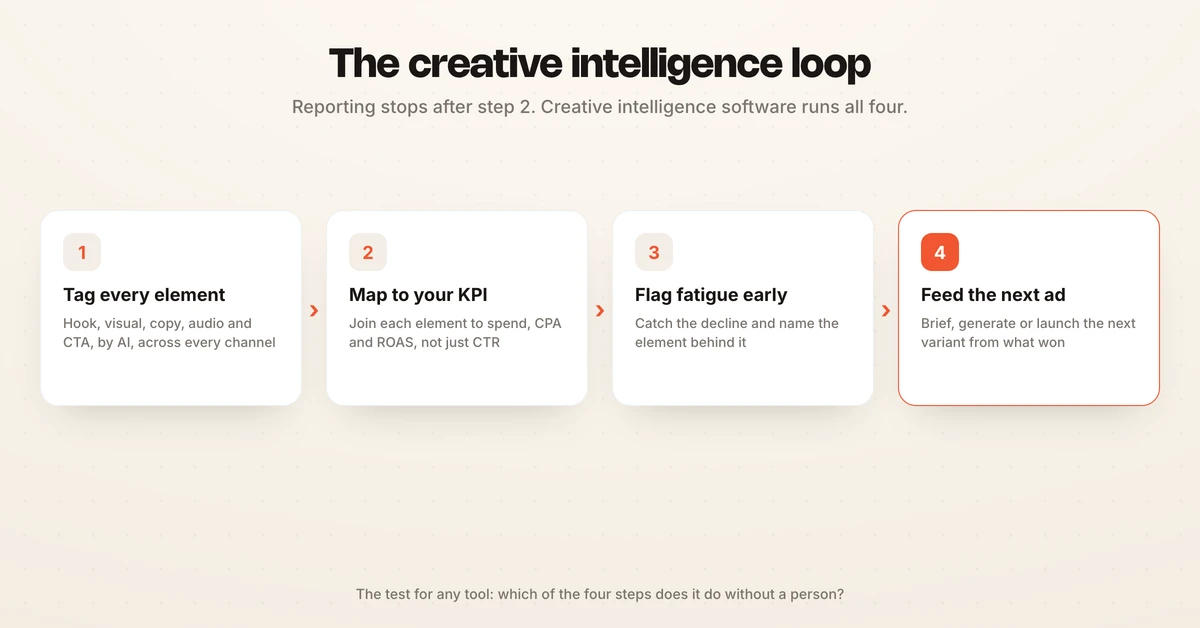
The best platforms in this category share a few core capabilities. They automatically tag creative elements using AI (hooks, CTAs, visuals, body copy). They connect those elements to performance data across ad platforms. And they surface patterns that inform your next creative brief, not just your next report.

Some platforms go further, adding competitor creative tracking, fatigue prediction, or AI ad creative optimization based on winning patterns. The tools below span that full spectrum, from dedicated creative testing platforms to full-stack creative intelligence software.

The 7 Best Creative Intelligence Platforms

1. Hawky - Best for Element-Level Creative Intelligence

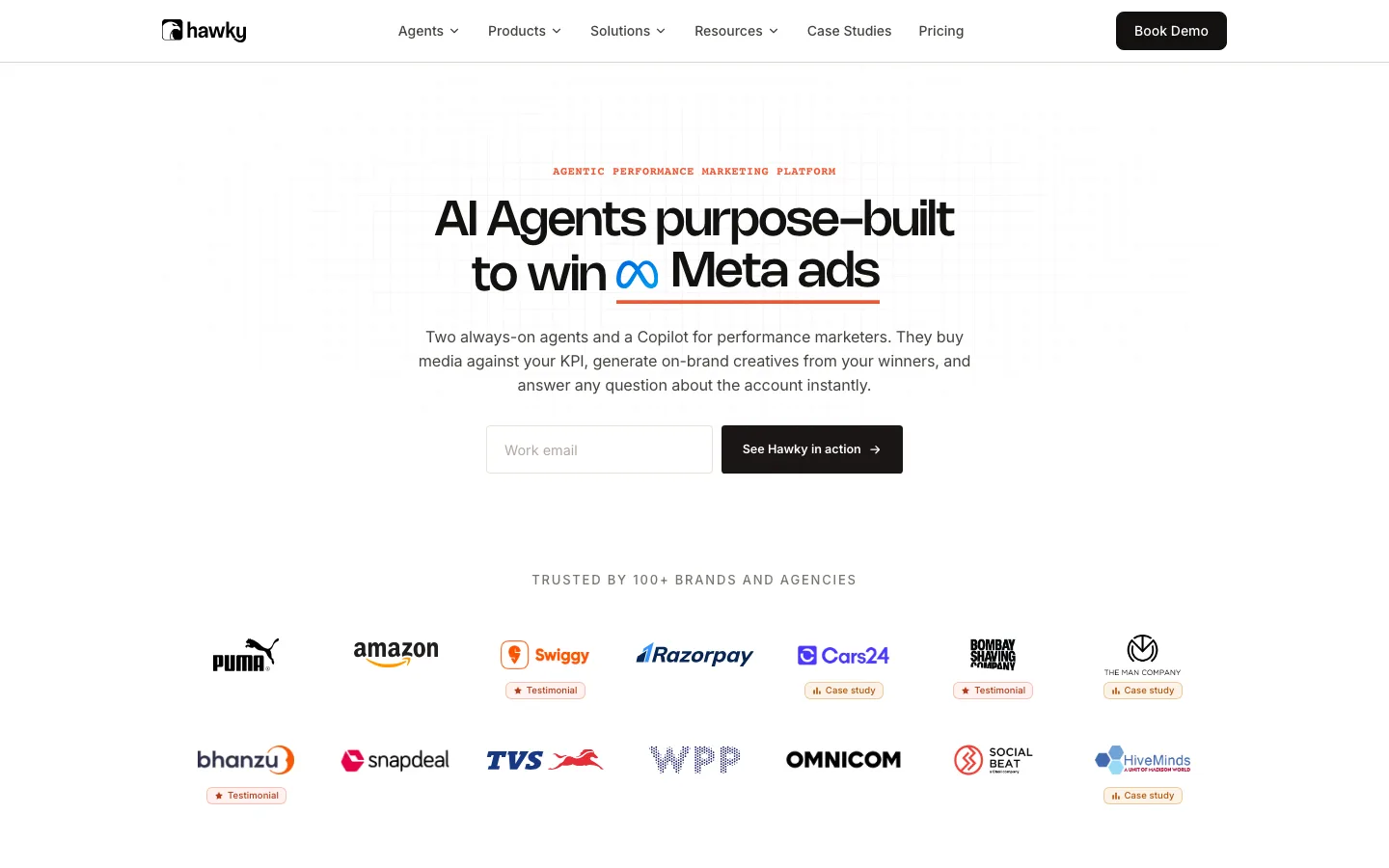
Hawky is an AI-native creative intelligence platform built for performance marketing teams running significant ad spend on Meta and Google. It breaks down every ad into its core elements (hook, visual composition, CTA, body copy) and maps each element to actual spend and performance data.

What separates Hawky from other creative analytics platforms is the depth of its analysis. Instead of telling you "this ad is performing well," Hawky tells you which specific hook style, CTA phrasing, or visual treatment is driving that performance. That level of granularity turns creative strategy from opinion-based to data-driven.

Hawky also predicts creative fatigue before it shows up in your CPMs, tracks competitor ad creative at the element level, and generates new ad concepts using AI trained on your winning patterns.

Key capabilities:

  • Element-level creative analysis across hook, CTA, visual, and copy dimensions

  • Predictive creative fatigue detection that flags declining assets before CPMs spike

  • Competitor creative intelligence with element-level breakdown

  • AI creative generation based on patterns from your top performers

  • Command Center dashboard for unified marketing decisions

Best for: Performance marketing teams and agencies managing $20k+/month in ad spend on Meta and Google who need actionable creative insights, not just dashboards.

Pricing: Available on request. Book a demo for team-specific pricing.

2. Motion - Best for Visual Creative Reporting

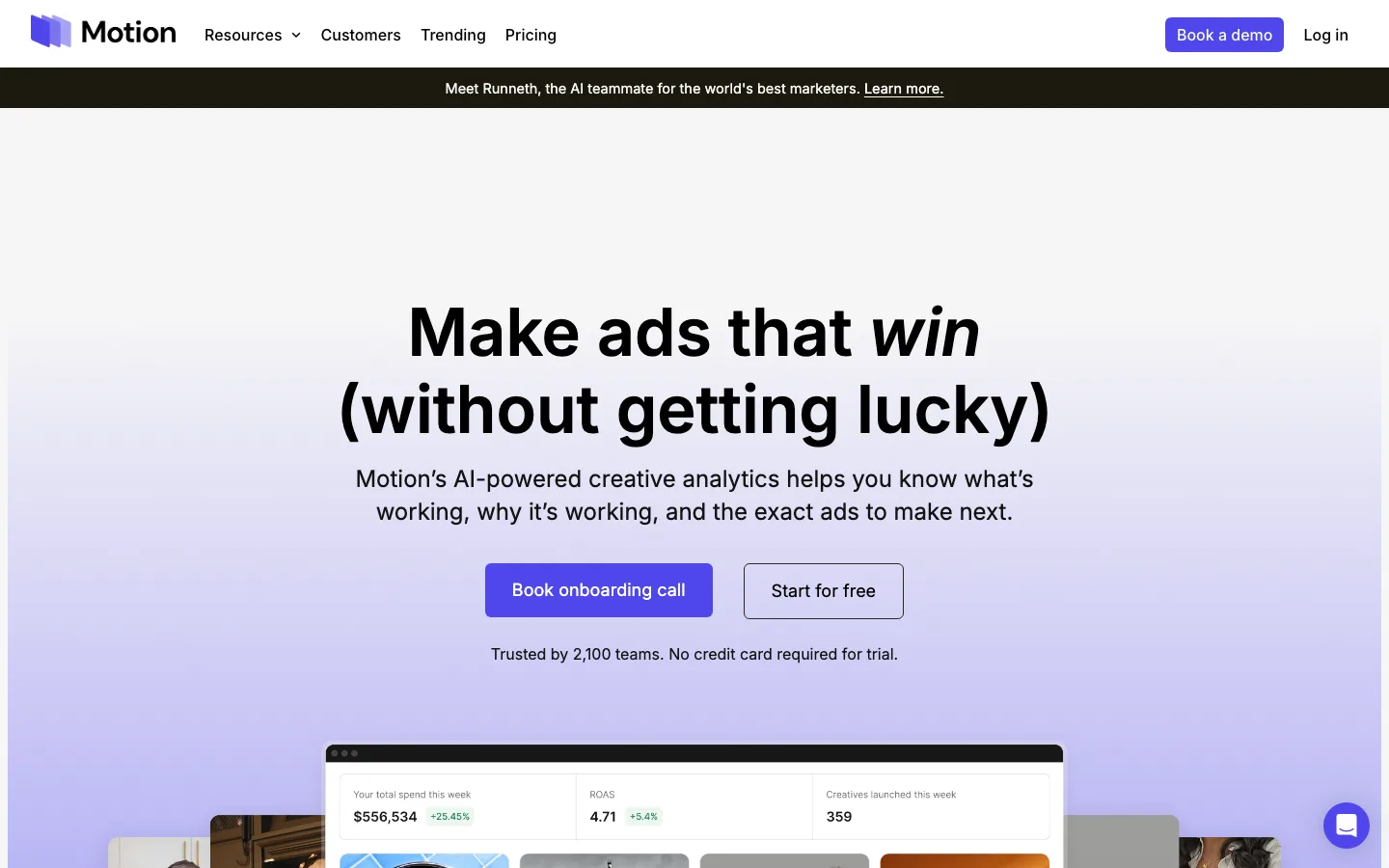
Motion is a creative analytics platform that turns raw ad performance data into visual reports. It connects to Meta, TikTok, YouTube, and LinkedIn, and uses AI auto-tagging to categorize creative assets by format, style, and visual elements.

Motion's strength is its visual interface. Creative strategists and media buyers can quickly see which ad formats, hook styles, and creative themes are trending up or down. The platform groups creatives together to show performance patterns, making it easy to brief designers on what to produce next.

Strength: Clean visual reporting that non-technical team members can understand. Strong AI tagging for creative categorization. Good for teams that need to communicate creative performance to stakeholders.

Limitation: Users on G2 report limited customization for complex use cases, occasional data accuracy issues, and a restriction to one ad account per platform. The platform focuses on post-launch analytics, so there is no pre-launch creative prediction or fatigue forecasting.

Best for: Growth teams needs visual creative reporting and cross-platform ad analytics.

Pricing: Starts at $250/month. Pro and Enterprise tiers available for higher-spend teams.

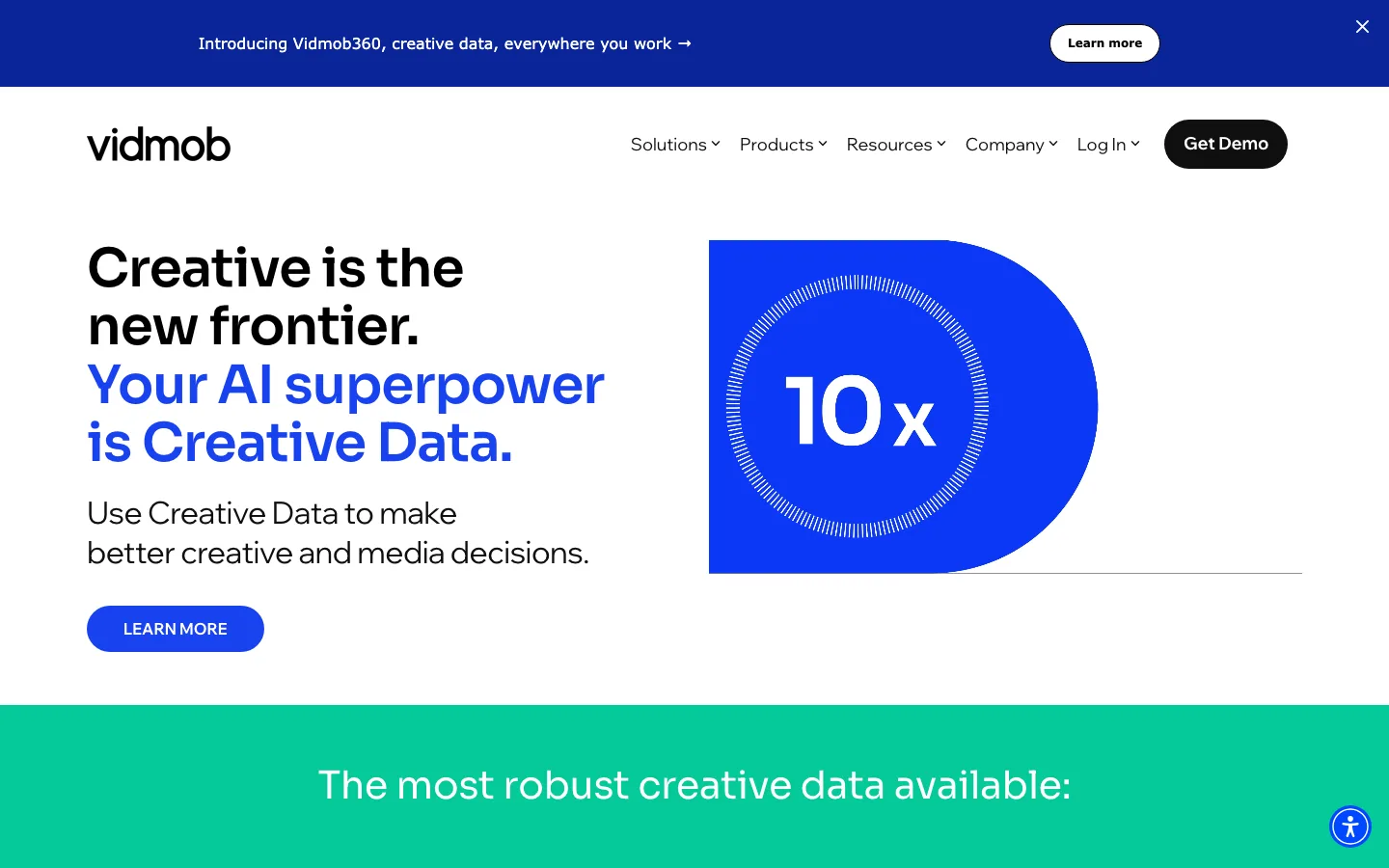
3. VidMob - Best for Enterprise Creative Optimization

VidMob combines human creative expertise with AI-powered analytics to help enterprise brands optimize creative performance at scale. The platform analyzes creative elements across a large asset database, breaking down performance by visual composition, messaging, talent, and brand elements.

VidMob's AI scores creative assets and provides specific recommendations for improvement. The platform is particularly strong for video-heavy advertisers who need to understand which scenes, transitions, and visual treatments drive engagement across platforms.

Strength: Enterprise-grade creative intelligence with deep historical data. Strong partnerships with Meta, Google, TikTok, Snap, and Amazon. Good for brands spending $1M+/month who need a partner, not just a tool.

Limitation: Enterprise pricing and onboarding can be heavy. Teams looking for quick self-serve creative analytics will find VidMob's process-oriented approach slower to start. Less suited for lean performance marketing teams or agencies managing multiple smaller accounts.

Best for: Enterprise brands and large agencies with $1M+/month ad budgets who need a full-service creative intelligence partner.

Pricing: Enterprise custom pricing. Contact VidMob for quotes.

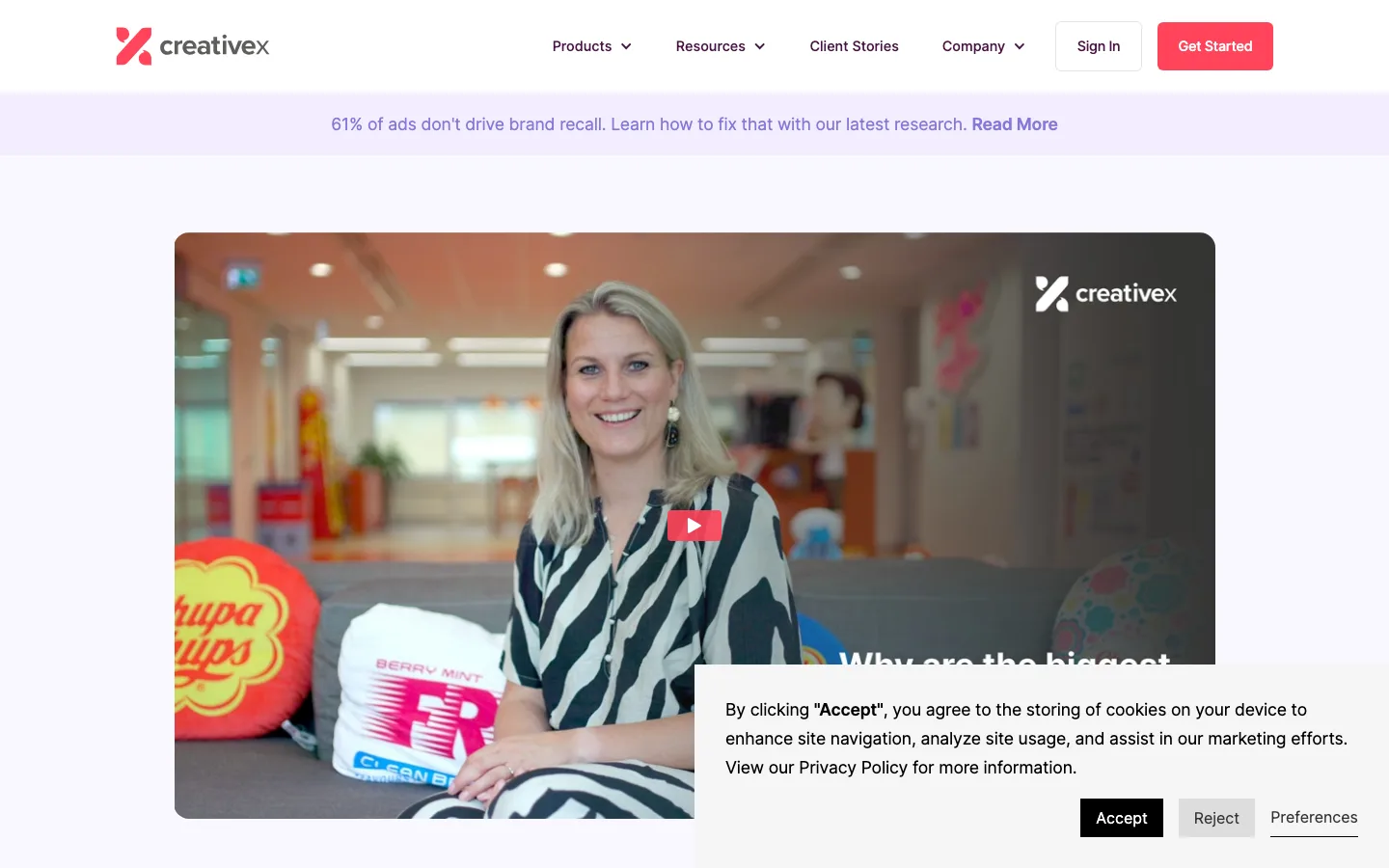
4. CreativeX - Best for Creative Quality Governance

CreativeX measures creative quality and brand compliance at scale. Its Creative Quality Score (CQS) evaluates whether every ad meets platform-specific best practices (like Meta's Brilliant Basics and YouTube's ABCDs) before a single impression is served.

CreativeX is not a performance analytics tool in the traditional sense. It is a governance and quality assurance platform that ensures your creative assets are "fit for platform" before they launch. For global brands running thousands of creative variants across markets, that quality layer prevents wasted media spend on non-compliant assets.

Strength: The only platform focused specifically on creative quality scoring and governance at scale. Pre-flight testing catches issues before media spend is wasted. Strong with global CPG and retail brands managing creative across dozens of markets.

Limitation: Does not provide element-level performance analysis or creative fatigue prediction. If you need to know which hooks or CTAs drive ROAS, CreativeX is not built for that job. It tells you if your creative is set up correctly, not if it will perform.

Best for: Global enterprise brands that need to enforce creative standards and platform best practices across markets, agencies, and thousands of assets.

Pricing: Enterprise custom pricing.

5. Marpipe - Best for Multivariate Creative Testing

Marpipe automates multivariate testing for ad creative. You upload creative components (backgrounds, CTAs, headlines, product shots), and Marpipe generates every possible combination, then tests them systematically to identify the highest-performing variant with statistical significance.

This is a fundamentally different approach from other ad creative analysis tools on this list. Instead of analyzing existing creative after it runs, Marpipe helps you build and test new creative combinations before scaling them. As a creative testing platform, it is most valuable for teams with strong design resources that need to optimize creative variables systematically.

Strength: The most rigorous multivariate testing methodology in the creative intelligence category. Generates all possible creative combinations automatically. Self-serve platform with no sales calls required for smaller plans.

Limitation: Focused on testing, not ongoing creative intelligence. Marpipe tells you which combination won the test, but does not provide continuous element-level analysis, fatigue prediction, or competitor tracking. You will likely need a separate tool for ongoing creative analytics.

Best for: E-commerce and D2C brands that run high-volume creative tests and want to isolate the performance impact of every creative variable.

Pricing: Free starter plan available. Growth plan at $199/month. Expert plans from $999/month.

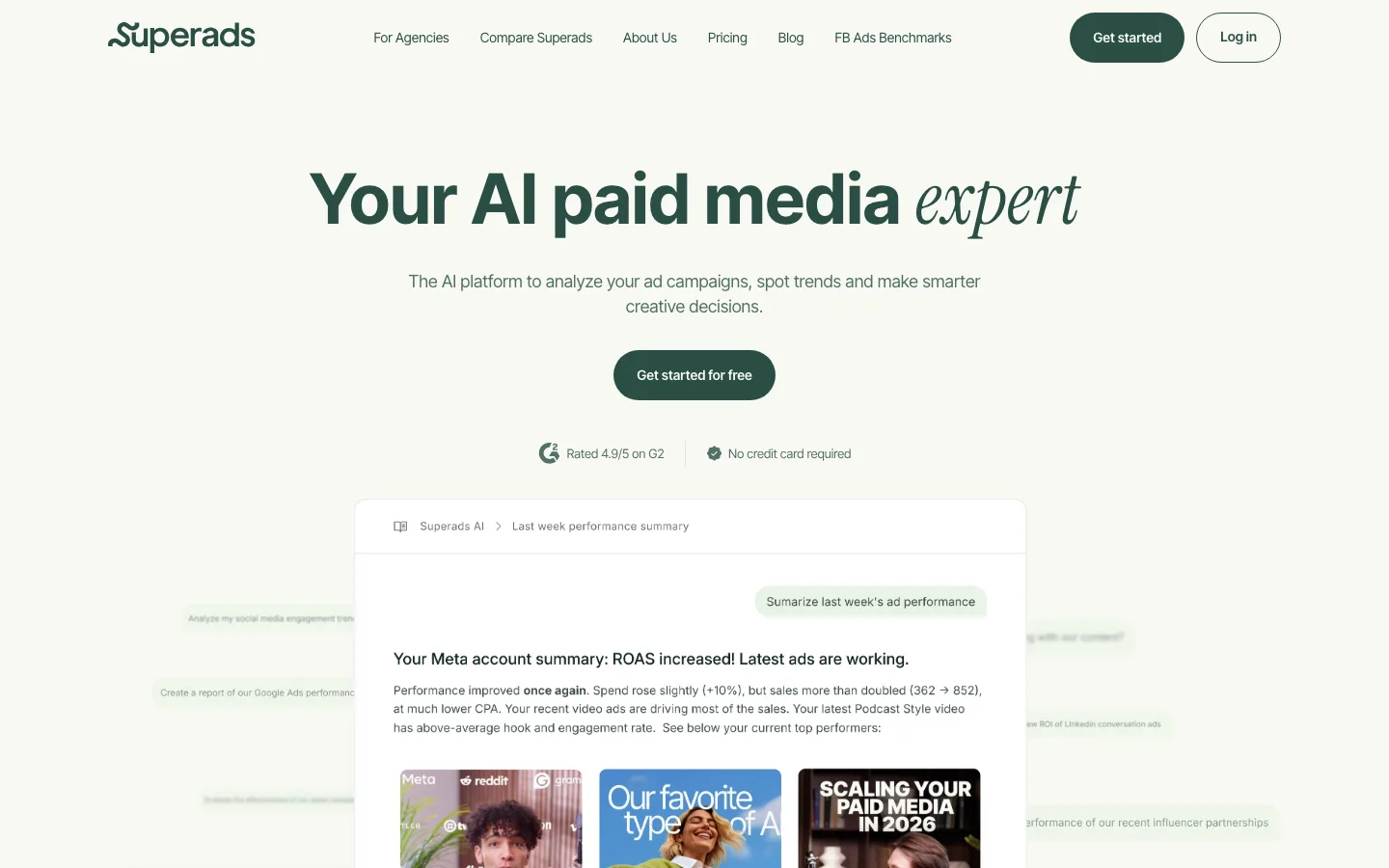
6. Superads - Best for Cross-Platform Creative Reporting

Superads consolidates creative performance data from Meta, TikTok, LinkedIn, and Google into a single reporting view. It auto-tags creative variations and surfaces insights about which creative themes, formats, and messaging approaches are working across platforms.

Superads positions itself as the bridge between ad intelligence (knowing what competitors do) and creative optimization (improving your own ads). The platform is straightforward to set up and does not require heavy onboarding or enterprise contracts.

Strength: Simple cross-platform creative reporting with fast setup. Good for smaller teams or agencies that need a unified view without enterprise complexity. Integrates well into existing creative workflows.

Limitation: Less depth than platforms like Hawky or Motion on element-level analysis. Better suited as a reporting layer than a strategic creative intelligence engine. Limited predictive capabilities.

Best for: Small to mid-size marketing teams or agencies that need consolidated creative reporting across platforms without a large budget.

Pricing: Free tier available. Paid plans start at a mid-range price point.

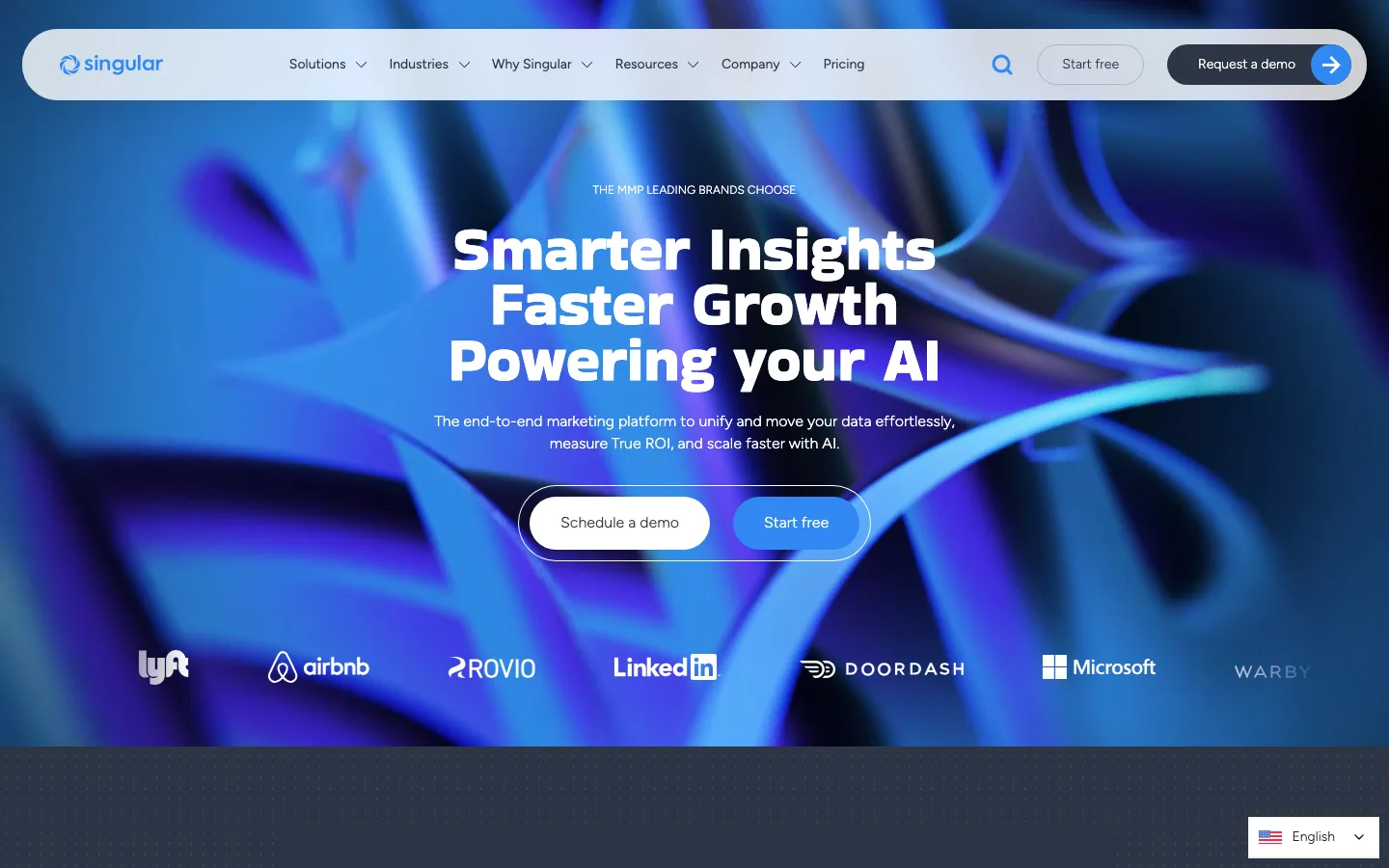
7. Singular Creative IQ - Best for Attribution-Linked Creative Analysis

Singular bundles creative analytics into its broader attribution and marketing analytics platform. Creative IQ uses AI tagging to categorize ad creative and tracks performance across channels, connecting creative data to Singular's attribution models.

For teams already using Singular for mobile attribution and marketing analytics, Creative IQ adds a creative intelligence layer without requiring a separate tool. The integration between attribution data and creative analysis is the primary value proposition.

Strength: Direct connection between creative performance and attribution data. No need for a separate creative analytics tool if you are already in the Singular ecosystem. Good cross-channel coverage.

Limitation: Creative intelligence is a feature within a larger attribution platform, not the core product. Depth of creative analysis is limited compared to dedicated creative intelligence platforms like Hawky or Motion. Less suited for teams whose primary need is deep creative optimization.

Best for: Mobile and app marketers already using Singular for attribution who want to add creative analytics without adopting a separate tool.

Pricing: Bundled with Singular's marketing analytics platform. Contact Singular for pricing.

Feature Comparison: How These Platforms Stack Up

Feature

Hawky

Motion

VidMob

CreativeX

Marpipe

Superads

Singular CIQ

Element-level analysis

Yes

Partial

Yes

No

No

No

Partial

AI creative tagging

Yes

Yes

Yes

Yes

No

Yes

Yes

Fatigue prediction

Yes

No

No

No

No

No

No

Competitor tracking

Yes

Yes

No

No

No

No

No

AI creative generation

Yes

No

No

No

Yes (variants)

No

No

Multi-platform support

Meta, Google

Meta, TikTok, YouTube, LinkedIn

Meta, Google, TikTok, Snap, Amazon

All major platforms

Meta, Google

Meta, TikTok, LinkedIn, Google

Cross-channel

Multivariate testing

No

No

No

No

Yes

No

No

Creative quality scoring

No

No

Partial

Yes

No

No

No

Self-serve setup

Yes

Yes

No

No

Yes

Yes

No

Best for spend level

$50k+/mo

$50k-$250k/mo

$1M+/mo

Enterprise

Any

SMB to mid-market

Varies


Element-Level Analysis vs. Campaign-Level Reporting: Why It Matters

Most ad platforms and analytics tools report at the campaign or ad set level. You see that Campaign A generated a 3.2x ROAS and Campaign B generated a 1.8x. That is useful for budget allocation, but useless for creative strategy.

Creative intelligence platforms that operate at the element level change the conversation entirely. Instead of "which campaign won," the question becomes "which hook style, CTA format, and visual composition drove the highest ROAS." That shift is the difference between knowing what happened and knowing what to do next.

Here is a practical example. A D2C brand running Meta ads discovers through element-level analysis that 3-second hooks featuring a product demo outperform lifestyle hooks by 42%. They also find that "Shop Now" CTAs drive 1.7x the conversions of "Learn More" CTAs, but only when paired with close-up product visuals. That level of specificity is impossible to extract from campaign-level data.

For teams scaling spend, element-level intelligence compounds. Every new creative brief is informed by data from the last 50 or 500 ads, not just gut instinct. Creative fatigue becomes predictable. New concepts are generated from proven patterns, not blank canvases.

This is why the category is shifting from "creative analytics" (how did my ads do?) toward "creative intelligence" (what should I create next?). Platforms that only offer post-hoc reporting are being replaced by creative intelligence software that connects analysis to action through predictive fatigue detection, AI ad creative optimization, and element-level competitive intelligence.

Not sure what creative intelligence means in practice? Start with our full explainer. For a deeper look at how to find and scale your best-performing ads, see Creative Performance Analysis: How to Find Your Winning Creative.

Which Platform Is Right for Your Team?

If you are a performance marketing team spending $50k+/month on Meta and Google and need to know exactly which creative elements drive ROAS, Hawky is built for that job. Element-level analysis, fatigue prediction, competitor intelligence, and AI creative generation in one platform. Book a demo to see it in action.

If you need clean visual creative reports to share with stakeholders and your team values intuitive dashboards, Motion is a strong choice. It is the most user-friendly creative analytics platform for teams that prioritize design-forward reporting.

If you are an enterprise brand spending $1M+/month and need a full-service creative intelligence partner, VidMob offers the depth and support that global brands require.

If your primary concern is creative quality compliance across markets and agencies, CreativeX is the only platform focused on creative governance and pre-flight quality assurance.

If you want to systematically test every creative variable before scaling spend, Marpipe's multivariate testing approach removes guesswork from creative production.


Frequently Asked Questions


What is a creative intelligence platform?

A creative intelligence platform is software that uses AI to analyze advertising creative at the element level and connect specific components (hooks, CTAs, visuals, body copy) to measurable performance outcomes. Unlike basic ad analytics that show which campaigns performed best, creative intelligence platforms reveal which specific creative elements drove that performance, enabling data-informed creative strategy.

How is creative intelligence different from creative analytics?

Creative analytics focuses on reporting what happened: which ads performed, what CTR and ROAS each achieved. Creative intelligence goes further by explaining why ads performed and recommending what to create next. It includes capabilities like element-level analysis, predictive fatigue detection, competitor creative tracking, and AI-powered creative generation based on winning patterns.

What is element-level creative analysis?

Element-level creative analysis breaks down each ad into its component parts: the hook (first 1-3 seconds of video or opening line of copy), visual composition, call-to-action, body copy, color palette, and format. It then measures how each element contributes to overall ad performance. This granularity allows teams to iterate on specific elements rather than scrapping entire ads when performance declines.

How do you measure creative performance in digital advertising?

Creative performance is measured through a combination of engagement metrics (CTR, video view rate, thumb-stop rate), efficiency metrics (CPL, CPA, cost per result), and outcome metrics (ROAS, conversion rate, revenue per ad). The most advanced teams also track creative fatigue indicators (rising CPMs, declining CTR over time) and use element-level analysis to attribute performance to specific creative components.

Do I need a creative intelligence platform if I already use Meta Ads Manager?

Meta Ads Manager provides campaign-level performance data, but it does not analyze why specific creative elements drive results. It cannot predict fatigue, track competitor creative, or connect creative patterns across platforms. If your team is spending more than $20k/month and produces more than 10 new ad variants per month, a dedicated creative intelligence platform will surface insights that native tools simply cannot provide.

What should I look for when choosing a creative intelligence platform?

Prioritize platforms that offer element-level analysis (not just campaign-level reporting), AI-powered creative tagging, cross-platform data integration, and actionable recommendations. For performance marketing teams, fatigue prediction and competitor creative tracking are significant advantages. Consider your team size, monthly ad spend, primary ad platforms, and whether you need self-serve access or enterprise support.

If your team is making creative decisions based on gut instinct and campaign-level dashboards, you are leaving performance on the table. Element-level creative intelligence gives you the data to know exactly what works, what is fatiguing, and what to build next.

Ready to Stop Guessing and Start Winning with Creative Intelligence? Book a Demo

The best creative intelligence platforms in 2026 are Hawky, Motion for teams that need to understand why ads work, not just which ones do. Each platform approaches the problem differently, from element-level creative analysis to visual creative performance analytics to multi-network data unification.

If your team is spending $20k or more per month on paid media, you already know the frustration: you can see winning ads in your dashboard, but you cannot explain what makes them win. Is it the hook? The CTA? The color palette? Without element-level data, every creative decision is a guess.

Creative intelligence platforms solve that problem. This guide compares the 7 best options, with honest assessments of what each does well and where each falls short.

What Creative Intelligence Actually Means in 2026

A creative intelligence platform is software that uses AI to analyze advertising creative at the component level, connecting specific visual, copy, and structural elements to measurable performance outcomes like ROAS, CTR, and CPL. It goes beyond campaign-level reporting to answer the question: which parts of your ad are driving results?

This is different from traditional ad analytics. Meta Ads Manager tells you Ad Set B outperformed Ad Set A. A creative intelligence platform tells you that 3-second hooks with a product close-up outperform text-overlay hooks by 34%, and that your "free trial" CTA drives 2x the conversions of "learn more."

The best platforms in this category share a few core capabilities. They automatically tag creative elements using AI (hooks, CTAs, visuals, body copy). They connect those elements to performance data across ad platforms. And they surface patterns that inform your next creative brief, not just your next report.

Some platforms go further, adding competitor creative tracking, fatigue prediction, or AI ad creative optimization based on winning patterns. The tools below span that full spectrum, from dedicated creative testing platforms to full-stack creative intelligence software.

The 7 Best Creative Intelligence Platforms

1. Hawky - Best for Element-Level Creative Intelligence

Hawky is an AI-native creative intelligence platform built for performance marketing teams running significant ad spend on Meta and Google. It breaks down every ad into its core elements (hook, visual composition, CTA, body copy) and maps each element to actual spend and performance data.

What separates Hawky from other creative analytics platforms is the depth of its analysis. Instead of telling you "this ad is performing well," Hawky tells you which specific hook style, CTA phrasing, or visual treatment is driving that performance. That level of granularity turns creative strategy from opinion-based to data-driven.

Hawky also predicts creative fatigue before it shows up in your CPMs, tracks competitor ad creative at the element level, and generates new ad concepts using AI trained on your winning patterns.

Key capabilities:

  • Element-level creative analysis across hook, CTA, visual, and copy dimensions

  • Predictive creative fatigue detection that flags declining assets before CPMs spike

  • Competitor creative intelligence with element-level breakdown

  • AI creative generation based on patterns from your top performers

  • Command Center dashboard for unified marketing decisions

Best for: Performance marketing teams and agencies managing $20k+/month in ad spend on Meta and Google who need actionable creative insights, not just dashboards.

Pricing: Available on request. Book a demo for team-specific pricing.

2. Motion - Best for Visual Creative Reporting

Motion is a creative analytics platform that turns raw ad performance data into visual reports. It connects to Meta, TikTok, YouTube, and LinkedIn, and uses AI auto-tagging to categorize creative assets by format, style, and visual elements.

Motion's strength is its visual interface. Creative strategists and media buyers can quickly see which ad formats, hook styles, and creative themes are trending up or down. The platform groups creatives together to show performance patterns, making it easy to brief designers on what to produce next.

Strength: Clean visual reporting that non-technical team members can understand. Strong AI tagging for creative categorization. Good for teams that need to communicate creative performance to stakeholders.

Limitation: Users on G2 report limited customization for complex use cases, occasional data accuracy issues, and a restriction to one ad account per platform. The platform focuses on post-launch analytics, so there is no pre-launch creative prediction or fatigue forecasting.

Best for: Growth teams needs visual creative reporting and cross-platform ad analytics.

Pricing: Starts at $250/month. Pro and Enterprise tiers available for higher-spend teams.

3. VidMob - Best for Enterprise Creative Optimization

VidMob combines human creative expertise with AI-powered analytics to help enterprise brands optimize creative performance at scale. The platform analyzes creative elements across a large asset database, breaking down performance by visual composition, messaging, talent, and brand elements.

VidMob's AI scores creative assets and provides specific recommendations for improvement. The platform is particularly strong for video-heavy advertisers who need to understand which scenes, transitions, and visual treatments drive engagement across platforms.

Strength: Enterprise-grade creative intelligence with deep historical data. Strong partnerships with Meta, Google, TikTok, Snap, and Amazon. Good for brands spending $1M+/month who need a partner, not just a tool.

Limitation: Enterprise pricing and onboarding can be heavy. Teams looking for quick self-serve creative analytics will find VidMob's process-oriented approach slower to start. Less suited for lean performance marketing teams or agencies managing multiple smaller accounts.

Best for: Enterprise brands and large agencies with $1M+/month ad budgets who need a full-service creative intelligence partner.

Pricing: Enterprise custom pricing. Contact VidMob for quotes.

4. CreativeX - Best for Creative Quality Governance

CreativeX measures creative quality and brand compliance at scale. Its Creative Quality Score (CQS) evaluates whether every ad meets platform-specific best practices (like Meta's Brilliant Basics and YouTube's ABCDs) before a single impression is served.

CreativeX is not a performance analytics tool in the traditional sense. It is a governance and quality assurance platform that ensures your creative assets are "fit for platform" before they launch. For global brands running thousands of creative variants across markets, that quality layer prevents wasted media spend on non-compliant assets.

Strength: The only platform focused specifically on creative quality scoring and governance at scale. Pre-flight testing catches issues before media spend is wasted. Strong with global CPG and retail brands managing creative across dozens of markets.

Limitation: Does not provide element-level performance analysis or creative fatigue prediction. If you need to know which hooks or CTAs drive ROAS, CreativeX is not built for that job. It tells you if your creative is set up correctly, not if it will perform.

Best for: Global enterprise brands that need to enforce creative standards and platform best practices across markets, agencies, and thousands of assets.

Pricing: Enterprise custom pricing.

5. Marpipe - Best for Multivariate Creative Testing

Marpipe automates multivariate testing for ad creative. You upload creative components (backgrounds, CTAs, headlines, product shots), and Marpipe generates every possible combination, then tests them systematically to identify the highest-performing variant with statistical significance.

This is a fundamentally different approach from other ad creative analysis tools on this list. Instead of analyzing existing creative after it runs, Marpipe helps you build and test new creative combinations before scaling them. As a creative testing platform, it is most valuable for teams with strong design resources that need to optimize creative variables systematically.

Strength: The most rigorous multivariate testing methodology in the creative intelligence category. Generates all possible creative combinations automatically. Self-serve platform with no sales calls required for smaller plans.

Limitation: Focused on testing, not ongoing creative intelligence. Marpipe tells you which combination won the test, but does not provide continuous element-level analysis, fatigue prediction, or competitor tracking. You will likely need a separate tool for ongoing creative analytics.

Best for: E-commerce and D2C brands that run high-volume creative tests and want to isolate the performance impact of every creative variable.

Pricing: Free starter plan available. Growth plan at $199/month. Expert plans from $999/month.

6. Superads - Best for Cross-Platform Creative Reporting

Superads consolidates creative performance data from Meta, TikTok, LinkedIn, and Google into a single reporting view. It auto-tags creative variations and surfaces insights about which creative themes, formats, and messaging approaches are working across platforms.

Superads positions itself as the bridge between ad intelligence (knowing what competitors do) and creative optimization (improving your own ads). The platform is straightforward to set up and does not require heavy onboarding or enterprise contracts.

Strength: Simple cross-platform creative reporting with fast setup. Good for smaller teams or agencies that need a unified view without enterprise complexity. Integrates well into existing creative workflows.

Limitation: Less depth than platforms like Hawky or Motion on element-level analysis. Better suited as a reporting layer than a strategic creative intelligence engine. Limited predictive capabilities.

Best for: Small to mid-size marketing teams or agencies that need consolidated creative reporting across platforms without a large budget.

Pricing: Free tier available. Paid plans start at a mid-range price point.

7. Singular Creative IQ - Best for Attribution-Linked Creative Analysis

Singular bundles creative analytics into its broader attribution and marketing analytics platform. Creative IQ uses AI tagging to categorize ad creative and tracks performance across channels, connecting creative data to Singular's attribution models.

For teams already using Singular for mobile attribution and marketing analytics, Creative IQ adds a creative intelligence layer without requiring a separate tool. The integration between attribution data and creative analysis is the primary value proposition.

Strength: Direct connection between creative performance and attribution data. No need for a separate creative analytics tool if you are already in the Singular ecosystem. Good cross-channel coverage.

Limitation: Creative intelligence is a feature within a larger attribution platform, not the core product. Depth of creative analysis is limited compared to dedicated creative intelligence platforms like Hawky or Motion. Less suited for teams whose primary need is deep creative optimization.

Best for: Mobile and app marketers already using Singular for attribution who want to add creative analytics without adopting a separate tool.

Pricing: Bundled with Singular's marketing analytics platform. Contact Singular for pricing.

Feature Comparison: How These Platforms Stack Up

Feature

Hawky

Motion

VidMob

CreativeX

Marpipe

Superads

Singular CIQ

Element-level analysis

Yes

Partial

Yes

No

No

No

Partial

AI creative tagging

Yes

Yes

Yes

Yes

No

Yes

Yes

Fatigue prediction

Yes

No

No

No

No

No

No

Competitor tracking

Yes

Yes

No

No

No

No

No

AI creative generation

Yes

No

No

No

Yes (variants)

No

No

Multi-platform support

Meta, Google

Meta, TikTok, YouTube, LinkedIn

Meta, Google, TikTok, Snap, Amazon

All major platforms

Meta, Google

Meta, TikTok, LinkedIn, Google

Cross-channel

Multivariate testing

No

No

No

No

Yes

No

No

Creative quality scoring

No

No

Partial

Yes

No

No

No

Self-serve setup

Yes

Yes

No

No

Yes

Yes

No

Best for spend level

$50k+/mo

$50k-$250k/mo

$1M+/mo

Enterprise

Any

SMB to mid-market

Varies


Element-Level Analysis vs. Campaign-Level Reporting: Why It Matters

Most ad platforms and analytics tools report at the campaign or ad set level. You see that Campaign A generated a 3.2x ROAS and Campaign B generated a 1.8x. That is useful for budget allocation, but useless for creative strategy.

Creative intelligence platforms that operate at the element level change the conversation entirely. Instead of "which campaign won," the question becomes "which hook style, CTA format, and visual composition drove the highest ROAS." That shift is the difference between knowing what happened and knowing what to do next.

Here is a practical example. A D2C brand running Meta ads discovers through element-level analysis that 3-second hooks featuring a product demo outperform lifestyle hooks by 42%. They also find that "Shop Now" CTAs drive 1.7x the conversions of "Learn More" CTAs, but only when paired with close-up product visuals. That level of specificity is impossible to extract from campaign-level data.

For teams scaling spend, element-level intelligence compounds. Every new creative brief is informed by data from the last 50 or 500 ads, not just gut instinct. Creative fatigue becomes predictable. New concepts are generated from proven patterns, not blank canvases.

This is why the category is shifting from "creative analytics" (how did my ads do?) toward "creative intelligence" (what should I create next?). Platforms that only offer post-hoc reporting are being replaced by creative intelligence software that connects analysis to action through predictive fatigue detection, AI ad creative optimization, and element-level competitive intelligence.

Not sure what creative intelligence means in practice? Start with our full explainer. For a deeper look at how to find and scale your best-performing ads, see Creative Performance Analysis: How to Find Your Winning Creative.

Which Platform Is Right for Your Team?

If you are a performance marketing team spending $50k+/month on Meta and Google and need to know exactly which creative elements drive ROAS, Hawky is built for that job. Element-level analysis, fatigue prediction, competitor intelligence, and AI creative generation in one platform. Book a demo to see it in action.

If you need clean visual creative reports to share with stakeholders and your team values intuitive dashboards, Motion is a strong choice. It is the most user-friendly creative analytics platform for teams that prioritize design-forward reporting.

If you are an enterprise brand spending $1M+/month and need a full-service creative intelligence partner, VidMob offers the depth and support that global brands require.

If your primary concern is creative quality compliance across markets and agencies, CreativeX is the only platform focused on creative governance and pre-flight quality assurance.

If you want to systematically test every creative variable before scaling spend, Marpipe's multivariate testing approach removes guesswork from creative production.


Frequently Asked Questions


What is a creative intelligence platform?

A creative intelligence platform is software that uses AI to analyze advertising creative at the element level and connect specific components (hooks, CTAs, visuals, body copy) to measurable performance outcomes. Unlike basic ad analytics that show which campaigns performed best, creative intelligence platforms reveal which specific creative elements drove that performance, enabling data-informed creative strategy.

How is creative intelligence different from creative analytics?

Creative analytics focuses on reporting what happened: which ads performed, what CTR and ROAS each achieved. Creative intelligence goes further by explaining why ads performed and recommending what to create next. It includes capabilities like element-level analysis, predictive fatigue detection, competitor creative tracking, and AI-powered creative generation based on winning patterns.

What is element-level creative analysis?

Element-level creative analysis breaks down each ad into its component parts: the hook (first 1-3 seconds of video or opening line of copy), visual composition, call-to-action, body copy, color palette, and format. It then measures how each element contributes to overall ad performance. This granularity allows teams to iterate on specific elements rather than scrapping entire ads when performance declines.

How do you measure creative performance in digital advertising?

Creative performance is measured through a combination of engagement metrics (CTR, video view rate, thumb-stop rate), efficiency metrics (CPL, CPA, cost per result), and outcome metrics (ROAS, conversion rate, revenue per ad). The most advanced teams also track creative fatigue indicators (rising CPMs, declining CTR over time) and use element-level analysis to attribute performance to specific creative components.

Do I need a creative intelligence platform if I already use Meta Ads Manager?

Meta Ads Manager provides campaign-level performance data, but it does not analyze why specific creative elements drive results. It cannot predict fatigue, track competitor creative, or connect creative patterns across platforms. If your team is spending more than $20k/month and produces more than 10 new ad variants per month, a dedicated creative intelligence platform will surface insights that native tools simply cannot provide.

What should I look for when choosing a creative intelligence platform?

Prioritize platforms that offer element-level analysis (not just campaign-level reporting), AI-powered creative tagging, cross-platform data integration, and actionable recommendations. For performance marketing teams, fatigue prediction and competitor creative tracking are significant advantages. Consider your team size, monthly ad spend, primary ad platforms, and whether you need self-serve access or enterprise support.

If your team is making creative decisions based on gut instinct and campaign-level dashboards, you are leaving performance on the table. Element-level creative intelligence gives you the data to know exactly what works, what is fatiguing, and what to build next.

Ready to Stop Guessing and Start Winning with Creative Intelligence? Book a Demo

The best creative intelligence platforms in 2026 are Hawky, Motion for teams that need to understand why ads work, not just which ones do. Each platform approaches the problem differently, from element-level creative analysis to visual creative performance analytics to multi-network data unification.

If your team is spending $20k or more per month on paid media, you already know the frustration: you can see winning ads in your dashboard, but you cannot explain what makes them win. Is it the hook? The CTA? The color palette? Without element-level data, every creative decision is a guess.

Creative intelligence platforms solve that problem. This guide compares the 7 best options, with honest assessments of what each does well and where each falls short.

What Creative Intelligence Actually Means in 2026

A creative intelligence platform is software that uses AI to analyze advertising creative at the component level, connecting specific visual, copy, and structural elements to measurable performance outcomes like ROAS, CTR, and CPL. It goes beyond campaign-level reporting to answer the question: which parts of your ad are driving results?

This is different from traditional ad analytics. Meta Ads Manager tells you Ad Set B outperformed Ad Set A. A creative intelligence platform tells you that 3-second hooks with a product close-up outperform text-overlay hooks by 34%, and that your "free trial" CTA drives 2x the conversions of "learn more."

The best platforms in this category share a few core capabilities. They automatically tag creative elements using AI (hooks, CTAs, visuals, body copy). They connect those elements to performance data across ad platforms. And they surface patterns that inform your next creative brief, not just your next report.

Some platforms go further, adding competitor creative tracking, fatigue prediction, or AI ad creative optimization based on winning patterns. The tools below span that full spectrum, from dedicated creative testing platforms to full-stack creative intelligence software.

The 7 Best Creative Intelligence Platforms

1. Hawky - Best for Element-Level Creative Intelligence

Hawky is an AI-native creative intelligence platform built for performance marketing teams running significant ad spend on Meta and Google. It breaks down every ad into its core elements (hook, visual composition, CTA, body copy) and maps each element to actual spend and performance data.

What separates Hawky from other creative analytics platforms is the depth of its analysis. Instead of telling you "this ad is performing well," Hawky tells you which specific hook style, CTA phrasing, or visual treatment is driving that performance. That level of granularity turns creative strategy from opinion-based to data-driven.

Hawky also predicts creative fatigue before it shows up in your CPMs, tracks competitor ad creative at the element level, and generates new ad concepts using AI trained on your winning patterns.

Key capabilities:

  • Element-level creative analysis across hook, CTA, visual, and copy dimensions

  • Predictive creative fatigue detection that flags declining assets before CPMs spike

  • Competitor creative intelligence with element-level breakdown

  • AI creative generation based on patterns from your top performers

  • Command Center dashboard for unified marketing decisions

Best for: Performance marketing teams and agencies managing $20k+/month in ad spend on Meta and Google who need actionable creative insights, not just dashboards.

Pricing: Available on request. Book a demo for team-specific pricing.

2. Motion - Best for Visual Creative Reporting

Motion is a creative analytics platform that turns raw ad performance data into visual reports. It connects to Meta, TikTok, YouTube, and LinkedIn, and uses AI auto-tagging to categorize creative assets by format, style, and visual elements.

Motion's strength is its visual interface. Creative strategists and media buyers can quickly see which ad formats, hook styles, and creative themes are trending up or down. The platform groups creatives together to show performance patterns, making it easy to brief designers on what to produce next.

Strength: Clean visual reporting that non-technical team members can understand. Strong AI tagging for creative categorization. Good for teams that need to communicate creative performance to stakeholders.

Limitation: Users on G2 report limited customization for complex use cases, occasional data accuracy issues, and a restriction to one ad account per platform. The platform focuses on post-launch analytics, so there is no pre-launch creative prediction or fatigue forecasting.

Best for: Growth teams needs visual creative reporting and cross-platform ad analytics.

Pricing: Starts at $250/month. Pro and Enterprise tiers available for higher-spend teams.

3. VidMob - Best for Enterprise Creative Optimization

VidMob combines human creative expertise with AI-powered analytics to help enterprise brands optimize creative performance at scale. The platform analyzes creative elements across a large asset database, breaking down performance by visual composition, messaging, talent, and brand elements.

VidMob's AI scores creative assets and provides specific recommendations for improvement. The platform is particularly strong for video-heavy advertisers who need to understand which scenes, transitions, and visual treatments drive engagement across platforms.

Strength: Enterprise-grade creative intelligence with deep historical data. Strong partnerships with Meta, Google, TikTok, Snap, and Amazon. Good for brands spending $1M+/month who need a partner, not just a tool.

Limitation: Enterprise pricing and onboarding can be heavy. Teams looking for quick self-serve creative analytics will find VidMob's process-oriented approach slower to start. Less suited for lean performance marketing teams or agencies managing multiple smaller accounts.

Best for: Enterprise brands and large agencies with $1M+/month ad budgets who need a full-service creative intelligence partner.

Pricing: Enterprise custom pricing. Contact VidMob for quotes.

4. CreativeX - Best for Creative Quality Governance

CreativeX measures creative quality and brand compliance at scale. Its Creative Quality Score (CQS) evaluates whether every ad meets platform-specific best practices (like Meta's Brilliant Basics and YouTube's ABCDs) before a single impression is served.

CreativeX is not a performance analytics tool in the traditional sense. It is a governance and quality assurance platform that ensures your creative assets are "fit for platform" before they launch. For global brands running thousands of creative variants across markets, that quality layer prevents wasted media spend on non-compliant assets.

Strength: The only platform focused specifically on creative quality scoring and governance at scale. Pre-flight testing catches issues before media spend is wasted. Strong with global CPG and retail brands managing creative across dozens of markets.

Limitation: Does not provide element-level performance analysis or creative fatigue prediction. If you need to know which hooks or CTAs drive ROAS, CreativeX is not built for that job. It tells you if your creative is set up correctly, not if it will perform.

Best for: Global enterprise brands that need to enforce creative standards and platform best practices across markets, agencies, and thousands of assets.

Pricing: Enterprise custom pricing.

5. Marpipe - Best for Multivariate Creative Testing

Marpipe automates multivariate testing for ad creative. You upload creative components (backgrounds, CTAs, headlines, product shots), and Marpipe generates every possible combination, then tests them systematically to identify the highest-performing variant with statistical significance.

This is a fundamentally different approach from other ad creative analysis tools on this list. Instead of analyzing existing creative after it runs, Marpipe helps you build and test new creative combinations before scaling them. As a creative testing platform, it is most valuable for teams with strong design resources that need to optimize creative variables systematically.

Strength: The most rigorous multivariate testing methodology in the creative intelligence category. Generates all possible creative combinations automatically. Self-serve platform with no sales calls required for smaller plans.

Limitation: Focused on testing, not ongoing creative intelligence. Marpipe tells you which combination won the test, but does not provide continuous element-level analysis, fatigue prediction, or competitor tracking. You will likely need a separate tool for ongoing creative analytics.

Best for: E-commerce and D2C brands that run high-volume creative tests and want to isolate the performance impact of every creative variable.

Pricing: Free starter plan available. Growth plan at $199/month. Expert plans from $999/month.

6. Superads - Best for Cross-Platform Creative Reporting

Superads consolidates creative performance data from Meta, TikTok, LinkedIn, and Google into a single reporting view. It auto-tags creative variations and surfaces insights about which creative themes, formats, and messaging approaches are working across platforms.

Superads positions itself as the bridge between ad intelligence (knowing what competitors do) and creative optimization (improving your own ads). The platform is straightforward to set up and does not require heavy onboarding or enterprise contracts.

Strength: Simple cross-platform creative reporting with fast setup. Good for smaller teams or agencies that need a unified view without enterprise complexity. Integrates well into existing creative workflows.

Limitation: Less depth than platforms like Hawky or Motion on element-level analysis. Better suited as a reporting layer than a strategic creative intelligence engine. Limited predictive capabilities.

Best for: Small to mid-size marketing teams or agencies that need consolidated creative reporting across platforms without a large budget.

Pricing: Free tier available. Paid plans start at a mid-range price point.

7. Singular Creative IQ - Best for Attribution-Linked Creative Analysis

Singular bundles creative analytics into its broader attribution and marketing analytics platform. Creative IQ uses AI tagging to categorize ad creative and tracks performance across channels, connecting creative data to Singular's attribution models.

For teams already using Singular for mobile attribution and marketing analytics, Creative IQ adds a creative intelligence layer without requiring a separate tool. The integration between attribution data and creative analysis is the primary value proposition.

Strength: Direct connection between creative performance and attribution data. No need for a separate creative analytics tool if you are already in the Singular ecosystem. Good cross-channel coverage.

Limitation: Creative intelligence is a feature within a larger attribution platform, not the core product. Depth of creative analysis is limited compared to dedicated creative intelligence platforms like Hawky or Motion. Less suited for teams whose primary need is deep creative optimization.

Best for: Mobile and app marketers already using Singular for attribution who want to add creative analytics without adopting a separate tool.

Pricing: Bundled with Singular's marketing analytics platform. Contact Singular for pricing.

Feature Comparison: How These Platforms Stack Up

Feature

Hawky

Motion

VidMob

CreativeX

Marpipe

Superads

Singular CIQ

Element-level analysis

Yes

Partial

Yes

No

No

No

Partial

AI creative tagging

Yes

Yes

Yes

Yes

No

Yes

Yes

Fatigue prediction

Yes

No

No

No

No

No

No

Competitor tracking

Yes

Yes

No

No

No

No

No

AI creative generation

Yes

No

No

No

Yes (variants)

No

No

Multi-platform support

Meta, Google

Meta, TikTok, YouTube, LinkedIn

Meta, Google, TikTok, Snap, Amazon

All major platforms

Meta, Google

Meta, TikTok, LinkedIn, Google

Cross-channel

Multivariate testing

No

No

No

No

Yes

No

No

Creative quality scoring

No

No

Partial

Yes

No

No

No

Self-serve setup

Yes

Yes

No

No

Yes

Yes

No

Best for spend level

$50k+/mo

$50k-$250k/mo

$1M+/mo

Enterprise

Any

SMB to mid-market

Varies


Element-Level Analysis vs. Campaign-Level Reporting: Why It Matters

Most ad platforms and analytics tools report at the campaign or ad set level. You see that Campaign A generated a 3.2x ROAS and Campaign B generated a 1.8x. That is useful for budget allocation, but useless for creative strategy.

Creative intelligence platforms that operate at the element level change the conversation entirely. Instead of "which campaign won," the question becomes "which hook style, CTA format, and visual composition drove the highest ROAS." That shift is the difference between knowing what happened and knowing what to do next.

Here is a practical example. A D2C brand running Meta ads discovers through element-level analysis that 3-second hooks featuring a product demo outperform lifestyle hooks by 42%. They also find that "Shop Now" CTAs drive 1.7x the conversions of "Learn More" CTAs, but only when paired with close-up product visuals. That level of specificity is impossible to extract from campaign-level data.

For teams scaling spend, element-level intelligence compounds. Every new creative brief is informed by data from the last 50 or 500 ads, not just gut instinct. Creative fatigue becomes predictable. New concepts are generated from proven patterns, not blank canvases.

This is why the category is shifting from "creative analytics" (how did my ads do?) toward "creative intelligence" (what should I create next?). Platforms that only offer post-hoc reporting are being replaced by creative intelligence software that connects analysis to action through predictive fatigue detection, AI ad creative optimization, and element-level competitive intelligence.

Not sure what creative intelligence means in practice? Start with our full explainer. For a deeper look at how to find and scale your best-performing ads, see Creative Performance Analysis: How to Find Your Winning Creative.

Which Platform Is Right for Your Team?

If you are a performance marketing team spending $50k+/month on Meta and Google and need to know exactly which creative elements drive ROAS, Hawky is built for that job. Element-level analysis, fatigue prediction, competitor intelligence, and AI creative generation in one platform. Book a demo to see it in action.

If you need clean visual creative reports to share with stakeholders and your team values intuitive dashboards, Motion is a strong choice. It is the most user-friendly creative analytics platform for teams that prioritize design-forward reporting.

If you are an enterprise brand spending $1M+/month and need a full-service creative intelligence partner, VidMob offers the depth and support that global brands require.

If your primary concern is creative quality compliance across markets and agencies, CreativeX is the only platform focused on creative governance and pre-flight quality assurance.

If you want to systematically test every creative variable before scaling spend, Marpipe's multivariate testing approach removes guesswork from creative production.


Frequently Asked Questions


What is a creative intelligence platform?

A creative intelligence platform is software that uses AI to analyze advertising creative at the element level and connect specific components (hooks, CTAs, visuals, body copy) to measurable performance outcomes. Unlike basic ad analytics that show which campaigns performed best, creative intelligence platforms reveal which specific creative elements drove that performance, enabling data-informed creative strategy.

How is creative intelligence different from creative analytics?

Creative analytics focuses on reporting what happened: which ads performed, what CTR and ROAS each achieved. Creative intelligence goes further by explaining why ads performed and recommending what to create next. It includes capabilities like element-level analysis, predictive fatigue detection, competitor creative tracking, and AI-powered creative generation based on winning patterns.

What is element-level creative analysis?

Element-level creative analysis breaks down each ad into its component parts: the hook (first 1-3 seconds of video or opening line of copy), visual composition, call-to-action, body copy, color palette, and format. It then measures how each element contributes to overall ad performance. This granularity allows teams to iterate on specific elements rather than scrapping entire ads when performance declines.

How do you measure creative performance in digital advertising?

Creative performance is measured through a combination of engagement metrics (CTR, video view rate, thumb-stop rate), efficiency metrics (CPL, CPA, cost per result), and outcome metrics (ROAS, conversion rate, revenue per ad). The most advanced teams also track creative fatigue indicators (rising CPMs, declining CTR over time) and use element-level analysis to attribute performance to specific creative components.

Do I need a creative intelligence platform if I already use Meta Ads Manager?

Meta Ads Manager provides campaign-level performance data, but it does not analyze why specific creative elements drive results. It cannot predict fatigue, track competitor creative, or connect creative patterns across platforms. If your team is spending more than $20k/month and produces more than 10 new ad variants per month, a dedicated creative intelligence platform will surface insights that native tools simply cannot provide.

What should I look for when choosing a creative intelligence platform?

Prioritize platforms that offer element-level analysis (not just campaign-level reporting), AI-powered creative tagging, cross-platform data integration, and actionable recommendations. For performance marketing teams, fatigue prediction and competitor creative tracking are significant advantages. Consider your team size, monthly ad spend, primary ad platforms, and whether you need self-serve access or enterprise support.

If your team is making creative decisions based on gut instinct and campaign-level dashboards, you are leaving performance on the table. Element-level creative intelligence gives you the data to know exactly what works, what is fatiguing, and what to build next.

Ready to Stop Guessing and Start Winning with Creative Intelligence? Book a Demo

Ready to Stop Guessing and Start Winning with Creative Intelligence?

Creative Intelligence for Performance Marketing

© 2025 Hawky AI, All rights reserved

Ready to Stop Guessing and Start Winning with Creative Intelligence?

Creative Intelligence for Performance Marketing

© 2025 Hawky AI, All rights reserved

Ready to Stop Guessing and Start Winning with Creative Intelligence?

Creative Intelligence for Performance Marketing

© 2025 Hawky AI, All rights reserved