Creative Asset Library
Last updated
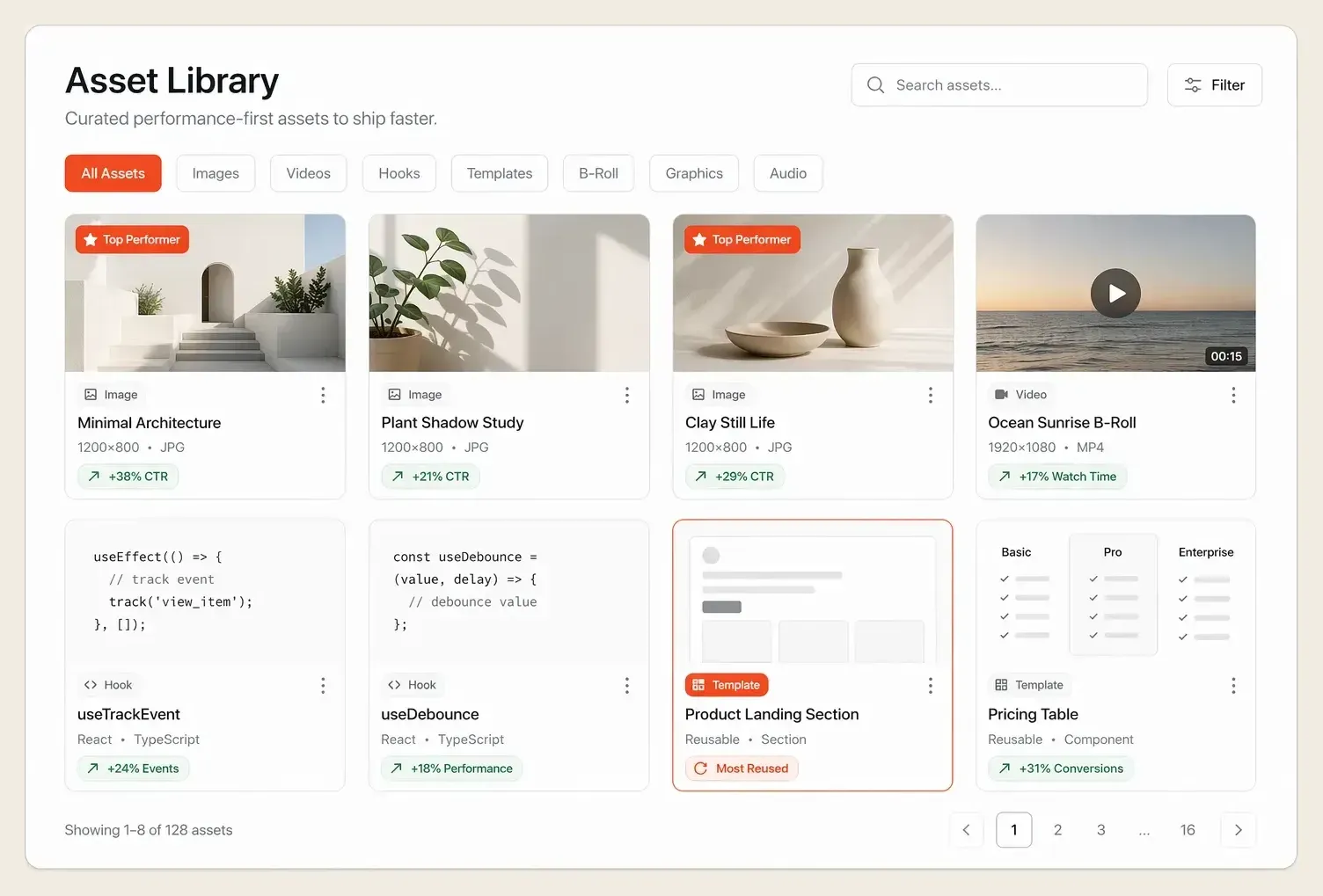
A creative asset library is a central, organized repository of an advertiser's ad assets and the performance data attached to each one. It is the institutional memory that lets a team reuse winners instead of rebuilding them.
Creative Asset Library
A creative asset library is a central, organized repository of an advertiser's ad assets, including images, videos, hooks, headlines, copy blocks, logos, and templates, along with the performance data attached to each one. It is the institutional memory of a creative program. Teams with a well-kept library reuse winners, brief faster, and stay on brand, while teams without one rebuild the same assets from scratch and lose track of what actually worked.
Why It Matters
A creative asset library turns one-off production into a compounding advantage. Without it, every campaign starts near zero: the hook that won last quarter is buried in someone's drive, the high-performing template gets rebuilt, and the same lessons get relearned. Since creative drives roughly 56% of campaign performance according to Nielsen and Meta, losing track of which assets work is losing track of your single largest lever.
The operational drag is real. Marketing teams spend a large share of production time searching for, recreating, or re-versioning assets that already exist, time that could go to testing new ideas. A library also protects brand consistency and speeds the creative refresh rate, because a deep, tagged pool of proven elements means there is always something on-brand to rotate in. The highest-value libraries do more than store files. They store performance context, so the question shifts from "what assets do we have" to "which assets won, and why," which is what makes the next creative brief sharper than the last.
How It Works
A useful library is organized around retrieval and reuse, not just storage. The difference between a folder of files and a real asset library is the metadata: every asset is tagged with what it is, where it ran, and how it performed, so the team can pull the right thing in seconds.
- Tag by element and performance. Label assets by hook type, format, offer, and the CTR, CPA, or ROAS they earned so winners are findable.
- Separate evergreen from dated. Keep reusable templates, logos, and brand elements distinct from campaign-specific creative.
- Attach the performance record. An asset is far more valuable when its history travels with it, so you know what to reuse and what to retire.
- Keep it current. A library that is not maintained decays into a graveyard, so retiring stale assets matters as much as adding new ones.
A Real Example
A mid-size apparel brand ran paid social across three contractors with no shared library. Each contractor stored assets in their own drive, so when one left, a quarter of the brand's best-performing creative effectively vanished. The team estimated they re-shot or rebuilt around 40% of assets each quarter simply because no one could find the originals or knew which versions had won.
They built a central creative asset library, tagging every asset by hook, format, offer, and its measured CTR and CPA. Within two months, new campaign turnaround dropped from nine days to four, because briefs could reference proven hooks and pull existing templates instead of starting blank. Reuse of top-performing elements rose sharply, and the brand stopped paying to recreate assets it already owned. The library did not produce a single new ad. It made every future ad faster and smarter to produce.
Common Mistakes
| ❌ Mistake | ✅ Better Approach |
|---|---|
| Storing assets in scattered personal drives and folders | Keep one central library every contributor reads from and writes to |
| Saving files with no tags or performance data | Tag each asset by element, format, offer, and the metrics it earned |
| Letting the library fill with stale, never-pruned assets | Maintain it actively, retiring dated creative as you add new winners |
How Hawky Helps
Hawky's FeatherDB is a living creative asset library that the agents both read from and write to, not a static folder a human has to maintain. Every winning hook, format, visual, and angle is captured with its performance context, so the library grows itself as campaigns run. The memory is the asset library, and it stays current because the agents keep it current.
The Creative Agent draws on that memory to generate new ad creative variations grounded in what already worked, so production starts from proven elements instead of a blank page. The Performance Agent writes results back, recording which assets won and why, so the library compounds in value with every cycle. Hawky operates the library as working memory; it does not just give you a place to dump files.
Frequently Asked Questions
What is a creative asset library?
A creative asset library is a central, organized repository of an advertiser's ad assets, including images, videos, hooks, headlines, copy, logos, and templates, ideally tagged with the performance data each asset earned. It serves as the institutional memory of a creative program, letting teams reuse winners and brief faster. The most valuable libraries store performance context alongside the files, not just the files themselves.
Why is a creative asset library important?
A creative asset library is important because it turns one-off production into a compounding advantage, preventing teams from rebuilding assets they already own and relearning lessons they already paid for. It protects brand consistency, speeds campaign turnaround, and supplies the deep pool of proven elements a healthy creative refresh rate needs. Since creative drives most of campaign performance, keeping track of what works is keeping track of your largest lever.
How do you organize a creative asset library?
Organize a creative asset library around retrieval and reuse by tagging every asset with what it is, where it ran, and how it performed. Separate evergreen brand elements and templates from campaign-specific creative, and attach each asset's performance record so winners are findable and stale assets can be retired. Consistent metadata is what turns a folder of files into a usable library.
What is the difference between a creative asset library and an asset folder?
An asset folder simply stores files, while a creative asset library adds structure, metadata, and performance context that make assets findable and reusable. The library tells you not only what assets exist but which ones won and why, so the next brief can reference proven elements. That performance memory is the difference between storage and a strategic resource.
Quick Takeaway
A creative asset library is the institutional memory of a creative program, and its value comes from the performance context attached to each asset, not just the files. Tag by element and result, keep it current, and brief from proven winners.
Your best-performing assets are scattered across drives and your team keeps rebuilding what it already owns. Ready to hire your first AI performance team? Book Demo