Swipe File
Last updated
A curated, organized collection of high-performing ads, headlines, hooks, and layouts that marketers save as reference and inspiration. A well-tagged swipe file replaces guesswork with proven patterns and shortens the path from blank page to a winning ad.
Swipe File
A swipe file is a curated, organized collection of high-performing ads, headlines, hooks, emails, and design layouts that marketers save as inspiration and reference for their own creative work. It is not about copying; it is a personal library of proven angles, formats, and patterns you can study, adapt, and remix to shorten the path from blank page to a winning ad.
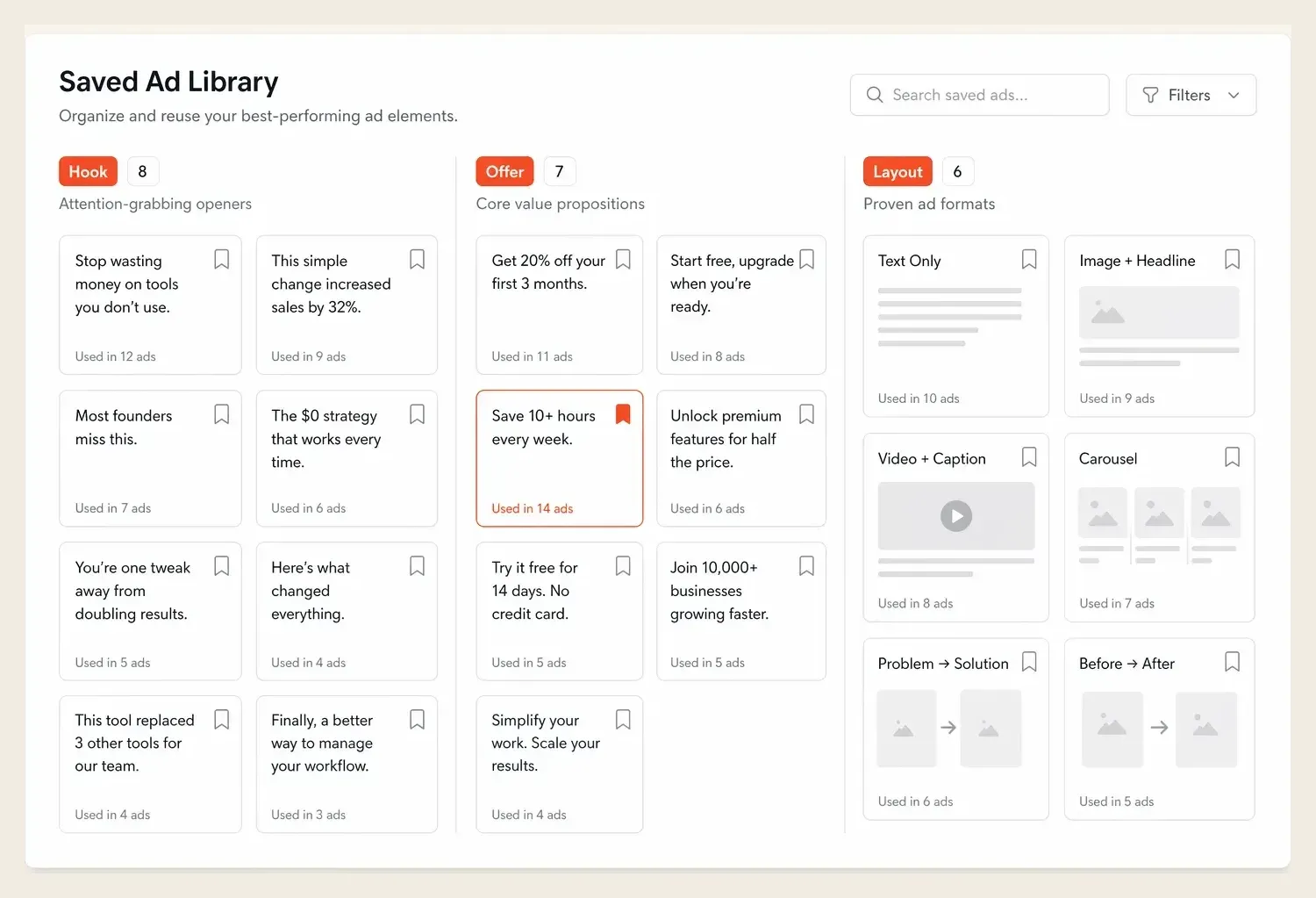
Why It Matters
Starting creative from scratch is slow and risky, because you have no evidence the idea will land. A swipe file replaces guesswork with patterns that already worked, giving you a running start on every brief and a vocabulary of hooks, layouts, and offers that you know convert in the wild. For performance teams shipping dozens of variants a month, that head start compounds.
Speed is the measurable payoff. Teams that maintain an organized swipe file report drafting first-round concepts far faster than teams brainstorming cold, and the quality of those drafts is higher because they are anchored to proven structures. The discipline also protects against creative blind spots, since you are constantly studying what competitors and category leaders are doing rather than recycling your own house style. A strong swipe file feeds directly into faster creative testing velocity.
How It Works
A swipe file works by turning scattered inspiration into a searchable system. The value is not the volume of saved ads; it is how well they are tagged and organized so you can pull the right reference at the right moment.
- Capture: Save standout ads, hooks, headlines, and layouts the moment you see them, from feeds, ad libraries, and email inboxes.
- Categorize: Tag each entry by format, funnel stage, angle, and emotional trigger so it is retrievable later.
- Annotate: Note why each example works, the hook structure, the offer, the visual hierarchy, so the lesson is captured, not just the asset.
- Apply: Pull relevant references when writing a brief or building variants, then adapt the underlying pattern to your brand and product.
The brands that get the most from a swipe file refresh it constantly and mine sources like the Facebook Ad Library and TikTok Creative Center for what is winning right now, not what worked last year.
A Real Example
A performance marketer at a supplements brand kept hitting a wall on new creative, recycling the same three ad formats until creative fatigue flattened results. The team had no system; ideas lived in scattered screenshots and people's memories.
They built a structured swipe file, saving 60 high-performing ads from competitors and adjacent categories, each tagged by hook type, offer, and format. When the next sprint started, writers pulled from the file instead of staring at a blank doc. Concept time per batch dropped from two days to half a day, and one adapted hook structure, a "I was skeptical until" testimonial open, lifted CTR 38% over the brand's previous control. The file became the team's shared starting point for every brief.
Common Mistakes
| The Mistake | ❌ Wrong Approach | ✅ Better Approach |
|---|---|---|
| Hoarding without structure | Dumping hundreds of screenshots into one folder | Tagging every entry by format, angle, and funnel stage so it is retrievable |
| Copying instead of adapting | Cloning a competitor's ad line for line | Extracting the underlying pattern and rebuilding it for your brand and product |
| Letting it go stale | Saving ads once and never updating | Refreshing constantly from live ad libraries to capture what is winning now |
| Saving the what, not the why | Keeping the image but no notes | Annotating why each ad works so the lesson survives, not just the file |
How Hawky Helps
A swipe file is only useful if its lessons make it into finished creative, and that translation step is usually where teams stall. Hawky's Creative Agent takes proven angles and hook structures and generates on-brand variants from them, turning a saved pattern into a ready-to-test ad instead of leaving a writer to manually reinterpret it. It works from your brief, value props, and the formats that already win in your category.
Hawky's Copilot handles the discovery side, surfacing the ad angles and creative patterns competitors are running with sourced answers, so your reference library stays current without manual scraping. Underneath both, FeatherDB acts as a living swipe file of what actually converted for your brand, storing every winning hook and layout so each new round of creative starts from evidence rather than a cold blank page.
Frequently Asked Questions
What is a swipe file in marketing?
A swipe file is an organized collection of high-performing ads, headlines, hooks, and layouts that marketers save as a reference library for their own creative. It is used to study proven patterns and adapt them, not to copy them outright. A well-tagged swipe file dramatically shortens the time it takes to produce strong first-draft concepts.
Is using a swipe file the same as copying?
No. A swipe file is about studying why an ad works and adapting the underlying pattern, hook structure, offer framing, or layout, to your own brand and product. Copying a competitor's ad line for line is both legally risky and ineffective, because it ignores your audience and context. The skill is extracting the transferable principle, not duplicating the asset.
How do I build a swipe file?
Start by saving standout ads, hooks, and layouts the moment you encounter them in feeds, ad libraries, and inboxes. Tag each entry by format, angle, and funnel stage, and add a short note on why it works. Refresh it regularly from sources like the Facebook Ad Library so it reflects what is winning now rather than what worked a year ago.
Where do marketers find ads for their swipe file?
The richest sources are public ad libraries like the Facebook Ad Library and TikTok Creative Center, competitor social feeds, and your own email inbox for high-converting campaigns. The goal is variety across formats and angles, including examples from adjacent categories. Saving from live sources keeps the file current and exposes you to patterns outside your usual house style.
Quick Takeaway
A swipe file turns scattered inspiration into a searchable system of proven creative patterns, giving every brief a running start. Its power comes from organization and annotation, not from how many ads you hoard.
When the patterns in your swipe file need to become finished, on-brand creative fast, an agent should be doing that work. Ready to hire your first AI performance team? Book Demo