Competitive Intelligence
Last updated
The ongoing practice of gathering and acting on information about competitors, channels, spend, and market trends to guide marketing strategy. Done right, it lets you respond to rival moves early instead of after they cost you share.
Competitive Intelligence
Competitive Intelligence is the ongoing practice of gathering, analyzing, and acting on information about competitors, market conditions, and category trends to make sharper marketing and business decisions. In paid media it means tracking what rivals spend, which channels they prioritize, how their positioning shifts, and where the category is moving, then turning that picture into budget, creative, and targeting decisions before the market does. It is broader than reading a single competitor's ads. It is the strategic layer that tells you where to play and where to pull back.
Why It Matters
Competitive intelligence decides whether your strategy is grounded in the real market or in last quarter's assumptions. Markets move fast, and a competitor doubling their spend on a new channel, repositioning around a new value proposition, or capturing share in a segment you ignored can erode your performance long before it shows up in your own dashboards. Companies with a formal competitive intelligence function are roughly 3 times more likely to outperform on revenue growth than those without one, because they see threats and openings while there is still time to respond.
The cost of skipping it is paid in lag. You discover a competitor's move only after their volume has shifted the auction, raised your CPM, and pulled customers you assumed were yours. Treating competitive intelligence as a standing function, rather than an annual slide deck, turns the wider category into an early warning system instead of a postmortem.
How It Works
Competitive intelligence layers several signals into one strategic view rather than fixating on a single competitor's creative. The discipline is connecting spend, channel, message, and timing so the picture is directional, not anecdotal.
- Spend and channel signals: estimate where competitors concentrate budget, which platforms they are entering or abandoning, and how aggressively they bid in shared auctions.
- Positioning and messaging shifts: track how rivals describe their value proposition, which audiences they court, and when their angle changes.
- Market share signals: monitor market share of voice to see who is winning attention in the category, not just who is spending.
- Product and offer moves: watch pricing changes, launches, promotions, and bundles that reshape customer expectations.
The goal is not to copy. It is to anticipate. When you can see a competitor expanding into a channel where you hold an advantage, you defend it. When you see them retreating from a segment, you press.
A Real Example
A mid-market B2B software brand watched a larger competitor quietly shift budget from search into paid social over a single quarter. Standard creative monitoring only showed new ad formats. Competitive intelligence connected the dots: the competitor was chasing a younger buyer segment with a repositioned message around speed, and their share of voice in that segment had climbed from 12 percent to 31 percent.
The brand responded by reinforcing its own search dominance where the competitor had retreated and launching a counter-message defending its core segment. Within 90 days it held its ROAS at 4.1x while the competitor's expansion stalled, because the response was strategic and early rather than reactive and late. The intelligence bought a quarter of lead time that pure ad-watching would have missed.
Common Mistakes
| ❌ Mistakes | ✅ Better Approach |
|---|---|
| Reduce competitive intelligence to screenshotting one rival's latest ads | Combine spend, channel, positioning, and share-of-voice signals into a strategic view |
| Run it as a one-time annual audit that is stale before it is presented | Treat it as a continuous function that flags shifts as they happen |
| Confuse copying competitors with learning from them | Use competitor ad analysis for creative patterns and intelligence for where to play |
How Hawky Helps
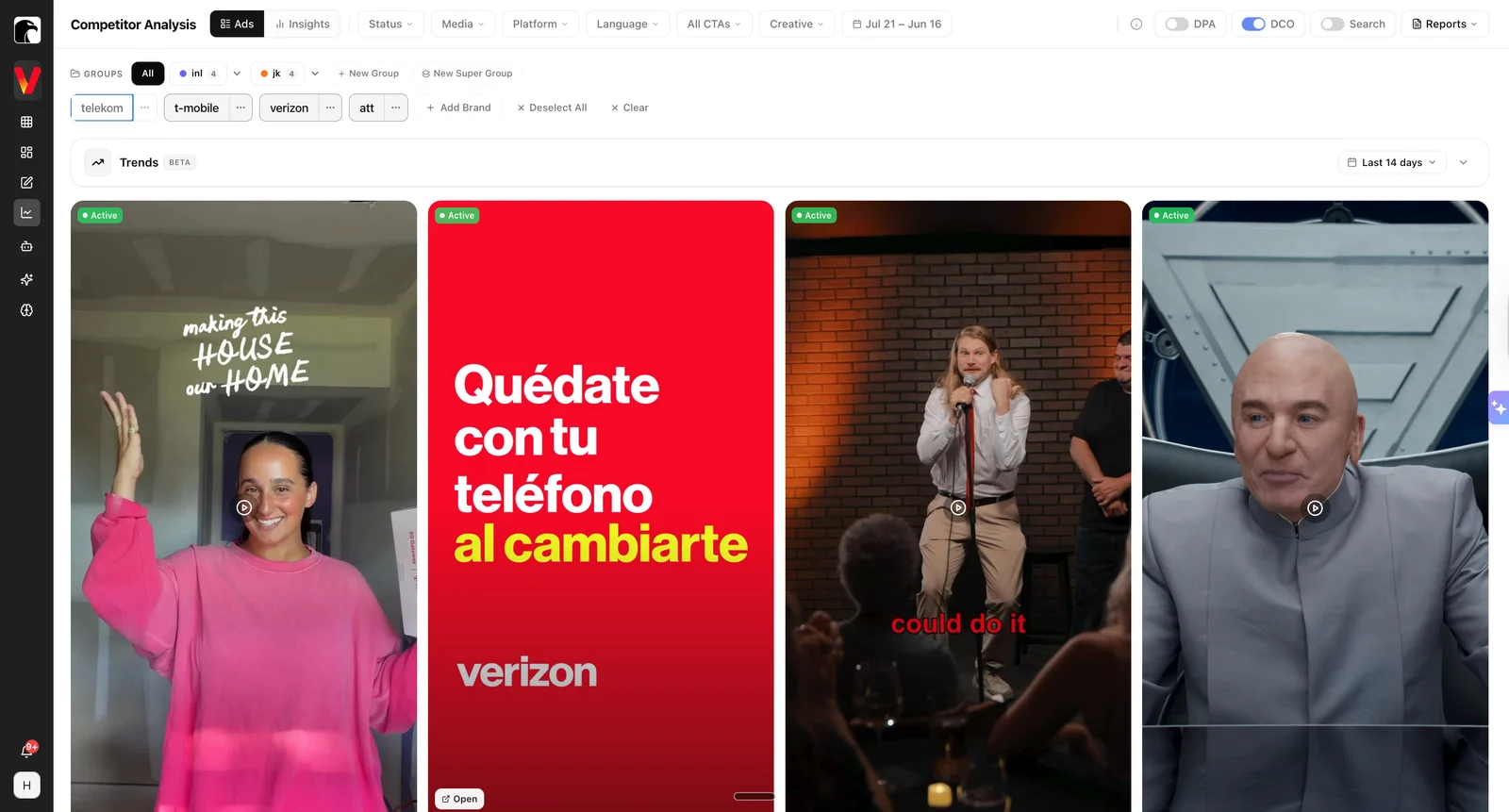
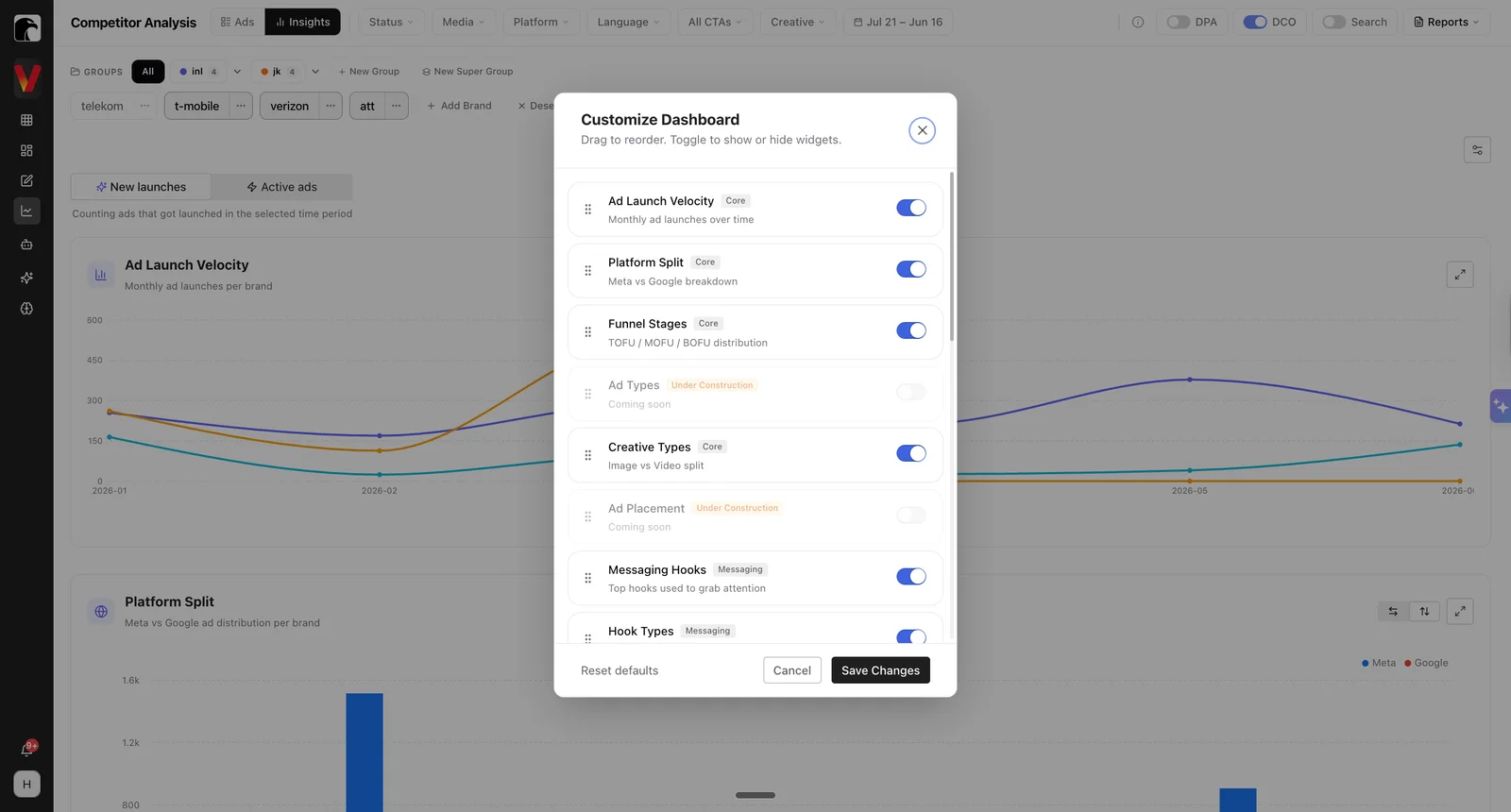
Hawky runs competitive intelligence as an agent, not a quarterly research project. Copilot continuously reads the competitive landscape, answering questions about what rivals are running, which channels they are leaning into, and how their positioning is shifting, with sources attached so every claim is checkable. Instead of assembling a deck from scattered screenshots, you ask a question and get a grounded answer in seconds.
Underneath, FeatherDB holds the account's living memory of competitor moves, so patterns compound over time and the system recognizes a repeat play before it costs you. When intelligence points to an opening, the Creative Agent renders your response on brand and the Performance Agent shifts budget toward the channels where you hold the edge.
Frequently Asked Questions
What is competitive intelligence in marketing?
Competitive intelligence in marketing is the structured practice of collecting and analyzing information about competitors and market conditions to guide budget, channel, creative, and positioning decisions. It goes beyond watching a single rival's ads to include spend signals, channel shifts, messaging changes, and share of voice. The aim is to anticipate market moves early enough to respond with advantage rather than react after the fact.
How is competitive intelligence different from competitor ad analysis?
Competitor ad analysis focuses on the creative layer, studying the specific hooks, formats, and offers a rival runs so you can adapt winning patterns. Competitive intelligence is the broader strategic layer that tells you where the market is moving, which channels competitors prioritize, and where share is shifting. Ad analysis answers what to make, while intelligence answers where to play and where to defend.
Is competitive intelligence legal?
Yes, competitive intelligence is legal when it relies on publicly available information such as ad transparency libraries, public filings, websites, pricing pages, and observable market behavior. The line to respect is between gathering public signals, which is fair practice, and acquiring confidential information through deception or theft, which is not. Ethical competitive intelligence draws only on what any member of the public could legitimately access.
How often should you run competitive intelligence?
Competitive intelligence works best as a continuous function rather than a periodic audit, because markets and competitor budgets shift week to week. At minimum, monitor major channels and positioning monthly, and watch share-of-voice and spend signals continuously in fast-moving categories. The brands that benefit most treat it as an always-on early warning system, not a slide deck refreshed once a year.
Quick Takeaway
Competitive intelligence is the strategic discipline of reading the whole market, spend, channels, positioning, and share, so you act on competitor moves early instead of reacting after they have already cost you.
Knowing where the category is heading is only useful if you can move on it fast, which is why the smartest teams put agents on the signal instead of a quarterly report. Ready to hire your first AI performance team? Book Demo