iOS 14 Update Impact
Last updated
The disruption to digital advertising from Apple's App Tracking Transparency, which required opt-in consent to track users across apps. Mass opt-outs cut the signal advertisers relied on, so most of the apparent performance loss was lost measurement, not lost sales.
iOS 14 Update Impact
The iOS 14 update impact refers to the disruption to digital advertising caused by Apple's App Tracking Transparency (ATT) framework, introduced with iOS 14.5 in April 2021, which required apps to ask users for explicit permission before tracking them across other apps and websites. Because a large share of users declined, advertisers lost much of the cross-app signal they relied on for targeting, optimization, and conversion measurement, especially on Meta. The change reset how performance marketers track results and forced a shift toward first-party data and server-side measurement.
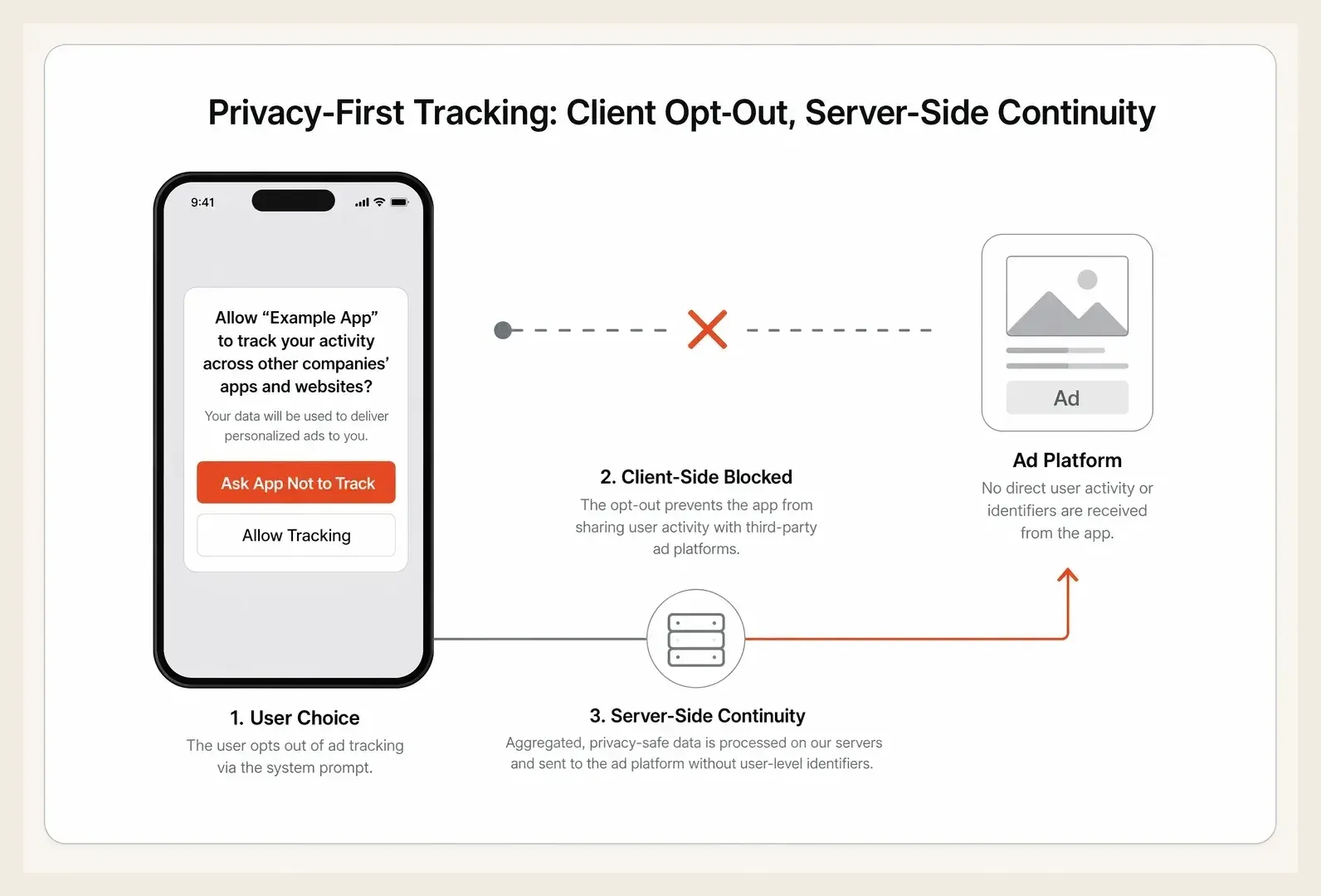
Before ATT, platforms could observe user behavior across apps fairly freely, which fed precise targeting and reliable conversion tracking. After ATT, that observation required opt-in consent that many users did not grant. The result was less granular data, longer attribution windows that no longer matched reality, and reported conversions that undercounted what actually happened.
Why It Matters
The iOS 14 changes hit measurement and optimization at the same time, which is why the impact was so broad. When the pixel can no longer see a meaningful share of conversions, the algorithm optimizes on incomplete data, and the dashboard understates true performance. Marketers found themselves making budget decisions on numbers that no longer reflected reality, which is a dangerous position at scale.
The magnitude was significant across the industry. Reporting at the time pointed to billions of dollars in affected ad revenue and widespread declines in measurable conversions, particularly for advertisers heavily dependent on iOS audiences. Meta itself publicly flagged a material revenue impact tied to the changes. The practical takeaway is that any account leaning on platform-reported conversions alone became less trustworthy, which made first-party data and server-side tracking through the Conversions API essential rather than optional.
How It Works
ATT changed the flow of data between apps. Instead of tracking by default, apps must now request permission, and the user's choice governs what signal the advertiser receives.
- The prompt: when an app wants to track a user across other apps and sites, iOS shows the ATT prompt asking the user to allow or ask the app not to track.
- The opt-out effect: a large share of users decline, which removes their cross-app identifier and shrinks the audience the platform can observe and attribute.
- Aggregated measurement: Meta responded with Aggregated Event Measurement, which limits the number of trackable conversion events per domain and reports results in a more aggregated, delayed form.
- The workaround stack: advertisers leaned harder on server-side tracking, domain verification, modeled conversions, and first-party data collection to recover signal.
The detail that still trips teams up is that "fewer reported conversions" does not mean "fewer real conversions." Much of the loss is measurement, not performance, so reacting by slashing budget on undercounted campaigns can cut spend that was actually working. The discipline is to rebuild trustworthy measurement before judging results.
A Real Example
A subscription app sees reported Meta conversions fall roughly 30 percent in the weeks after iOS 14.5 rolls out, even though revenue in their own billing system barely moves. The Ads Manager dashboard now undercounts iOS purchases because many users opted out of tracking, so the platform simply cannot attribute them.
The team almost cuts the budget on campaigns that look like they collapsed. Instead, they implement the Conversions API to send purchase events server-side, verify their domain, and configure Aggregated Event Measurement priorities. Within two weeks, reported conversions recover a large portion of the gap as server-side events fill in what the browser could no longer see.
With trustworthy measurement restored, blended ROAS in their reporting climbs back toward its true level, and they avoid the mistake of defunding campaigns that were quietly profitable the whole time. The performance had not actually dropped 30 percent. The visibility had, and rebuilding the signal was the fix.
Common Mistakes
| ❌ Mistakes | ✅ Better Approach |
|---|---|
| Treat the drop in reported conversions as a real drop in sales | Compare platform data to your own backend, since much of the loss is measurement, not performance |
| Rely on the pixel alone after ATT | Add the Conversions API for server-side events and verify your domain |
| Ignore first-party data collection | Build owned data through email, accounts, and the Meta Pixel so you depend less on cross-app tracking |
How Hawky Helps
When measurement gets noisier, optimization decisions get harder, and that is exactly where Hawky's Performance Agent earns its keep. It operates the account against your true KPI rather than reacting to a single undercounted dashboard number, shifting budget toward what is genuinely converting and holding steady when a dip is a measurement artifact rather than a performance one.
Because Hawky runs as a team of agents, FeatherDB holds the account's living memory across the signal loss, so the agents reason from a fuller, longer-running picture than any single noisy week of reporting. The Creative Agent keeps feeding fresh creative so performance does not stall while the measurement layer stabilizes. The combination keeps the account moving in the right direction even when the raw platform numbers are harder to trust.
Frequently Asked Questions
What did the iOS 14 update do to Facebook ads?
The iOS 14.5 update introduced App Tracking Transparency, which required apps to get user permission before tracking them across other apps and sites. Many users opted out, so Facebook lost much of the cross-app signal it used for targeting and conversion measurement, leading to less precise optimization and reported conversions that undercount real results.
Why did my Facebook conversions drop after iOS 14?
Most of the drop is a measurement loss, not a sales loss. When users opt out of tracking, the platform cannot attribute their conversions, so Ads Manager reports fewer than actually happened. Comparing platform numbers to your own backend usually shows the real performance is far closer to before than the dashboard suggests.
How do you recover ad performance after the iOS 14 changes?
The main fix is rebuilding trustworthy measurement by implementing the Conversions API to send events server-side, verifying your domain, and setting up Aggregated Event Measurement. Pairing that with stronger first-party data collection recovers much of the lost signal so the algorithm can optimize on a fuller picture again.
Is the iOS 14 impact still relevant today?
Yes. App Tracking Transparency is now a permanent part of how iOS works, and the privacy-first direction has only continued across the industry. The workarounds it forced, including server-side tracking and first-party data strategy, are now standard practice rather than temporary responses.
Quick Takeaway
The iOS 14 update impact was the shift from default cross-app tracking to opt-in consent under ATT, which broke much of advertising's measurement and pushed the industry toward first-party data and server-side tracking. Most of the apparent performance loss was lost visibility, not lost sales.
When noisy measurement makes it risky to judge a campaign, an agent should be optimizing against your true KPI instead of a single undercounted number. Ready to hire your first AI performance team? Book Demo