Brand Guidelines
Last updated
A documented set of rules covering logo, color, typography, imagery, and tone that keeps a brand recognizable across every ad. Consistent presentation is linked to revenue gains of 10 to 20 percent, so guidelines are a performance driver, not just a style sheet.
Brand Guidelines
Brand guidelines are a documented set of rules that define how a brand looks, sounds, and presents itself across every channel, covering logo usage, color palette, typography, imagery style, tone of voice, and messaging. In advertising, they are the reference that keeps creative consistent so that a viewer recognizes the brand instantly, whether they see a Reel, a display banner, or a product demo. Strong brand guidelines turn scattered ads into a single recognizable identity that compounds recall over time.
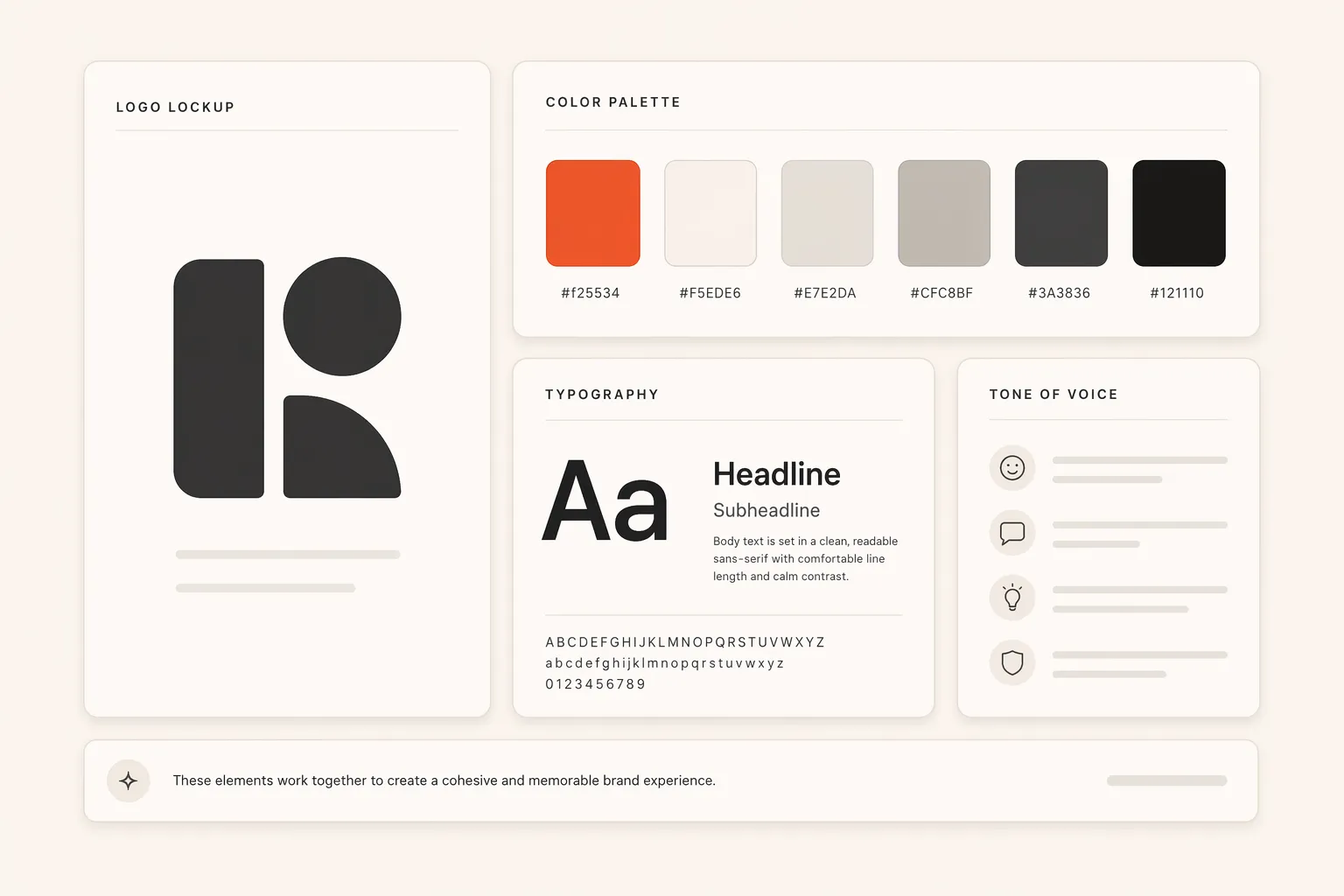
A brand guideline document typically specifies primary and secondary colors with exact hex values, approved logo variations and clear-space rules, font families and weights, photography or illustration direction, and voice principles that describe how the brand speaks. The goal is repeatability, so any designer or agent can produce on-brand work without guessing.
Why It Matters
Consistency is not a cosmetic preference, it is a measurable driver of performance. Research commonly cited in branding studies attributes revenue lifts of around 10 to 20 percent to consistent brand presentation, because recognition lowers the cognitive cost of trusting an ad. When every creative reinforces the same colors, voice, and look, each impression strengthens the next instead of starting from zero.
The risk runs in the opposite direction when guidelines are loose. Ad accounts that scale creative volume without documented standards drift fast, and within months the feed shows five different logo treatments, three tones of voice, and a color palette nobody agreed to. That inconsistency erodes recall and forces every ad to reintroduce the brand, which raises the real cost of attention. As you increase creative testing velocity, guidelines are what let you move fast without the brand falling apart.
How It Works
Brand guidelines work as a constraint layer that sits on top of creative production. They do not dictate the idea, they govern how the idea is expressed so the output stays recognizable.
- Define the visual system. Colors, logo rules, typography, and spacing give every asset a consistent frame.
- Define the verbal system. Tone, vocabulary, and messaging pillars keep copy sounding like one brand across every ad.
- Document do and do-not examples. Showing correct and incorrect usage side by side prevents the most common drift.
- Make the rules accessible. Guidelines only work if the people and systems making creative actually reference them, so they live where production happens.
The detail teams underestimate is enforcement at scale. A guideline that exists as a PDF nobody opens has no effect on the hundredth ad variation. The brands that stay consistent are the ones that bake the rules into the production workflow itself, so compliance is the default rather than a manual review step.
A Real Example
A skincare brand scales from 10 to 80 active ad variations per month to feed an aggressive creative testing framework. Without enforced guidelines, freelancers and tools each interpret the brand differently. Some ads use the bright coral logo, others a muted version, and the voice swings from clinical to playful between placements.
Brand recall in their post-campaign surveys drops noticeably, and CTR on new creative softens even though the offers are strong. The team documents a tight guideline set, locks the palette to three hex values, fixes one logo lockup, and defines a single confident-but-warm voice. They rebuild the next batch against those rules.
Within two months, aided recall recovers, and the consistent batch posts a 22 percent higher CTR than the inconsistent one at the same spend. The creative concepts were comparable. The difference was that viewers finally recognized the brand fast enough to engage, which is exactly what guidelines are meant to produce.
Common Mistakes
| ❌ Mistakes | ✅ Better Approach |
|---|---|
| Treat guidelines as a one-time PDF that lives in a forgotten folder | Embed the rules into the production workflow so every asset is on-brand by default |
| Scale creative volume before standards are documented | Lock colors, logo, and voice first, then increase creative testing velocity |
| Define visuals but leave tone of voice undocumented | Specify verbal rules and messaging pillars so copy stays as consistent as the visuals |
How Hawky Helps
Volume is where brands usually break, and Hawky's Creative Agent generates ad variations that hold to your colors, logo treatment, typography, and voice even as output scales into the dozens of variants. Instead of choosing between consistency and quantity, the agent produces on-brand creative at the volume modern testing demands, so the hundredth variation looks as deliberate as the first.
Because Hawky operates as a team of agents, FeatherDB holds the brand's living memory, including the guideline rules and which on-brand formats have historically performed, so the Creative Agent never drifts from the standard. The Performance Agent then scales the on-brand winners, which means brand consistency and performance reinforce each other rather than competing.
Frequently Asked Questions
What should brand guidelines include?
Brand guidelines should include logo usage and clear-space rules, an exact color palette with hex values, approved typography and weights, imagery or photography direction, and tone-of-voice principles with messaging pillars. The strongest guidelines also show correct and incorrect usage side by side so anyone producing creative can stay on-brand without guessing.
Why are brand guidelines important in advertising?
Brand guidelines keep every ad recognizable, which lowers the cognitive cost of trust and lets each impression reinforce the last instead of reintroducing the brand. Consistent presentation is commonly linked to revenue gains of 10 to 20 percent, making guidelines a performance driver rather than a purely visual concern.
How do brand guidelines affect ad performance?
When creative is consistent, viewers recognize the brand faster and engage more readily, which lifts CTR and recall over time. When guidelines are loose, ads drift visually and verbally, recall erodes, and every creative has to work harder to earn attention, raising the real cost of each impression.
How do you keep brand guidelines consistent at scale?
The reliable way to stay consistent at scale is to embed the rules into the production process so compliance is automatic, rather than relying on manual review of every variation. Locking the palette, logo, and voice before increasing creative volume prevents the drift that usually appears once output grows.
Quick Takeaway
Brand guidelines are the documented rules that keep your advertising recognizable across every channel, and consistent presentation reliably outperforms scattered creative because viewers trust what they recognize.
When scaling creative volume threatens to fracture your brand, an agent should be producing every variation on-brand by default. Ready to hire your first AI performance team? Book Demo