Native Ads
Last updated
Paid placements designed to match the look and feel of the platform they appear on, so they blend into the feed instead of interrupting it. Done right, they earn 53% more attention than banners and sidestep banner blindness entirely.
Native Ads
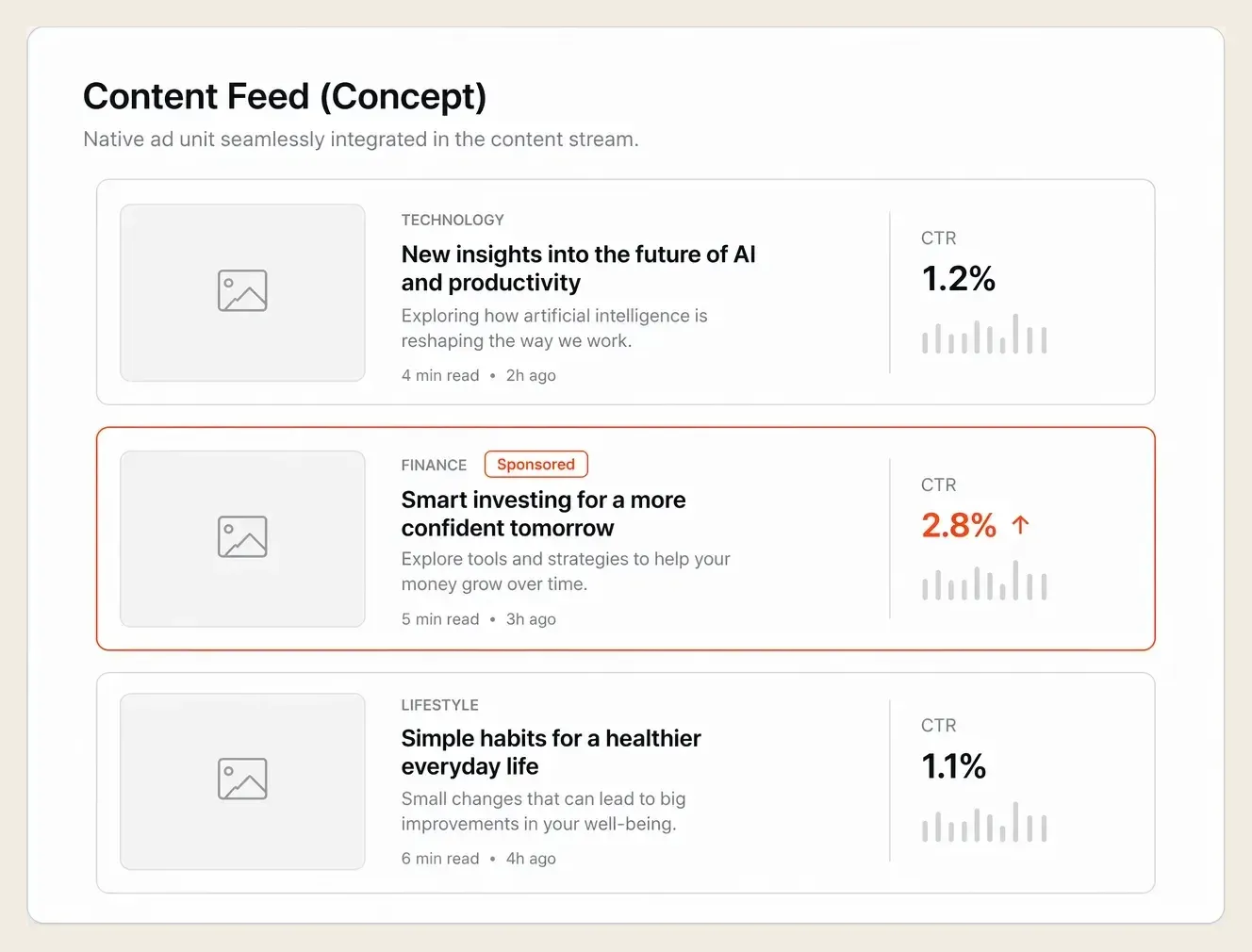
Native ads are paid placements designed to match the look, feel, and function of the platform they appear on, so they blend into the surrounding content instead of interrupting it. Instead of a loud banner, a native ad reads like a recommended article, an in-feed post, or a sponsored product card, carrying a small "Sponsored" label as the only obvious tell. The goal is a non-disruptive experience that earns attention rather than fighting for it.
Why It Matters
Native ads matter because audiences have learned to ignore anything that looks like an ad. Native placements consistently sidestep that reflex, and the numbers back it up: consumers look at native ads 53% more often than traditional display banners, and native ads can lift purchase intent by as much as 18% over standard formats. When the ad respects the reading experience, people actually process the message.
The format also fights banner blindness, the trained habit of skipping over rectangular ad slots. A native unit sits inside the content stream, so it inherits the trust and attention the surrounding feed already commands. For performance marketers, that translates into a healthier CTR and a lower cost to earn a click, because the placement is not working against the user's intent. The tradeoff is that native creative has to be good enough to survive next to real content, which raises the bar on the asset itself.
How It Works
Native ads work by inheriting the styling and context of their host environment, then matching the message to the mindset of someone already engaged with that content. The platform serves the unit programmatically or through a managed buy, and the creative adapts to fit.
- Match the format: in-feed social posts, sponsored search listings, content recommendation widgets, and promoted listings all qualify as native.
- Mirror the design: fonts, image ratios, and layout follow the host page so nothing feels bolted on.
- Respect the context: the angle and offer align with what the reader came to do, not a hard interruption.
- Disclose clearly: a "Sponsored" or "Promoted" tag keeps the placement compliant and honest.
Because the unit blends in, the creative carries the entire burden of standing out. A weak hook disappears into the feed, while a strong one earns the click without breaking the native illusion.
A Real Example
A meal-kit brand is tired of its display banners returning a 0.08% CTR and a rising CPC. It shifts budget into native content-recommendation placements, running a "5 dinners under 20 minutes" article-style unit that matches the publisher's editorial layout.
The native unit returns a 0.42% CTR, more than five times the banner, and the landing page sees a stronger CVR because readers arrive primed by useful content rather than a cold pitch. Cost per signup drops from $61 to $34 across a $40,000 monthly spend, and the brand reallocates the entire display budget into native within two quarters.
Common Mistakes
| ❌ Mistakes | ✅ Better Approach |
|---|---|
| Running a hard-sell banner message inside a native slot | Write the creative to match the editorial voice of the placement |
| Hiding or omitting the sponsored label to trick users | Disclose clearly so trust and compliance both hold |
| Reusing one static unit until it fatigues and CTR collapses | Refresh native creative on a creative refresh rate before performance decays |
| Judging native by impressions instead of downstream conversions | Track CVR and cost per result, not just clicks |
How Hawky Helps
Native ads live or die on whether the creative feels native, and that is a creative production problem at its core. Hawky's Creative Agent studies which editorial angles, headlines, and image styles earn clicks in a given placement, then generates native variants written to match the host environment rather than shout over it. It isolates the hook and format that historically convert and briefs fresh units in that proven style.
On the delivery side, Hawky's Performance Agent decides where the spend goes, shifting budget toward the native placements holding the lowest cost per result and pulling back on the ones fatiguing. Both agents read from FeatherDB, the account's living memory, so every native unit is informed by what already worked instead of starting from a blank brief. The result is native creative that keeps pace with the feed, optimized against your KPI rather than impressions alone.
Frequently Asked Questions
What is the difference between native ads and display ads?
Native ads match the form and feel of the surrounding content so they blend into the feed, while display ads are clearly separate banner or rectangle units that sit in dedicated ad slots. Native typically earns higher engagement because it sidesteps banner blindness, while display offers broader reach and cheaper impressions for awareness.
Are native ads more effective than banner ads?
For engagement and purchase intent, native ads usually outperform banners because users view them more often and trust them more in context. Consumers look at native ads roughly 53% more than display banners, which is why many performance marketers shift budget from banners to native for mid-funnel goals.
What are the main types of native ads?
The common native formats are in-feed ads inside social or content streams, sponsored search listings, content-recommendation widgets at the end of articles, and promoted product listings on marketplaces. Each one mirrors the host platform's native layout while carrying a sponsored disclosure.
Do native ads have to be labeled as ads?
Yes. Regulators and platforms require a clear disclosure such as "Sponsored," "Promoted," or "Ad" so users can tell paid placements from organic content. Hiding the label damages trust and can trigger compliance penalties, so the disclosure should stay visible even as the creative blends in.
Quick Takeaway
Native ads win attention by respecting the reading experience instead of interrupting it, but the creative has to be strong enough to stand next to real content. Let a Creative Agent generate units that feel native and a Performance Agent send spend to the placements that convert.
When your banners get ignored and native creative is hard to produce at volume, the fix is agents that generate and place native units against your KPI. Ready to hire your first AI performance team? Book Demo