Display Ads
Last updated
Visual banner-style ads of images, text, or rich media that run across websites, apps, and networks like the GDN on a cost-per-impression basis. They deliver the cheapest reach in marketing and shine in retargeting, even though direct CTR averages just 0.46%.
Display Ads
Display ads are visual banner-style advertisements made of images, text, or rich media that appear on websites, apps, and across ad networks like the Google Display Network. They sit in dedicated ad slots rather than blending into content, and they run on a cost-per-thousand-impressions model that makes them one of the cheapest ways to put a brand in front of a large audience. Display is the workhorse of awareness and retargeting, less about the immediate click and more about presence and recall.
Why It Matters
Display ads matter because reach at low cost is still the foundation of upper-funnel marketing. The Google Display Network alone reaches over 90% of internet users worldwide across more than two million sites and apps, which means a single campaign can build awareness at a scale no other format matches. For brands that need to be seen before they can be chosen, that footprint is hard to ignore.
The honest tradeoff is performance. The average display ad CTR hovers around 0.46%, far below search, so display rarely drives direct response on its own. Its real value shows up in retargeting, where warm audiences who already visited convert at a much higher rate, and in the assist it gives other channels by keeping the brand top of mind. Judging display by last-click conversions alone undersells what it actually does, which is why a sound attribution model matters here.
How It Works
Display ads work by buying impressions across an ad network, then targeting them to audiences and contexts where the brand wants to appear. The creative is served into standardized slots, and the system optimizes delivery against the campaign goal.
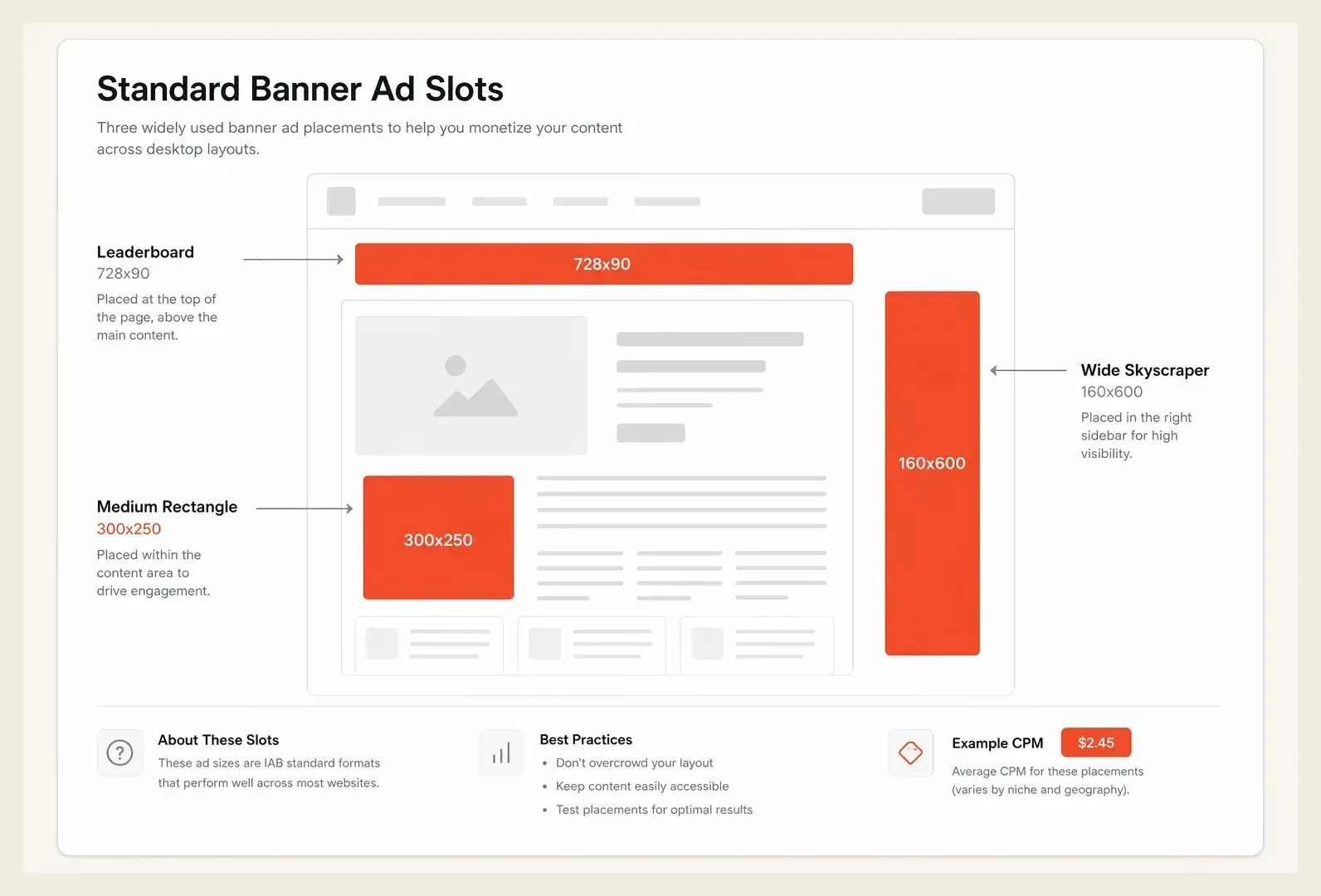
- Pick the sizes: standard units like the 300x250 medium rectangle, 728x90 leaderboard, and 160x600 skyscraper cover most placements.
- Choose the targeting: contextual (page topic), audience (interests or behaviors), or remarketing (past visitors) all steer where ads show.
- Set the buy: most display runs on a CPM basis, so you pay for visibility rather than clicks.
- Optimize the delivery: responsive display ads auto-assemble headlines, images, and logos to fit each slot.
Because the slots are fixed and the audience is often passive, the creative has to interrupt gracefully. A clear value proposition and a single, legible call to action outperform a cluttered banner trying to say everything at once.
A Real Example
A SaaS company runs a prospecting display campaign across the GDN at a $4.50 CPM, reaching 1.2 million people in a month for roughly $5,400. The direct CTR is a modest 0.38%, and very few of those clicks convert immediately, which makes the campaign look weak on a last-click report.
When the team layers in retargeting, the picture flips. Display ads served to people who already visited the pricing page return a 1.9% CTR and a CVR five times the cold audience, dropping cost per trial to $42. The prospecting display was never meant to close the sale, it was building the warm pool that retargeting then converts.
Common Mistakes
| ❌ Mistakes | ✅ Better Approach |
|---|---|
| Judge display purely on last-click conversions | Measure assisted conversions and view-through with a real attribution model |
| Run prospecting display and expect direct-response numbers | Use display for reach and retargeting, search for high intent |
| Cram every message and offer into one cluttered banner | Lead with one clear value proposition and a single CTA |
| Let the same banner run until ad fatigue tanks CTR | Refresh creative on a schedule and rotate fresh variants |
How Hawky Helps
Display performance is capped by two things: the creative in the slot and where the spend goes. Hawky's Creative Agent generates display variants in every required size, testing headlines, layouts, and CTAs to find the banner that earns the click, then refreshing assets before creative fatigue drags CTR down. It works from the formats and angles that already converted, not guesswork.
On placement and delivery, Hawky's Performance Agent manages the buy, shifting budget toward the audiences and contexts holding the lowest cost per result and separating cold prospecting from warm retargeting so each is judged on the right goal. Both agents read and write to FeatherDB, so the account remembers which display creative and which placements actually moved the business. That turns display from a set-and-forget awareness line item into an actively managed channel.
Frequently Asked Questions
What is the difference between display ads and search ads?
Display ads are visual banners shown to people as they browse sites and apps, while search ads are text listings shown to people actively searching for a keyword. Display is built for reach, awareness, and retargeting at low cost, whereas search captures existing high intent and usually converts at a higher rate per click.
What is a good CTR for display ads?
The average display ad CTR sits around 0.46%, so anything above 0.5% on prospecting is solid and retargeting campaigns often clear 1% or more. Because display is an awareness and assist channel, a low CTR is not automatically a failure if the campaign is lifting assisted conversions and brand recall.
What are the standard display ad sizes?
The most used sizes are the 300x250 medium rectangle, 728x90 leaderboard, 336x280 large rectangle, 160x600 wide skyscraper, and 320x50 mobile banner. Running creative in all the top sizes maximizes how many placements a campaign can fill across the network.
Are display ads worth it for performance marketing?
Yes, when used for the right job. Display delivers the cheapest reach for awareness and is one of the strongest retargeting channels, where warm audiences convert far better than cold prospects. The mistake is expecting cold display to drive direct response like search, rather than crediting the assists and view-through it generates.
Quick Takeaway
Display ads buy cheap, large-scale visibility, and their real return shows up in retargeting and assisted conversions rather than first-click sales. Let a Creative Agent keep the banners fresh in every size and a Performance Agent send spend where the cost per result is lowest.
When your display banners get ignored and direct conversions look thin, the fix is agents that produce better creative and place it against your true KPI. Ready to hire your first AI performance team? Book Demo