Google Display Network (GDN)
Last updated
A network of millions of websites, apps, and Google properties where your display ads can appear. Useful for retargeting and broad awareness campaigns at scale.
Google Display Network (GDN)
Google Display Network (GDN) is a group of more than 2 million websites, videos, and apps where your Google Ads can appear as visual banner, image, or responsive ads. While Search ads reach people who are already looking for something, Display ads place your brand on content-relevant sites to reach people while they browse their favorite websites, read articles, or watch videos. It is built for scale and awareness across a vast inventory of placements.
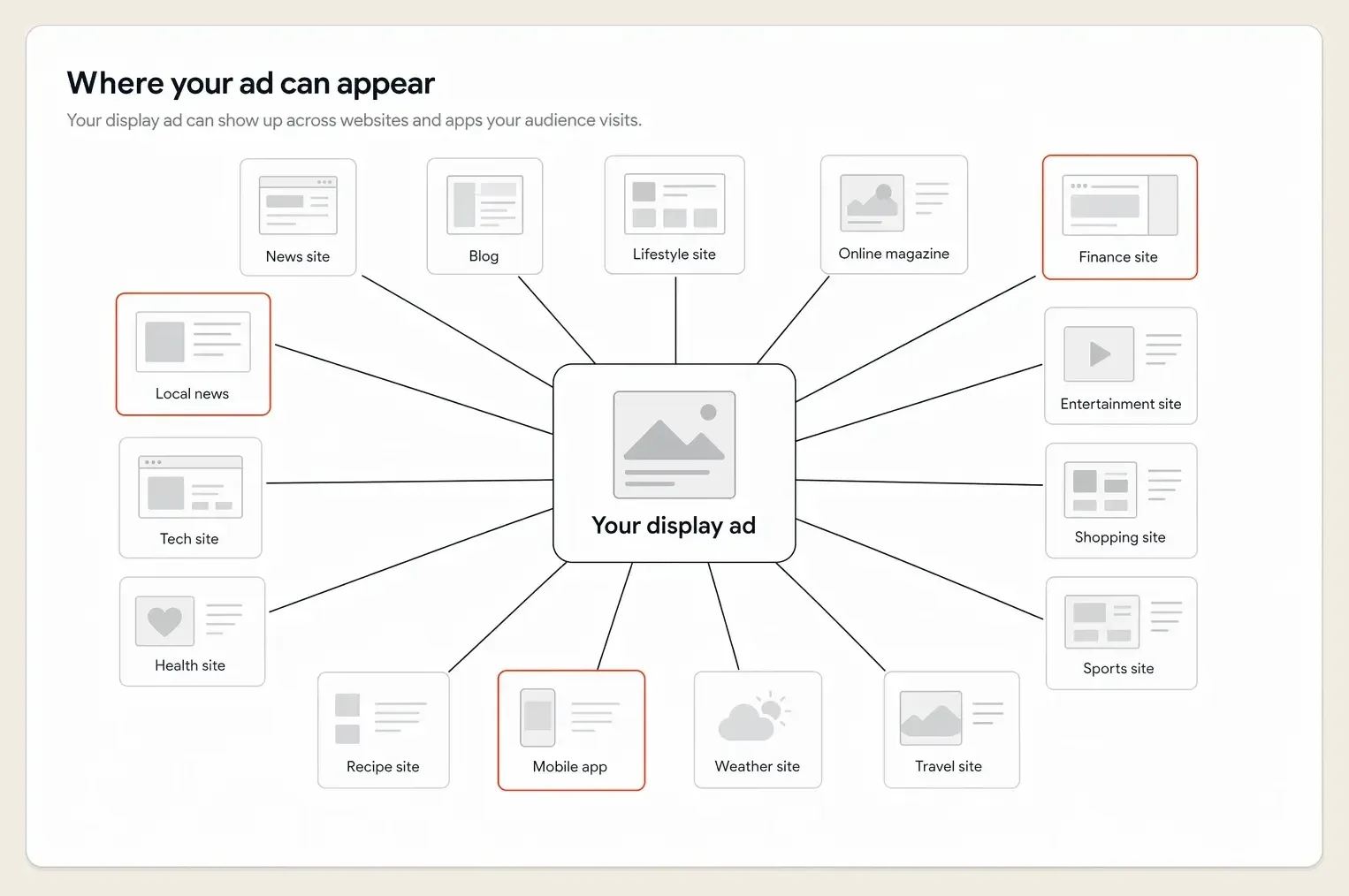
Why It Matters
GDN is one of the most powerful tools available for brand awareness and reach at scale, putting your product in front of potential customers long before they ever type a query into a search engine. The network reaches over 90% of internet users worldwide, which means almost any audience you want is somewhere in that inventory.
The real performance value shows up when GDN is paired with retargeting. Display is typically far cheaper per impression than Search, so using it to keep your product top-of-mind across the web can meaningfully lower your overall CPA. The catch is that this cheap reach only pays off when placements and creative are actively managed, because unmanaged Display can burn budget on worthless inventory fast.
How It Works
- Contextual targeting: Placing ads on pages relevant to your product, such as showing a running shoe ad on a marathon blog.
- Audience targeting: Showing ads based on interests, demographics, or past behavior through interest-based targeting, regardless of the site the user is currently on.
- Responsive Display Ads: You supply the assets (images, headlines, logos) and Google's AI tests combinations automatically to find the highest CTR.
- Placement exclusions: Performance marketers use these to stop ads from serving on "junk" sites and apps that drive high clicks but zero ROAS.
The lever that separates profitable Display accounts from wasteful ones is the placement report. Reviewing where ads actually served, then excluding the mobile games and made-for-advertising sites that generate accidental clicks, is what keeps GDN efficient over time.
A Real Example
A travel insurance company wants to reach people planning summer vacations and uses GDN to do it.
- The strategy: They place banner ads on travel blogs and flight comparison sites using contextual targeting.
- The creative: They test a generic "Travel Insurance" banner against a performance creative featuring a photo of a lost suitcase with the headline "Don't let a lost bag ruin your trip."
- The result: The "lost bag" ad achieves a 0.95% CTR, roughly 3x the industry average for Display. Using that high-intent hook, they drive traffic at a $0.40 CPC and feed their retargeting funnel with thousands of qualified leads.
Within the first month, the team pulls a placement report and excludes 40 low-quality app placements that were generating clicks but no quotes, which drops their cost per qualified lead by another 22%.
Common Mistakes
| The Mistake | ❌ Wrong Approach | ✅ Better Approach |
|---|---|---|
| "Set It and Forget It" | Letting ads run on mobile games where users accidentally click. | Monitoring placement reports and excluding poor performers to protect media spend. |
| Boring Creative | Using standard, text-heavy corporate banners. | Designing high-converting, benefit-driven visuals built around a clear hook. |
| Ignoring Landing Pages | Sending display traffic to a generic homepage. | Sending users to a focused landing page that matches the ad's visual and message. |
How Hawky Helps
When display banners hit a wall of ad saturation and clicks stop converting, Hawky's Performance Agent operates on the account directly, auditing placements, flagging the junk inventory draining spend, and reallocating budget toward what converts. It treats GDN as something to actively run, not a dashboard to read after the damage is done.
The Performance Agent works alongside the Creative Agent, which generates fresh display variants built around the color palettes, layouts, and hooks currently capturing attention across the network. FeatherDB keeps the memory of which placements and creative combinations worked for your brand before, so each refresh builds on proven ground instead of starting over.
Frequently Asked Questions
What is the difference between Google Search and Google Display ads?
Search ads appear in Google search results when someone actively types a query, capturing existing demand. Display ads appear on the 2 million-plus sites, apps, and videos in the Google Display Network while people browse, which builds awareness and demand before the search ever happens. Search is intent-driven, Display is reach-driven.
How much do Google Display Network ads cost?
Display ads are generally far cheaper than Search, with average CPCs often under $1 and CPMs frequently in the low single digits. Actual cost depends on your industry, targeting, and competition, but the low cost per impression is exactly why GDN works well for awareness and retargeting at scale.
Is the Google Display Network worth it?
GDN is worth it when placements and creative are actively managed. It delivers cheap reach and pairs powerfully with retargeting to lower overall CPA, but unmanaged it can waste budget on low-quality placements. The value comes from disciplined exclusions and strong creative, not from leaving it on autopilot.
What are placement exclusions in GDN?
Placement exclusions tell Google not to serve your ads on specific sites or apps. Marketers use them to block low-quality inventory like certain mobile games and made-for-advertising sites that generate accidental clicks but no conversions, which protects spend and improves ROAS.
Quick Takeaway
The Google Display Network is a 2 million-site canvas for your brand, but cheap reach only pays off when placements are managed and the creative is worth stopping for.
When Display spend is leaking into junk placements and stale banners, an agent should be fixing it in the account. Ready to hire your first AI performance team? Book Demo