Collection Ads
Last updated
A mobile Meta format that pairs a hero image or video with a tappable product grid and opens into a fast full-screen Instant Experience. Collection Ads shorten the path from feed tap to product view, where most mobile shopping intent leaks away.
Collection Ads
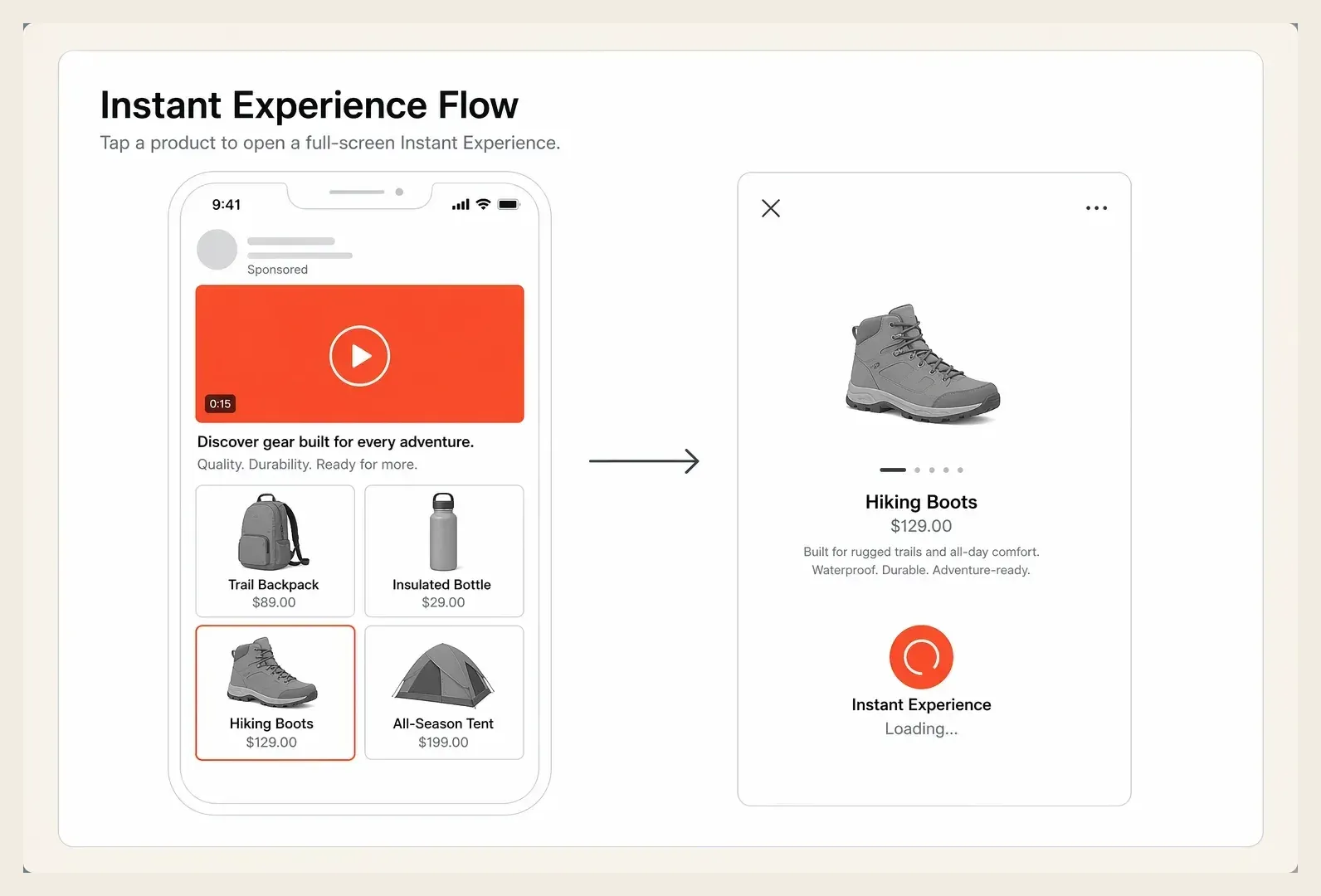
Collection Ads are a mobile ad format on Meta that pairs one hero image or video with a grid of tappable product images beneath it, and that opens into a fast-loading full-screen Instant Experience when a user taps. Built for ecommerce, the format turns a single ad into a mini storefront: the hero stops the scroll, the product grid shows the range, and the Instant Experience lets people browse and buy without leaving the app. Collection Ads exist to shorten the path from a feed tap to a product view, which is where most mobile shopping intent leaks away.
Why It Matters
Collection Ads attack the biggest weakness in mobile commerce: slow, clunky transitions from ad to site. The Instant Experience loads inside the app instantly rather than waiting on a mobile site, and Meta has reported that this near-instant load can lift conversion rates and reduce drop-off compared with sending traffic to a standard landing page. For a catalog brand, removing that friction is often worth more than a creative tweak.
The format also does double duty as discovery and direct response. The hero builds desire while the product grid surfaces four or more items at once, so one ad can drive a CTR on the hero and product-level taps in the same impression. That combination tends to lower CPA on catalog campaigns because viewers self-select into the product they want before they ever reach checkout.
How It Works
A Collection Ad has three layers: a hero (image or video), a product grid of tappable items below it, and a full-screen Instant Experience that opens on tap. It can be powered manually or pulled dynamically from a product catalog so the grid personalizes to each viewer.
- Hero: one image or video at the top that carries the hook and stops the scroll.
- Product grid: typically four product images beneath the hero, each linking to its own product detail.
- Instant Experience: a fast, full-screen post-tap canvas where users browse products, watch video, and tap through to buy.
- Catalog-powered: connected to a product feed, the grid can use dynamic creative optimization to show each user the items they are most likely to buy.
- Mobile-only: Collection Ads run on mobile feeds, so creative must be vertical-friendly and fast.
Because the grid can pull from a live catalog, a Collection Ad doubles as a retargeting engine that re-shows browsed products to warm audiences.
A Real Example
A fashion retailer runs single-image catalog ads at a $22 CPA and a 1.1 percent CTR, but sees heavy drop-off when users hit the slow mobile site. The team rebuilds the campaign as a Collection Ad: a 10-second hero video of the new season's looks, a four-product grid pulled from the catalog, and an Instant Experience that loads the lookbook in-app.
At the same $300 daily budget, the Instant Experience cuts post-click drop-off sharply, lifting ROAS from 2.1x to 3.4x and pulling CPA down to $13.50. The product grid reveals that one jacket drives 60 percent of taps, an insight the brand turns into a dedicated product demo ad. Removing the friction between tap and product, not changing the offer, drove the gain.
Common Mistakes
| ❌ Mistake | ✅ Better Approach |
|---|---|
| Using a weak static hero that fails to stop the scroll | Lead with a strong hero video built around a clear hook |
| Sending the tap to a slow external site instead of the Instant Experience | Use the in-app Instant Experience so the post-tap load is near-instant |
| Filling the grid with random products unrelated to the hero | Curate the grid so the products match the hero's theme and audience |
| Running a static product grid when a catalog could personalize it | Connect a product feed so the grid adapts to each viewer's intent |
How Hawky Helps
A Collection Ad needs a scroll-stopping hero plus a coherent set of product visuals, and Hawky's Creative Agent produces both on brand. It generates hero video and image variants around the hooks already converting in your account, builds the supporting product creative and Instant Experience layout to match, and refreshes the hero when engagement slips, so the format stays filled with tested assets instead of one stale image. The Creative Agent keeps the look consistent across the hero, grid, and post-tap canvas so the whole experience feels like one storefront.
The Performance Agent handles placement and delivery: it manages catalog-powered targeting, watches hero CTR and product-level conversions, and shifts budget toward the Collection Ads and audiences driving the lowest CPA. Every winning hero, product mix, and audience pattern is written to FeatherDB, so the next Collection Ad starts from the combinations that already sell.
Frequently Asked Questions
What is a collection ad on Facebook?
A collection ad on Facebook is a mobile format that combines a hero image or video with a grid of tappable product images below it. When a user taps, it opens a full-screen Instant Experience where they can browse and buy without leaving the app. It is designed for ecommerce and catalog brands that want to turn one ad into a fast, shoppable storefront.
What is the difference between a collection ad and a carousel ad?
A collection ad shows one hero plus a fixed grid of products and opens into a full-screen Instant Experience, while a carousel ad shows 2 to 10 swipeable cards that each link out individually. Collection ads are mobile-only and built for catalog shopping with an in-app browse experience, whereas carousels work across placements and suit storytelling or angle testing. Many catalog advertisers run both and let performance decide the mix.
Do I need a product catalog to run collection ads?
No, you can run a collection ad with a manually chosen hero and product set, but connecting a product catalog unlocks the format's full value. With a catalog, the grid can personalize to each viewer and re-show browsed items to warm audiences automatically. Catalog-powered collection ads typically outperform static ones because the products match real intent.
Are collection ads good for ecommerce?
Yes, collection ads are one of the strongest formats for mobile ecommerce because the Instant Experience removes the slow ad-to-site transition that kills conversions. Showing a hero plus multiple products in one ad lets viewers self-select into what they want before checkout, which often lowers CPA. They work best for brands with a visual catalog and several products to feature.
Quick Takeaway
Collection Ads turn one mobile placement into a fast, shoppable storefront, and the Instant Experience is what makes them convert. Pair a strong hero with a curated, catalog-powered grid and let the data show which product to scale.
Watching mobile shoppers tap your ad and bounce on a slow site before they ever see the product? Ready to hire your first AI performance team? Book Demo