37 AI Tools for Marketing Teams in 2026 (Categorized by Use Case)
The best AI tools for marketing teams in 2026 are Hawky for paid media and creative, ChatGPT and Claude for content, and Ahrefs for SEO. Those four cover the work most teams do every day. The other 33 tools on this list fill the gaps around them, sorted by the job you are hiring them to do.
The hard part is not finding AI marketing tools. It is choosing the few that map to a real bottleneck and ignoring the rest. A tool you cannot tie to a business problem will not return its subscription. This guide groups 37 tools across ten use cases so you can shortlist by the job in front of you, not by hype.
How to choose AI marketing tools in 2026
An AI marketing tool is software that uses machine learning or large language models to plan, produce, or optimize marketing work that a person used to do by hand. The category splits into two kinds. Assistants generate recommendations and hand them back to a human. Agents do the job end to end and log every action.
That distinction matters more in 2026 than it did two years ago. Gartner reports that 80% of marketing leaders now use at least one AI-powered tool in daily workflow, up from 35% in 2023. The leaders pulling ahead are the ones moving from assistants that draft to agents that execute against a KPI. For the wider shift in how AI is reshaping creative and media work, see Hawky's take on AI tools and creative trends.
Three rules keep a stack lean. Match each tool to your single biggest bottleneck before you buy. Check that it plugs into your CRM, ad accounts, and analytics with native integrations, because a powerful feature you cannot connect to your data is shelfware. Account for the hidden cost of implementation and training, which often dwarfs the subscription. Fewer well-integrated tools beat a sprawl of disconnected ones.
Paid ads and performance marketing
Paid media is where AI moves real money, so this is where autonomy pays off fastest. The tools below range from full autonomous media buying to native platform automation inside Meta and Google. For a grounding in the metrics these tools optimize, start with Hawky's guide to mastering performance marketing.
1. Hawky: Best for autonomous paid media and creative
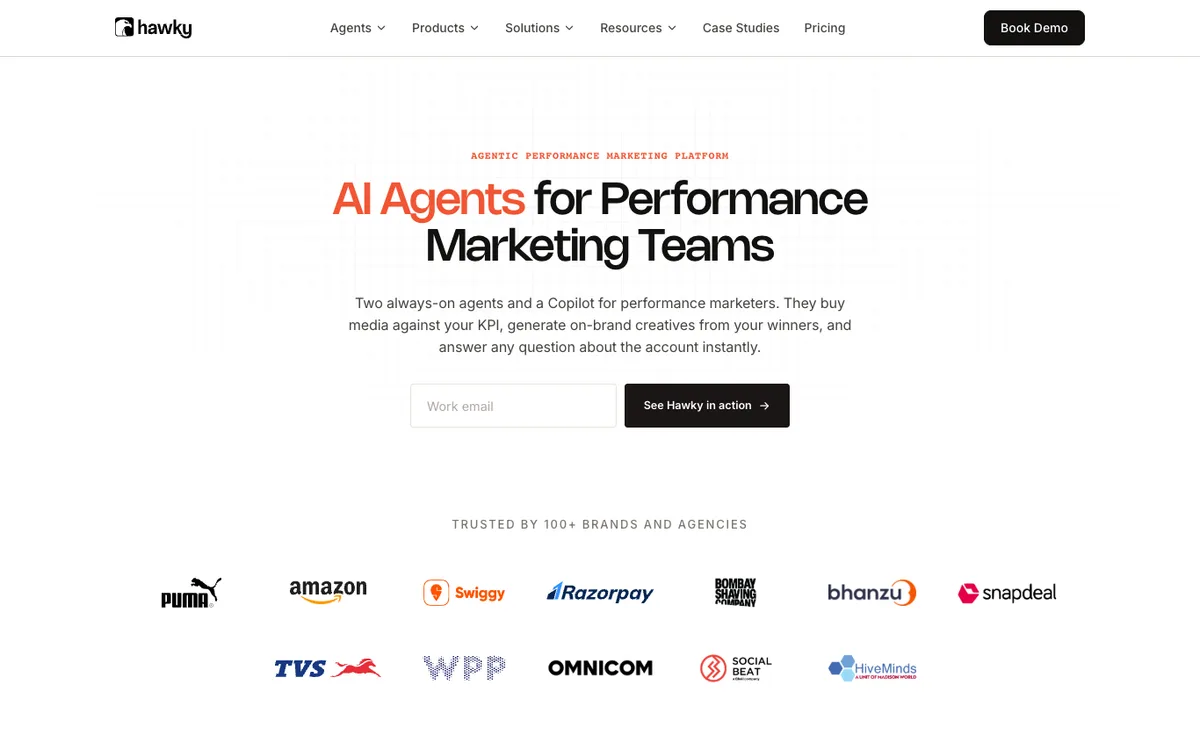
Hawky is an agentic performance marketing platform built for teams running $50k to $5M or more per month across Meta, Google, and YouTube. It ships two always-on agents and a Copilot, all powered by FeatherDB, a living-context memory layer that records every winner, competitor pattern, and decision the account has ever seen. Where most tools generate a recommendation and wait for a human, Hawky's agents do the job and log every move.
The Performance Agent plans, launches, and optimizes campaigns against your KPI 24/7, running a closed loop of test, track, optimize, and scale. The Creative Agent reads past winners and portfolio gaps from FeatherDB, renders finished on-brand creatives, and routes them through seat-level approval. Autonomy is configurable: you pick the gate (every batch, every campaign, every brand, or none) and loosen it as trust builds, with the same audit trail throughout.
Key capabilities:
- Autonomous media buying that optimizes Meta, Google, and YouTube against ROAS, CAC, or contribution margin, with spend caps and one-click reversibility on every action.
- Autonomous creative production that generates on-brand statics from your winning ads, each bound to a specific ad set and citing the evidence behind it.
- Copilot that answers any question about campaigns, creatives, or competitor moves with sourced citations in seconds.
- Guardrails and shadow mode so humans stay in command while the agents do the labor.
Best for: performance teams and agencies spending $50k or more per month who want autonomous execution with a full audit trail. Pricing is outcome-based: a subscription minimum plus KPI-tied upside, with a 30-day free pilot. Hiveminds cut CPL by 27% and saved 160+ hours per brand monthly running Hawky.
2. Madgicx: Best for Meta and Instagram bidding automation
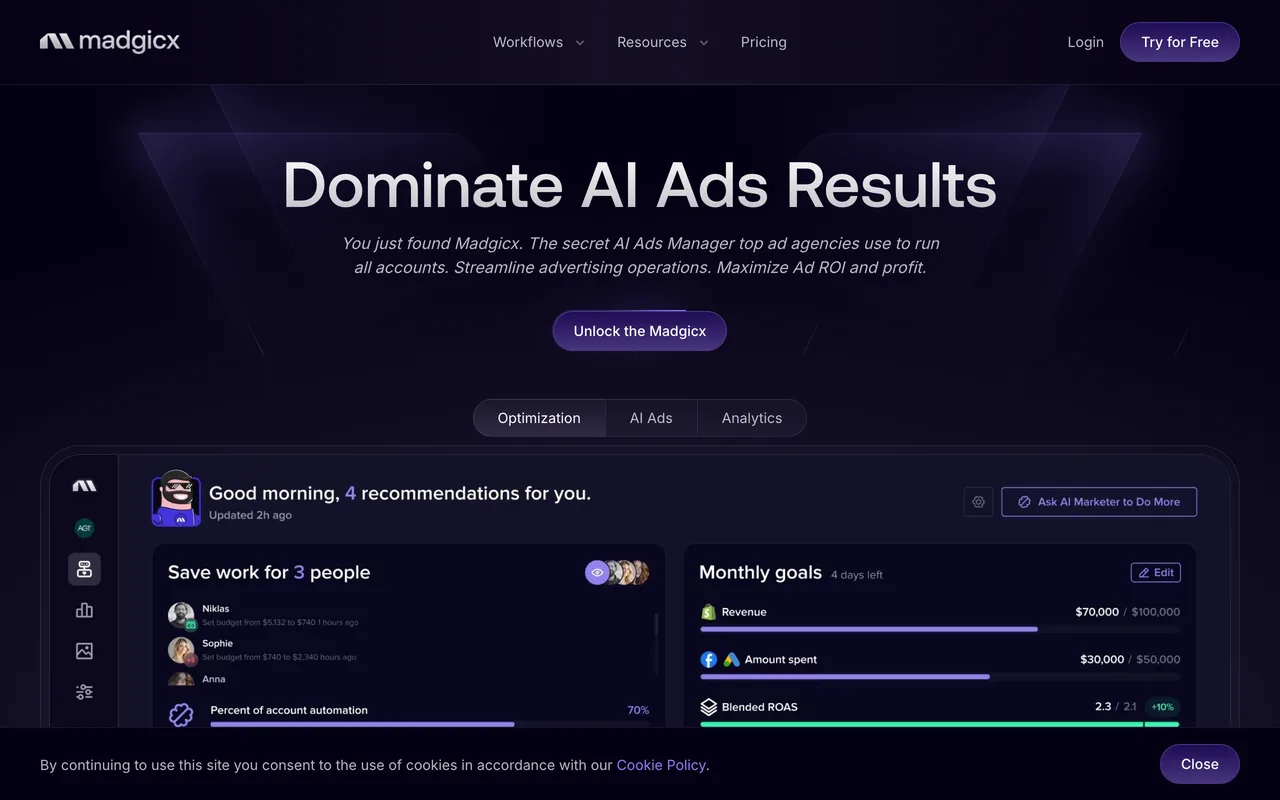
Madgicx uses autonomous agents to bid and manage budgets for Facebook and Instagram ads, marketed as a media buyer that never sleeps and constantly optimizes for ROAS. It is a strong fit for D2C advertisers concentrated on Meta who want automated bid and budget management without building it in-house.
Strength: deep, opinionated automation on the Meta stack with a mature ad audit and tactic library. Limitation: it is Meta-first, so teams running heavy Google or YouTube spend will still need coverage elsewhere. Best for: D2C brands whose paid budget lives mostly inside Meta.
3. Smartly.io: Best for enterprise creative and media at scale
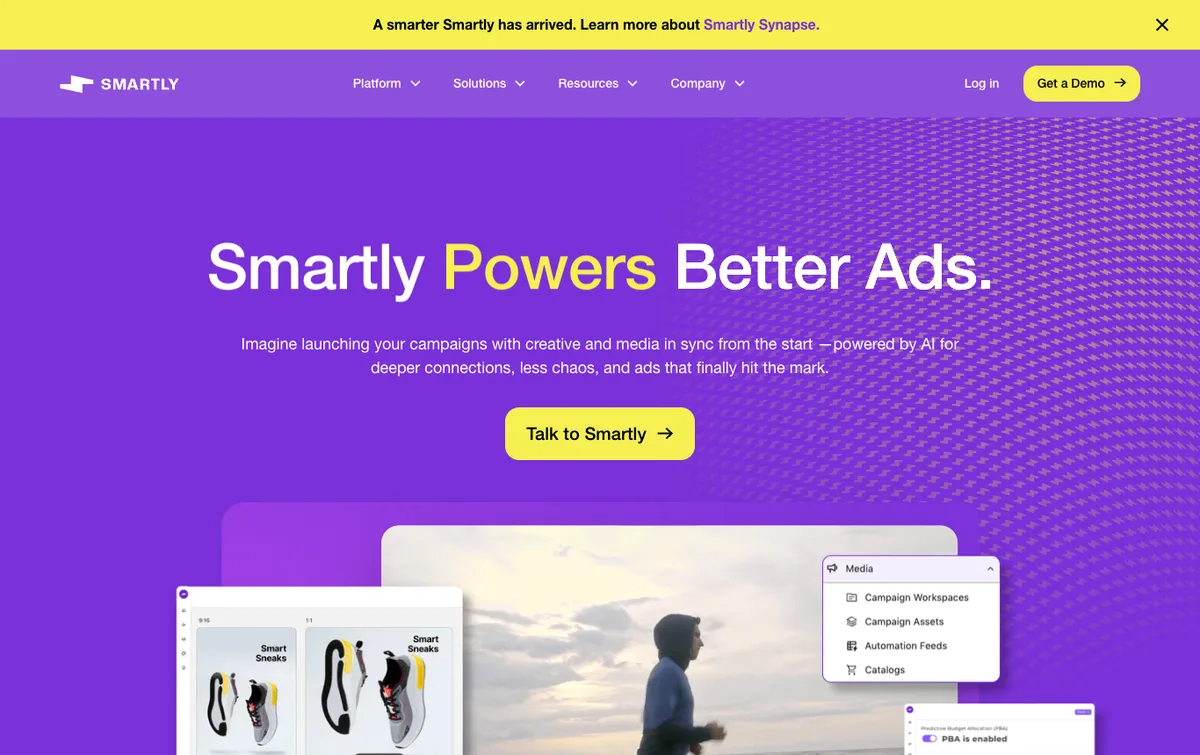
Smartly.io combines creative production and media buying for large advertisers running across Meta, Google, TikTok, and Pinterest. It suits enterprise teams and big agencies that need governed workflows and volume.
Strength: breadth across channels and a track record with large brands. Limitation: built for enterprise scale and budgets, which can be heavy for a lean team. Best for: enterprise advertisers managing many markets and channels at once.
4. Pixis: Best for codeless AI optimization
Pixis offers a suite of codeless AI models for targeting, bidding, and creative optimization across channels. Teams use it to layer predictive optimization on top of existing campaigns without engineering work.
Strength: cross-channel models that plug into existing accounts. Limitation: it sits as an optimization layer rather than an end-to-end operator. Best for: mid-market and enterprise teams that want AI optimization without writing code.
5. Google Performance Max: Best native Google automation
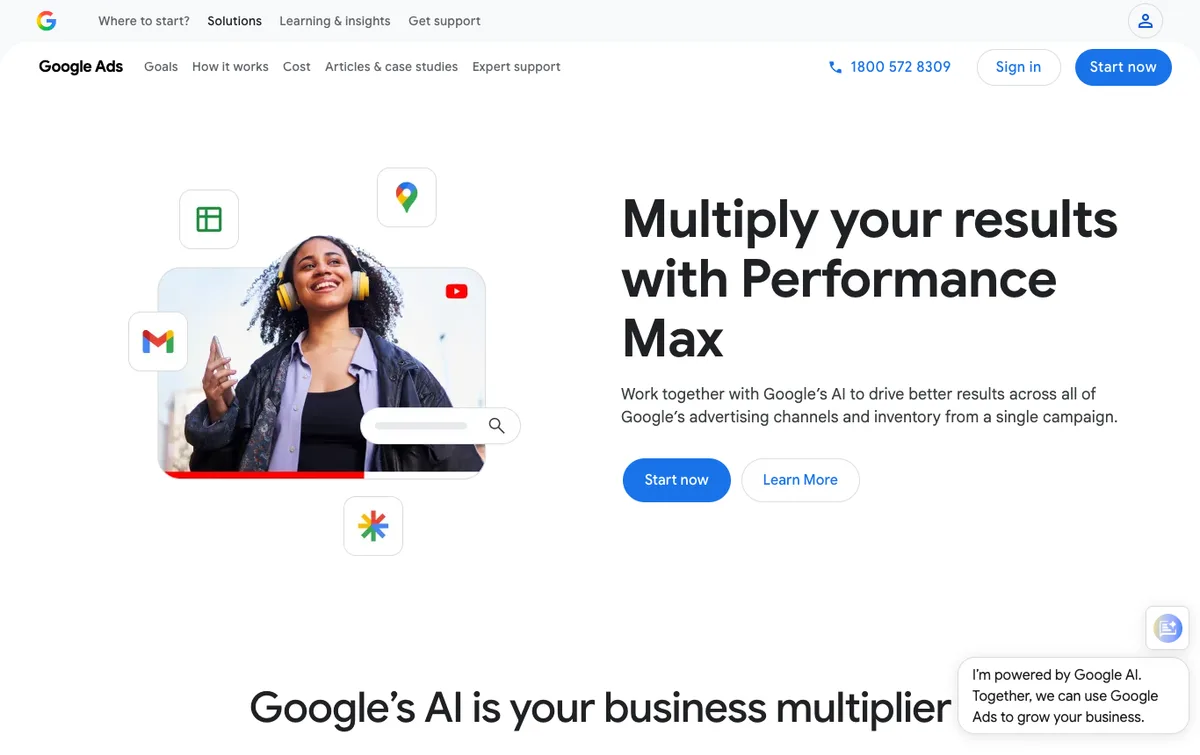
Performance Max has matured in 2026 into Google's automated campaign type, generating assets and placing them across YouTube, Search, Display, Gmail, and Maps from a single campaign. It is free to run beyond ad spend and delivers reliable baseline automation.
Strength: native access to Google inventory and signals no third party can match. Limitation: it is a black box, with limited visibility into where spend goes and why. Best for: every Google advertiser as a baseline, ideally paired with a tool that adds transparency.
6. Meta Advantage+: Best native Meta automation
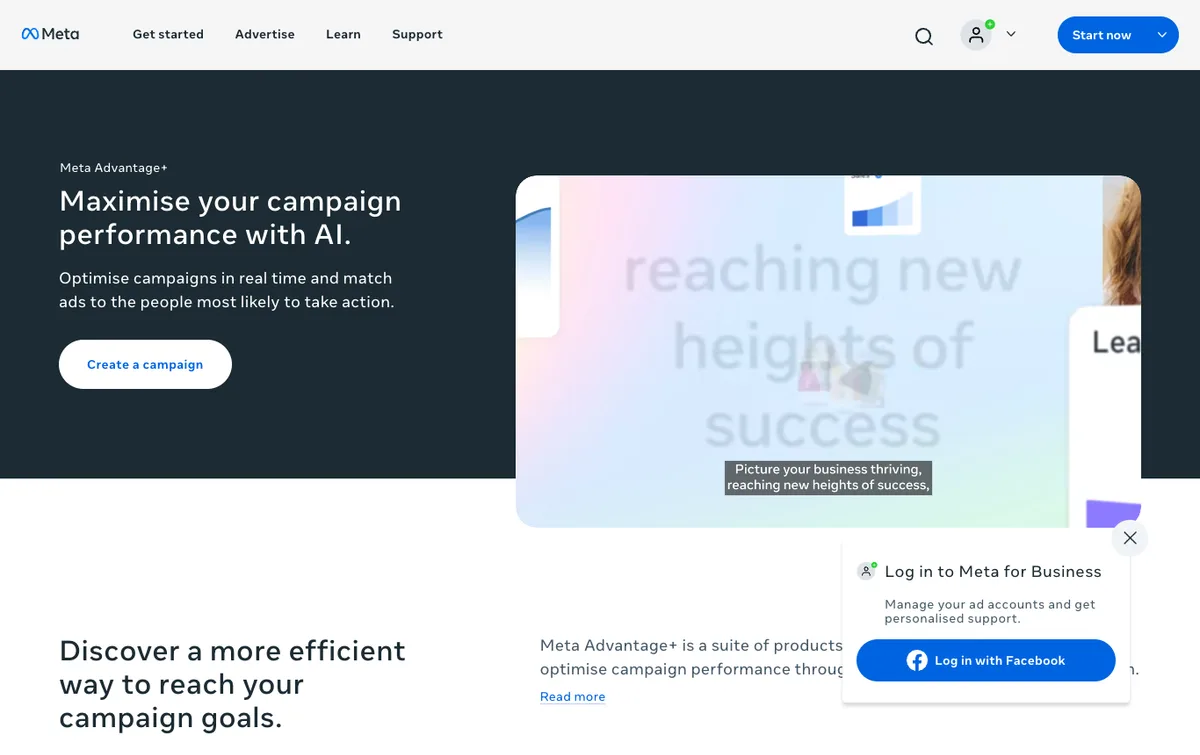
Advantage+ is Meta's automated campaign and audience system, handling targeting, placement, and budget allocation inside Meta's own machine learning. Like Performance Max, it costs nothing beyond ad spend and is the default starting point on Meta.
Strength: direct access to Meta's signal and the lowest incremental cost of any option. Limitation: little control or reporting granularity, so optimization decisions stay hidden. Best for: Meta advertisers who want a strong automated baseline before adding a layer of control on top.
Creative and ad production
Creative is the biggest lever on paid performance and the slowest to produce by hand. These tools compress the gap between insight and finished asset.
7. AdCreative.ai: Best for high-volume static ad variations
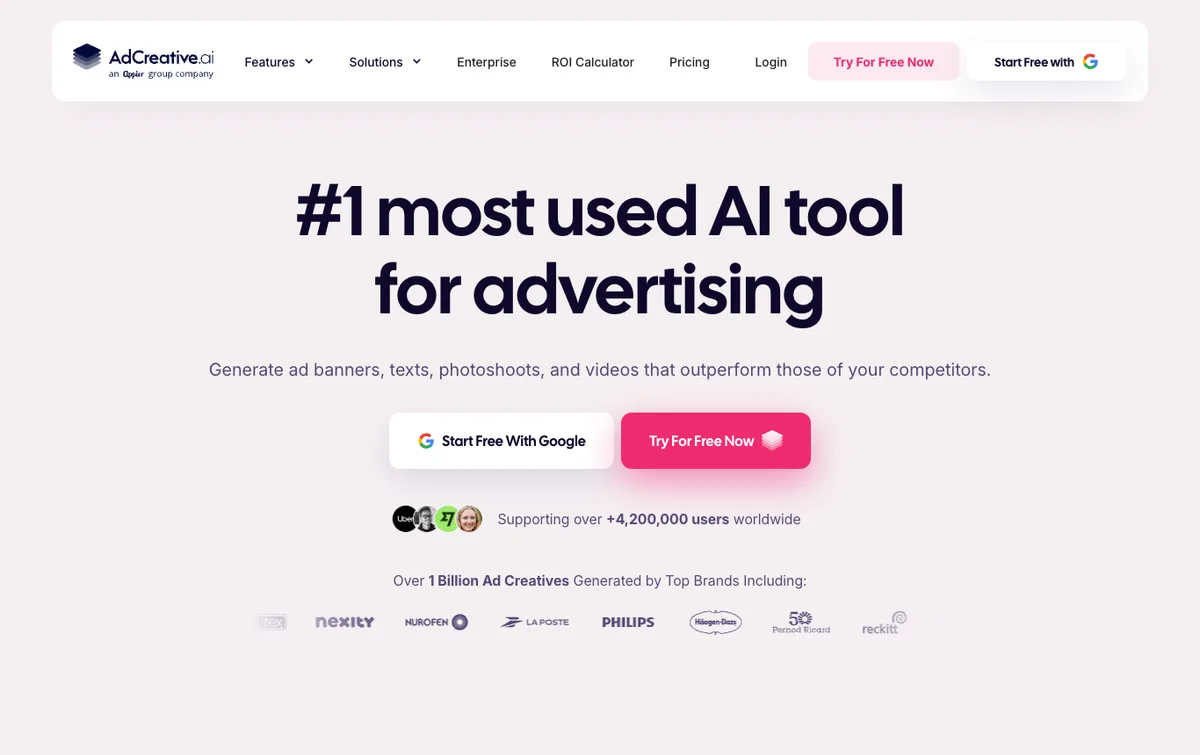
AdCreative.ai generates conversion-focused ad creatives and copy at volume from a brand profile. It is popular with small teams that need many variations fast.
Strength: speed and quantity of on-format ad variants. Limitation: outputs can feel templated and still need human curation for brand nuance. Best for: small teams testing many static concepts quickly.
8. Creatify: Best for AI video ads from product URLs
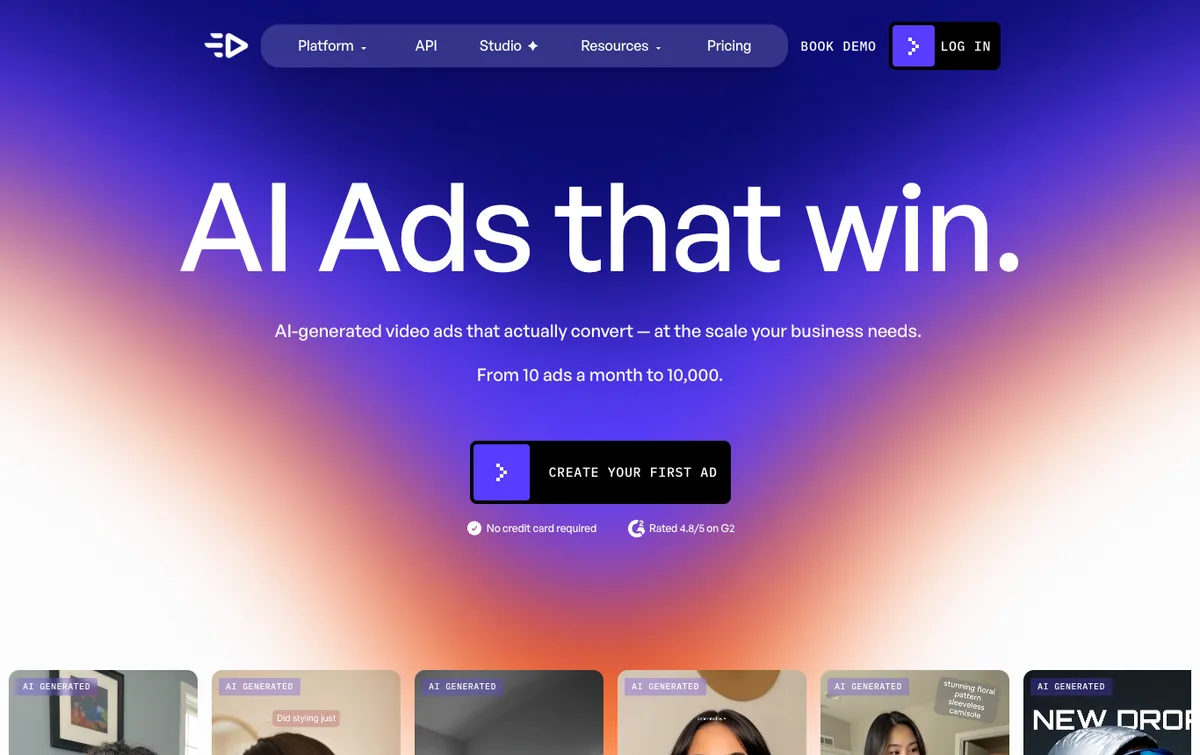
Creatify turns a product URL or assets into short video ads with AI avatars and voiceover. It serves D2C teams that need UGC-style video without a production setup.
Strength: fast product-to-video for social ad formats. Limitation: avatar and template video still reads as synthetic for premium brands. Best for: D2C advertisers producing high volumes of social video ads.
9. Foreplay: Best for ad inspiration and creative briefs
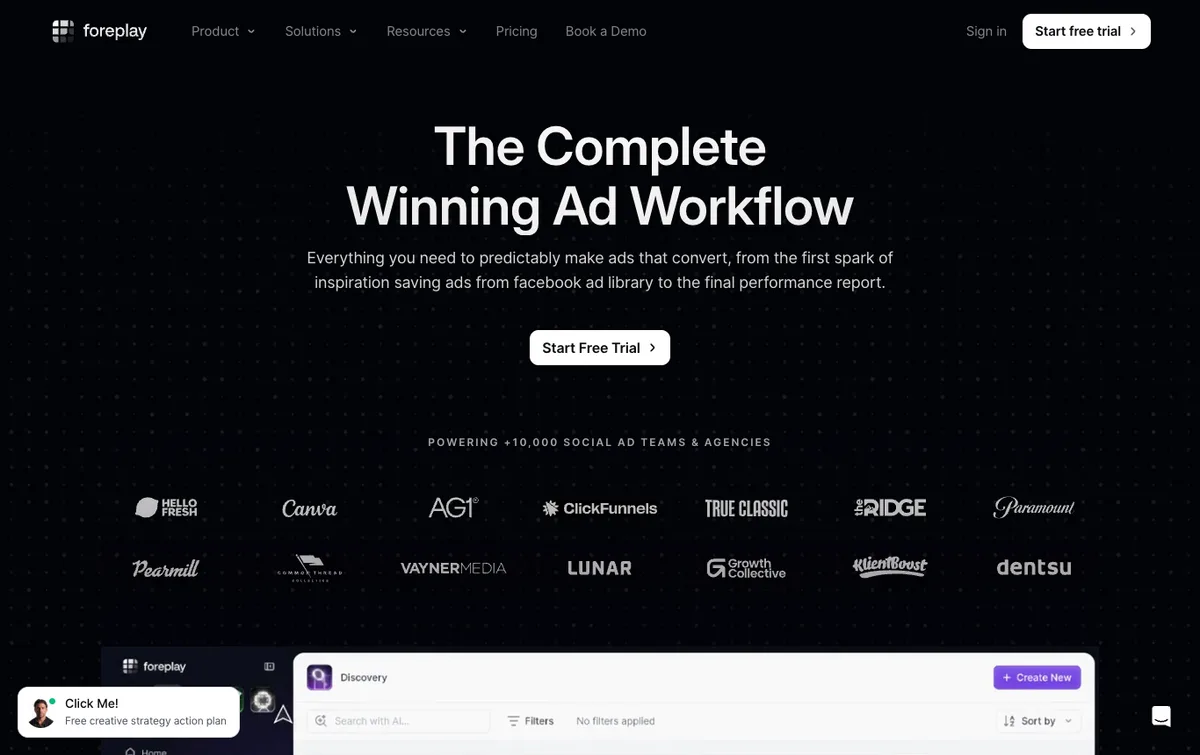
Foreplay lets teams save, organize, and analyze competitor and winning ads, then turn them into briefs. Creative strategists use it as a swipe file and briefing hub.
Strength: the strongest ad-saving and brief workflow for creative teams. Limitation: it organizes and briefs but does not produce or buy media. Best for: creative strategists who brief designers from competitive inspiration.
Content writing and copywriting
Writing assistants are the highest-ROI, lowest-cost AI most teams adopt first. The split is between general reasoning models and marketing-specific platforms.
10. ChatGPT: Best general-purpose AI assistant
ChatGPT remains the default workhorse for drafting, ideation, and research across marketing tasks. The paid tier runs about $20 per month and earns it back quickly.
Strength: versatility across nearly any content or analysis task. Limitation: it needs strong prompts and brand context to stay on voice. Best for: any marketer who wants one flexible assistant for daily work.
11. Claude: Best for long-form and nuanced content
Claude excels at long-form, nuanced writing: research synthesis, in-depth guides, technical content, and brand-voice consistency at scale. Content teams reach for it when quality and tone matter more than raw speed.
Strength: long-context reasoning and careful, on-brand prose. Limitation: like any general model, it needs your brand inputs to avoid generic output. Best for: teams producing long-form content where nuance counts.
12. Jasper: Best for brand-governed content at scale
Jasper is an enterprise content platform with brand-voice training, templates, and campaign workflows. Creator plans start around $49 per month, with team tiers above that.
Strength: brand-voice controls and team workflows for high-volume output. Limitation: cost climbs fast versus a raw model subscription. Best for: content teams that need consistent brand voice across many writers.
13. Copy.ai: Best for go-to-market workflows
Copy.ai has shifted from a copy generator toward a go-to-market workflow platform that automates sequences across sales and marketing. Teams use it to chain content tasks into repeatable plays.
Strength: workflow automation around content, not just one-off copy. Limitation: the breadth can overwhelm a team that only wants quick drafts. Best for: GTM teams building repeatable content and outreach workflows.
SEO and answer engine optimization
Search is splitting in two. Classic SEO still drives traffic, while answer engine optimization decides whether your brand shows up in AI Overviews and chatbots.
14. Ahrefs: Best all-in-one SEO platform
Ahrefs remains a core SEO intelligence platform, with 2026 updates adding AI content-gap analysis, AI-written briefs, and competitor content intelligence. Teams treat it as the backbone of keyword and backlink research.
Strength: the deepest backlink and keyword data set with strong AI layers added. Limitation: the full suite carries an enterprise price for small teams. Best for: any team that wants one authoritative SEO platform.
15. Semrush: Best for combined research and content
Semrush pairs keyword and competitive research with content tools, and its ContentShake AI links research to generation. Marketers use it to move from keyword to draft in one place.
Strength: breadth across SEO, ads, and content in a single subscription. Limitation: the sprawl of features has a learning curve. Best for: teams that want research and content production together.
16. Surfer SEO: Best for on-page optimization
Surfer SEO scores and guides on-page content, and in 2026 it analyzes information gain to flag whether content adds unique value AI engines reward. Writers use it to optimize drafts against the SERP.
Strength: clear, actionable on-page guidance tied to ranking factors. Limitation: it optimizes content but does not research or build links. Best for: content teams optimizing drafts before they publish.
17. Profound: Best for answer engine optimization
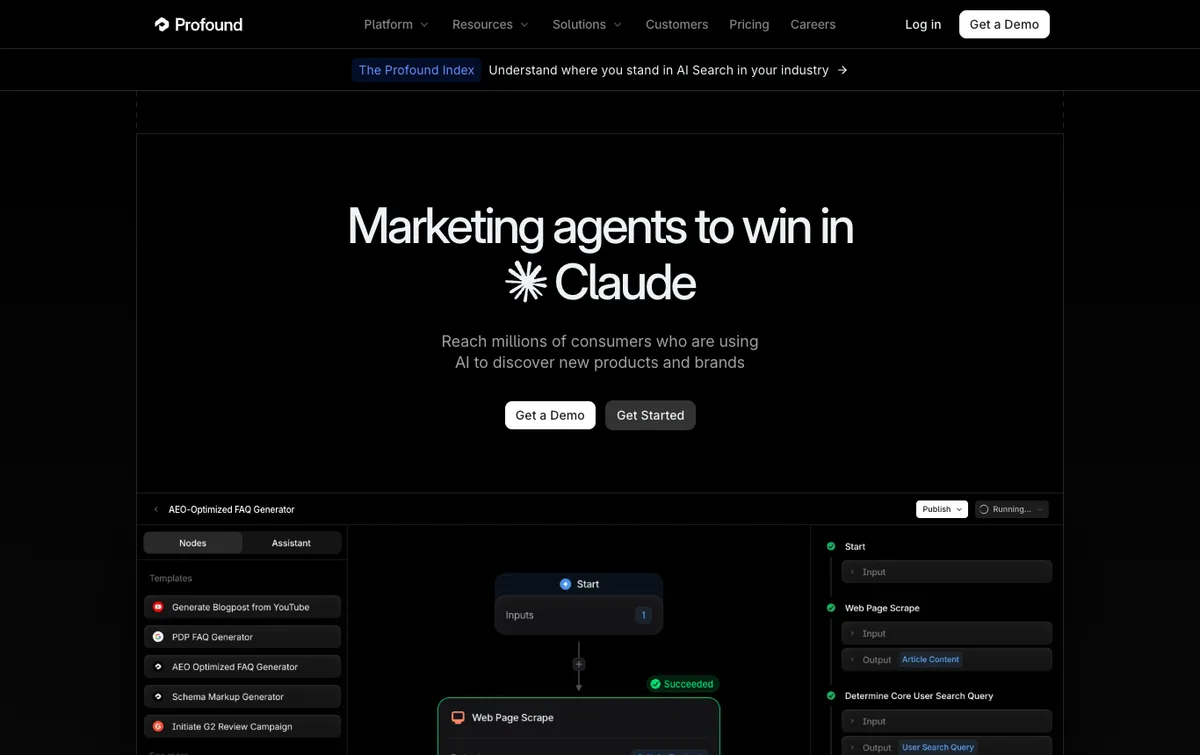
Profound monitors how often and how your brand appears in AI-generated answers across ChatGPT, Perplexity, and Google AI Overviews. It is part of a new AEO category built for the shift to answer engines.
Strength: visibility into citations and mentions inside AI answers, a blind spot for classic SEO tools. Limitation: a young category, so benchmarks are still forming. Best for: brands that need to track and improve AI-answer visibility.
18. Clearscope: Best for content relevance scoring
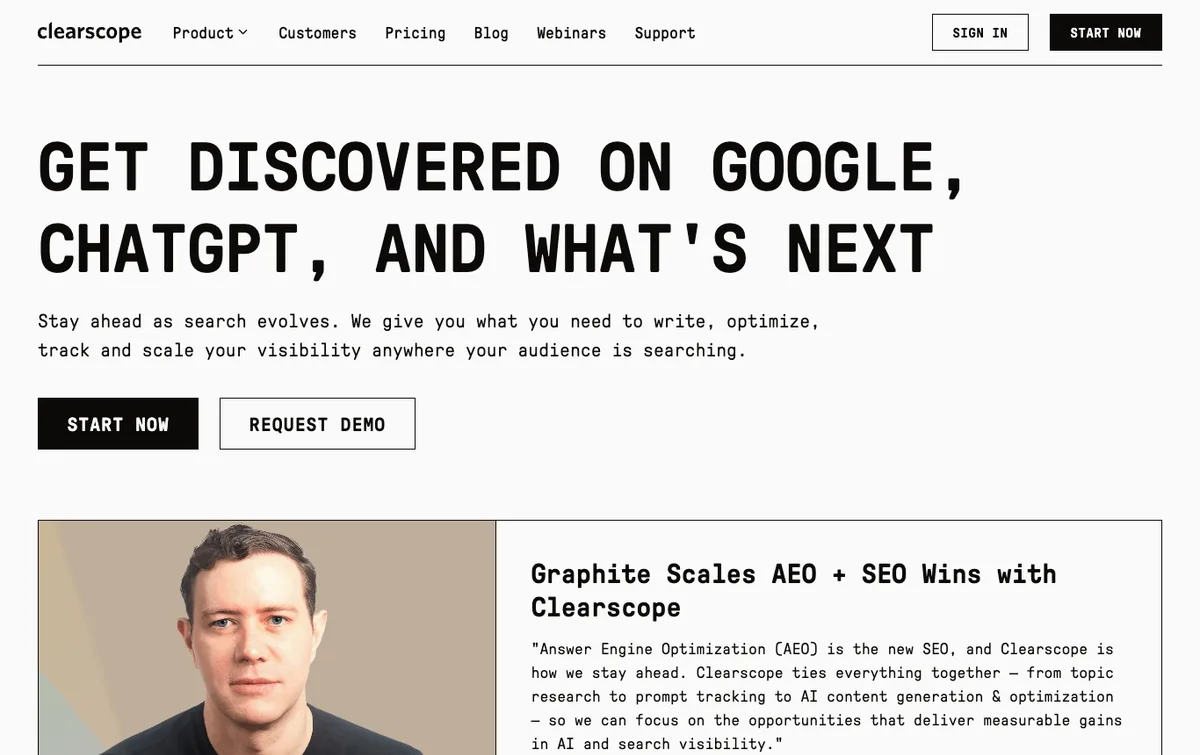
Clearscope grades content against target keywords for topical coverage and relevance. Editorial teams use it to keep writers comprehensive without keyword stuffing.
Strength: clean, reliable relevance scoring that is easy for writers to follow. Limitation: narrow scope focused on content grading alone. Best for: editorial teams standardizing content quality across writers.
Social media management
Social tools have folded AI into scheduling, listening, and repurposing. The job is doing more with the same headcount.
19. Sprout Social: Best for end-to-end social management
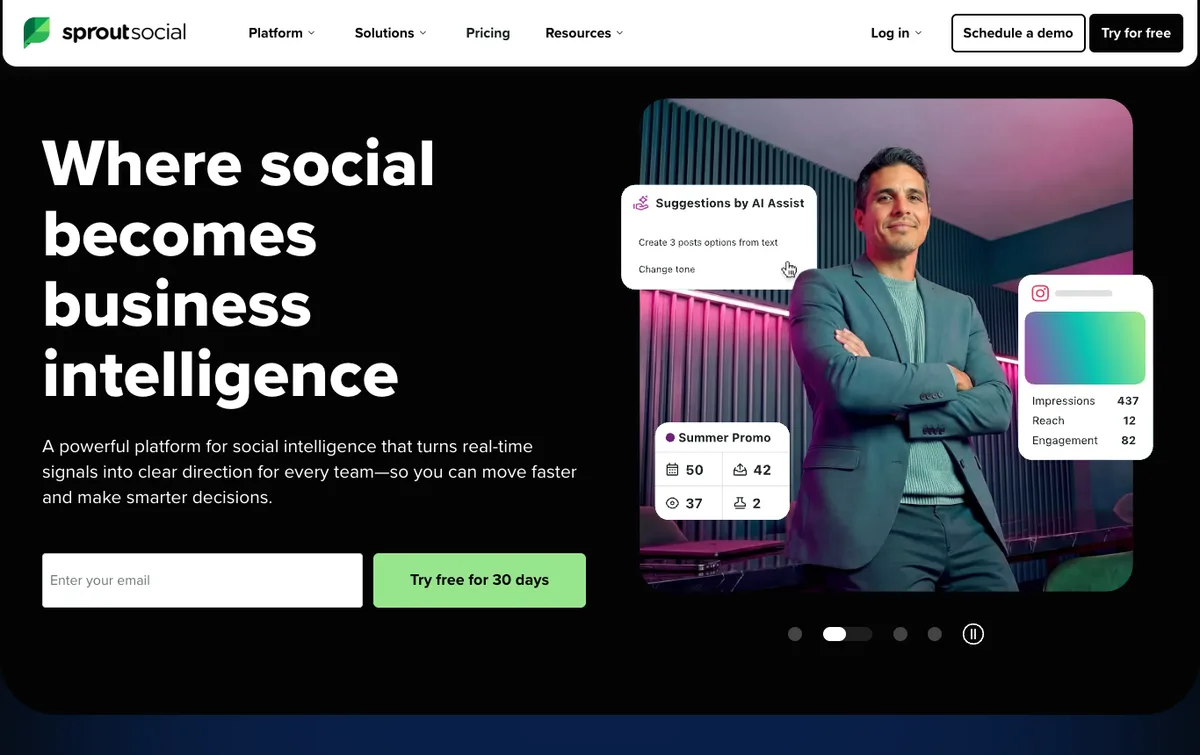
Sprout Social offers AI-powered sentiment analysis, optimal send-time prediction, and automated response suggestions across networks. Larger teams use it as a single social hub.
Strength: a polished, complete suite with strong analytics. Limitation: premium pricing aimed at established teams. Best for: mid-market and enterprise social teams.
20. Buffer: Best for lean teams and scheduling
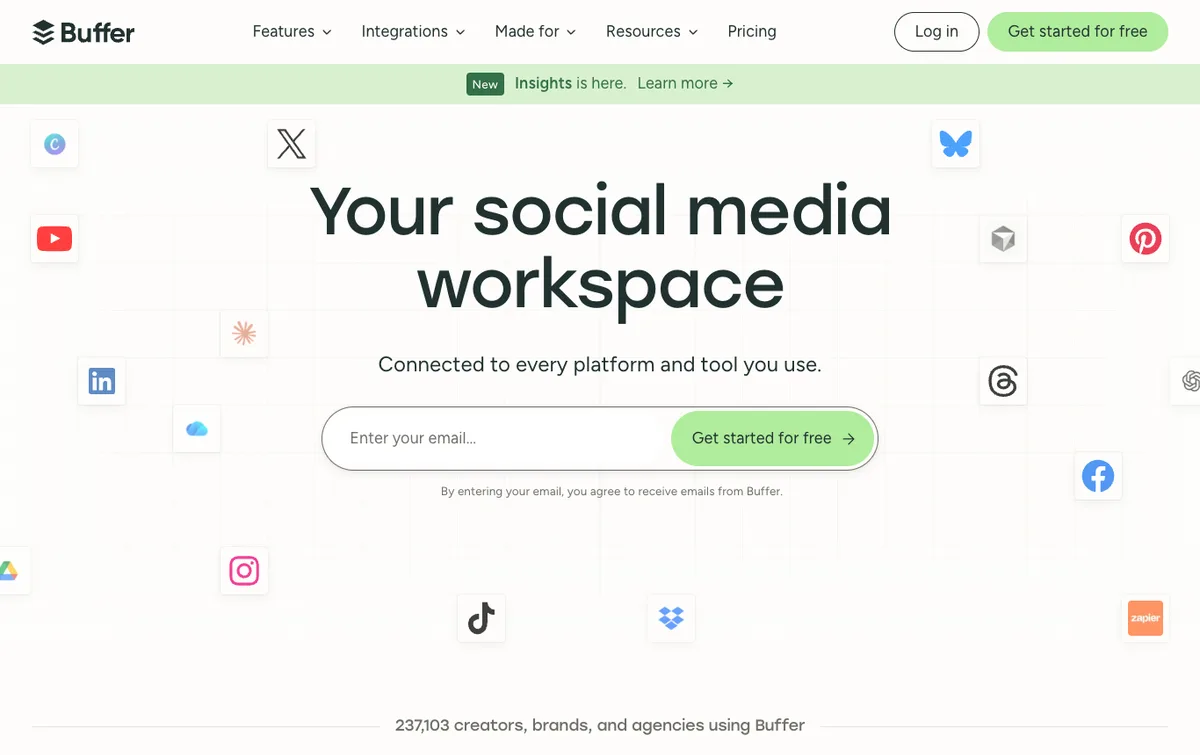
Buffer keeps publishing simple and has added an AI assistant for repurposing posts across channels. Small teams favor it for low cost and ease of use.
Strength: simplicity and an affordable entry point. Limitation: lighter analytics and listening than enterprise suites. Best for: small teams and creators who want straightforward scheduling.
21. Lately.ai: Best for repurposing long-form into social
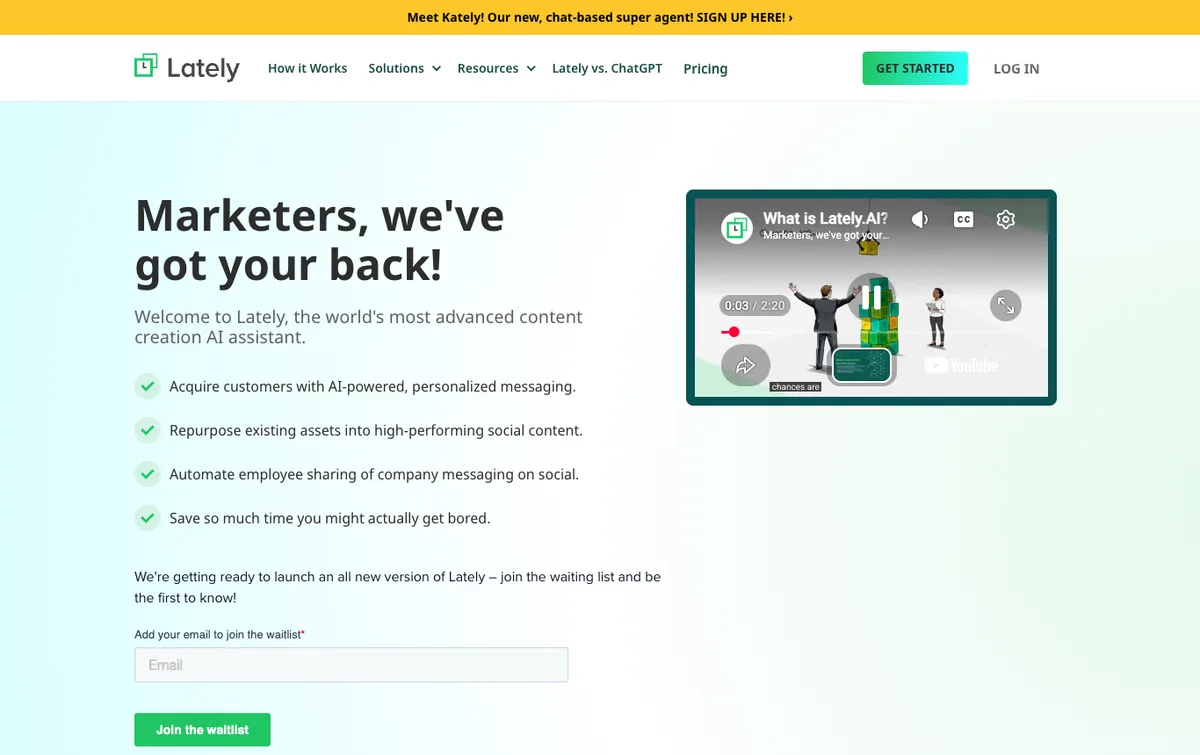
Lately.ai turns long-form content into dozens of social posts using AI that learns your brand voice and top-performing patterns. Teams use it to multiply one asset into a month of posts.
Strength: high-volume repurposing tuned to past performance. Limitation: focused on repurposing rather than full social management. Best for: teams turning podcasts, webinars, and blogs into social at scale.
Email and lifecycle marketing
Email still returns more per dollar than almost any channel, and AI now drives segmentation, send timing, and subject lines inside the platforms teams already use.
22. Klaviyo: Best for ecommerce lifecycle
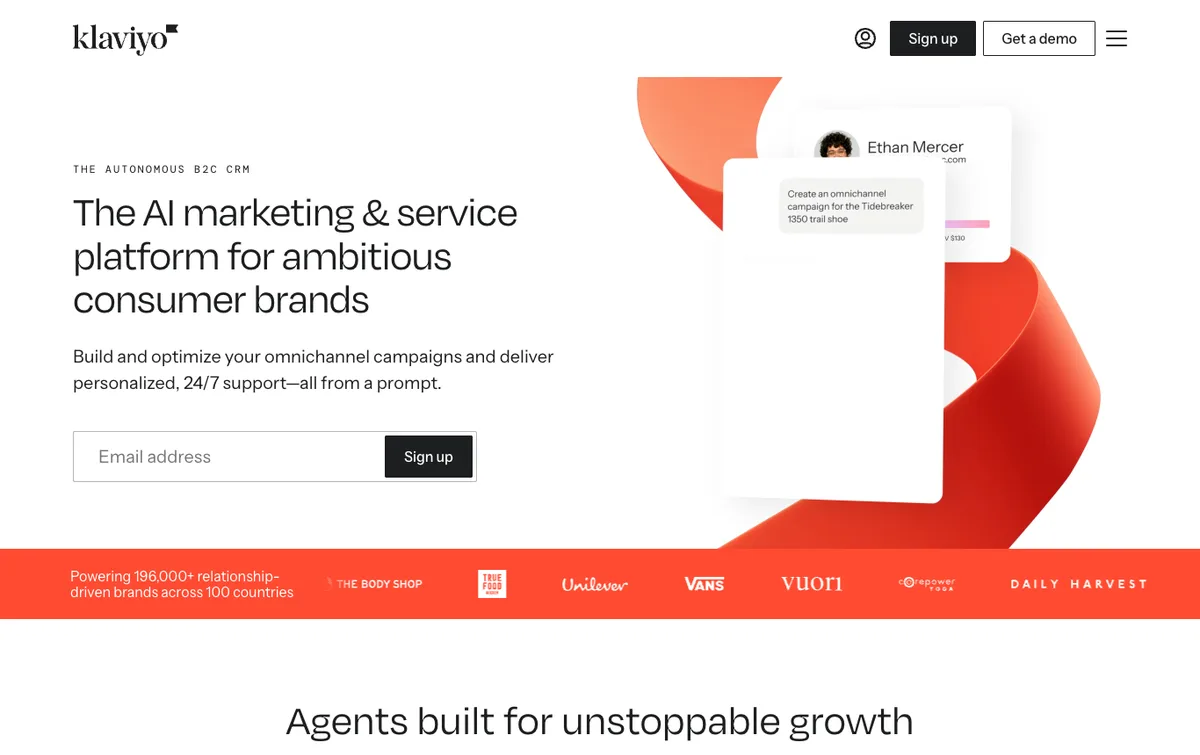
Klaviyo brings AI to ecommerce email and SMS with predictive analytics, smart send-time optimization, and automated flows tied to purchase behavior. D2C brands run lifecycle programs on it.
Strength: deep ecommerce data and predictive segmentation. Limitation: built for ecommerce, less suited to B2B. Best for: D2C brands running revenue-driven email and SMS.
23. Mailchimp: Best for small business all-in-one
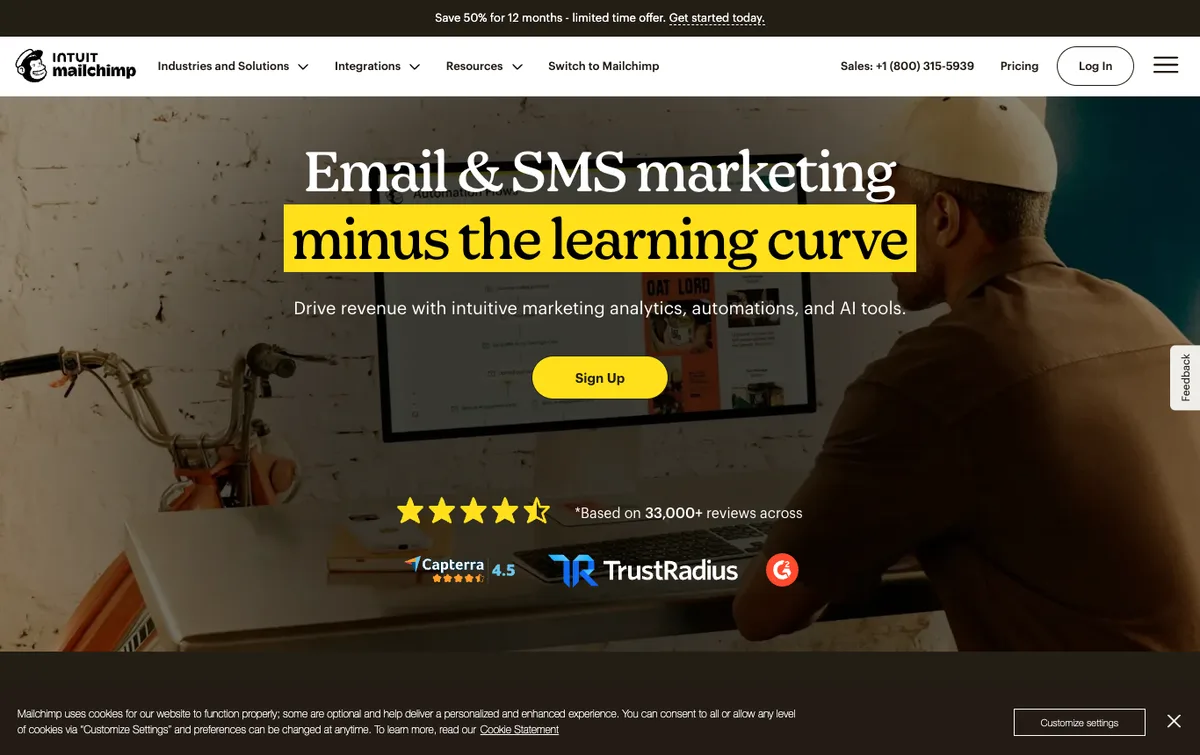
Mailchimp layers AI content and send-time features onto an accessible all-in-one platform. Small businesses use it to run email without specialist help.
Strength: ease of use and a broad feature set for small teams. Limitation: less depth than specialist ecommerce tools at scale. Best for: small businesses that want email plus light automation.
24. HubSpot: Best for integrated CRM and marketing
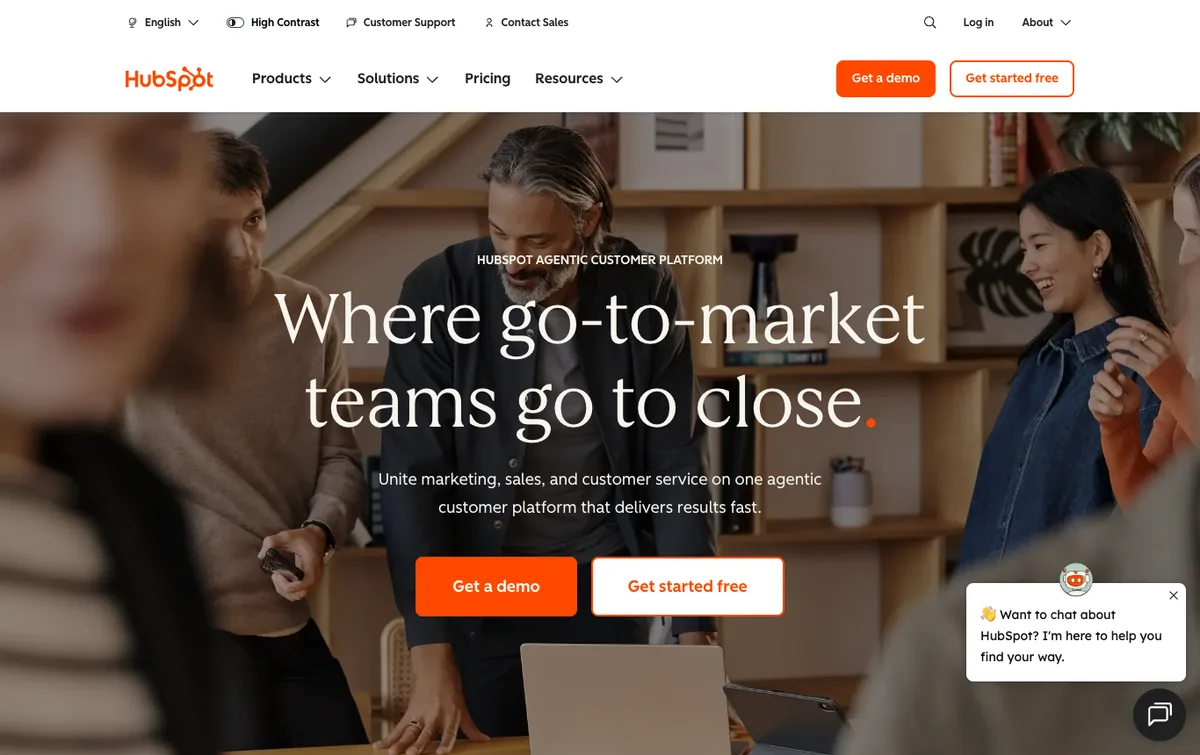
HubSpot embeds AI across its CRM, email, and content tools, connecting lifecycle marketing to a shared customer record. Teams that want marketing and sales on one platform pick it.
Strength: tight CRM integration so AI acts on unified data. Limitation: cost scales quickly as you add hubs and contacts. Best for: teams that want marketing, sales, and service in one system.
Video creation
Video is the format buyers expect and the hardest to produce. AI video tools remove the studio from the equation.
25. Synthesia: Best for AI avatar and training video
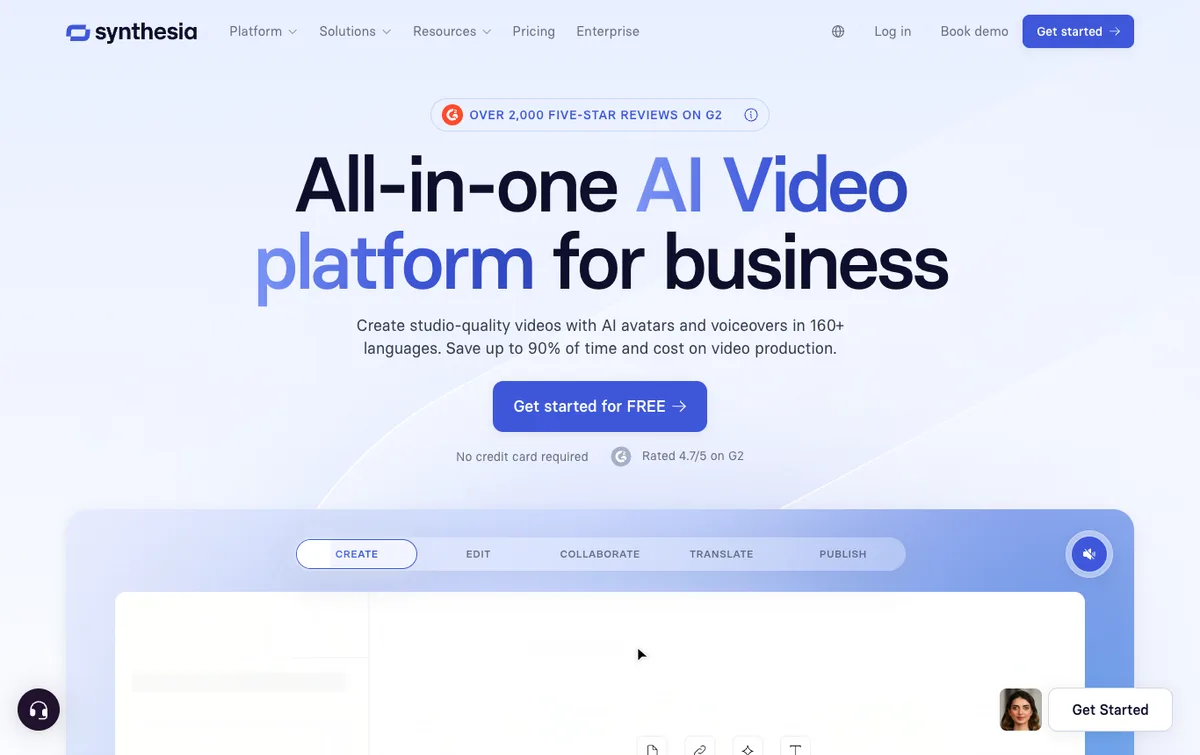
Synthesia generates video from text using AI avatars, removing the need for filming. Marketing teams use it for explainer, training, and localized video at scale.
Strength: fast, multilingual video without a production crew. Limitation: avatar video still reads as synthetic for high-end brand work. Best for: teams producing explainer and training video in volume.
26. HeyGen: Best for AI avatars and personalization
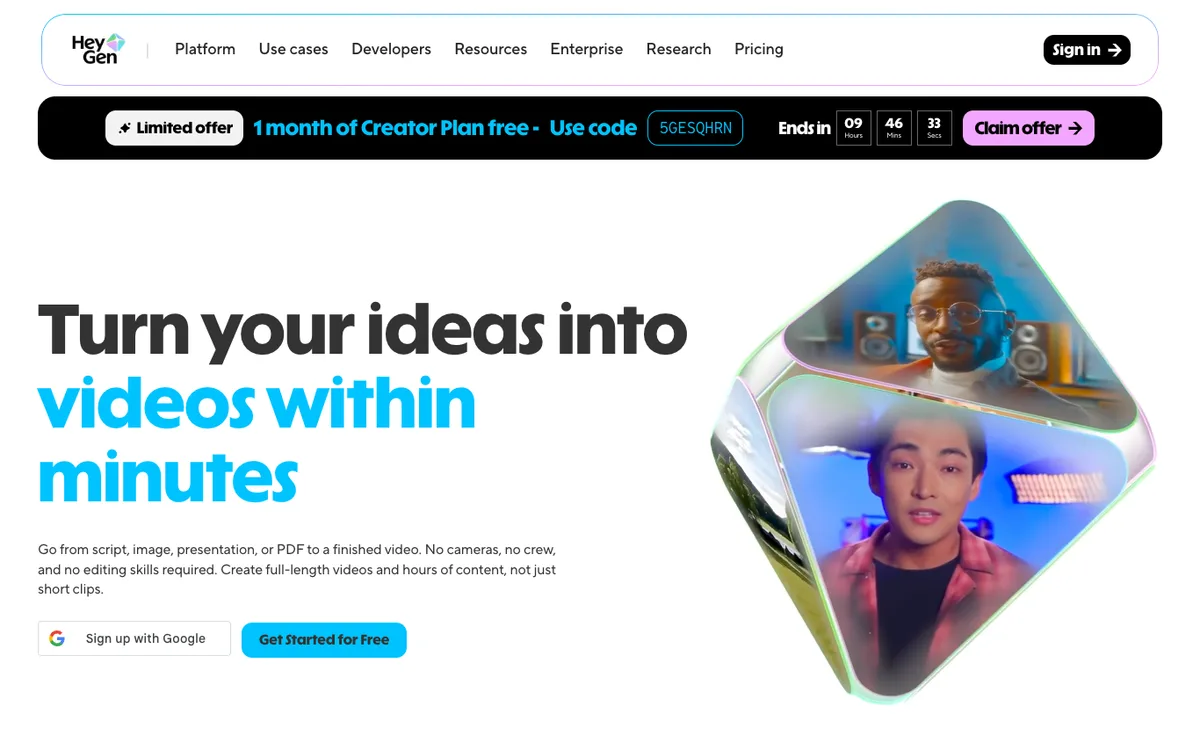
HeyGen has become a standard for AI avatars, with interactive avatar features that power real-time, personalized video. Teams use it for outreach and localized creative.
Strength: high-quality avatars and personalization at scale. Limitation: realism limits for premium brand storytelling. Best for: teams sending personalized or localized avatar video.
27. Descript: Best for text-based video editing
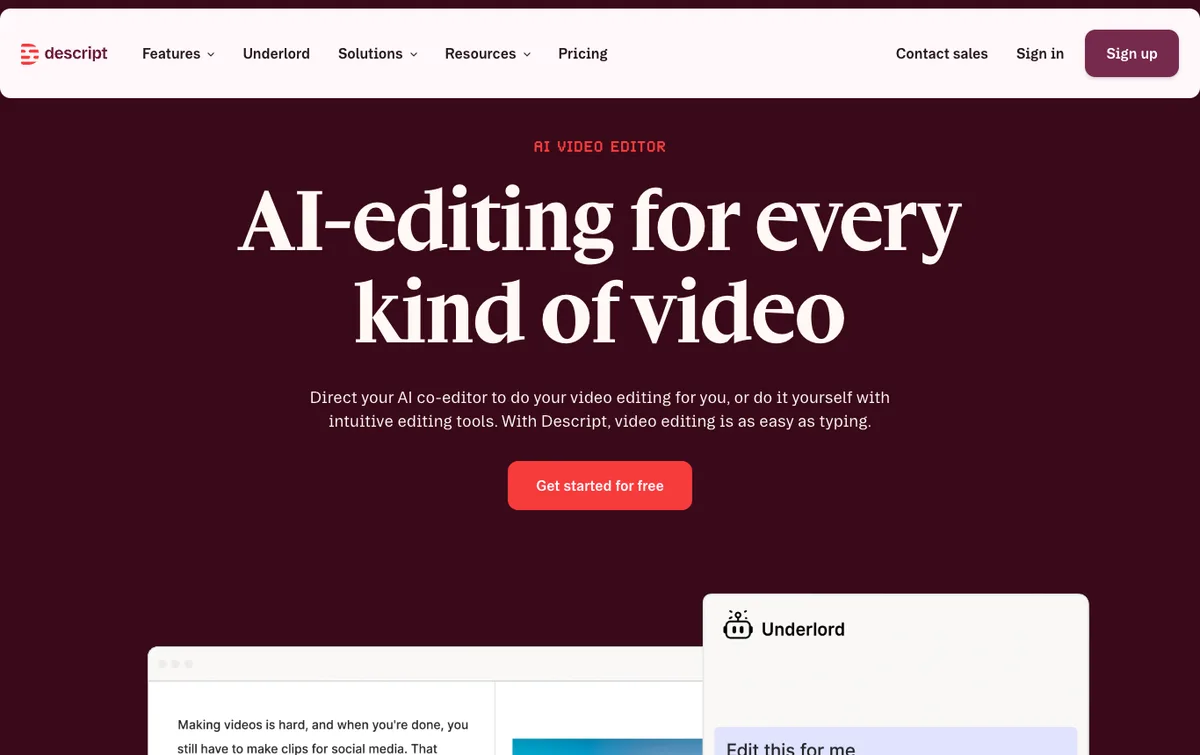
Descript lets you edit video by editing a transcript, clone voices to fix audio, and remove filler words automatically. Creators use it to cut production time dramatically.
Strength: the fastest editing workflow for talking-head and podcast content. Limitation: less suited to highly designed motion graphics. Best for: podcasters and creators editing spoken-word video.
28. Runway: Best for generative video and VFX
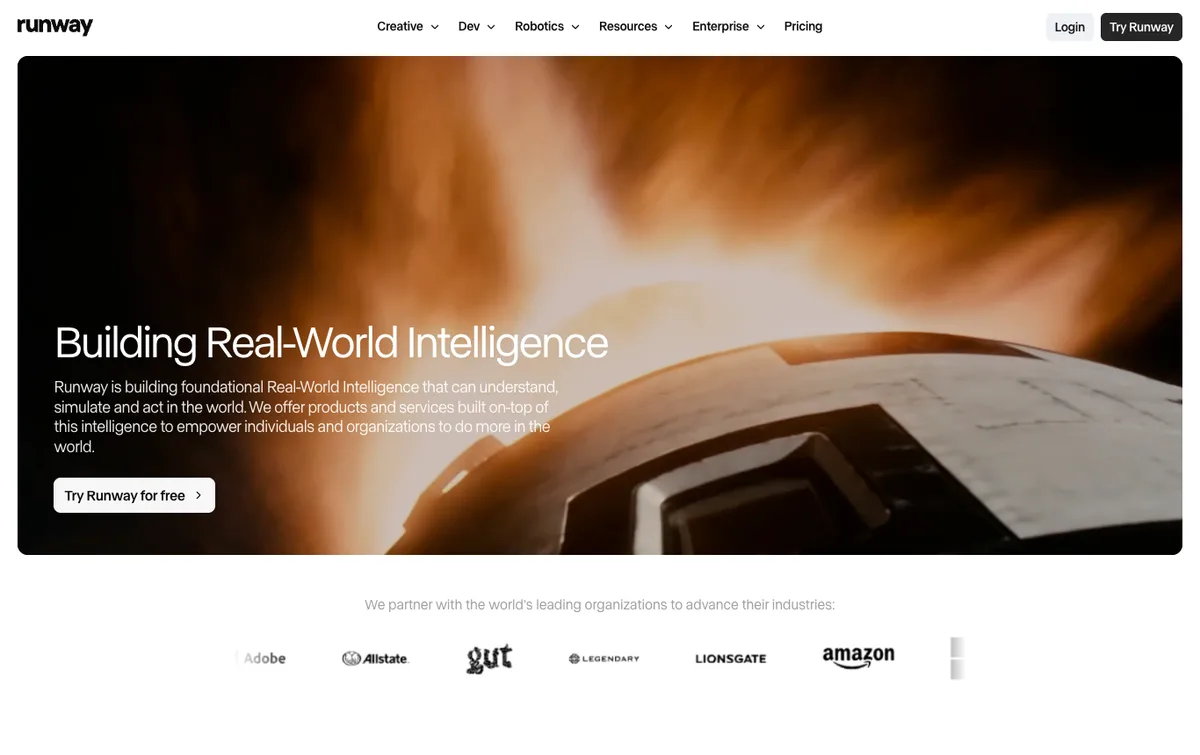
Runway generates and edits video with text and image prompts, plus advanced effects tools. Creative teams use it for generative b-roll and experimental content.
Strength: advanced generative video and effects ahead of most rivals. Limitation: outputs need creative direction and still vary in consistency. Best for: creative teams exploring generative video and VFX.
Analytics and attribution
Analytics AI moves teams from dashboards they have to read to assistants they can ask. The win is faster answers and earlier anomaly detection.
29. Triple Whale: Best for ecommerce analytics
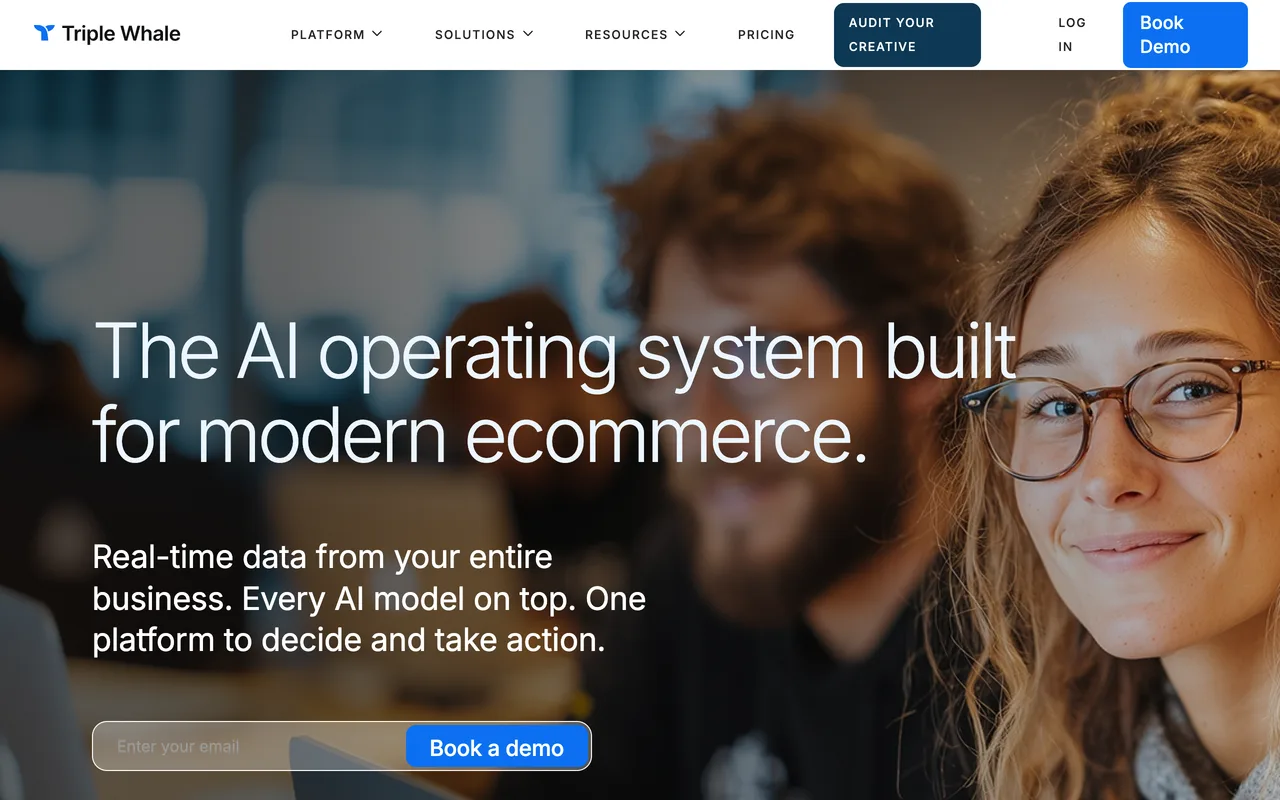
Triple Whale centralizes ecommerce metrics, and its AI assistant Moby answers natural-language questions about your data and surfaces anomalies automatically. D2C operators use it as a daily command center.
Strength: unified ecommerce data with a strong conversational layer. Limitation: built around ecommerce, less fit for other models. Best for: D2C brands that want one source of truth with an AI analyst.
30. Improvado: Best for enterprise marketing data
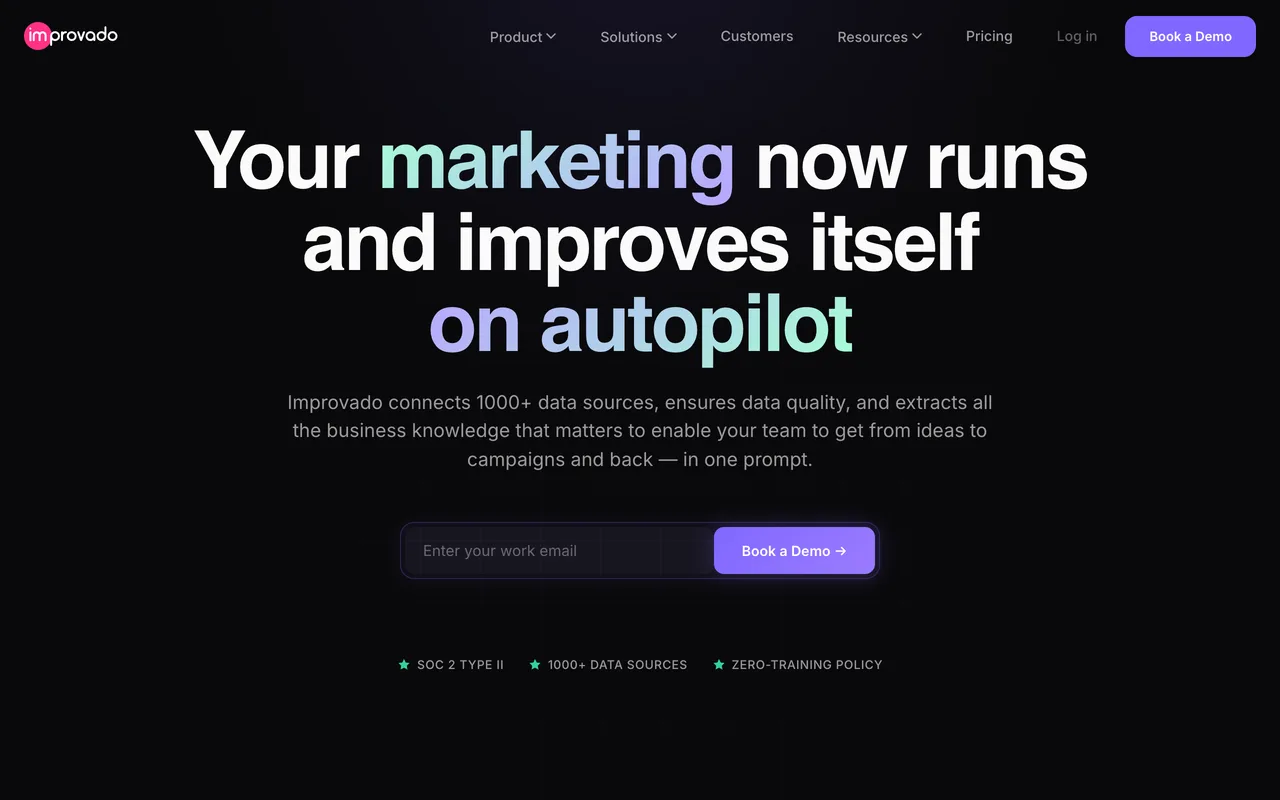
Improvado unifies marketing data across hundreds of sources and adds an AI agent for natural-language analysis. Large teams use it to centralize attribution before layering on AI.
Strength: broad data integration that cleans the foundation for AI. Limitation: enterprise scope and setup effort. Best for: enterprise teams unifying many data sources before AI analysis.
31. Mixpanel: Best for product and funnel analytics
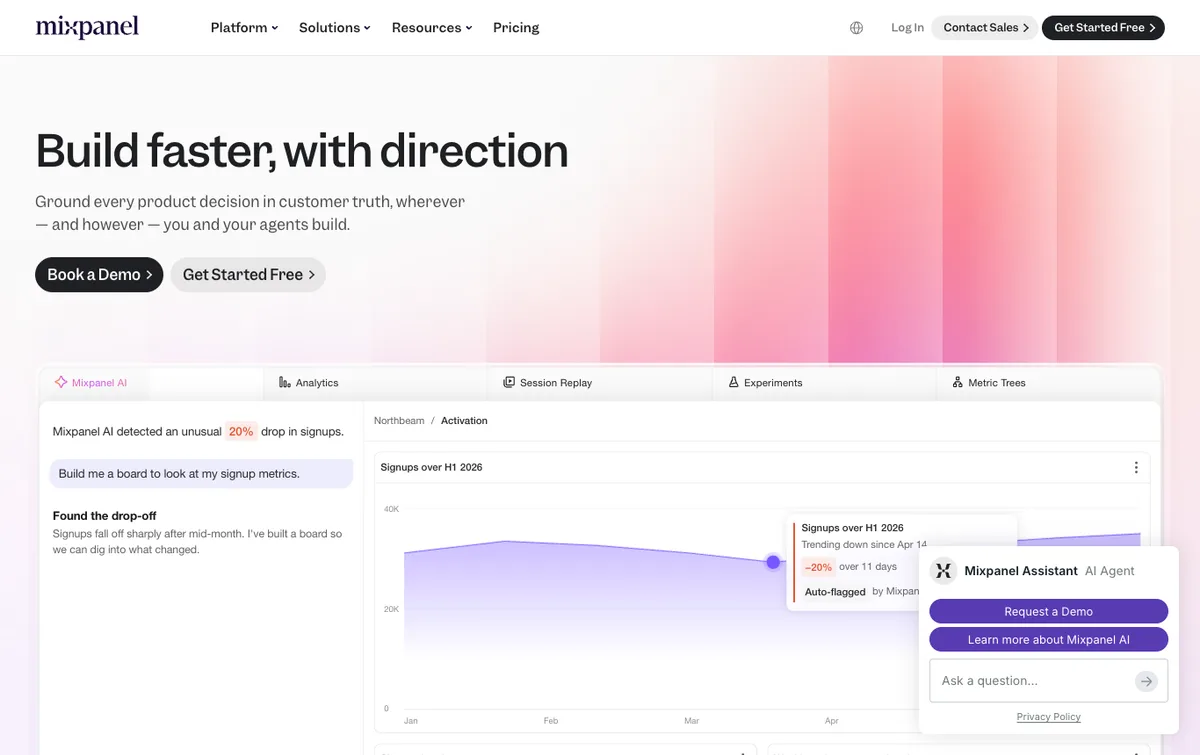
Mixpanel analyzes product and funnel behavior, with AI features that surface insights and anomalies from event data. Growth teams use it to connect marketing to in-product action.
Strength: deep behavioral and funnel analysis. Limitation: requires solid event tracking to deliver value. Best for: growth teams tying marketing to product engagement.
Market research and social listening
Research AI compresses weeks of fieldwork into days and watches the brand conversation around the clock.
32. Brand24: Best for affordable brand monitoring
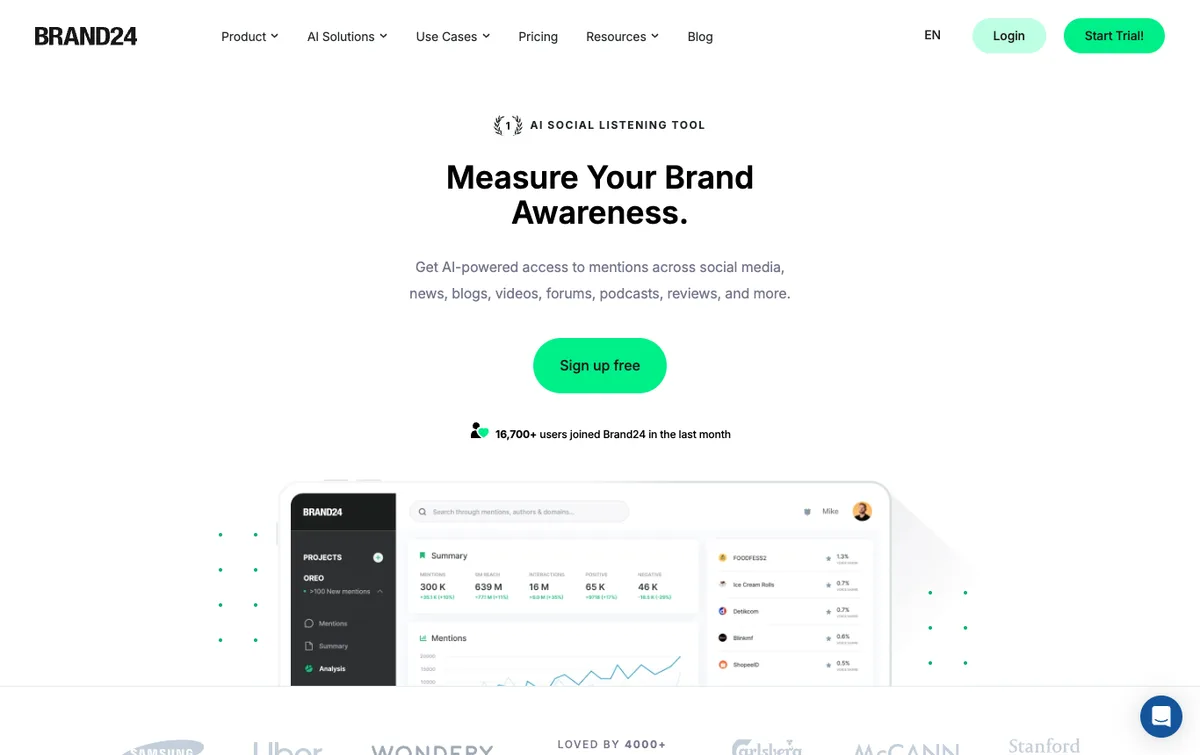
Brand24 monitors brand mentions across news, social, blogs, forums, and video, then applies sentiment analysis to categorize them. Smaller teams use it for accessible real-time monitoring.
Strength: broad mention coverage at an approachable price. Limitation: lighter analytics than enterprise listening suites. Best for: small and mid-market teams that need affordable monitoring.
33. Brandwatch: Best for enterprise social listening
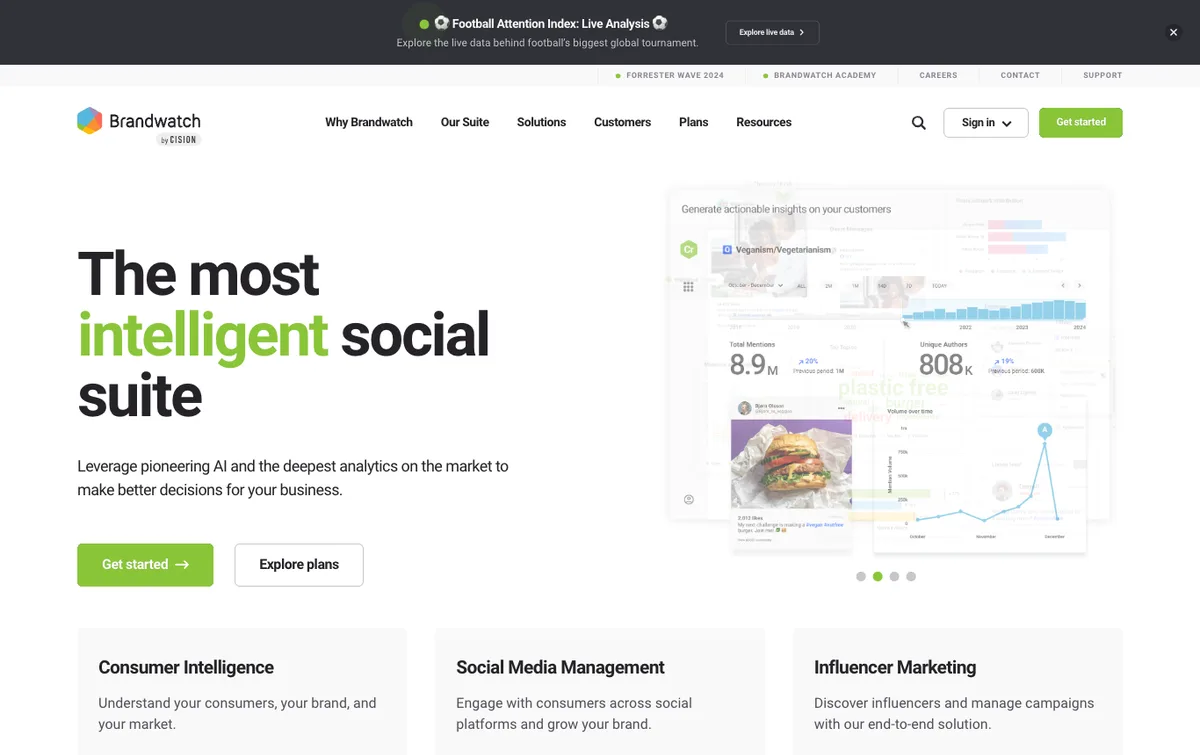
Brandwatch processes social conversations, reviews, and digital signals at scale, with an AI layer that categorizes mentions by topic, sentiment, and source. Enterprise teams use it for deep audience insight.
Strength: scale and depth of consumer intelligence. Limitation: enterprise pricing and complexity. Best for: large brands running serious social listening programs.
34. Perspective AI: Best for AI-moderated research
Perspective AI runs hundreds of AI-moderated interviews and focus groups in parallel for positioning research, concept testing, and voice-of-customer programs. Teams use it to gather qualitative insight at quantitative scale.
Strength: qualitative depth delivered fast and continuously. Limitation: a newer category that complements rather than replaces traditional research. Best for: teams running continuous brand and concept research.
Workflow automation and conversational marketing
The last category connects everything else. Automation tools move data between apps, and conversational AI turns traffic into qualified pipeline.
35. Zapier: Best for connecting your stack
Zapier connects thousands of apps, and its Central features let you build AI bots that act across them. Teams use it to move data from lead forms to CRM without engineering.
Strength: the widest integration network in the category. Limitation: complex automations get expensive and brittle. Best for: teams stitching many tools into one workflow.
36. Gumloop: Best for AI-native automation
Gumloop works like Zapier with an AI layer, letting you connect any LLM to internal tools and workflows without code. Teams use it to build AI-driven processes visually.
Strength: native LLM steps inside no-code automations. Limitation: a younger ecosystem with fewer prebuilt integrations. Best for: teams building AI-first automations without engineers.
37. Intercom: Best for conversational marketing
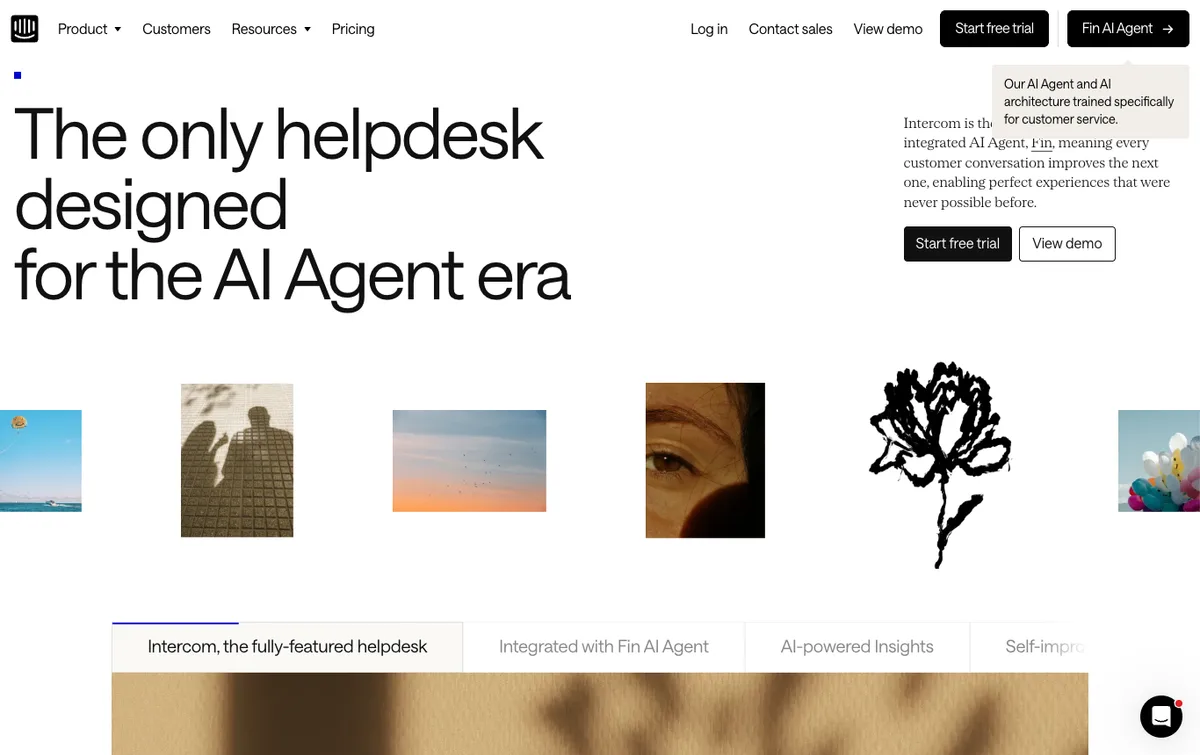
Intercom uses AI-assisted chat to qualify leads, answer questions, and route conversations across the buying journey. Marketing teams use it to convert traffic into pipeline in real time.
Strength: mature AI chat that reduces friction and speeds response. Limitation: pricing and scope lean toward support as much as marketing. Best for: teams that want to qualify and convert visitors through chat.
Feature comparison: the 37 tools by category
| Use case | Tools | Primary job |
|---|---|---|
| Paid ads and performance | Hawky, Madgicx, Smartly.io, Pixis, Performance Max, Advantage+ | Buy and optimize media |
| Creative and ad production | AdCreative.ai, Creatify, Foreplay | Produce ad creative |
| Content and copywriting | ChatGPT, Claude, Jasper, Copy.ai | Draft and scale content |
| SEO and AEO | Ahrefs, Semrush, Surfer SEO, Profound, Clearscope | Win search and AI answers |
| Social media | Sprout Social, Buffer, Lately.ai | Publish and listen |
| Email and lifecycle | Klaviyo, Mailchimp, HubSpot | Drive lifecycle revenue |
| Video | Synthesia, HeyGen, Descript, Runway | Create video at scale |
| Analytics and attribution | Triple Whale, Improvado, Mixpanel | Answer data questions |
| Research and listening | Brand24, Brandwatch, Perspective AI | Understand the market |
| Automation and chat | Zapier, Gumloop, Intercom | Connect and convert |
Assistants versus agents: the real 2026 split
The most useful way to read this list is not by category but by how much work the tool actually takes off your plate. Most of these 37 tools are assistants. They draft, score, suggest, or surface, and then a human carries the output the last mile. That is real value, and for content, research, and analytics it is often all you need.
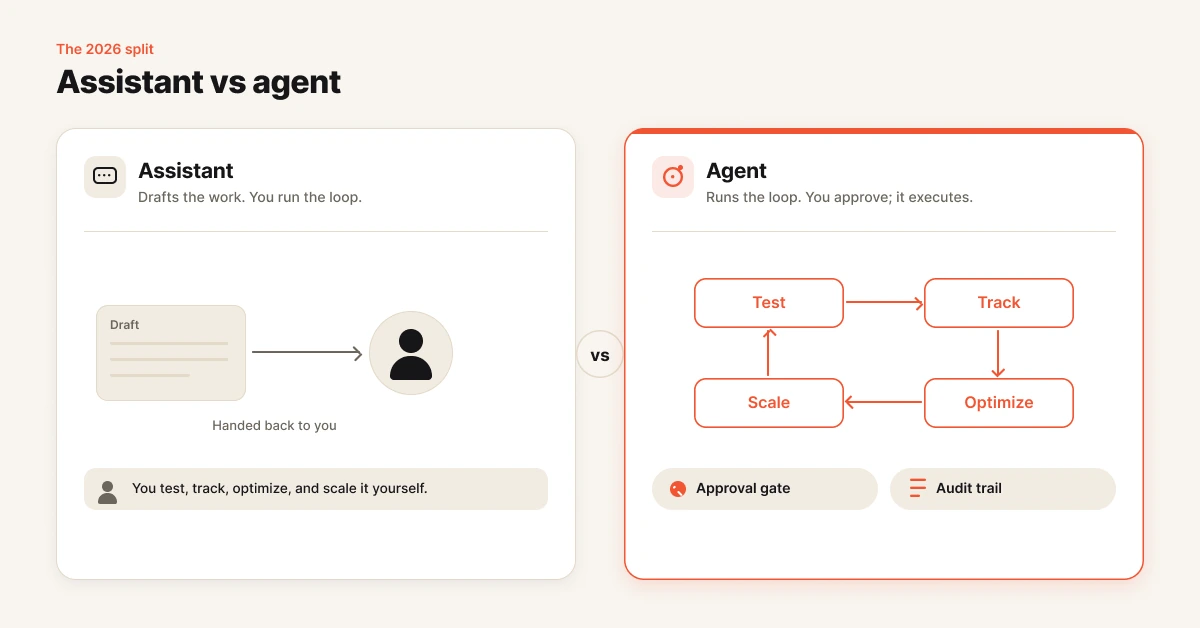
Paid media is different. The work runs 24/7, the money is real, and the optimization never stops, which is exactly the job an agent is built for. An agent plans, executes, and logs the outcome against a KPI, with guardrails and a human approval gate you can tighten or loosen. This is why autonomous performance marketing matters more than another dashboard: dashboards describe the past, agents change the present.
The practical move is to be honest about which jobs you want done versus drafted. Use assistants where judgment has to stay human and the cost of a miss is a rewrite. Use agents where the labor is constant and every action needs an audit trail. Memory compounds in the second case, because every dollar an agent spends makes the next dollar smarter.
Which tools are right for your team?
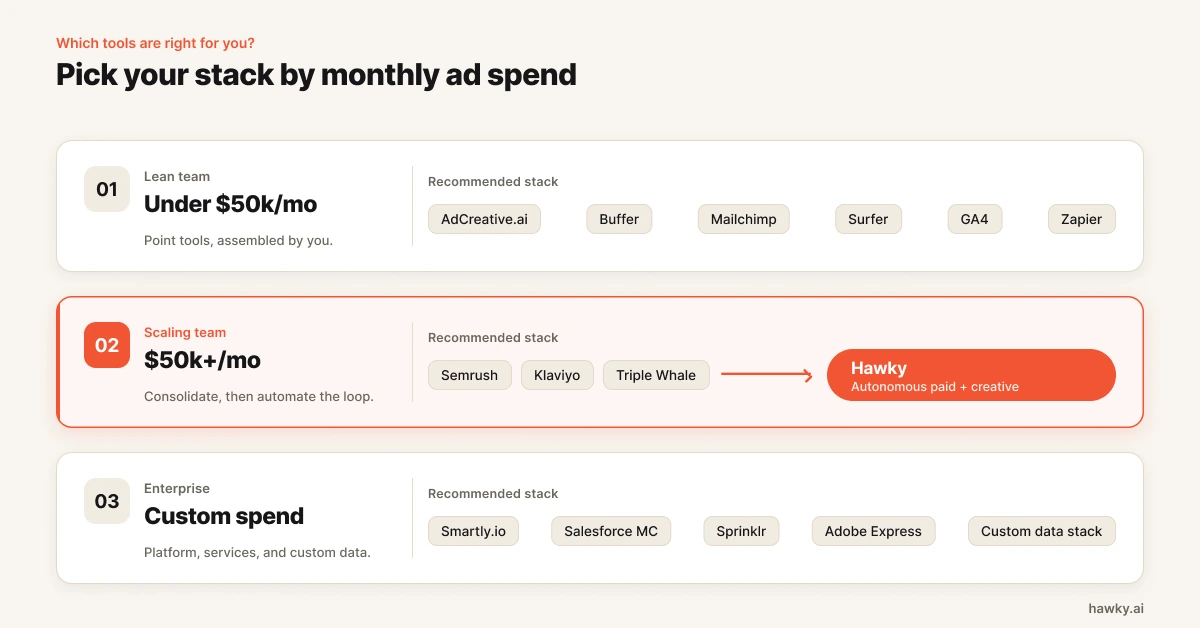
If you are a lean D2C team under $50k per month in ad spend, start with ChatGPT or Claude for content, native Performance Max and Advantage+ for ads, and Klaviyo for lifecycle. That stack delivers the highest ROI at the lowest incremental cost. Add a listening tool like Brand24 only when monitoring becomes a real job.
If you are a performance team or agency spending $50k or more per month, the bottleneck is execution, not ideas. This is where an autonomous platform earns its keep: Hawky's Performance Agent and Creative Agent operate Meta, Google, and YouTube against your KPI with a full audit trail, which removes the need to bolt together a separate bidding tool, creative generator, and reporting layer. Pair it with Ahrefs for SEO and a video tool as needed.
If you are an enterprise team, prioritize data unification first with Improvado or HubSpot, then layer Brandwatch for listening and Smartly.io or Hawky for media depending on how much autonomy you want. The common failure mode at scale is buying AI before the data is clean. Unify the foundation, then let the agents work on top of it.
Frequently asked questions
What are the best AI tools for marketing teams in 2026?
The best AI tools for marketing teams in 2026 are Hawky for autonomous paid media and creative, ChatGPT and Claude for content, Ahrefs and Semrush for SEO, and Klaviyo for ecommerce email. The right stack depends on your biggest bottleneck. Most teams need one tool per core job rather than many overlapping ones.
How many AI tools should a marketing team use?
Most marketing teams need five to eight AI tools, one for each core job: content, SEO, paid ads, email, analytics, and social. Quality of integration matters more than quantity. Fewer well-connected tools that share data outperform a sprawl of disconnected point solutions.
How do I choose the right AI marketing tool?
Choose an AI marketing tool by matching it to your single biggest bottleneck, then confirming it integrates natively with your CRM, ad accounts, and analytics. If you cannot map a tool directly to a business problem, you will not see ROI. Factor in implementation and training costs, which often exceed the subscription.
What is the difference between an AI assistant and an AI agent in marketing?
An AI assistant generates recommendations or drafts and hands them back to a human to execute. An AI agent does the job end to end, executing against a KPI and logging every action for review. Hawky's Performance Agent is an example: it buys and optimizes media autonomously, with guardrails and one-click reversibility.
Are free AI marketing tools good enough?
Native platform AI like Google Performance Max and Meta Advantage+ is free beyond ad spend and delivers strong baseline automation, and a $20 per month assistant like ChatGPT covers most content work. Free and low-cost tools are enough to start. Paid platforms earn their cost when a specific job, such as autonomous media buying or ecommerce lifecycle, becomes a daily bottleneck.
Which AI tool is best for paid advertising?
For autonomous paid media across Meta, Google, and YouTube, Hawky is purpose-built, running campaigns against your KPI with configurable autonomy and a full audit trail. Madgicx is a strong Meta-focused option. Native Performance Max and Advantage+ are the free baseline every advertiser should run underneath either.
The bottleneck decides the tool
Thirty-seven tools sounds like a lot until you sort them by job, and then the shortlist for your team is usually four or five. Pick the one tool that solves your loudest bottleneck, make sure it shares data with the rest of your stack, and ignore the noise around the rest. The teams winning in 2026 are not the ones with the most AI; they are the ones that moved the right jobs from assistants that draft to agents that execute.
If your loudest bottleneck is paid media that never stops needing optimization, Hawky's Performance Agent is built for that job. If it is creative production that cannot keep pace with your ad sets, the Creative Agent is built for that one.
Ready to hire your first AI performance team? Book Demo