The best creative automation software in 2026 is Hawky for agentic automation with element-level intelligence, Smartly for cross-channel orchestration, and Celtra for enterprise rich-media production. Creative automation software mass-produces and adapts ad creative from templates, feeds, and rules, so one concept scales into hundreds of variations. The 2026 differentiator is no longer production, which is commoditized, but knowing which creative elements actually drive performance.
Producing enough creative, in every size and variation, is the bottleneck of modern advertising. Creative automation software removes it. This guide ranks the eight best platforms, what each is built for, and how to choose.
What is creative automation software?
Creative automation software produces ad creative at scale by combining templates, brand rules, and data feeds so that one master concept becomes many variations automatically. Instead of a designer building each size and version by hand, the software generates them, whether that is 50 banner sizes, 500 product-feed ads, or dynamic combinations tested in market.
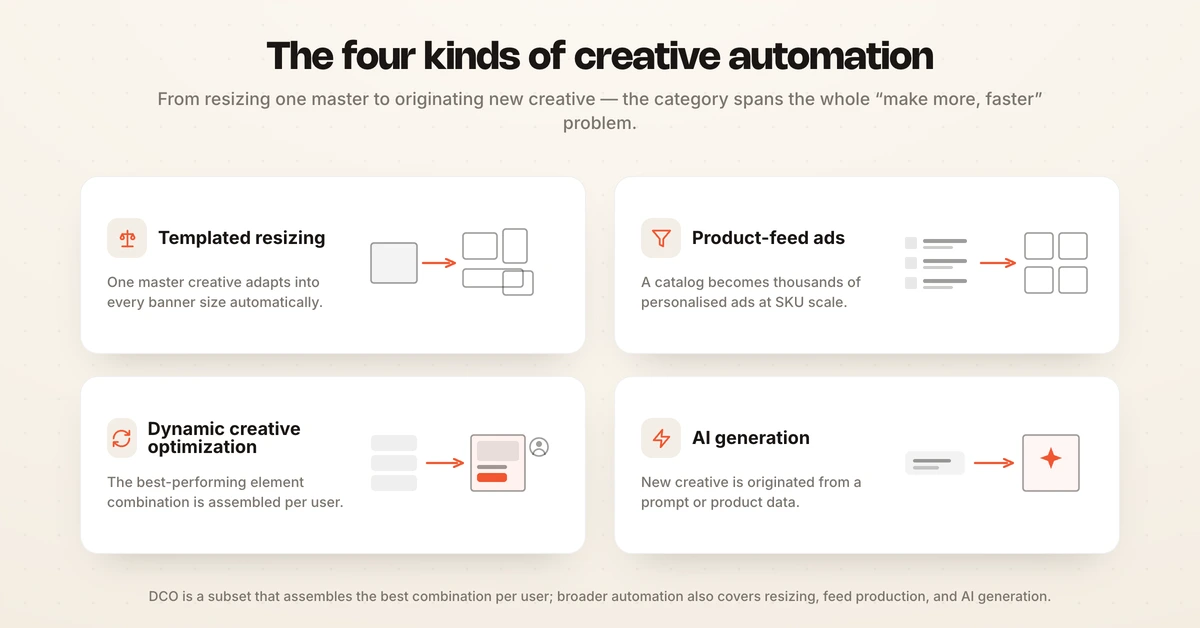
The category overlaps with dynamic creative optimization (DCO), which specifically assembles and serves the best-performing creative combinations per user. Broader creative automation also covers templated resizing, bulk production from product feeds, and creative management, so it spans the whole "make more creative faster" problem. For the DCO-specific tools, see the best dynamic creative optimization tools.
The market has matured to the point where production itself is commoditized. Many tools can churn out variations, so the real differentiator in 2026 is whether the platform tells you, at the element level, which components are driving performance across the networks you run. Production without that intelligence just makes more untested creative.
The 8 best creative automation software
1. Hawky: Best for agentic automation with intelligence
Hawky is an agentic performance marketing platform, and it pairs creative automation with the element-level intelligence that defines the category in 2026. Its Creative Agent generates on-brand variations from your winners, AI Creative Generation adapts one concept into every placement's formats, and Creative Analysis scores each element so you know which hook or visual is driving results.
Where most automation tools stop at producing variations, Hawky's agents test them, read the results at the element level, and generate the next round against your KPI, with guardrails and an audit trail. That closes the loop between making creative and knowing what works.
Key capabilities:
- Creative Agent: on-brand variation generation bound to specific ad sets.
- AI Creative Generation: one winning concept adapted into every size and format.
- Element-level analysis: which component drives performance, not just which ad.
Best for: brands and agencies who want creative automation that also tells them what is working and acts on it. Pricing is outcome-based with a 30-day pilot. The Man Company doubled creative performance and cut iteration cycles 50% working this way.
2. Smartly: Best for cross-channel orchestration
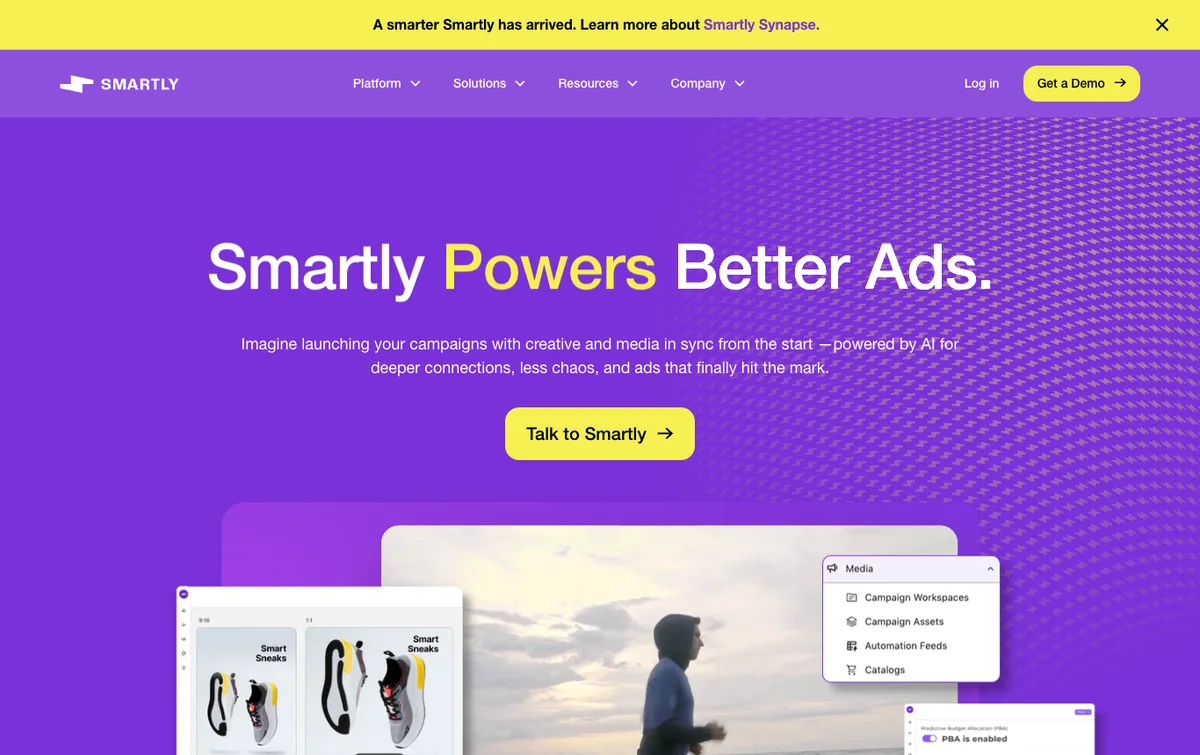
Smartly combines creative automation with campaign management across Meta, TikTok, Pinterest, Snapchat, and programmatic, per Segwise. Its strength is orchestrating dynamic templates and media buying together across many channels.
Strength: enterprise cross-channel automation plus campaign management in one platform. Limitation: enterprise pricing and complexity put it out of reach for smaller teams. Best for: large advertisers running coordinated creative across many channels.
3. Celtra: Best for rich-media production
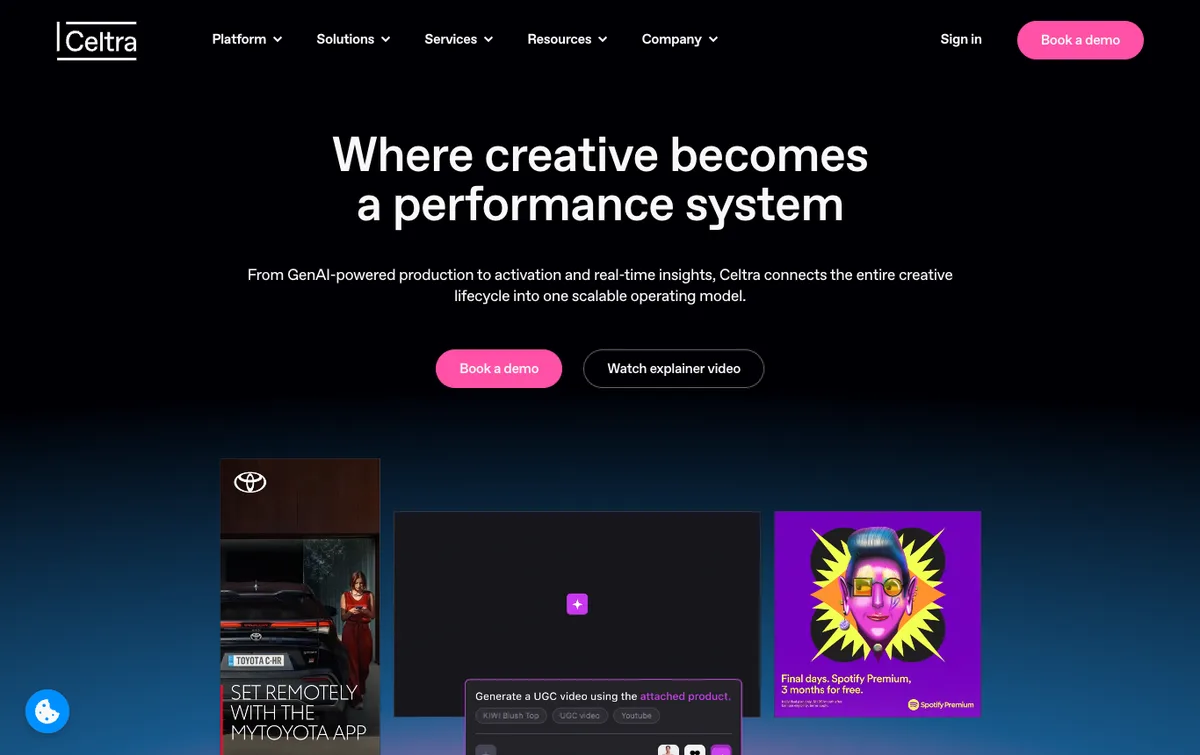
Celtra is built for rich media and HTML5 interactive ad production, with a creative environment designed specifically for those formats. It is the specialist for interactive, animated, and high-production display.
Strength: best-in-class rich-media and HTML5 production at enterprise scale. Limitation: focused on production rather than performance intelligence, and priced for enterprise. Best for: brands and agencies producing interactive and rich-media display at volume.
4. Hunch: Best for product-feed ads at scale
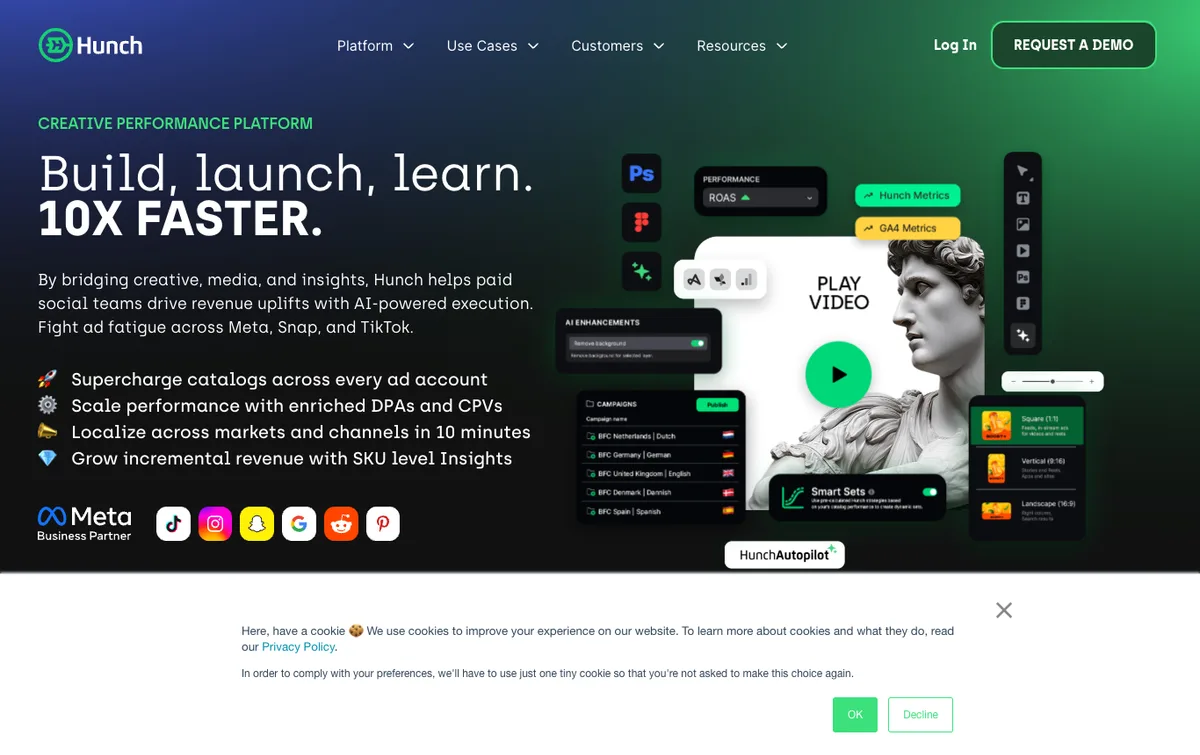
Hunch specializes in ecommerce product-feed ads at SKU scale, with feed integration, template variants, and Meta and TikTok trafficking as its core workflow, per Hunch. It turns a product catalog into thousands of personalized ads automatically.
Strength: deep product-feed automation for large catalogs. Limitation: focused on feed-based ecommerce rather than general creative. Best for: ecommerce brands running catalog ads across many SKUs.
5. Bannerflow: Best for display ad production
Bannerflow specializes in display, letting you build one master creative that adapts into native, editable, animated HTML5 ads across every size, audience, and platform, with tight brand control, per Viewst. It is the workhorse for scaled display banner production.
Strength: master-to-all-sizes display production with strong brand governance. Limitation: display-focused rather than a full cross-channel or performance tool. Best for: brands producing large volumes of display banners with brand consistency.
6. Creatopy: Best for small teams
Creatopy offers light creative automation with fast onboarding, using templates and translation features to cover most needs without enterprise overhead. It is the approachable option for small teams.
Strength: easy, affordable templated automation with quick setup. Limitation: lighter DCO and intelligence than enterprise platforms. Best for: small teams that want fast, templated creative production.
7. Marpipe: Best for multivariate automation
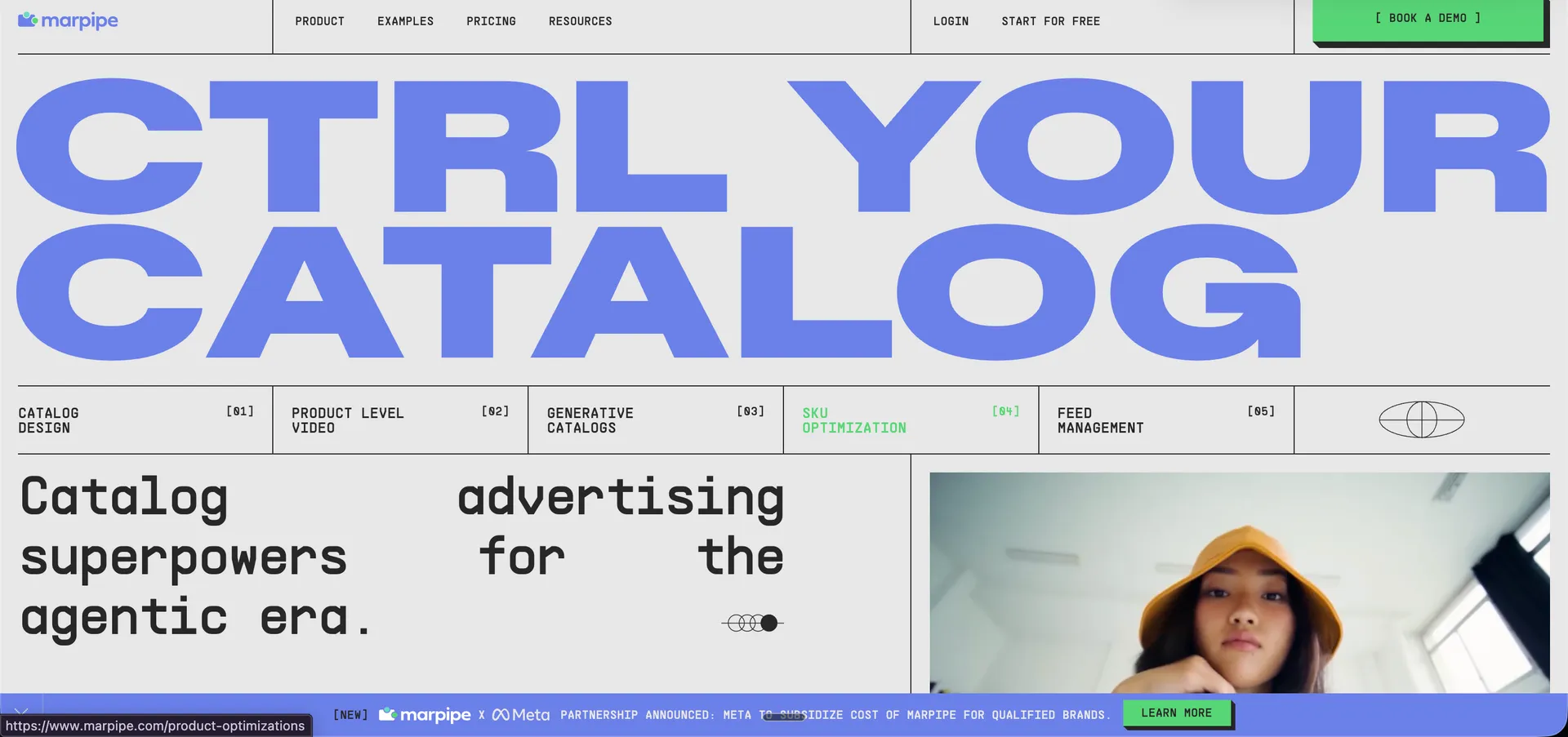
Marpipe automates multivariate creative production and testing, building every combination of elements and isolating which drove the result. It sits at the intersection of automation and testing.
Strength: automated multivariate production with element-level attribution. Limitation: needs meaningful spend for multivariate tests to reach significance. Best for: DTC brands wanting automated element-level testing at scale.
8. Rocketium: Best for bulk creative operations
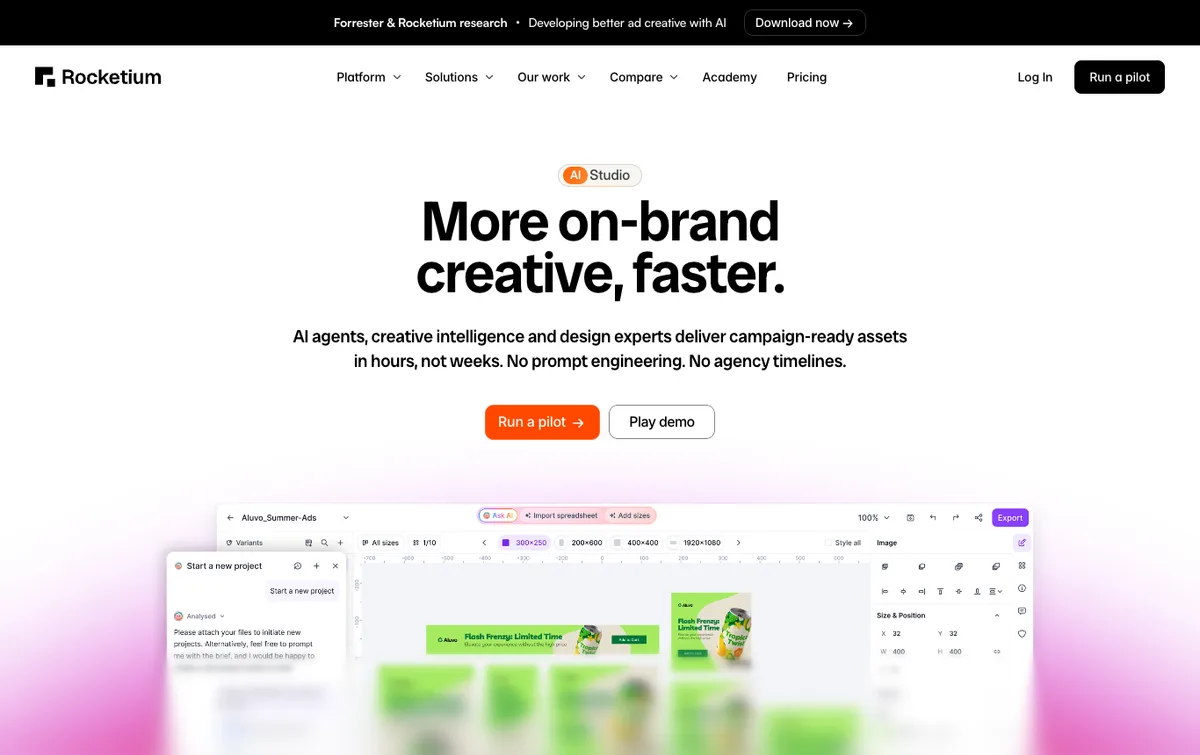
Rocketium focuses on bulk creative production and creative operations, automating resizing and versioning for teams that ship high volumes of ads. It streamlines the creative-ops workflow.
Strength: fast bulk production and versioning for high-volume teams. Limitation: production-focused, with lighter performance intelligence. Best for: in-house teams and agencies with heavy creative-ops needs.
Feature comparison: creative automation software
| Tool | Core strength | Element-level intelligence | Cross-channel | Best for |
|---|---|---|---|---|
| Hawky | Agentic automation + analysis | Yes | Yes | Automation that acts on results |
| Smartly | Cross-channel orchestration | Limited | Yes | Enterprise multi-channel |
| Celtra | Rich-media production | No | Limited | Interactive display |
| Hunch | Product-feed ads | Limited | Meta, TikTok | Ecommerce catalogs |
| Bannerflow | Display production | No | Display | Scaled banners |
| Creatopy | Templated automation | No | Limited | Small teams |
| Marpipe | Multivariate testing | Yes | Meta | Element-level testing |
| Rocketium | Bulk creative ops | No | Limited | High-volume production |
Production is commoditized; intelligence is the differentiator
For years, creative automation was about output: how many variations can you produce, how fast. That problem is largely solved, since most tools can now generate variations at scale. Making more creative is no longer the edge. The AI ad creative tools comparison shows which generators now publish and learn from results.
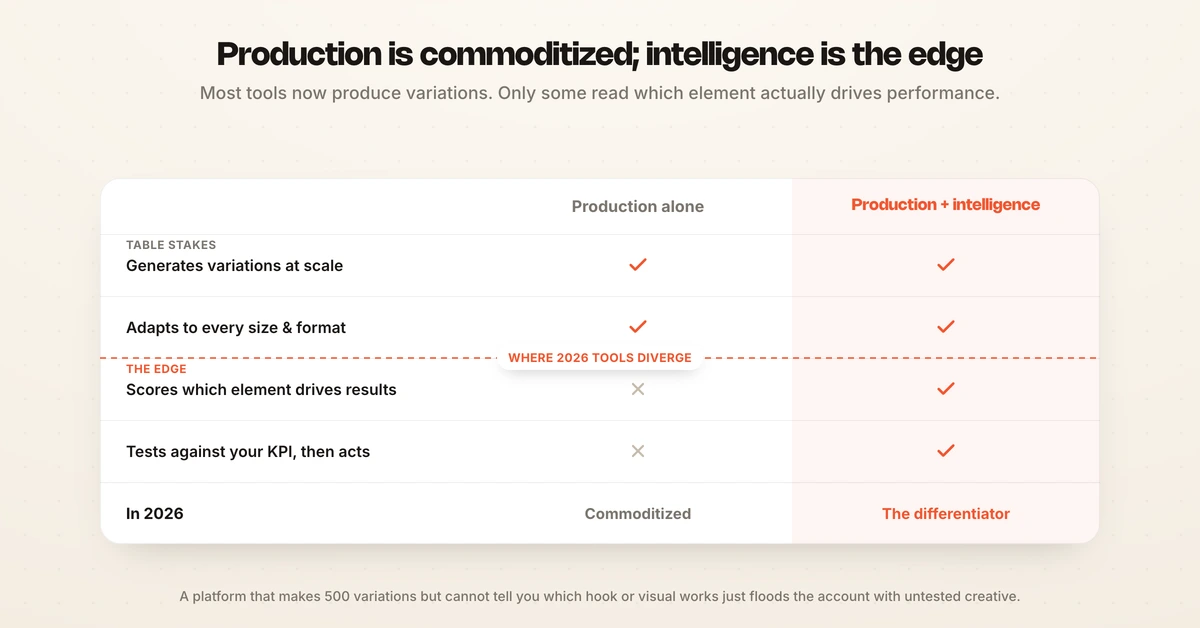
The edge in 2026 is knowing which creative actually works. A platform that produces 500 variations but cannot tell you which hook, visual, or element drives performance just floods your account with untested creative. The differentiator is element-level intelligence across every network you run, so automation feeds testing rather than replacing it.
This is why the category is converging with agentic platforms. Automation that generates, tests, reads the result at the element level, and generates the next round is worth more than automation that only produces. For the concept behind DCO, see what is dynamic creative optimization.
Which creative automation software is right for you?
If you run large product catalogs: Hunch turns your feed into thousands of personalized ads automatically.
If you need rich-media or display at scale: Celtra for interactive formats, Bannerflow for master-to-all-sizes banners.
If you are a small team: Creatopy gives templated automation without enterprise overhead.
If you want automation that also tells you what works: Hawky generates variations, tests them, and reads results at the element level, so production feeds performance instead of just filling the account.
Frequently asked questions
What is the best creative automation software?
The best creative automation software in 2026 is Hawky for agentic automation paired with element-level intelligence, Smartly for enterprise cross-channel orchestration, and Celtra for rich-media production. Hunch leads for ecommerce product-feed ads and Bannerflow for scaled display banners. The right choice depends on whether you need feed automation, display production, or automation that also tells you which creative elements drive performance.
What is creative automation?
Creative automation is the use of software to mass-produce and adapt ad creative from templates, brand rules, and data feeds, so one master concept becomes many variations without manual design. It covers templated resizing, bulk production from product feeds, and dynamic creative optimization that assembles the best combinations per user. The goal is to remove the production bottleneck that limits how much creative a team can test and run.
What do creative automation platforms do?
Creative automation platforms take a master creative or a set of assets and generate variations at scale: every ad size, language, product from a feed, or dynamic combination. Many also handle brand governance, resizing, and trafficking to ad platforms. The best also analyze performance at the element level, telling you which hook, visual, or CTA drove results, so the automation feeds smarter creative rather than just producing more of it.
What is the difference between creative automation and AI ad generators?
Creative automation scales an existing concept into many variations through templates, feeds, and rules, focusing on production volume and consistency. AI ad generators create new creative from prompts or product data, focusing on originating concepts. The two overlap: modern platforms like Hawky both generate new creative with AI and automate its adaptation into every format, then test which performs, combining generation and automation in one workflow.
Is creative automation the same as DCO?
Not exactly. Dynamic creative optimization (DCO) is a subset of creative automation that specifically assembles and serves the best-performing creative combination to each user in real time. Creative automation is broader, covering templated resizing, bulk feed production, and creative management as well as DCO. Many platforms do both, but DCO is the performance-serving layer while automation is the wider production and adaptation workflow.
If producing every creative variation and knowing which elements actually drive performance is the problem, Hawky's Creative Agent and AI Creative Generation are built for that job.
Ready to hire your first AI performance team? Book Demo