DTC Meta Ad Hook Examples: 8 Real Brands Worth Swiping (2026)
These eight DTC Meta ad hook examples are real ads running right now, each pulled from the Meta Ad Library and matched to the pattern that makes it work. Use them as a swipe file: study the live creative, borrow the structure, then test your own version. Every example links to its public Ad Library entry so you can verify it and see the full ad.
A hook is the first line or frame that earns the next three seconds, and on Meta it decides whether the rest of your ad gets seen. This piece is the example-led companion to our DTC Meta ad hook patterns playbook: there you get the patterns, here you see eight brands executing them in live campaigns.
Why study real Meta ad hooks instead of templates
Real ads beat templates because they show you what a brand is actually spending money to run, not what a blog imagined. An ad that has been live for weeks has almost certainly survived some testing, so its hook is a signal, not a guess.
Hooks decide cost efficiency more than targeting now. When Advantage+ and Performance Max control delivery, the creative does the targeting, and the hook is the part the algorithm rewards with cheaper, broader reach. A weak opener gets starved of delivery no matter how strong the offer behind it is.
Every example below was captured from the public Meta Ad Library, Meta's transparency tool that shows ads currently running. Each card links to its live entry so you can confirm it and study the full creative for yourself.
8 real DTC Meta ad hook examples worth swiping
1. The curiosity gap: Wooden Spoon Herbs
The curiosity hook names an outcome but withholds the mechanism, so the only way to close the loop is to keep watching. It works best when the promise is specific and the "how" is genuinely non-obvious.

Wooden Spoon Herbs opens with "Sleep is sacred. If you're tired of being tired, Tart Cherry Magic Magnesium is your new evening ritual," pairing a relatable tension ("tired of being tired") with an intriguing product you have to keep reading to understand. The phrase "Tart Cherry Magic Magnesium" is the curiosity hook: it names a specific, unusual mechanism without explaining it yet. View this ad in the Meta Ad Library.
2. The third-party stamp: Graza
This hook borrows credibility from a source the buyer already trusts, so the brand does not have to make the claim about itself. A recognizable publication or award does the persuading in five words.
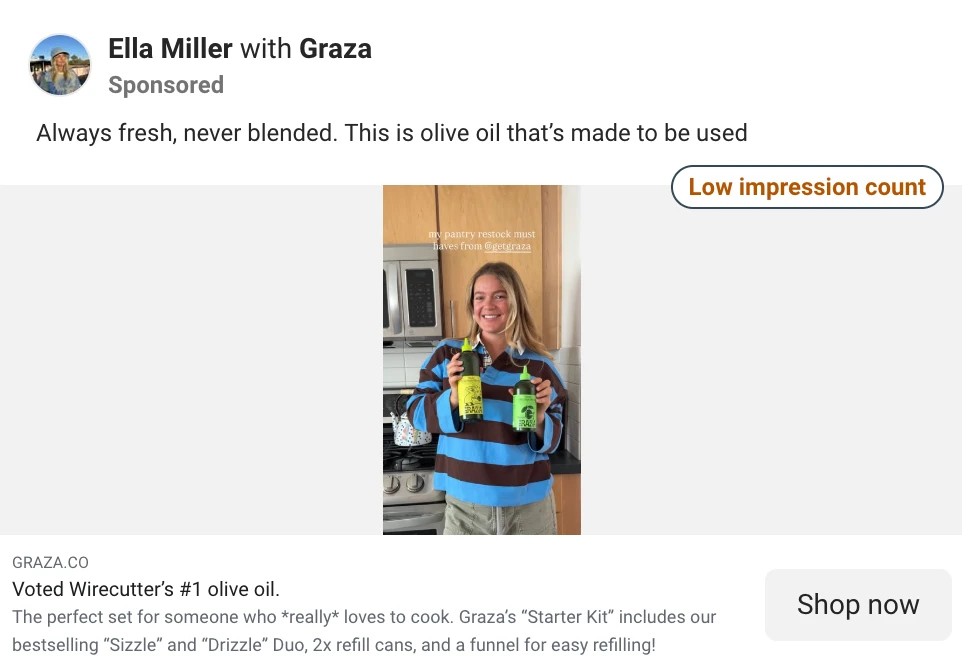
Graza's headline reads "Voted Wirecutter's #1 olive oil," which front-loads earned authority before the viewer can get skeptical. Third-party proof in the hook lowers the guard that brand-made claims usually raise. View this ad in the Meta Ad Library.
3. The bandwagon: Caraway
The bandwagon hook makes the purchase feel like a trend already in motion, so the viewer feels late rather than sold to. It turns social proof into momentum.
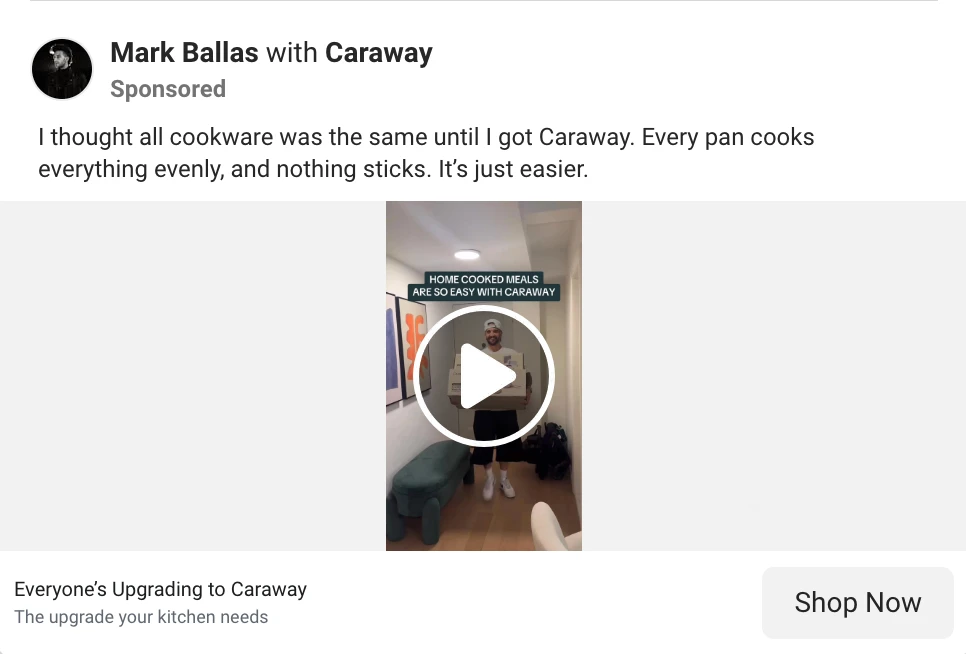
Caraway runs "Everyone's Upgrading to Caraway," which frames switching as the default choice smart buyers are already making. The word "upgrading" reframes the product as the obvious next step, not a risk. View this ad in the Meta Ad Library.
4. The "does more" benefit: Everyday Dose
This hook leads with a tangible upgrade to something the buyer already does daily, so the value lands instantly. It promises more from a familiar habit rather than introducing a new one.
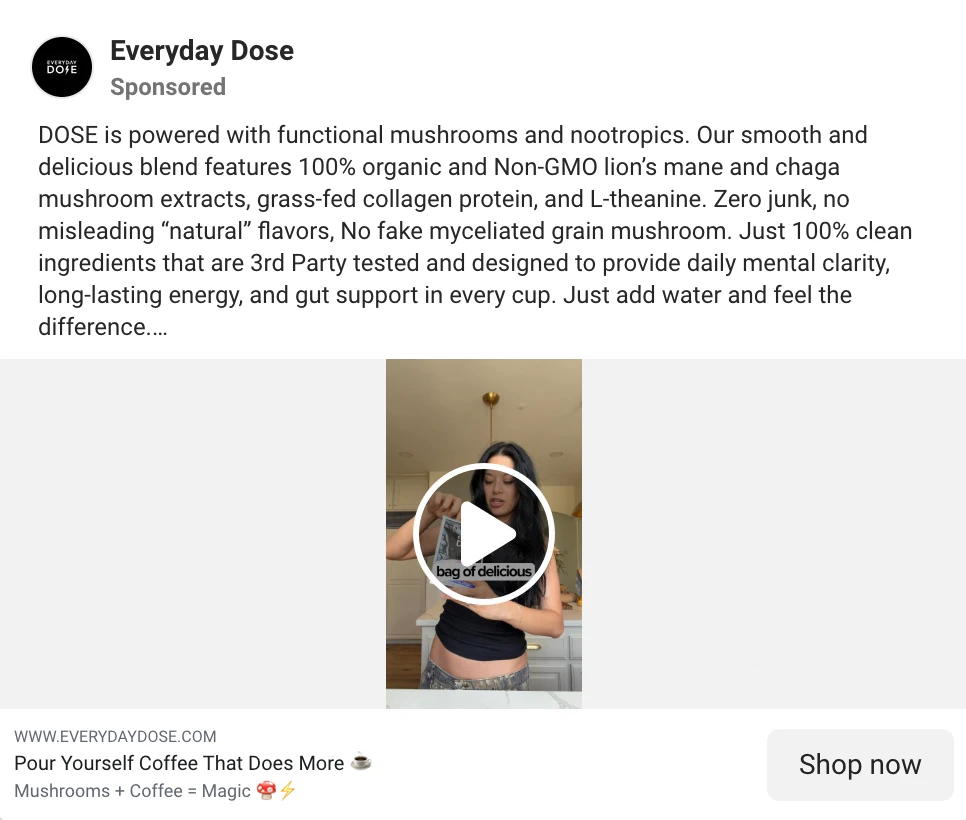
Everyday Dose uses "Pour Yourself Coffee That Does More," anchoring to an existing ritual (coffee) and promising added benefit without friction. Anchoring to a daily habit makes the benefit feel easy to adopt. View this ad in the Meta Ad Library.
5. The identity and desire callout: Dr. Squatch
This hook sells the feeling and the identity the product confers, not the product spec. It speaks to who the buyer wants to be or how they want to be seen.
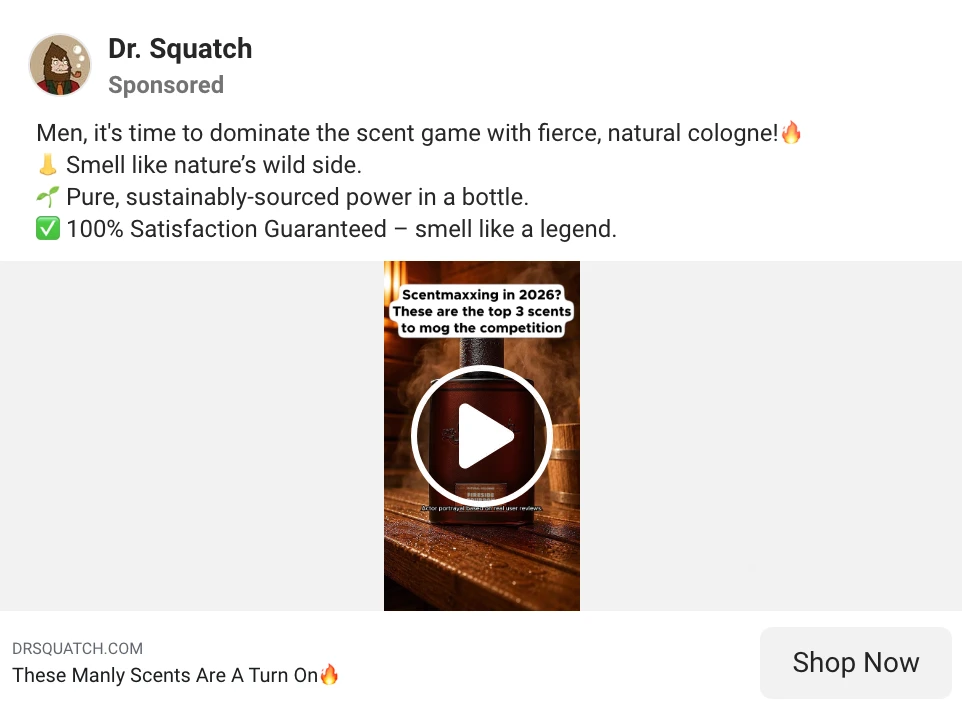
Dr. Squatch runs "These Manly Scents Are A Turn On," which sells an outcome (attraction, identity) rather than soap ingredients. Leading with desire rather than features is what makes a commodity category feel personal. View this ad in the Meta Ad Library.
6. The one-line product promise: Oliver Charles
This hook compresses the entire value proposition into a single, concrete claim. It works when the product does one thing remarkably well and you can say it plainly.
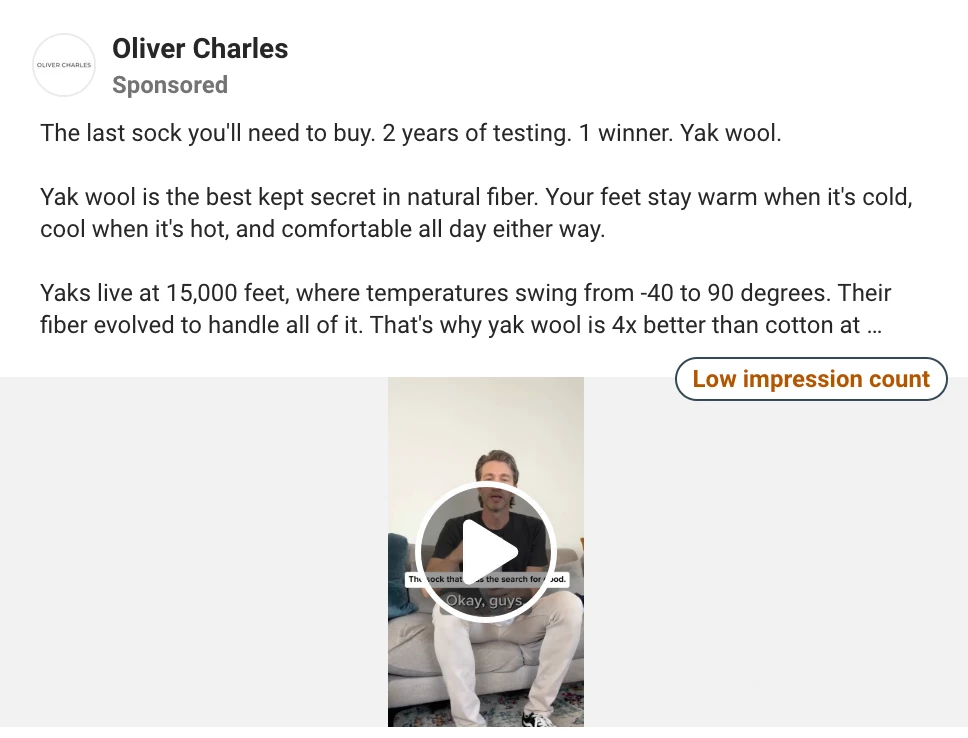
Oliver Charles opens with "The last sock you'll need to buy. 2 years of testing. 1 winner. Yak wool," a promise so specific it doubles as the product demo. Concrete beats clever: a finality claim ("the last sock you'll need") plus a proof detail ("2 years of testing") is easy to picture and easy to believe. View this ad in the Meta Ad Library.
7. The new-customer offer: Bombas
The offer hook leads with the deal because, for a first purchase in a known category, price is the fastest reason to stop. It works best paired with a memorable code that doubles as a tracking handle.
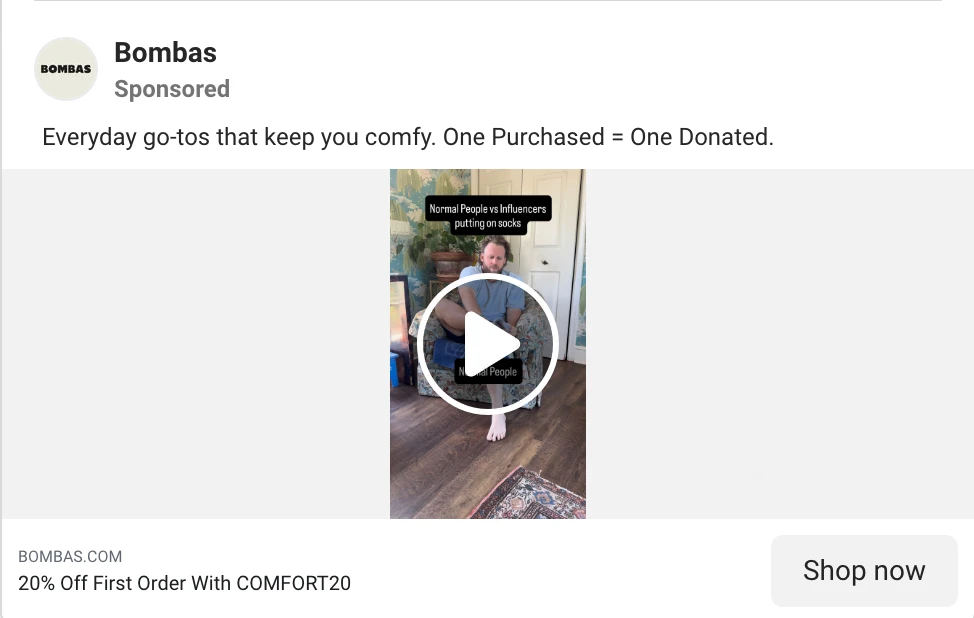
Bombas runs "20% Off First Order With COMFORT20," putting a concrete incentive and a branded code right in the hook. The code name reinforces the product benefit (comfort) while making the offer feel exclusive. View this ad in the Meta Ad Library.
8. The category claim: Thrive Market
This hook stakes out a whole category in one line, positioning the brand as the obvious answer to a need rather than one option among many. It works for brands confident enough to define the space.
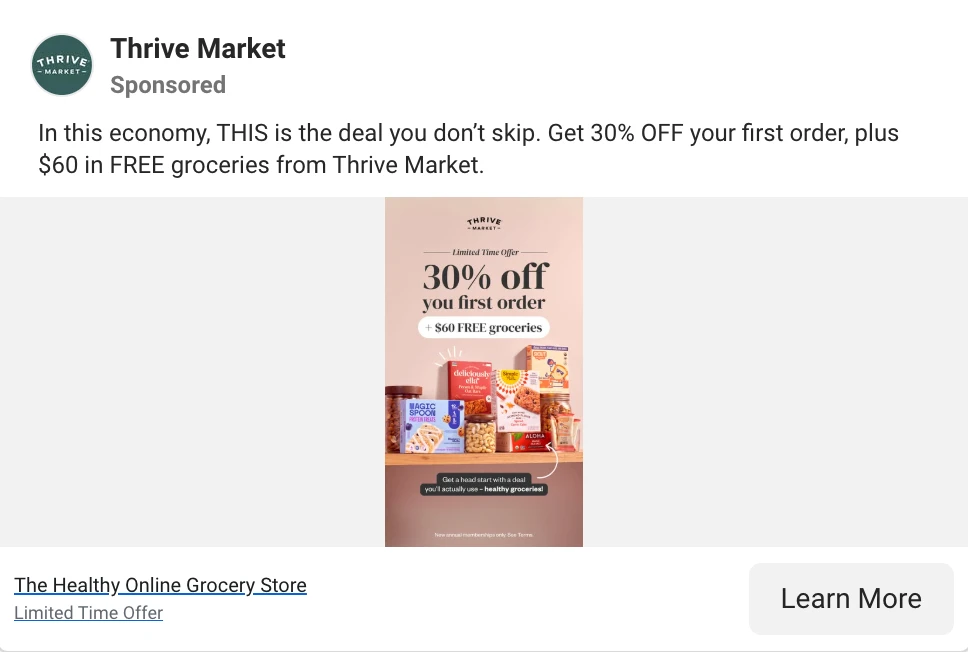
Thrive Market's headline reads "The Healthy Online Grocery Store," claiming the category outright so the viewer files it as the default, not a contender. A clear category claim is its own hook when the positioning is sharp. View this ad in the Meta Ad Library.
What these hook examples have in common
Across all eight, the hook leads with the viewer, not the brand. None of them open with a logo or a product name for its own sake; they open with a result, a proof, a desire, or a deal the viewer cares about. The brand earns the mention after it has earned attention.
They are also short and concrete. Each hook is a single readable line that survives a sound-off, thumb-speed feed, which is the real test on Meta. Specific beats clever every time: "One Yak Wool Sock. Any Temperature" outperforms a vague mood line because the viewer can picture it instantly.
How to turn these examples into your own winning hooks
Treat this list as a swipe file, not a copy-paste. Map each pattern onto your product, write at least five openers per concept, and keep the rest of the creative constant so a win is unambiguous. The opener you are most confident in is rarely the one the market rewards.
Then test, do not guess. Hooks are the cheapest element to test and the highest in payoff, so run several against the same creative and let creative testing decide. Watch the three-second view rate and CTR per opener, and graduate the winner before it fatigues. The usual constraint is not ideas, it is producing enough variants to test.
How AI agents help you ship hooks at volume
The bottleneck this teardown keeps pointing at, producing enough strong hooks to test, is exactly what AI agents remove. Hawky runs an agentic performance marketing platform whose Creative Agent reads your past winners and competitor patterns and renders finished on-brand creatives, including hook variants, each batch bound to a specific ad set with the evidence cited.
Element-level creative analysis then tells you which hooks actually earned attention, so the next batch is sharper than the last, and the Performance Agent graduates winners and refreshes fatigued hooks against your KPI, 24/7. Configurable autonomy keeps humans in command: start in shadow mode where the agents only report, then move to approval-gated, then fully autonomous, with the same audit trail throughout. The Man Company doubled creative performance and cut iteration cycles 50% running this loop.
If writing and testing enough DTC hooks to feed Meta is your bottleneck, Hawky's Creative Agent is built for that job.
Frequently asked questions
Where can I find real DTC Meta ad examples?
The Meta Ad Library is the official, public source for ads currently running on Meta, searchable by brand, keyword, or country. Every example in this article links to its live Ad Library entry so you can study the full creative. Creative research tools and agentic platforms like Hawky also surface competitor ads and the patterns behind them.
What is a Meta ad hook?
A hook is the opening line, headline, or first frame of a Meta ad that earns the viewer's first three seconds of attention. It works by opening a curiosity, benefit, or proof loop the viewer wants to resolve, which buys the rest of the ad a chance to land. On automated delivery, a strong hook also earns cheaper, broader reach because the algorithm rewards engagement.
What are the best DTC Meta ad hook patterns?
The strongest patterns include the curiosity gap, the third-party stamp, the bandwagon, the single-benefit promise, the identity callout, the one-line product promise, the new-customer offer, and the category claim. The brands in this article run a live example of each. Match the pattern to your product and your buyer's mindset rather than forcing one formula everywhere.
How many hooks should I test per ad?
Test at least five hooks per concept, each taking a different angle, while keeping the rest of the creative constant so the result is clean. The opener you are most confident in is often not the winner, so volume and variety beat a single strong guess. Let the three-second view rate and click-through rate decide which hook graduates to scaling.
Is it legal to swipe competitor ad hooks?
Studying competitor hooks in the Meta Ad Library is standard, legitimate research, and the library exists for transparency. You can borrow the structure and psychology of a hook, but do not copy a brand's exact wording, claims, or creative assets. Adapt the pattern to your own product and voice.
Do hooks still matter with Advantage+ and Performance Max?
Yes, more than ever. When the algorithm controls delivery, the creative does the targeting, and the hook is the part of the creative that earns attention and cheaper reach. Feeding automated campaigns a diverse pool of strong hooks is now one of the highest-impact levers you control.
If your DTC account needs more strong Meta hooks than your team can write and test by hand, Hawky's Creative Agent generates on-brand hook variants and the Performance Agent tests and scales the winners, with guardrails and a full audit trail keeping you in command.
Ready to hire your first AI performance team? Book Demo