Bounce Rate
Last updated
The percentage of visitors who land on a page and leave without any further action, signaling how well the page matches the ad that sent them. A high bounce rate quietly inflates CPA by wasting the paid clicks you already bought.
Bounce Rate
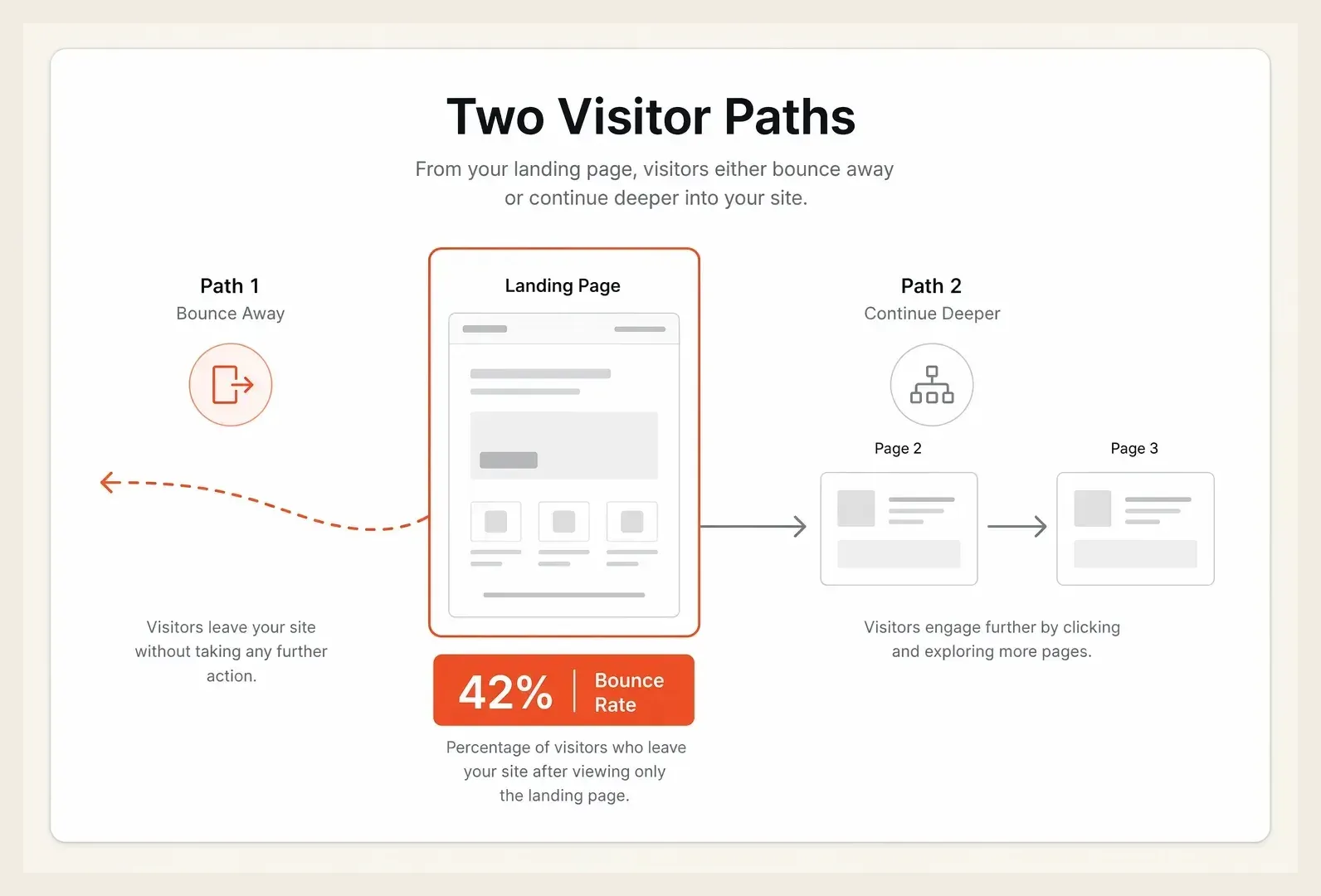
Bounce Rate is the percentage of visitors who land on a page and leave without taking any further action, such as clicking a link, visiting a second page, or triggering a tracked event. It is a direct signal of how well the landing experience matches the promise of the ad that sent the visitor there, and a high bounce rate is one of the fastest ways to waste paid traffic.
Why It Matters
Every paid click costs money, so a visitor who bounces is budget spent for nothing. Bounce rate is where the ad and the landing page meet, and when it is high it almost always means the page broke a promise the ad made, loaded too slowly, or asked for the wrong next step. For performance marketers, bounce rate is the clearest early warning that the problem is the destination, not the targeting.
The stakes compound across the funnel. Research from Google has found that as page load time goes from 1 second to 3 seconds, the probability of a bounce rises by roughly 32 percent, and from 1 to 5 seconds it climbs over 90 percent. A page that bounces most of its traffic quietly inflates CPA and drags down CVR, because the conversion math only works on the visitors who stay. Cutting bounce rate often lifts conversions faster than any change to bidding or targeting.
Formula
Bounce rate is a simple ratio expressed as a percentage:
Bounce Rate = (Single-Action Sessions / Total Sessions) x 100
If 10,000 visitors land on a page and 6,500 leave without a second interaction, the bounce rate is 65 percent. Note that newer analytics tools (such as GA4) report "engaged sessions" instead, so bounce rate becomes the inverse of the engagement rate. Benchmarks vary widely by page type and traffic source:
| Page Type | Typical Bounce Rate | Notes |
|---|---|---|
| Landing pages (paid) | 60% to 90% | Single-purpose pages naturally bounce higher |
| Ecommerce / retail | 20% to 45% | Multi-page browsing lowers the rate |
| Content / blog | 65% to 90% | Readers often leave satisfied after one page |
| Lead generation sites | 30% to 55% | A clear form keeps visitors engaged |
A high bounce rate is not always bad. A blog reader who gets the answer and leaves has bounced but was satisfied, so read bounce rate against intent and traffic source. For paid landing pages, pair it with landing page conversion rate and CVR to know whether the bounce is costing conversions or simply reflecting a satisfied single-page visit.
How It Works
Bounce rate works by counting sessions that include only one qualifying interaction, then dividing by all sessions. The exact rule depends on the analytics platform, since some count any second pageview as engagement while others require time-on-page or a tracked event.
- Message Match: Whether the page headline and offer match the ad the visitor clicked.
- Page Speed: How fast the page becomes usable, since slow loads drive immediate exits.
- Mobile Experience: Whether the layout, tap targets, and forms work on the device most paid traffic uses.
- Intent Alignment: Whether the traffic source sent visitors who actually want what the page offers.
In practice, teams lower bounce rate by tightening the match between ad and landing page, speeding up load times, and removing friction in the first scroll. The biggest gains usually come from making the page deliver, within seconds, exactly what the call to action in the ad promised.
A Real Example
A subscription box brand drove paid social traffic to a homepage and could not understand why a strong 2.1 percent CTR produced so few sales.
Analytics showed an 84 percent bounce rate on mobile, with most visitors leaving in under four seconds. The ad promised "Build your first box for $19," but the homepage led with a generic brand video and buried the offer below the fold. The team built a dedicated landing page that opened with the exact $19 offer, a single product image, and one button, then compressed the hero image to cut load time from 4.2 seconds to 1.6. Bounce rate fell to 52 percent, landing page conversion rate doubled, and CPA dropped from $41 to $23. The traffic and targeting never changed.
Common Mistakes
| The Mistake | ❌ Wrong Approach | ✅ Better Approach |
|---|---|---|
| Message mismatch | Sending ad traffic to a generic homepage | Matching the landing page headline to the ad promise |
| Ignoring page speed | Tolerating a 4 to 6 second load | Compressing assets to load the usable page under 2 seconds |
| Reading bounce in a vacuum | Treating every high bounce as a failure | Pairing it with CVR and intent to judge impact |
| Desktop-first design | Optimizing the page on desktop only | Designing for the mobile session that most paid clicks use |
How Hawky Helps
A high bounce rate is a budget leak, and the fix is rarely in the ad account alone, it is in how well the whole journey holds together. Hawky's Performance Agent reads post-click signals like bounce rate and landing page conversion rate next to cost data, so it can tell when a campaign is bleeding budget on traffic that lands and leaves, then shift spend away from the placements and audiences that bounce hardest.
The Creative Agent keeps the promise consistent, generating ad variations whose hook and offer match the page the visitor will see, which closes the gap that causes most bounces. Every pattern about which ad-to-page combinations keep visitors engaged is stored in FeatherDB as living context for the account. The effect is a system that hunts down and fixes the bounce leak across creative and budget, rather than a report that simply shows the number rising.
Frequently Asked Questions
What is a good bounce rate?
A good bounce rate depends heavily on page type and traffic source. Paid landing pages naturally run 60 to 90 percent because they serve a single purpose, while ecommerce sites with multi-page browsing often sit between 20 and 45 percent. The number only matters in context, so judge a paid landing page by whether bouncing visitors are costing conversions, not by a universal target.
Why is my bounce rate so high?
A high bounce rate usually traces to one of three causes: the landing page does not match what the ad promised, the page loads too slowly, or the mobile experience is broken. Visitors decide within seconds, so a mismatch between the ad hook and the page headline is the most common culprit. Speeding up load time and tightening the message match are the fastest fixes.
Is a high bounce rate always bad?
No. A blog reader who finds the answer and leaves has technically bounced but was fully satisfied, so bounce rate must be read against visitor intent. For content pages a high bounce can be perfectly healthy, while for a paid lead-generation landing page the same number signals wasted spend. Always pair bounce rate with conversion data before acting on it.
How is bounce rate different from exit rate?
Bounce rate measures sessions that included only one page or interaction, so the visitor left from the same page they entered. Exit rate measures the percentage of visitors who left from a specific page, regardless of how many pages they viewed before it. A page can have a low bounce rate but a high exit rate if visitors commonly leave from it after browsing.
Quick Takeaway
Bounce Rate shows how many paid visitors land and immediately leave, and on paid traffic that almost always means the page failed to deliver the ad's promise fast enough. Fix message match, page speed, and mobile experience first, because cutting bounce rate often lifts conversions faster than any bidding change.
Paying for clicks that land and leave without converting? Ready to hire your first AI performance team? Book Demo