Engagement Rate
Last updated
The percentage of people who interact with your ad (likes, comments, shares, clicks) out of total impressions. A key signal of creative resonance with your audience.
Engagement Rate
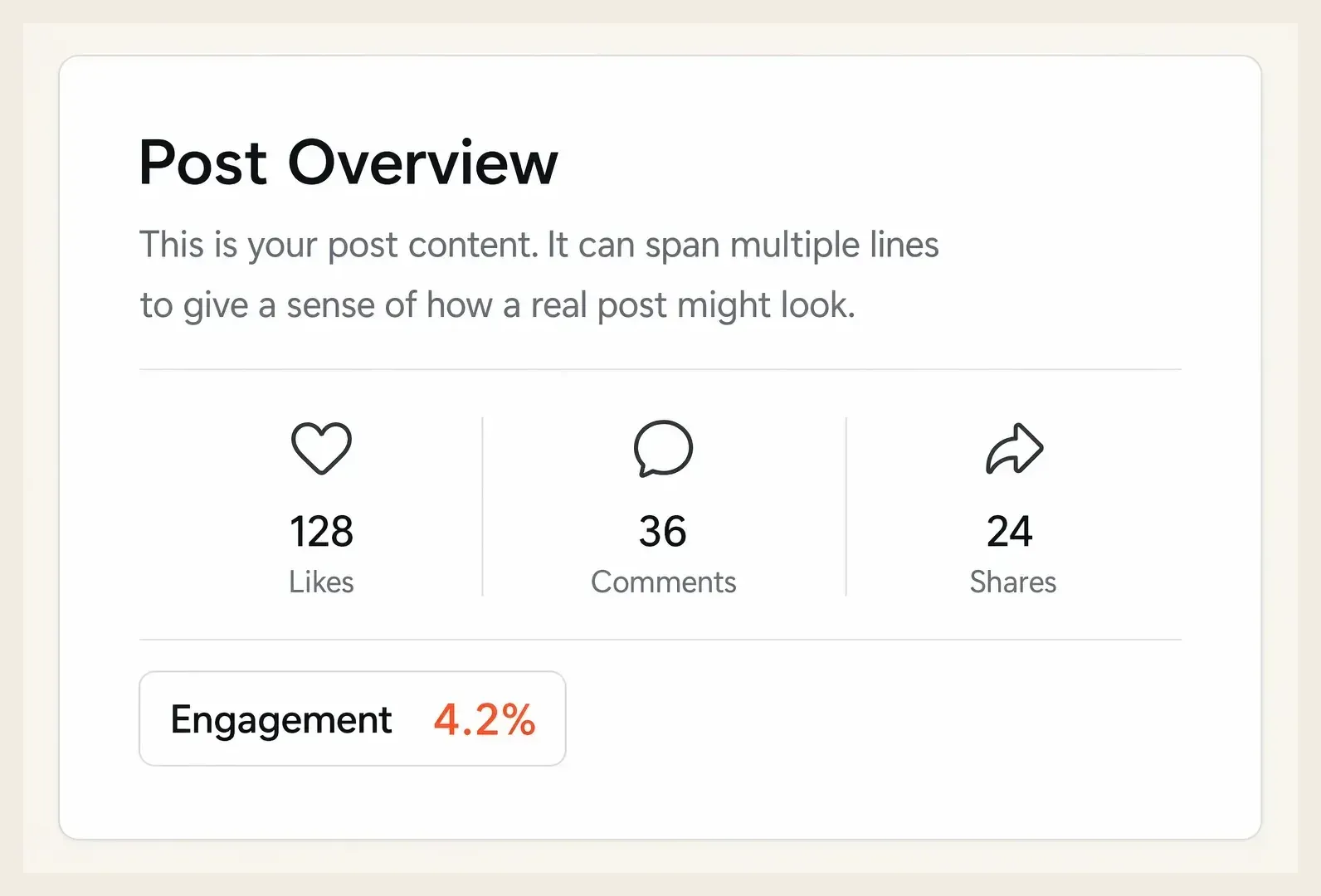
Engagement Rate is a metric that measures the level of interaction (likes, comments, shares, and saves) an ad or post receives relative to its reach or impressions. It is calculated by dividing the total number of interactions by the total number of people who saw the content, then multiplying by 100. A high engagement rate signals that creative is resonating, which platforms reward with cheaper distribution.
Why It Matters
Engagement Rate is a leading indicator of brand affinity and creative health, and it shows up in your account before ROAS does. When an ad earns interactions, the platform reads that as a relevance signal and lowers your delivery costs, because Meta and TikTok both prioritize content that keeps users inside the app. The compounding effect is real: a high engagement rate can pull CPM down meaningfully, which means every dollar of budget reaches more people for the same spend.
Most paid social benchmarks land between 1% and 3% engagement on cold traffic, so an ad pushing above 4% is usually doing something right at the creative level. The reverse is also true. When engagement slides week over week, it is one of the earliest warning signs of creative fatigue, often appearing before CTR or conversion rate visibly drop.
How It Works
- Social signals: Comments and shares act as "earned media," giving your ad additional organic reach you did not pay for.
- Algorithm favoritism: A high engagement rate tells the platform your ad is relevant, which typically results in a lower CPM and better placements.
- Feedback loop: Reading the comments on a high-engagement ad surfaces the language, objections, and benefits real customers care about.
- Thumbstop strength: A high engagement rate is almost always preceded by a strong hook in the first three seconds.
Engagement is not a single number you optimize in isolation. It works as a diagnostic layer that sits on top of your funnel: strong engagement with weak conversions usually points to a creative or offer mismatch, while weak engagement points to a hook or targeting problem.
Formula
The standard formula divides total interactions by reach (or impressions) and converts to a percentage:
Engagement Rate = (Total Interactions / Total Reach) x 100
For example, an ad with 8,000 interactions and 200,000 people reached produces an engagement rate of 4.0%. Some teams calculate against impressions instead of reach, which lowers the percentage because impressions count repeat views. Typical benchmark ranges by platform: Facebook and Instagram feed ads sit around 1% to 3%, Instagram Reels and TikTok often run 3% to 6% or higher, and anything above 6% on paid traffic is considered exceptional. Always compare against your own historical baseline rather than a generic benchmark, since engagement norms vary widely by industry and format.
A Real Example
A beauty brand launches a UGC video showing a "3-step morning routine" and tests two versions against the same audience.
- Ad A: A standard "Buy Now" video with 10,000 impressions and 50 interactions, a 0.5% engagement rate.
- Ad B: An educational video asking "Which step is your favorite?" with 10,000 impressions and 450 interactions, a 4.5% engagement rate.
Ad B earned 200 shares and 50 comments. Because the platform read that engagement as a strong relevance signal, it lowered the brand's CPC by 30%, making customer acquisition on Ad B significantly cheaper than Ad A despite identical production cost. The brand reallocated budget to the engagement winner and scaled it for three weeks before refreshing.
Common Mistakes
| The Mistake | ❌ Wrong Approach | ✅ Better Approach |
|---|---|---|
| Vanity Metric Focus | Chasing likes and comments that never lead to sales. | Treating engagement as a byproduct of high-performing direct response creative. |
| Ignoring Negative Feedback | Leaving negative comments unanswered on a high-engagement ad. | Using comments as a data source to improve future hooks and offers. |
| Static Formats | Sticking to photos when video engagement rates run several times higher. | Testing different formats and styles to find what your audience responds to. |
How Hawky Helps
When engagement rate starts to dip from ad saturation, Hawky's Creative Agent acts on it directly rather than just charting the decline. The Creative Agent identifies the specific elements (questions, visual "Easter eggs," trending audio, hook structures) that are driving the highest engagement in your niche, then generates fresh variants built around those patterns.
Because Hawky operates as a team of agents on your account, the Creative Agent works alongside FeatherDB, which retains the memory of which engagement plays have worked for your brand before. That living context means each new round of creative starts from what already resonated instead of from a blank page.
Frequently Asked Questions
What is a good engagement rate for Facebook ads?
A good engagement rate for Facebook and Instagram feed ads typically falls between 1% and 3% on cold traffic. Reels and TikTok placements often run higher, in the 3% to 6% range. Anything above 6% on paid traffic is considered strong, but the most reliable benchmark is your own account's historical average.
How do you calculate engagement rate?
Divide the total number of interactions (likes, comments, shares, and saves) by your total reach or impressions, then multiply by 100. For example, 8,000 interactions across 200,000 people reached equals a 4.0% engagement rate. Using reach gives a higher number than impressions because impressions count repeat views.
Is engagement rate a vanity metric?
Engagement rate is only a vanity metric when it is chased in isolation. When tied to conversion outcomes, it becomes a genuine leading indicator, because high engagement lowers CPM and signals creative health before ROAS shifts. The key is treating it as a diagnostic, not a goal in itself.
Why does engagement rate affect ad costs?
Platforms like Meta and TikTok reward content that keeps users in the app. When your ad earns strong engagement, the algorithm reads it as relevant and lowers your CPM, which means cheaper distribution and a lower effective cost per result for the same budget.
Quick Takeaway
Engagement Rate measures how much your audience interacts with your content, and it is one of the earliest signals of creative health. High engagement lowers your costs and makes scaling cheaper.
Engagement sliding while your spend climbs is the moment to refresh creative, not the moment to raise bids. Ready to hire your first AI performance team? Book Demo